


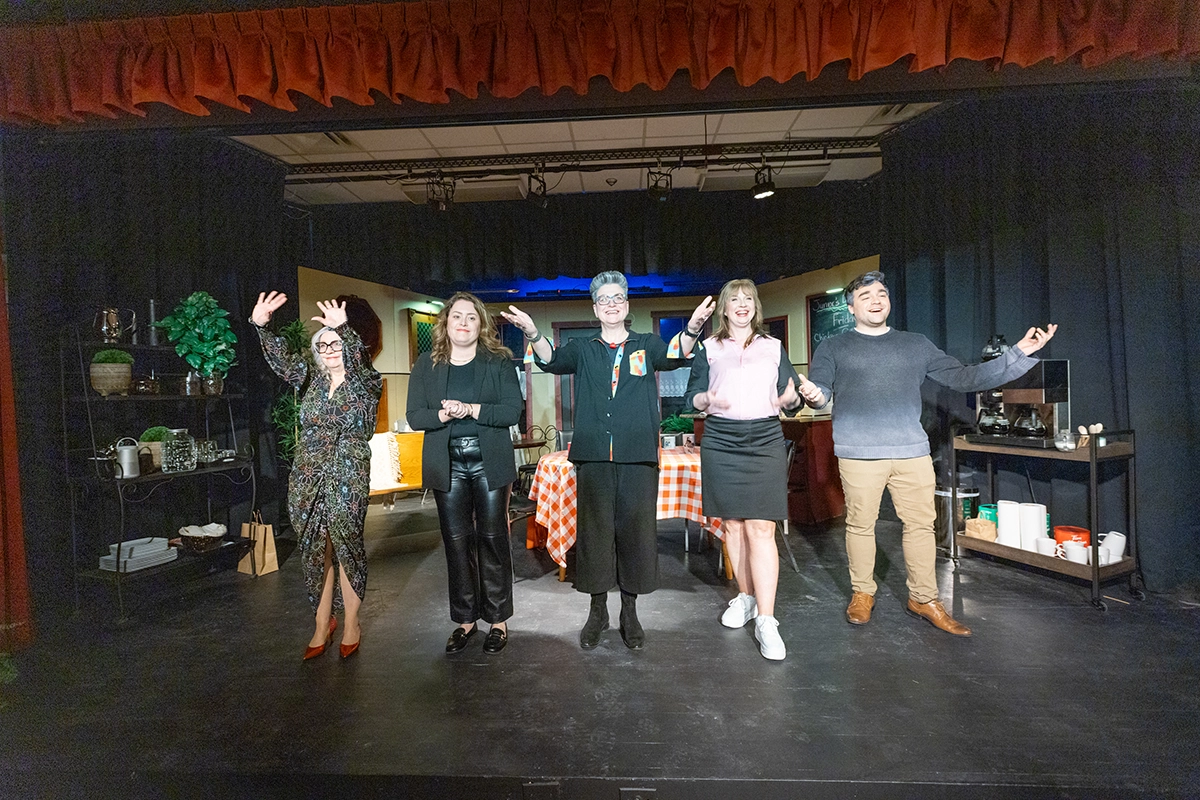



The last time Valerie Twolan-Graham helmed the creative crew that is the Pontiac Community Players was two years ago for a period piece by Norm Foster called Hilda’s Yard (THE EQUITY, January 23, 2023). This time around, she brought a contemporary tale by the same playwright called Halfway There to the stage.
The cast of five and crew of many filled the Pontiac High School auditorium over near-sold-out performances from Thursday through Saturday.
The story they told, set in a very familiar small-town café in Nova Scotia, is ostensibly a romantic comedy.
Particularly during these short days of winter, this levity was an open invitation for a little bit of joy.
The uninhibited laughter right from the opening lines through to the standing ovation at curtain close was clear indication of just how entertained the audience felt and that is exactly what Twolan-Graham and her crew had set out to do when casting began in August of last year.
In his first role with the Players, Matt Lafleur took on the role of Sean Merrit, a heartbroken doctor taking on a temporary job at the clinic in town. Jen Mielke, in her second role with the troupe, stepped in as somewhat-spoken-for Janine, Sean’s love interest and a waitress at the diner in which the entire play is set.
Rounding out the primaries, and each with their own love life in some stage of messy awareness were: Deb Stephens continuing her dedication to the stage as Vi, who had recently declined a marriage proposal; Lynn Spencer, in her second year with the Players, as Rita, a saucy spark of life who just wants some adventure; and long-standing trouper Holly Richardson as Mary-Ellen, the every-housewife who finds herself tired of the grind and being taken for granted.
Together they seamlessly stitched six scenes over two acts that felt very much to the audience as if they were in the diner as well, sitting at a distant table, sipping coffee and eavesdropping on the local goings-on.
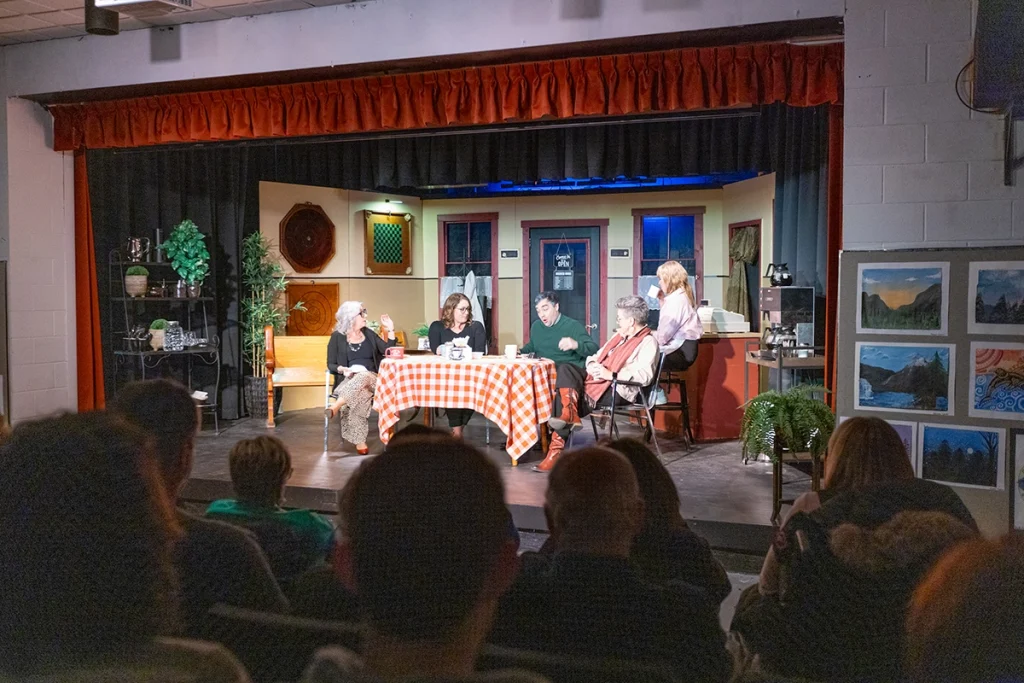
The dialogue was so well penned and delivered with such conviction that the proverbial fourth wall typically separating the stage from the audience was placed smack-dab at the back of the auditorium and everyone was transported on stage, enjoying the banter while passing the sugar.
Lafleur was delightfully innocent as the betrayed and lovelorn doctor suddenly transported from metro Toronto to small-town Stewiacke. His sheepish expression and gesticulations were spot-on and cemented his character’s endearment with the audience. Mere minutes into the play, with a group of complete strangers sitting but a few feet away, his delivery of the line “Ladies, I can hear you,” set the tone for the comedic tension and flirtation that was to follow for the duration.
Mielke’s vulnerable and yet confident Janine left one wondering if she was even acting at all, so well did she present her character’s persona. From casual indifference afforded to the out-of-towner, to the absolute familiarity of her daily entourage, Mielke nailed it. Her dialogue in particular brought head-nods from around the room as she spoke of coming “back to town because that’s where my friends are”.
Spencer brought the house down as Rita. Her dialogue was hilarious, bordering on outrageous, and her delivery was near flawless. Audience members were left wanting a Rita in their own lives, if not to spice things up with fantastical stories of audacity from all corners of town, then to embolden them and put kick in their own steps.
Spencer managed, with grace and delicacy, a scene where Rita had to step back from her raptorial zeal for all things man-like, and speak of the death of her son and how there are “different kinds of alone”. Her emotive delivery was real and her loss, palpable.
Stephens’ Vi was a very believable and up-to-date extension of her Edith Bunker-esque character from Hilda’s Yard where she was that familiar next-door neighbour. Stephens’ dry-as-can-be delivery brought consistent laughter, and she anchored the daily fellowship gathered at the diner. She was fluid with her use of the stage, moving about at will, while ensuring her movements added authenticity to the scene.
Richardson’s Mary-Ellen provided somewhat of a ballast against the fracas of the others. Her character’s well-being transitioned from relative joy to dismay to relief to celebration to belonging, and the audience was right there for the all of it. Mary-Ellen was perhaps the most relatable of the characters due to her relationship challenges, and Richardson did a fantastic job of personifying the space where daily angst gives way to validation complete with the ensuing afterglow.
William Bastien and Deb White deserve praise for set design, and Chris Graham and Yves Perreault for the set’s construction. The entire play was set within a diner, and all cast members were fully visible across the duration of the play from every corner of the auditorium with no blind spots. The wonderfully rendered diner was rich with detail including a collection of art pieces hanging on the walls from students at Pontiac High School offering similarities to Shawville’s own Café 349, where visual arts teacher Ms. Jadwiga Dunin-Borkowska annually showcases her students’ creativity.
In thanks for use of the space, the Players once again made a donation to the Pontiac High School to help with their ongoing maintenance and improvement of the auditorium.
It’s been a two-year wait for the combined talents of Twolan-Graham, The Pontiac Community Players and a Norm Foster play. And it was well worth the wait, no halfway about it.