





Now that we are looking closely at what we have been throwing away, such as things that don’t break down for hundreds or even thousands of years, it’s time the farmers justify their pollution habits.
Let’s start with manure since it is the most noticeable to our noses. It smells whether it comes from animals or people. The department of environment says,. . .
“The answer to pollution is dilution.” That was approach that towns and cities took with their sewer waste for years. They just dumped it into the rivers and some towns and cities still do that with some or all of theirs.
Several years ago, a large town east of Ottawa paid huge compensation to the environment ministry rather than install an expensive sewage treatment facility. New York City did the same many years ago.
Farmers have invested billions of dollars to fence animals away from lakes, rivers and streams and to develop manure composting sites, develop waste water treatment lagoons, buy manure incorporation equipment, develop emergency plans to address any manure spills that might happen, develop animal wintering sites to keep animals out of woodlots, buy equipment that spreads liquid manure close to the ground rather than use manure guns that shoot manure up 50 feet into the air and allow smelly nitrogen gas to blow in the wind and dozens of other to reduce or eliminate manure pollution.
Moving and mixing solid manure with organic matter like feed waste, leaves, wood chips, extra bedding and air will help change the nitrogen makeup to reduce smell and stabilize nitrogen to make it more readily available to growing plants. Stirring a liquid manure lagoon to incorporate oxygen and maybe microbes and more organic matter will do the same to it. Farmers don’t like to smell manure either because that smell is nitrogen escaping into the air and that nitrogen is very expensive to buy back as chemical fertilizer.
Plastic is not only one of the biggest pollution problems in the world, it is the biggest pollution problem to many farmers. Soaps and chemicals come in plastic drums and containers. Plastic is used to tie bales, wrap bales in, cover silage piles and dozens of other uses that we just take for granted. Corn is planted under plastic that is rolled out and sealed with earth on the sides as the corn is seeded under the soil. This plastic is made from corn and breaks down with sunlight and time. It does not pollute because it is made from organic material and is broken down before next year’s crop.
Twenty years ago I bought plastic to cover silage with. It came in a cardboard container that was printed with information that stated, “This plastic is approved for burning.” It must have been organic based and not made from oil. Why is all our plastic not made from material that will break down or be safe to burn? Would advertising and lobbying by the oil companies have anything to do with it?
“Zero” emission barns are being constructed to save all milk waste, wash water containing phosphate soaps, all manure both liquid and solid, used copper sulphate from the cattle foot bathes, water from the water misters used in the summer to cool the cows, and all cattle bedding. Only the barn smell is lost.
Farm animals are bred to be more efficient and produce more milk, more eggs and more meat on less feed. Animal nutrition allows animals to be healthy and produce to their genetic potential. Even the corn silage is rolled and shredded to make the fiber in the silage easier to digest and break corn kernels up so they too can supply sugars and starch when it’s needed by the animal. All this means that a higher percentage of the feed is used for growth, production, and reproduction; and less nutrients are expelled in the manure.
My grandfather used a small coal oil stove to warm the milking parlor. Now an electric boiler heats the floors in the barn. A heat recovery system takes heat from cooling the milk and uses it to heat the water to wash dairy equipment with. Well water used to cool the milk is then piped to the barn to give cows a warmed drink in winter. The farm houses are heated with electric furnaces. Electric tractors are now in use in vegetable farms and under development for use as a replacement for diesel powered machines. Electric cars and trucks are now for sale. As I once told an MPP in Ontario, “As long as the sun shines, the wind keeps blowing and water runs down hill, Quebec will not run out of electricity.”
Even after 100 years of improvement in gas and diesel tractors, it still takes one gallon of fuel to plow one acre of soil whether the tractor is 20 horsepower or 600 horsepower.
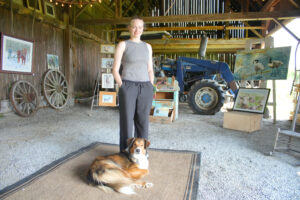
Chris Judd is a farmer in Clarendon on land that has been in his family for generations.
gladcrest@gmail.com