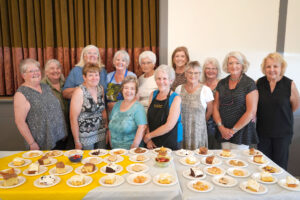







Around 20 volunteers in the Pontiac Hospital’s palliative care unit were recognized on Thursday with a brunch and visit to Pine Lodge’s sugar shack, organized by Outaouais regional health authority CISSSO.
Palliative care volunteers, who receive a training course and must complete a background check with the health authority before being allowed in the hospital, are there as an aid to the patients and do many things including getting them water, blankets, food, or just giving them a hand to hold as their days grow dim.
Certain volunteers can also play a role in medically-assisted death procedures by helping family members grieve.
Rick Valin and his wife Carole have been volunteering for about 10 years in palliative care, and are co-coordinators for the unit’s volunteers. Rick said although they often recruit new volunteers and fill training courses hosted three times a year, it is still a struggle to find people to lend a hand.
“Covid hit us hard. We lost a third of our members, because they weren’t expected to come to the hospital when it was full of covid, and it was dangerous, and then they aged out,” he said.
Carolyne Slater, head of volunteer resources with CISSSO who was also there to celebrate the volunteers, said it’s difficult finding people to lend a hand as many of them, especially in the Pontiac, are aging.
“It’s hard to find volunteers,” said Slater. “Especially younger volunteers. Most of our volunteers are older,” she said, adding that has been an ongoing issue despite repeated attempts to get the message out to younger volunteers.
The Valins said they were grateful the CISSSO takes the time twice a year to recognize their accomplishments, and it makes them feel appreciated.
“It might not seem like much for them, but for us, it’s a lot. And considering the cutbacks that are happening right now, it’s pretty nice that they still find the time and money,” Rick said.
THE EQUITY spoke with a few of these volunteers to understand why they choose to give their time to the palliative care unit. Here are a few of their stories, in their own words.
Rick and Carole Valin
Rick and Carole Valin are co-coordinators for volunteers at the Pontiac Hospital’s palliative care unit, a job they both started doing about 10 years ago when their friend Shirley Green asked them to consider taking it over. Rick, a former full-time teacher at Pontiac High School, helps certain patients and their families during the medically-assisted death (MAID) process.
Carole: Rick was in it first, and a lot of times he couldn’t do a shift. And I thought, ‘Well, isn’t that too bad? I should be able to,’ but I had to take the course. I didn’t know if I was really cut out for that, but I took the course and knew right away that it was something I wanted to do. I’ve always said that nobody should ever die alone. So that was my big driving force behind it. I’ve lost family members, but not palliative, mostly accidents.
Rick: Now we practice MAID (medical assistance in death) at the hospital, so our clients have been sensitized to the MAID process, and we try to help them through the process. The people who are involved in terms of administering the final passing of the person are incredibly sensitive and empathetic, but there’s a huge range of reactions to it. Some people who are members of the family just don’t want to let go. There’s a room right beside ours, which we call a chapel. It’s multi-faith, and it’s a meditation room. Sometimes we’ll just go out there and let people vent.
It’s part of our religious belief, it’s pastoral care. You’ll find most of the people here are of religious orientation and see it as part of their role as being a Christian. We’re United, but we have Anglicans, we have Catholics. Every church in the Pontiac is kind of represented on our team.
Carole: It’s amazing how some people have wanted to do things like [volunteer], but they just didn’t know where to start, and all it takes is a little something to ask themselves ‘What if I was in the same boat?’ and then see if [they] can do it or not. What we’re finding is people who experience the passing of a loved one, a couple years later they get in contact with us and say, ‘I’m ready to do this.’
Rick: We give a lot, but we get more back from it. It’s really weird, we live in the Pontiac, you know everybody. It’s pretty likely that if the three rooms are full, you know at least one of the three families. You feel better because you’re able to support somebody that you already have a relationship with, and it’s harder because it’s somebody you know. Sometimes I’ve taught their kids, and in some cases, I’ve taught the person who is passing away, that’s a little difficult.
Carole: And I always have a little cry, and after I do then I’m okay. The nurses have often said to me, ‘You don’t have to finish your shift,’ and I said ‘No, I’ll be fine,’ but it’s just that if you know the people, you see them coming in, it just hits you harder. And then I have my cry, and I’m okay. But that’s got to come out, I guess, that’s human nature.
Joyce McCleary Binder
Joyce McCleary Binder has spent the past 17 years volunteering at the Pontiac Hospital’s palliative care unit, the very same facility where she herself received cancer treatments in 2008. When she took the volunteer course the next year, she specifically chose to volunteer in the Shawville palliative care unit, and is proud to say she always works a double shift, from 9 a.m. to 5 p.m, once a week.
I’m a cancer survivor. I had several surgeries in 2008, and after one of them I woke up in the palliative care unit as an overflow patient. So the unit was relatively new, and I was told it was the only bed in the hospital. And when I figured out what the unit was, I said, ‘You know, I would like to do that.” After taking the volunteer course I started right away.
I tell my patients’ families, or the patient themselves, [I can help with] anything they don’t need a nurse for. So I can just sit with them. I can be an ear to listen. I can read to them. I can sit and hold their hand. Some shifts I do very little because they have family with them, so I let the family know if there’s something they need that they don’t need a nurse for, please consider it.
I vividly remember one of the first patients that I sat with, I finished my five o’clock shift, I phoned my hubby and said, ‘Bob, I’m not coming home for a while. Don’t wait up for me.’ And this was a guy who had no family, no friends, and had never seen a visitor. But I knew that probably before midnight, he was going to pass. So I closed up things on my desk, I went in, and I sat beside him. I sat and held his hand, and I talked to him. I can still feel the feeling that I felt when he passed; it was like walking on air, and I said ‘He didn’t die alone?’
I had heard of people dying alone, and I thought, that is so sad. But if I can bring a little bit of comfort to anybody, it’s just a good feeling.
Sandra Rutledge-Barber
Sandra Rutledge-Barber has been volunteering in the palliative care unit for two years, but she originally took the course to tend to her terminally-ill husband at home. Now, she volunteers four hours of her time every week to the hospital, and has referred at least two new people to take the volunteer course.
I’m only two years into volunteering. My mother was in palliative care, and I stayed with her at nighttime at the hospital, and I was with her when she passed away. I found my brother-in-law dead at home, and my husband died Nov. 2023, and he was in palliative care.
So by taking the palliative care course, I could look after him at home, and he didn’t have to go to the hospital, which he didn’t want to go to. It was hard watching him be in pain, and he had his mind made up that he would only take his pain medicine when he wanted to take it. So I said, ‘You tell me when you want it, and I’ll give it to you.’ So then he felt more that he was in control of the last days of his life.
At palliative care, it’s so nice when you go to a room and you knock on the door and say, ‘If you want ice water, tea, coffee, just let me know and I’ll get it for you.’ When somebody passes you’re there, and if they want coffee, you go get a little snack for them and let the family spend as much time as they want with their loved one before they leave.
It’s hard, but when you’re there and the people show appreciation for what you’re doing, you feel that it’s worthwhile. Sometimes, there’s people [in palliative care] and nobody goes in to visit them. So you’re checking on them, you’ll get a nurse and say ‘I think you’d better come and check on that person, so they’re not going to die by themselves.
One [pair of family members] asked what palliative was about, and I explained. They said they were interested, so I gave them Rick Valin’s phone number and said ‘When you’re up to it, give them a phone call.’ Both sisters said ‘Both of us are interested,’ so I said, ‘That might be two new recruits’. As we get older, we may not be able to keep on [volunteering], but at least this way we know somebody else is coming up behind us to take over our jobs.
Anyone who is interested in volunteering in palliative care can get in touch with Carole and Rick Valin at 819-647-5609 or at thevalins@hotmail.com.
Environ 20 bénévoles de l’unité de soins palliatifs de l’Hôpital de Pontiac ont été honorés jeudi lors d’un brunch et d’une visite à la cabane à sucre du Pine Lodge, organisés par le Centre intégré de santé et de services sociaux de l’Outaouais (CISSSO).
Les bénévoles en soins palliatifs, qui suivent une formation et doivent passer une vérification des antécédents auprès de l’autorité sanitaire avant d’être autorisés à entrer à l’hôpital, sont là pour aider les patients et font de nombreuses choses, notamment leur apporter de l’eau, des couvertures, de la nourriture, ou simplement leur offrir une main à tenir alors que leurs jours s’estompent.
Certains bénévoles peuvent également jouer un rôle dans les procédures d’aide médicale à mourir en aidant les membres de la famille à faire leur deuil.
Rick Valin et son épouse Carole sont bénévoles en soins palliatifs depuis une dizaine d’années et sont co-coordonnateurs des bénévoles de l’unité. Rick a déclaré que même s’ils recrutent souvent de nouveaux bénévoles et remplissent les cours de formation organisés trois fois par an, il est toujours difficile de trouver des gens pour donner un coup de main.
« La COVID nous a frappés durement. Nous avons perdu un tiers de nos membres, car on ne s’attendait pas à ce qu’ils viennent à l’hôpital quand il était plein de cas de COVID, et c’était dangereux, et ensuite ils ont vieilli », a-t-il affirmé.
Carolyne Slater, chef des ressources bénévoles du CISSSO, également présente pour célébrer les bénévoles, a déclaré qu’il est difficile de trouver des personnes pour donner un coup de main, car beaucoup d’entre elles, surtout dans le Pontiac, vieillissent.
« C’est difficile de trouver des bénévoles », a déclaré Mme Slater. « Surtout des bénévoles plus jeunes. La plupart de nos bénévoles sont plus âgés », a-t-elle précisé, ajoutant que cela reste un problème constant malgré les tentatives répétées de faire passer le message aux jeunes bénévoles.
Les Valin se sont dits reconnaissants que le CISSSO prenne le temps deux fois par an de reconnaître leurs réalisations, ce qui leur donne le sentiment d’être appréciés.
« Ça ne leur semble peut-être pas grand-chose, mais pour nous, c’est beaucoup. Et compte tenu des compressions qui ont lieu en ce moment, c’est plutôt gentil qu’ils trouvent encore le temps et l’argent », a dit Rick.
THE EQUITY s’est entretenu avec quelques-uns de ces bénévoles pour comprendre pourquoi ils choisissent de donner de leur temps à l’unité de soins palliatifs. Voici quelques-unes de leurs histoires, dans leurs propres mots.
Rick et Carole Valin
Rick et Carole Valin sont co-coordonnateurs des bénévoles à l’unité de soins palliatifs de l’Hôpital de Pontiac, un travail qu’ils ont tous deux commencé il y a environ 10 ans lorsque leur amie Shirley Green leur a demandé d’envisager de le reprendre. Rick, ancien enseignant à temps plein à l’école secondaire Pontiac High School, aide certains patients et leurs familles pendant le processus d’aide médicale à mourir (AMM).
Carole : Rick était le premier à s’impliquer, et bien des fois, il ne pouvait pas faire un quart de travail. Et j’ai pensé : « Eh bien, n’est-ce pas dommage ? Je devrais pouvoir le faire », mais j’ai dû suivre le cours. Je ne savais pas si j’étais vraiment faite pour ça, mais j’ai suivi le cours et j’ai su tout de suite que c’était quelque chose que je voulais faire. J’ai toujours dit que personne ne devrait jamais mourir seul. C’était donc ma principale motivation. J’ai perdu des membres de ma famille, mais pas en soins palliatifs, surtout des accidents.
Rick : Maintenant, nous pratiquons l’AMM (aide médicale à mourir) à l’hôpital, nos clients sont donc sensibilisés au processus d’AMM, et nous essayons de les aider tout au long du processus. Les personnes qui sont impliquées dans l’administration du dernier passage de la personne sont incroyablement sensibles et empathiques, mais il y a un large éventail de réactions à cela. Certaines personnes qui sont membres de la famille ne veulent tout simplement pas laisser partir. Il y a une pièce juste à côté de la nôtre, que nous appelons une chapelle. Elle est multiconfessionnelle et c’est une salle de méditation. Parfois, nous allons simplement là-bas et laissons les gens se défouler.
Cela fait partie de notre croyance religieuse, c’est un ministère pastoral. Vous constaterez que la plupart des gens ici ont une orientation religieuse et considèrent cela comme faisant partie de leur rôle de chrétien. Nous sommes de l’Église Unie, mais nous avons des anglicans, nous avons des catholiques. Chaque église du Pontiac est en quelque sorte représentée dans notre équipe.
Carole : C’est incroyable de voir comment certaines personnes ont voulu faire des choses comme [du bénévolat], mais elles ne savaient tout simplement pas par où commencer, et il suffit d’un petit quelque chose pour se demander « Et si j’étais dans le même bateau ? » et ensuite voir si [elles] peuvent le faire ou non. Ce que nous constatons, c’est que les personnes qui vivent le décès d’un être cher, quelques années plus tard, nous contactent et disent : « Je suis prête à faire ça. »
Rick : Nous donnons beaucoup, mais nous en recevons davantage en retour. C’est vraiment étrange, nous vivons dans le Pontiac, nous connaissons tout le monde. Il est fort probable que si les trois chambres sont pleines, vous connaissez au moins l’une des trois familles. Vous vous sentez mieux parce que vous êtes capable de soutenir quelqu’un avec qui vous avez déjà une relation, et c’est plus difficile parce que c’est quelqu’un que vous connaissez. Parfois, j’ai enseigné à leurs enfants, et dans certains cas, j’ai enseigné à la personne qui décède, c’est un peu difficile.
Carole : Et je pleure toujours un peu, et après ça, je vais bien. Les infirmières m’ont souvent dit : « Vous n’avez pas besoin de finir votre quart de travail », et j’ai répondu : « Non, ça ira », mais c’est juste que si vous connaissez les gens, vous les voyez arriver, ça vous frappe plus fort. Et puis je pleure, et je vais bien. Mais ça doit sortir, je suppose, c’est la nature humaine.
Joyce McCleary Binder
Joyce McCleary Binder a passé les 17 dernières années à faire du bénévolat à l’unité de soins palliatifs de l’Hôpital de Pontiac, le même établissement où elle a elle-même reçu des traitements contre le cancer en 2008. Lorsqu’elle a suivi le cours de bénévolat l’année suivante, elle a spécifiquement choisi de faire du bénévolat à l’unité de soins palliatifs de Shawville, et est fière de dire qu’elle travaille toujours un double quart de travail, de 9 h à 17 h, une fois par semaine.
Je suis une survivante du cancer. J’ai subi plusieurs opérations en 2008, et après l’une d’elles, je me suis réveillée à l’unité de soins palliatifs comme patiente en surplus. L’unité était donc relativement nouvelle, et on m’a dit que c’était le seul lit de l’hôpital. Et quand j’ai compris ce qu’était l’unité, j’ai dit : « Vous savez, j’aimerais faire ça. » Après avoir suivi le cours de bénévolat, j’ai commencé tout de suite.
Je dis aux familles de mes patients, ou au patient lui-même, [que je peux aider avec] tout ce pour quoi ils n’ont pas besoin d’une infirmière. Je peux donc simplement m’asseoir avec eux. Je peux être une oreille attentive. Je peux leur lire. Je peux m’asseoir et leur tenir la main. Certains quarts de travail, je fais très peu parce qu’ils ont de la famille avec eux, alors je fais savoir à la famille si elle a besoin de quelque chose pour lequel elle n’a pas besoin d’une infirmière, de bien vouloir y penser.
Je me souviens très bien de l’un des premiers patients avec qui je me suis assise. J’ai terminé mon quart de cinq heures, j’ai téléphoné à mon mari et j’ai dit : « Bob, je ne rentre pas tout de suite. Ne m’attends pas. » Et c’était un homme qui n’avait ni famille, ni amis, et n’avait jamais reçu de visiteur. Mais je savais que probablement avant minuit, il allait décéder. Alors, j’ai rangé mes affaires sur mon bureau, je suis entrée et je me suis assise à côté de lui. Je me suis assise, je lui ai tenu la main et je lui ai parlé. Je peux encore ressentir ce que j’ai ressenti quand il est décédé ; c’était comme marcher sur un nuage, et j’ai dit : « Il n’est pas mort seul ? »
J’avais entendu parler de personnes mourant seules, et je trouvais ça tellement triste. Mais si je peux apporter un peu de réconfort à qui que ce soit, c’est simplement un bon sentiment.
Sandra Rutledge-Barber
Sandra Rutledge-Barber est bénévole à l’unité de soins palliatifs depuis deux ans, mais elle a initialement suivi le cours pour s’occuper de son mari en phase terminale à la maison. Maintenant, elle donne quatre heures de son temps chaque semaine à l’hôpital et a recommandé au moins deux nouvelles personnes pour suivre le cours de bénévolat.
Je ne fais du bénévolat que depuis deux ans. Ma mère était en soins palliatifs, et je suis restée avec elle la nuit à l’hôpital, et j’étais avec elle quand elle est décédée. J’ai trouvé mon beau-frère mort à la maison, et mon mari est décédé en novembre 2023, et il était en soins palliatifs.
Donc, en suivant le cours de soins palliatifs, j’ai pu m’occuper de lui à la maison, et il n’a pas eu à aller à l’hôpital, ce qu’il ne voulait pas faire. C’était difficile de le voir souffrir, et il avait décidé qu’il ne prendrait ses analgésiques que lorsqu’il le voudrait. Alors j’ai dit : « Dis-moi quand tu le veux, et je te le donnerai. » Il a ainsi eu le sentiment de mieux contrôler les derniers jours de sa vie.
Aux soins palliatifs, c’est tellement agréable quand vous allez dans une chambre, que vous frappez à la porte et que vous dites : « Si vous voulez de l’eau glacée, du thé, du café, faites-le-moi savoir et je vous l’apporterai. » Quand quelqu’un décède, vous êtes là, et s’ils veulent du café, vous leur apportez une petite collation et vous laissez la famille passer autant de temps qu’elle le souhaite avec son être cher avant de partir.
C’est difficile, mais quand vous êtes là et que les gens montrent de l’appréciation pour ce que vous faites, vous sentez que ça en vaut la peine. Parfois, il y a des gens [en soins palliatifs] et personne ne vient leur rendre visite. Alors vous les surveillez, vous appelez une infirmière et dites : « Je pense que vous devriez venir vérifier l’état de cette personne, afin qu’elle ne meure pas seule. »
Une [paire de membres de la famille] a demandé ce qu’étaient les soins palliatifs, et j’ai expliqué. Elles ont dit qu’elles étaient intéressées, alors je leur ai donné le numéro de téléphone de Rick Valin et j’ai dit : « Quand vous serez prêtes, appelez-les. » Les deux sœurs ont dit : « Nous sommes toutes les deux intéressées », alors j’ai dit : « Ça pourrait faire deux nouvelles recrues. » En vieillissant, nous ne pourrons peut-être plus continuer [le bénévolat], mais au moins de cette façon, nous savons que quelqu’un d’autre nous succédera pour prendre nos postes.
Toute personne intéressée à faire du bénévolat en soins palliatifs peut contacter Carole et Rick Valin au 819-647-5609 ou à thevalins@hotmail.com.