





Leystone Farms welcomed guests to partake in its annual spring shearing event on Saturday, during which its two dozen sheep received fresh spring haircuts with an audience of about 60 onlookers.
Karri Munn-Venn, who co-owns the farm with her husband Trefor, has been farming sheep for five years and said that days like Saturday are big for farms like theirs.
“It’s a really big deal because we only shear once a year and that’s where we get all the wool for all our yarn.
It’s our harvest,” said Munn-Venn, who specializes in raising the sheep for wool, which is then cleaned and processed at a mill into roving (unprocessed wool) and yarn.
The original vision for the event, which the farm has held twice in years past, was to have guests help to clean the wool after it had been sheared before it would be sent on for processing, but Saturday’s seasonal mix of slush and precipitation dampened those plans.
Despite the less-than-ideal weather, Munn-Venn said the event has grown in popularity since its previous iterations.
“Every year it gets bigger, and we promote it more,” she said. “And Trefor makes cake, so that’s a nice treat.”
Trefor explained the sharing of shearing cake is a Welsh tradition that would traditionally take place once all shearing in the region had been completed.
He said that he got the recipe, which features caraway seeds, citrus peel and nutmeg, from the archives of an old Welsh museum and adapted it a bit.
This was the third time the Leystone Farm invited guests to see the shearing, something Munn-Venn said not a lot of people get to see up close if they don’t work in agriculture.
Tyler Armstrong, of the Renfrew-area farm Pinnacle Haven, is well known in the area for shearing sheep and was invited to do so for Leystone on Saturday.
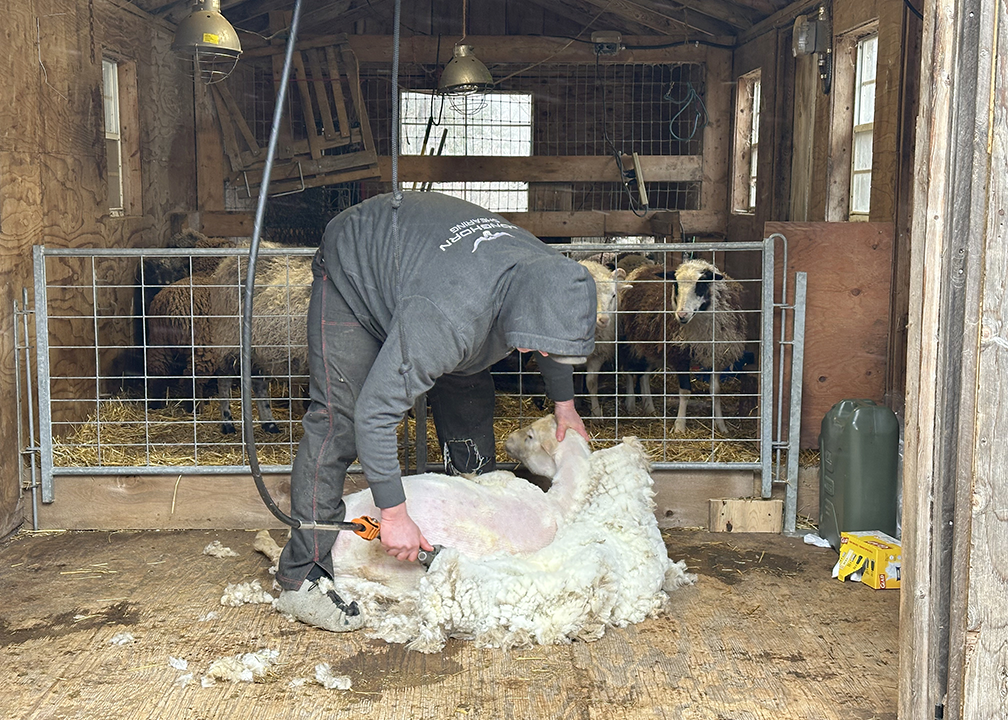
He explained that shearing is important for lambing season, which is due in about a month, so the lambs can latch well, recognize their mothers and take advantage of their mother’s warmth. It’s also important for cleanliness to prevent flies from laying eggs in the wool.
“I like the challenge and it’s hard work,” Armstrong said. “I like seeing a full pen of sheared sheep at the end of the day. It’s a task that you can physically see right away that you’ve completed the job.”
As the wool was coming off the sheep, Munn-Venn said she was feeling giddy.
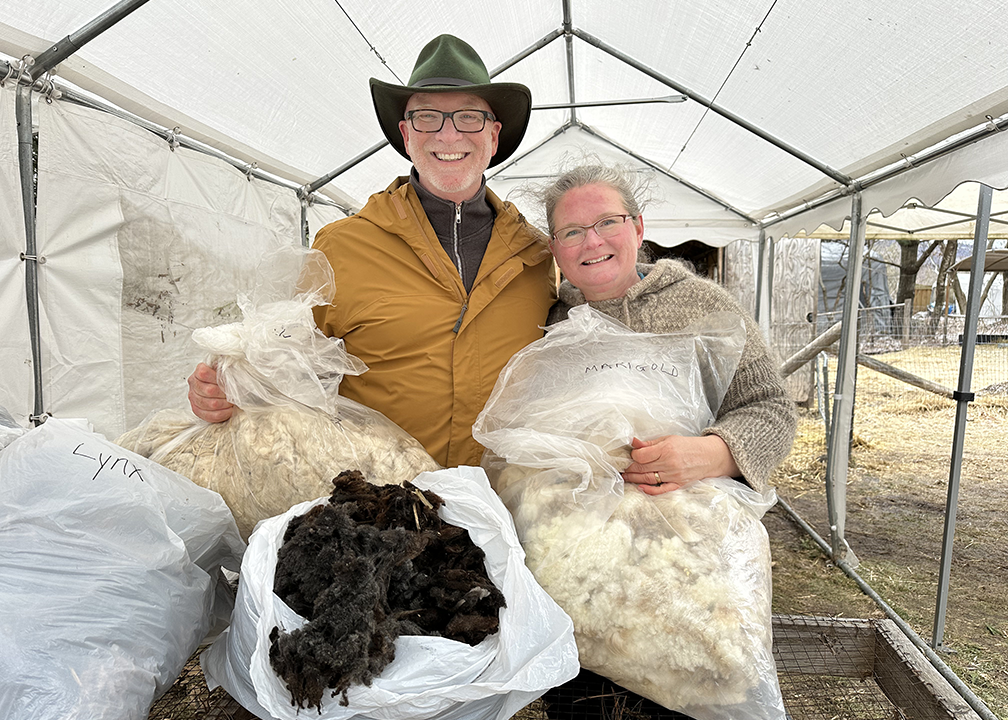
She collected each fleece from each sheep and placed it into a labeled bag with the sheep’s name on it to be sent to the mill. Keeping track of the sheep to which each fleece belongs is important to Munn-Venn, as she makes a point of identifying each ball of yarn she sells with the name of the sheep from which it came.
Munn-Venn explained that she even collects the dirty yarn that would otherwise be thrown away to be used for wool pellets, which can be used in your garden to enhance soil quality.
“There’s so much textile waste, so to be able to see where the animal fibre comes from and which animal it came from, it’s exciting to see,” Munn-Venn said.
“Wool is a tremendous resource. There’s about 15,000 sheep between Eastern Ontario and Western Quebec and most of them are raised for meat and a lot of the wool that they produce is discarded.”
Munn-Venn hopes to continue inviting people to the farm to learn about how she makes her yarn. She said that on Saturday, one of the guests was even wearing a sweater made entirely from the wool of one of her sheep. She hopes to continue to grow the flock and find ways to help divert discarded wool from the landfill.
Check out the recipe for traditional Welsh shearing cake here: https://theequity.ca/cacen-gneifo-traditional-welsh-shearing-cake/
Leystone Farms welcomed guests to partake in its annual spring shearing event on Saturday, during which its two dozen sheep received fresh spring haircuts with an audience of about 60 onlookers.
Karri Munn-Venn, who co-owns the farm with her husband Trefor, has been farming sheep for five years and said that days like Saturday are big for farms like theirs.
“It’s a really big deal because we only shear once a year and that’s where we get all the wool for all our yarn.
It’s our harvest,” said Munn-Venn, who specializes in raising the sheep for wool, which is then cleaned and processed at a mill into roving (unprocessed wool) and yarn.
The original vision for the event, which the farm has held twice in years past, was to have guests help to clean the wool after it had been sheared before it would be sent on for processing, but Saturday’s seasonal mix of slush and precipitation dampened those plans.
Despite the less-than-ideal weather, Munn-Venn said the event has grown in popularity since its previous iterations.
“Every year it gets bigger, and we promote it more,” she said. “And Trefor makes cake, so that’s a nice treat.”
Trefor explained the sharing of shearing cake is a Welsh tradition that would traditionally take place once all shearing in the region had been completed.
He said that he got the recipe, which features caraway seeds, citrus peel and nutmeg, from the archives of an old Welsh museum and adapted it a bit.
This was the third time the Leystone Farm invited guests to see the shearing, something Munn-Venn said not a lot of people get to see up close if they don’t work in agriculture.
Tyler Armstrong, of the Renfrew-area farm Pinnacle Haven, is well known in the area for shearing sheep and was invited to do so for Leystone on Saturday.
He explained that shearing is important for lambing season, which is due in about a month, so the lambs can latch well, recognize their mothers and take advantage of their mother’s warmth. It’s also important for cleanliness to prevent flies from laying eggs in the wool.
“I like the challenge and it’s hard work,” Armstrong said. “I like seeing a full pen of sheared sheep at the end of the day. It’s a task that you can physically see right away that you’ve completed the job.”
As the wool was coming off the sheep, Munn-Venn said she was feeling giddy.
She collected each fleece from each sheep and placed it into a labeled bag with the sheep’s name on it to be sent to the mill. Keeping track of the sheep to which each fleece belongs is important to Munn-Venn, as she makes a point of identifying each ball of yarn she sells with the name of the sheep from which it came.
Munn-Venn explained that she even collects the dirty yarn that would otherwise be thrown away to be used for wool pellets, which can be used in your garden to enhance soil quality.
“There’s so much textile waste, so to be able to see where the animal fibre comes from and which animal it came from, it’s exciting to see,” Munn-Venn said.
“Wool is a tremendous resource. There’s about 15,000 sheep between Eastern Ontario and Western Quebec and most of them are raised for meat and a lot of the wool that they produce is discarded.”
Munn-Venn hopes to continue inviting people to the farm to learn about how she makes her yarn. She said that on Saturday, one of the guests was even wearing a sweater made entirely from the wool of one of her sheep. She hopes to continue to grow the flock and find ways to help divert discarded wool from the landfill.
Check out the recipe for traditional Welsh shearing cake here: https://theequity.ca/cacen-gneifo-traditional-welsh-shearing-cake/