


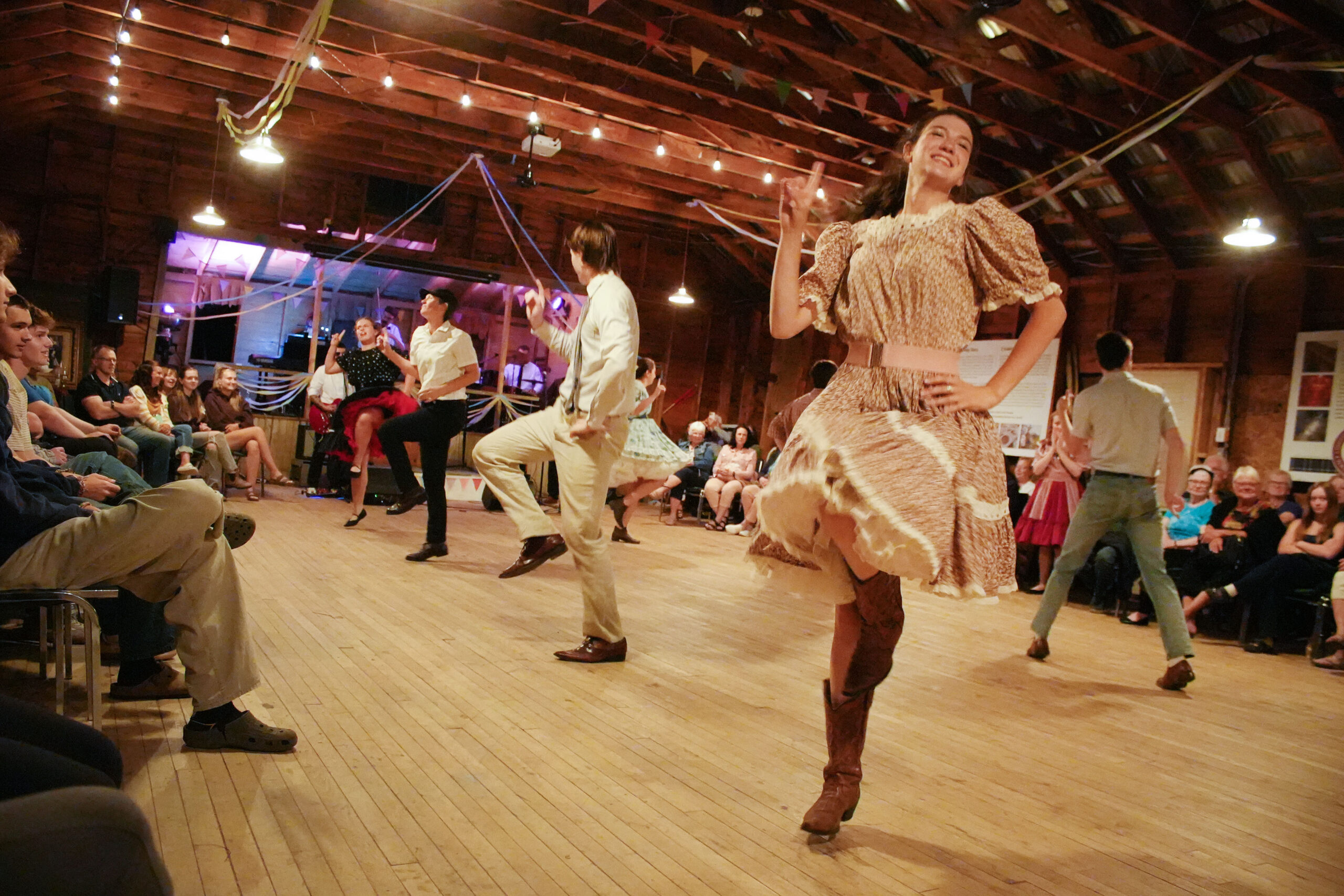



It’s the year 1960. Elvis Presley is top of the charts, cigarettes cost 45 cents a pack, and Saturday nights in small-town Bristol mean a visit to the local dance hall.
Coronation Hall is where hundreds of young people flock in the summer in hopes of stealing a dance – and maybe a kiss – with someone special.
But there’s a little-known secret: Coronation Hall, like many dance halls in the Ottawa Valley, is in danger of shutting down – not just for the summer, but forever.
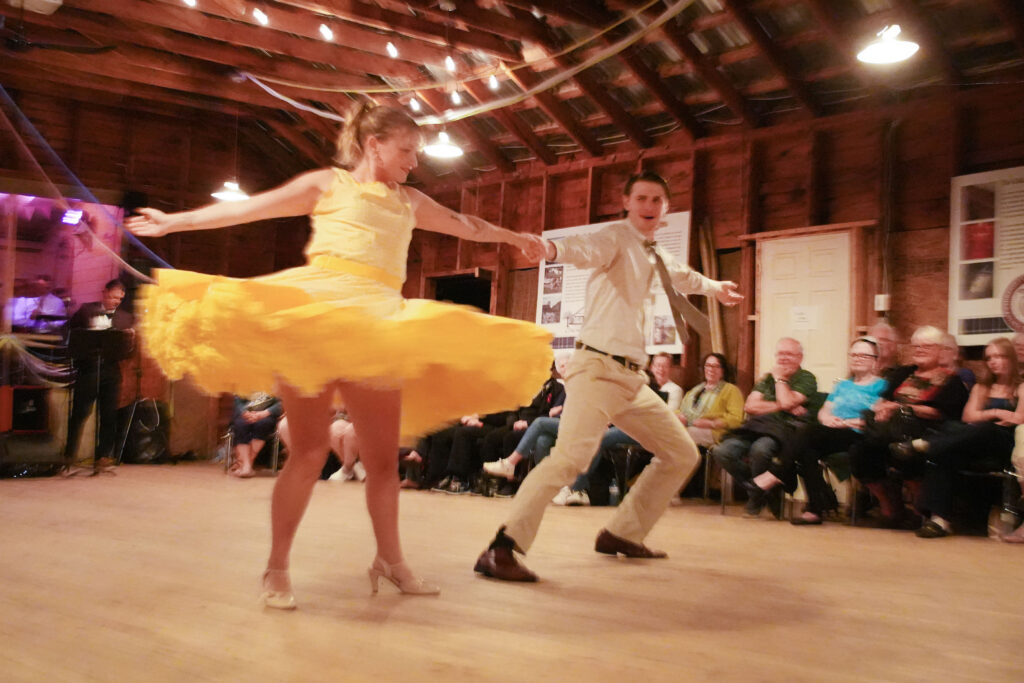
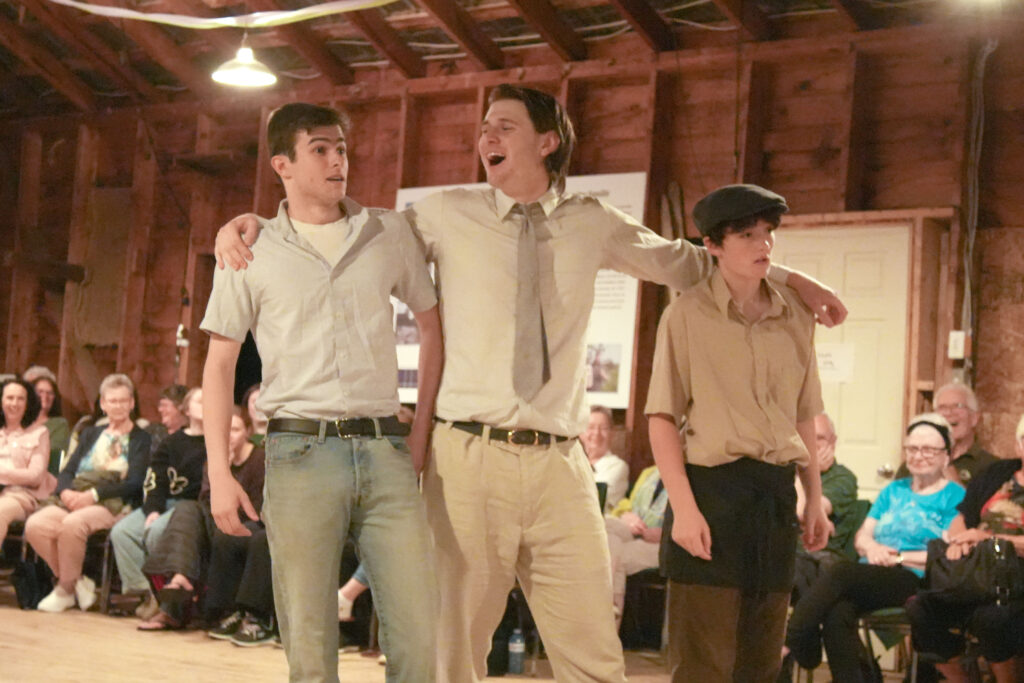
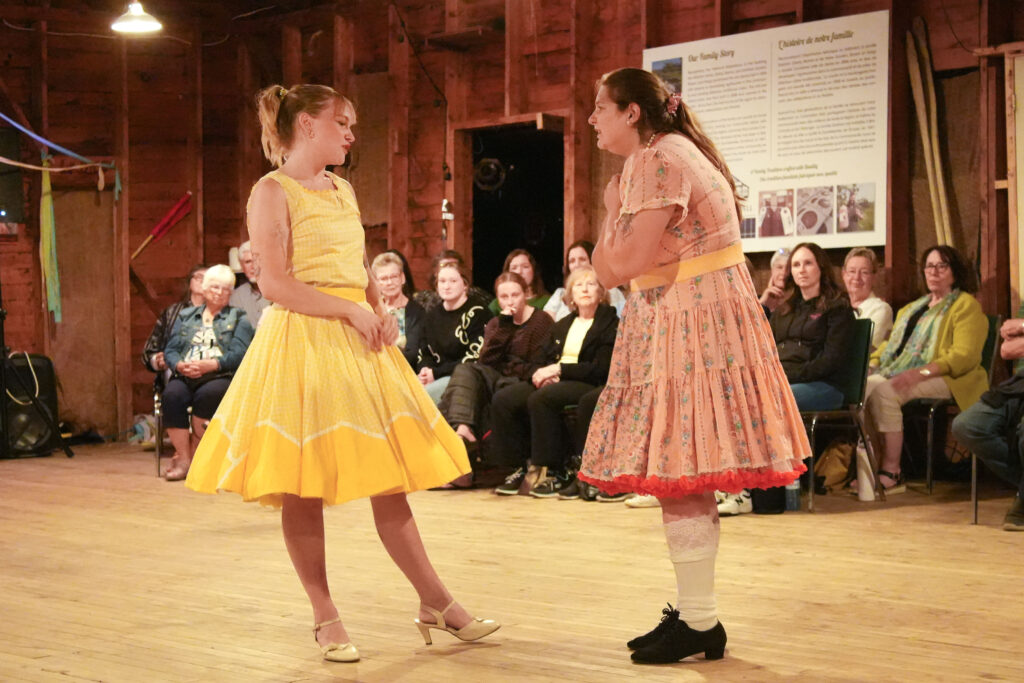
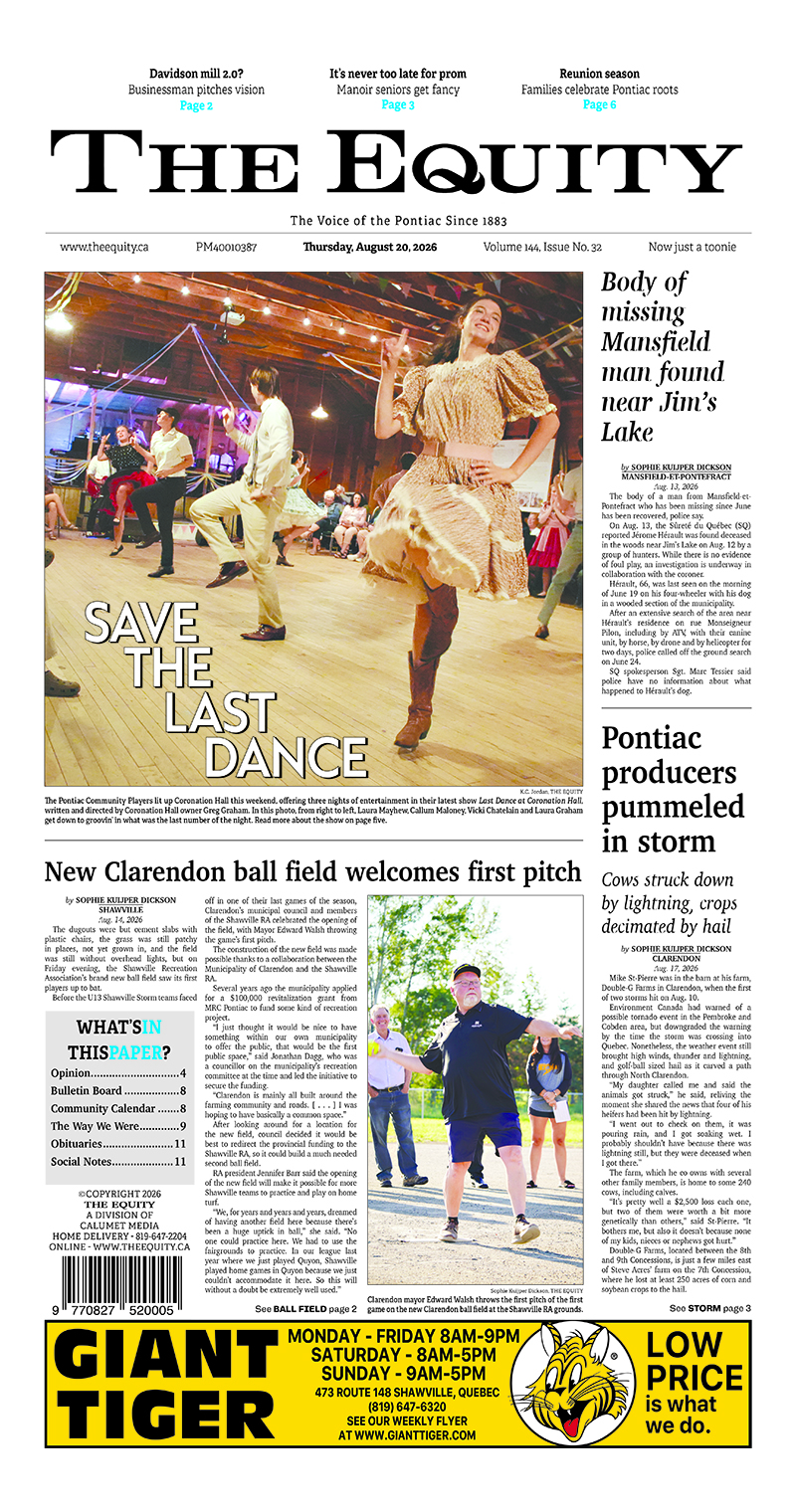
Such was the setting of the play Last Dance at Coronation Hall put on three nights this weekend by the Pontiac Community Players. Coronation Hall was transformed once again into a 1960s dance hall as actors played out the hall’s final night.
As audience members walked into the warmly lit hall, they took a seat around the edges of the dance floor, which would double as the night’s stage. A band clad in suit-and-tie played 1950s grooves as actors started prancing into the hall for the night’s dance.
“One third of the play is inspired by the real history of the hall,” said Coronation Hall owner Greg Graham, who wrote and directed the play. “One third is inspired by all the dance halls in the Pontiac and what our culture was. And one third just on what it’s like to be a young person.”
The play unfolds over a single night at Coronation Hall, one of many dance halls in the Pontiac in that era. It features a group of young adults, who all come to the hall for their own reasons.
Fair young Virginia (played by Sydney Côté) who is the apple of many a young man’s eye, loves to play the field. Hall owner Eddie (played by Robin Lottes) jokes that while Virginia is alone at the start of the night, that usually changes by the end of the night.
Among Virginia’s admirers is Charles (played by Callum Maloney), a businessman staying at nearby Pine Lodge who comes to the hall on a date with another woman, Margaret (played by Ollie Côté).
Charles competes for Virginia’s attention with John (played by Isaac Graham), a Bristol local and would-be charmer who is more talk than action. He gets shy around Virginia, who plays hard to get.
Graham said the characters and the plot are based on stories collected over the years from visitors to the hall. He said while giving tours of the grounds, he’d hear stories that were often colourful and provided ample fodder for a script.
“I had one lady, she’s passed away now, but she talked about sneaking out of her parents’ cottage in Norway Bay and coming to dance with the older boys,” he said, speaking about Betty (played by Megan Vokey), a character in the play who does just that.
“And just growing up in Bristol, of course, the whole tension between the permanent residents and the cottagers, I thought that was a really interesting dynamic.”
As the evening unfolds, it becomes clear that the dance is about more than simply finding a partner. Owner Eddie finds out that he needs to raise $1,000 before the end of the night, or else the hall will close forever.
Old friendships, new romances and rivalries begin to collide on the dance floor, while the looming possibility of the hall’s closure hangs over the evening.
Eddie and John conspire to raise money by illicitly selling booze outside the hall. When Charles catches them and calls the cops, they enlist Virginia to dance with him in hopes of nudging open his wallet. But she could only keep up the charade for so long.
In the end, a dance-off between John and Charles was the final hope for the hall’s future. If John wins, Charles would fork over the rest of the money to keep the hall alive. If Charles wins, the kids will have to find another dance hall.
John, despite claiming to be the best dancer in Bristol, sends his dance partner Virginia to the floor, all but squandering their chance to keep the hall alive. The audience voted overwhelmingly in Charles’ favour, ending the hall’s run forever.
Charles did get a bit of poetic justice, as he managed to disgust every woman in attendance except one – the young and awkward Betty. After some advice from the other ladies, she managed to summon enough confidence to get exactly what she wanted: a dance with a handsome young man, whom she held in a death grip until the final note.
Seeing how much the hall meant seemed to have some effect on Charles. Talking to the band at the end of the show, he asked them to play one more song – the last dance at Coronation Hall.
“I have some money to return,” he said, speaking of Eddie’s $500, before the entire cast returned for one final dance.
Graham said the show was a smashing success. With three sold-out shows, he said Sunday’s attendance of 148 is quite possibly the most the Players have ever drawn for a show. Short of a larger venue, they could have had even more, as he said there were 40 people on the waitlist.
He thanked the entire cast and crew for their tireless efforts preparing for the show, rehearsing twice a week all summer to make the show happen. He said a lot of different parts went into the show, from the acting to the choreography to the music to the costumes.
“It was absolutely amazing,” Graham said when asked how it felt to see the vision come to life on stage. “They really worked hard right up to the wire.”
Graham said while the Players put on all kinds of different performances, rare are the opportunities where they get to tell local stories. He said that’s a responsibility he takes seriously.
“It really binds us together as a community, to tell stories. That’s a big part of why we exist. It kind of reminds people, ‘The Pontiac is a pretty cool place, and we’re pretty cool people, and it’s a real privilege to live here and be a part of it.’”