





J.D. Potié
PONTIAC May 13, 2019
Spring is in full swing and it’s the perfect time to start setting up your home garden.
With a variety of factors to consider when putting together a plant-space in your yard, here are a few tips from a local expert.
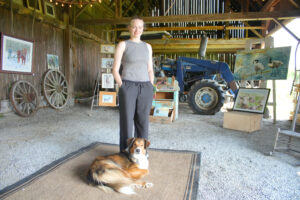
According to Shandy Ardern, owner of Blue Heron Landscaping in Shawville, the first thing to consider when setting up your home garden is deciding what kind of products you’ll be growing.
Whether you’re intending on growing flowers, vegetables or both, knowing what you’re growing will dictate how you want to manage all the factors that make your plants grow.
One of the first elements to consider is your soil.
Having the right kind of soil plays a significant role as far as yielding results from your crops, especially if you’re growing vegetables.
Flowers tend to grow fairly well in all kinds of soil – even sand can do the job nicely.
However, for vegetables it’s important to have a soil that is not too heavy. An optimal option would be a Triple Mix which contains a blend of sand, compost and black loam.
“You need to have a mixture of organic matters – soil, sand or stone so that you have some drainage in it,” said Ardern.
With a soil that is too heavy, water tends to have more difficulty draining through the ground which can sometimes lead roots to start rotting, Ardern said.
Another important factor that affects plant growth is the amount of sunlight they’re exposed to.
For most plants the ideal amount of time under the sun is six hours per day, which typically requires watering them around twice per week or once every two days, according to Ardern.
Making sure plants receive enough water is crucial to their growth. The more sunlight plants are exposed to the more water they require to survive.
Also worth considering is choosing the right kind of fertilizer. Although, using a certain type of fertilizer isn’t necessary to help plants grow, it can certainly make the job easier. However, it’s important to know which is the right one depending on what you’re growing.
When it comes to growing flowers, chemical fertilizers which usually contain Phosphate, Nitrogen or Potassium tend to get the job done very well.
But, if you’re growing vegetables it should be noted that an organic fertilizer is probably the best way to go. Plus, it’s very beneficial for the durability of the soil.
“If you use a chemical fertilizer you will continuously have to fertilize,” he said. “Most natural fertilizers have some form of organic material that they’re based on. So, they improve the soil. Long term use of natural will generally build up the soil through organic matter. Whereas long term use of chemical, the soil becomes dependent upon it.”
However, at the end of the day, it all depends on personal preference, according to Ardern.
“I don’t really want to say that you can use one or the other,” he said. “You can use chemical fertilizers on everything and you can use natural fertilizers on everything. They’re just two different kinds.”
And for those who don’t have fertilizer or don’t feel like using it on your garden, that’s perfectly fine as well.
According to Ardern, various forms of compost like dead leaves are great products when it comes to refurbishing your soil for a fresh crop.
“Compost and leaves add organic matter to the soil,” he said. “The plants use it and it also breaks up the soil so that there’s more air and moisture held in the soil.”
For those who aren’t quite gardening savants yet, the most important thing to do when starting out on your home garden is work on a basis of trial and error as it’s the best way to learn what helps yield crops and what doesn’t, Ardern said.
“It’s not a complicated science,” he said. “You have to try something out and see what happens.”