





J.D. Potié
SHAWVILLE
Nov. 7, 2019
Over a dozen local caregivers gathered at St. Paul’s Anglican Church in Shawville to learn . . .
ways to cope with stress and keep a healthy balance in their lives to avoid getting too burnt out.
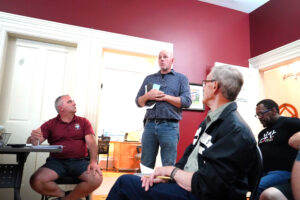
Organized by Connexions Resource Centre, the event consisted of a two-hour information session where attendees learned how to deal with their emotions in the midst of heavy hardships, the importance of embracing emotions rather than pushing them away and that they ultimately have the power over how they deal with things.
According to Connexions’ community coordinator Anita Lambton, the goal of the event was to support local caregivers since they’re often underappreciated for the work that they do.
“Being a caregiver is incredibly stressful and your needs are often put second because you are caring for someone else,” she said.
During the presentation, attendees filled out a questionnaire and listened to personal wellness and development consultant France Pérodeau who shared with them a variety of tips to deal with tough situations.
Perodeau shared a story about her experience with a sick family member and how it brought her family closer together. She explained the right and wrong questions to ask oneself when everything seems to be going wrong in life and she highlighted the importance of understanding that all circumstances come with positive and negative repercussions.
According to Pérodeau, the session was a great way to teach caregivers ways to minimize the negative impacts of stress, notably during difficult situations like taking care of a dying family member.
“If you have tools to change your reaction to that, emotionally and on a mental level, it’s going to be helpful,” she said.”
The most important message for the attendees to go home with was that, while they can’t control life’s every circumstance, they do have the power to control their emotions, Pérodeau said.
“We might not have power over difficult situations in our lives,” she said. “Caregivers are faced with situations where they have no control over sickness and disease of a loved-one. But they have more power than they think over how they can experience that situation.”