





Sophie Kuijper Dickson
Pontiac Feb.23, 2022
At the end of last month, Pontiac MP Sophie Chatel hosted the first of a series of community consultations about how to ensure Pontiac’s industries remain sustainable and competitive as the country moves towards net zero carbon emissions by 2050.
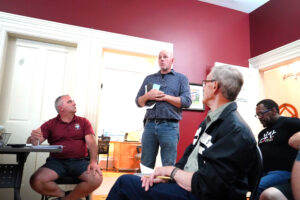
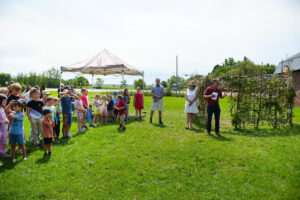
The theme of the first consultation was sustainable agriculture. More than 70 people attended, including farmers, experts, politicians from all levels of government as well as the Minister of Agriculture and Agri-Food.
Chatel’s goal with organizing this roundtable was to develop a shared understanding of the . . .
kinds of supports the region’s farmers will need to transition to an economy that will be more resilient to impacts of climate change, digital technologies and carbon pricing, while maximizing profitability.
“When you concentrate your ask and your energy into one precise issue that will be helping farmers to be successful in tomorrow’s economy then I can really make a difference and help the community,” Chatel said. “The more people are engaged the more successful I’ll be to identify the key priorities.”
According to a vision paper released by the MP in November, most of the technologies needed to meet the net-zero target by 2050 already exist. The challenge will be in crafting policies that empower local businesses to adjust to a decarbonized economy.
A report put out by Agriclimate and Conseil pour le Développement de l’Agriculture du Québec (CDAQ) predicts that by the year 2050, the region will see a longer growing season with more frequent extreme heat days and heat waves. The region will also see a thinner snow cover for a shorter period of time.
These environmental changes will present challenges for both crop and livestock farming if methods, such as cover cropping and field rotation, aren’t adapted to better manage water retention in the soil and prevent soil erosion.
Scott Judd is president of the Pontiac chapter of L’Union des Producteurs Agricole (UPA). He said farmers in the region are already practicing many of these methods and have been for years.
“The cool thing is that each one of those things makes the farmer money anyways,” Judd said.
“They save your fuel, they save your fertilizer, they save your spray, they increase your organic matter and reduce your fertilizer needs.”
“The tricky part is that a lot of farmers have already started to do this kind of stuff, and there’s no credit for people who have already done it.”
Ralph Lang is one of these crop farmers. In an email to THE EQUITY, he said that since his experience of a bad drought in 2012, he has been increasing his use of organic as opposed to synthetic fertilizers. This has improved the fertility of the soil and increased its moisture retention.
When it comes to climate change, he believes it is simply another excuse to increase taxation.
“We need the government to drop the carbon tax. Stop adding more legislation. Drop taxes so the blue-collar workers can survive,” Lang said, adding that he has been sequestering carbon for years but hasn’t seen any of the economic benefit of doing this returned to his business.
Lang is also concerned about pressures on farmers to reduce the use of nitrogen fertilizers, and the negative impacts that this will have on his crops.
“[This] will not allow us to grow a green carbon sequestering crop,” he said. “We have already cut out nitrogen as much as we can. We test our corn field in June and apply only what the crop needs to meet its full potential by harvest.”
Judd echoed this concern.
“We’re already reducing it a lot, and farmers are afraid of it being reduced too much, and then cutting into the profitability,” he said.
Judd said federal support to the community needs to focus on educating farmers on best practices for carbon sequestration. This would empower farmers, through economic incentive, to adopt ecologically responsible farming practices.
While Judd believes that farmers could receive anywhere from $10 to $100 per acre, he said they are missing the guidance and research from the government that might support them in joining this economy competitively.
And this would be a missed opportunity.
The region’s abundance of agricultural land leaves it well positioned to build an economy around its ability to store carbon in the ground. Much of the land in the region is pasturable but not tillable, which makes for ideal carbon sequestration.
There are of course different ways to store carbon. Most effective is leaving the land to pasture. Livestock farming is ideal for this because the main product doesn’t depend on tilling the soil.
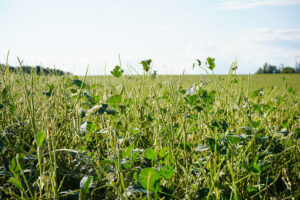
Large cash croppers can also participate in carbon sequestration by using cover crops and ensuring that the ground stays covered, but likely won’t get as high a price per acre as untilled pasture would go for.
Judd has been in touch with the Canadian Grassland and Forage Association to try and gather further information about how carbon pricing might work for different types of agricultural production.
According to him, they are in the middle of experimenting with the best methods of keeping a pasture to keep maximum carbon in the ground. But even they don’t have perfect answers as to how to best measure and track carbon levels in the soil yet. This knowledge will be essential to maximizing profitability of carbon sequestration.
Judd said he believes that for the country to get to net zero, there needs to be better infrastructure in place for farms to start selling their credits to industry.
“There’s a lot of people getting their fingers in the pot right now. And the ones who can do the most good is the farmer, and we don’t know what the hell we’re talking about,” Judd said. “The gun has gone off, and the race is on, and everybody is looking at each other wondering which direction to run in.”
Chatel said she is working to put forward a motion to study carbon pricing and its impact on small and medium business and farmers so that she can get more information back to the farmers of the community she represents.
The roundtable was step one in these conversations. The MP is inviting all community members to participate in the second step of these discussions, that is contributing to the online public consultation that is available through outaouaisvert.ca.