





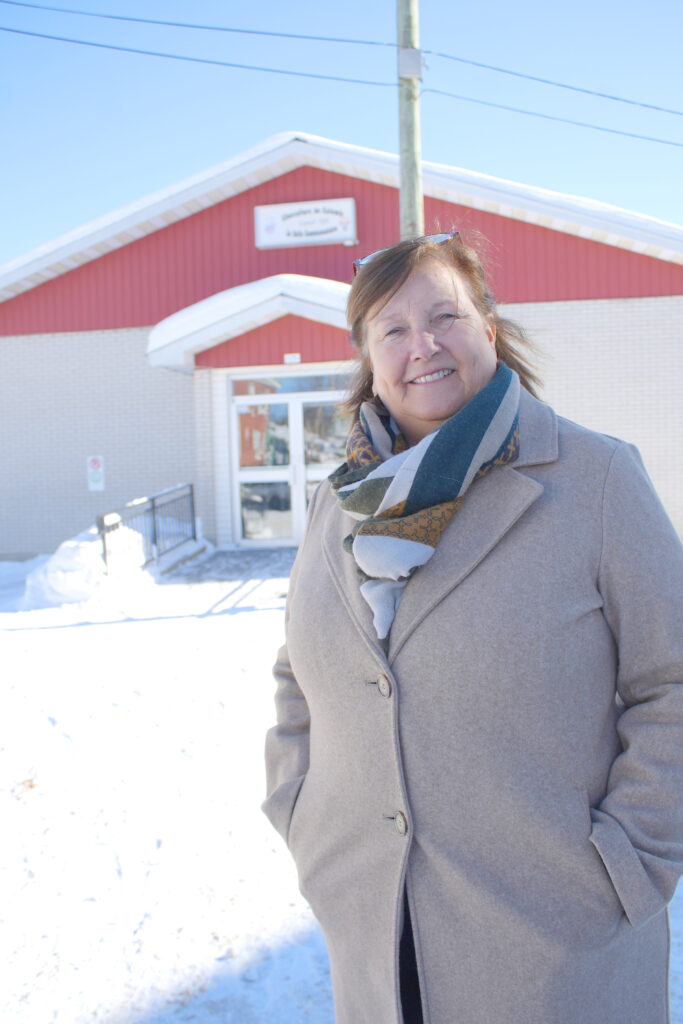
Louise Francoeur has been a member of the Filles d’Isabelle community service club in Fort-Coulonge for 35 years.
She along with its nearly 300 other members have spent countless hours elbow to elbow rolling out dough for the club’s annual cipaille supper fundraiser or washing up afterwards, or organizing any number of other fundraisers the club puts on to support the community.
The charity club’s mission is to give back to the community and support those most in need. A lot of this work involves feeding, fundraising, gathering, and donating – supporting her neighbours through material means.
But last year, over three decades into volunteering with the club, Francoeur was reminded of the power of an equally important yet often overlooked approach to supporting her neighbours – simply listening.
She and some 15 other members took part in a workshop to become part of Pontiac’s Beacon Network.
Since 2021, local social service providers have been training Pontiac residents in basic active listening skills and equipping them with knowledge about local financial, health and social support resources.
The goal of this initiative has been to create a network of people to act as a first line of support for those who might need help, confident in how to detect signs of distress and direct people to the appropriate service providers.
“It’s mainly to teach people how to be present, the signs to pick up on when someone is not feeling super well,” said Kim Laroche, responsible for delivering the trainings through her work at AutonHomme Pontiac.
“[We] give phrases to say when somebody might need help, to encourage them to talk a little more . . . How to use your body posture to show the other person you’re really present for them, that you’re taking the time for them, all about active listening. [ . . . ] Their role is how to be the eyes and ears of the community. It’s mainly to recognize all the stress signals, and hand out the resources that are available.”
Many of the people trained have regular contact with the public. Some, like Francoeur, are members of service clubs, but the group of almost 200 people trained as Beacons since 2021 includes everyone from school bus drivers,to grocery store cashiers, to members of the community who simply want to feel more empowered supporting their neighbours.
It’s a model that was first created in Lac-Mégantic, as a response to the train derailment that killed 47 people in 2013. At the time, social workers realized that in a major crisis situation, people do not necessarily seek out existing services, despite their needs. So instead, they set to work building a network of people – beacons – trained to help guide people in the community to the resources that could help them.
“There wasn’t enough mental health support for everybody around, so they had this blitz training where they helped people help others, and create resiliency,” explained CISSSO community Serena Larivière, one of the coordinators of Pontiac’s Beacon Network.
Almost a decade later, in the early days of the COVID-19 pandemic, Quebec’s Ministry of Health introduced a similar project in communities across the province in an effort to build grassroot networks of people who could help break the extreme isolation and distress. And Pontiac was one of the communities that took it on.
For the past five years, Larivière and colleague Véronique Lamoureux have been working with Laroche to spread awareness about this initiative and grow Pontiac’s network.
“So you’re not becoming a trained professional, We’re just [coaching] the Good Samaritan to be just a little bit extra prepared to help somebody in need,” Larivière explained, emphasizing that Beacons are not expected to act as social workers or mental health professionals, in fact they are discouraged from doing so.
Rather, they are simply trained to recognize distress, to feel comfortable listening, and to be able to refer neighbours to some of the region’s lesser known social services.
“So people who take the Beacon Network training become familiar with those services so when they’re making sandwiches for a church supper and they hear somebody who’s not doing that well, they can say, ‘Hey did you know we have a service right here in the Pontiac that can help you with that?’”
Now, the organizers are trying to distance the initiative from its pandemic roots.
“We tried really hard to disassociate that it was a covid program, because resiliency is never ending. If it’s a flood, if it’s a power outage for a couple of days, if it’s whatever the community can get hit with, it’s not just covid where this [network] is needed,” Larivière said.
For Francoeur, getting some basic tips for reaching out to people who don’t seem to be doing well was one of the key skills she took away from her training.
“When you don’t have the tools, you don’t even know what to say to them. So the training helped us understand how to reach out to people who need help, when we know they have problems,” she said. “It’s rare people will admit they’re not doing well when you ask how they’re doing. We also learned the importance of simply listening. Often it’s just listening that’s important, and that’s what I learned the most from this training. Because it’s not a psychologist course we took.”
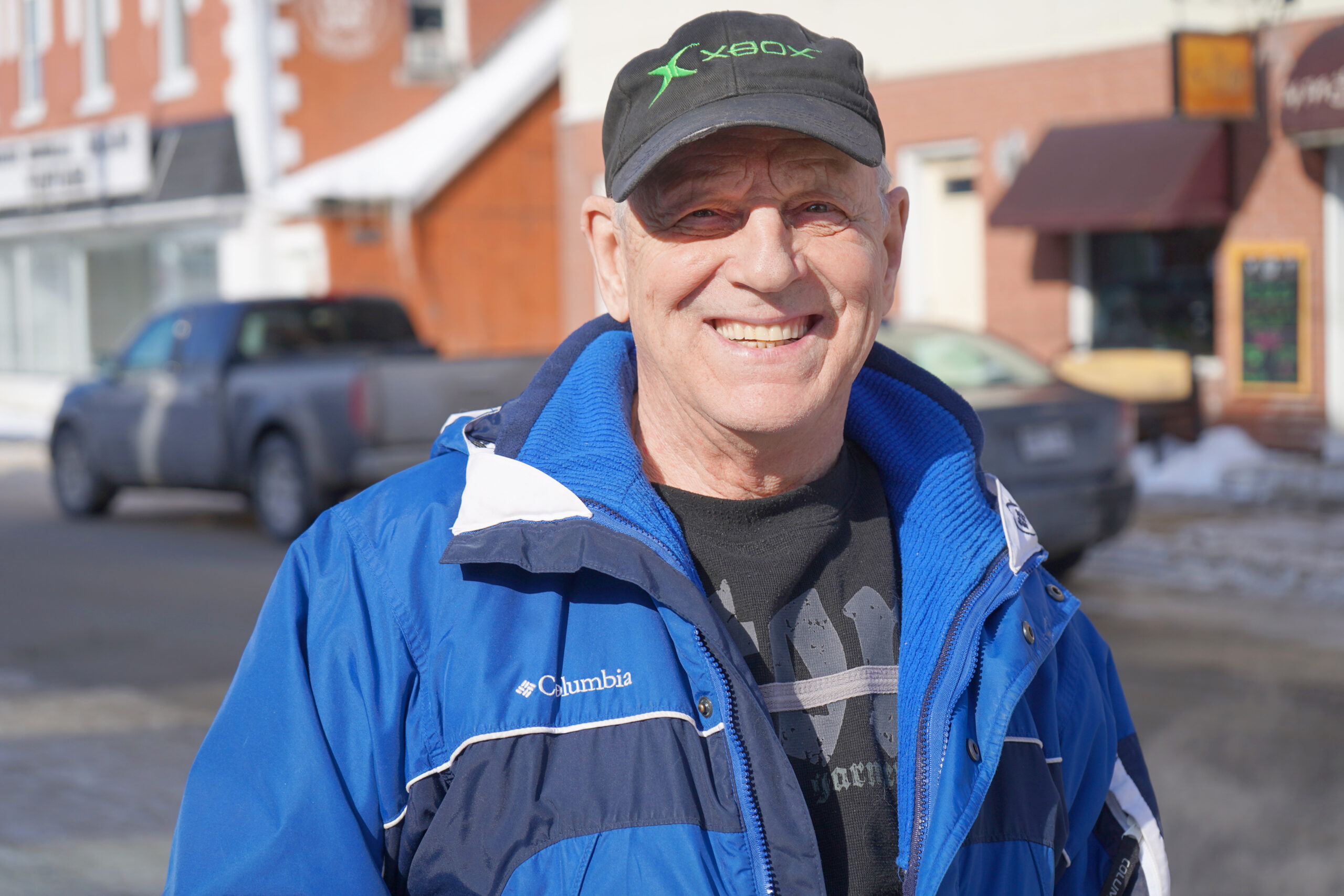
Shawville resident Renald Ferland also did the training last year. He’s been a volunteer TransporAction driver for over two decades, and recently started the Shawville ViaActive exercise group.
“I was interested [in taking the training] because there’s all kinds of potential, not only in Shawville but in all the Pontiac, to help seniors, and help people,” Ferland said. “Every day, just smiling and saying hello, sometime will make the day of somebody else.”
He said since taking the training, he has found himself in two separate instances where he was able to draw upon some of the skills he learned. Once, he was helping a man who shared he was terminally ill. Another time, he helped a lost child find their mother in the Canadian Tire.
“Every day, there’s potential like this for us to help people. And if I’m doing it, I bet you most other people can do the same. Like I said, if you see potential to help people, grab it.”
Those interested in taking the Beacon Network training can call 819-648-2309 ext. 107, or send an email to info@autonhommepontiac.ca.
Louise Francoeur est membre du club de service communautaire des Filles d’Isabelle à Fort-Coulonge depuis 35 ans.
Avec près de 300 autres membres, elle a passé d’innombrables heures coude à coude à étendre de la pâte pour le souper-bénéfice annuel de cipaille du club ou à faire la vaisselle après, ou à organiser d’autres collectes de fonds mises sur pied par le club pour soutenir la communauté.
La mission de ce club caritatif est de redonner à la communauté et de soutenir les plus démunis. Une grande partie de ce travail implique de nourrir, de collecter des fonds, de rassembler et de donner – de soutenir ses voisins par des moyens matériels.
Mais l’année dernière, après plus de trois décennies de bénévolat au sein du club, Mme Francoeur s’est remémoré le pouvoir d’une approche tout aussi importante, mais souvent négligée, pour soutenir ses voisins : simplement écouter.
Elle et une quinzaine d’autres membres ont participé à un atelier pour faire partie du Réseau des Phares du Pontiac.
Depuis 2021, les fournisseurs de services sociaux locaux forment les résidents du Pontiac aux compétences de base en écoute active et les dotent de connaissances sur les ressources locales de soutien financier, de santé et social.
L’objectif de cette initiative est de créer un réseau de personnes qui agiront comme première ligne de soutien pour ceux qui pourraient avoir besoin d’aide, en étant confiants dans leur capacité à détecter les signes de détresse et à diriger les gens vers les fournisseurs de services appropriés.
« C’est principalement pour apprendre aux gens à être présents, les signes à détecter quand quelqu’un ne se sent pas très bien », a déclaré Kim Laroche, responsable de la prestation des formations dans le cadre de son travail à AutonHomme Pontiac.
« [Nous] donnons des phrases à dire quand quelqu’un pourrait avoir besoin d’aide, pour l’encourager à parler un peu plus . . . Comment utiliser votre posture corporelle pour montrer à l’autre personne que vous êtes vraiment présent pour elle, que vous prenez le temps pour elle, tout sur l’écoute active. [ . . . ] Leur rôle est d’être les yeux et les oreilles de la communauté. Il s’agit principalement de reconnaître tous les signaux de stress et de distribuer les ressources disponibles. »
Bon nombre des personnes formées ont des contacts réguliers avec le public. Certaines, comme Mme Francoeur, sont membres de clubs de service, mais le groupe de près de 200 personnes formées en tant que Phares depuis 2021 comprend tout le monde, des chauffeurs d’autobus scolaires, aux caissiers d’épicerie, en passant par les membres de la communauté qui veulent simplement se sentir plus habilités à soutenir leurs voisins.
C’est un modèle qui a été créé pour la première fois à Lac-Mégantic, en réponse au déraillement de train qui a tué 47 personnes en 2013. À l’époque, les travailleurs sociaux ont réalisé que dans une situation de crise majeure, les gens ne cherchaient pas nécessairement les services existants, malgré leurs besoins. Alors, ils se sont plutôt mis à construire un réseau de personnes – des phares – formées pour aider à guider les gens de la communauté vers les ressources qui pourraient les aider.
« Il n’y avait pas assez de soutien en santé mentale pour tout le monde, alors ils ont mis en place cette formation éclair où ils ont aidé les gens à aider les autres et à créer de la résilience », a expliqué Serena Larivière, du CISSSO, l’une des coordinatrices du Réseau des Phares du Pontiac.
Près d’une décennie plus tard, aux débuts de la pandémie de COVID-19, le ministère de la Santé du Québec a introduit un projet similaire dans les communautés de toute la province dans le but de construire des réseaux de base de personnes qui pourraient aider à briser l’isolement et la détresse extrêmes. Et le Pontiac a été l’une des communautés à l’adopter.
Au cours des cinq dernières années, Mme Larivière et sa collègue Véronique Lamoureux ont travaillé avec Mme Laroche pour faire connaître cette initiative et développer le réseau du Pontiac.
« Vous ne devenez donc pas un professionnel formé, nous ne faisons que [entraîner] le Bon Samaritain à être un peu plus préparé à aider quelqu’un dans le besoin », a expliqué Mme Larivière, soulignant que les Phares ne sont pas censés agir comme des travailleurs sociaux ou des professionnels de la santé mentale, et sont même découragés de le faire.
Ils sont plutôt simplement formés pour reconnaître la détresse, se sentir à l’aise d’écouter et être capables de référer leurs voisins à certains des services sociaux moins connus de la région.
« Ainsi, les personnes qui suivent la formation du Réseau des Phares se familiarisent avec ces services, de sorte que lorsqu’elles préparent des sandwichs pour un souper d’église et qu’elles entendent quelqu’un qui ne va pas très bien, elles peuvent dire : « Hé, saviez-vous que nous avons un service ici même dans le Pontiac qui peut vous aider avec cela ? » »
Maintenant, les organisateurs tentent de dissocier l’initiative de ses origines pandémiques.
« Nous avons vraiment essayé de dissocier cela du fait que c’était un programme lié à la COVID, parce que la résilience est sans fin. S’il s’agit d’une inondation, d’une panne de courant de quelques jours, de tout ce qui peut frapper la communauté, ce n’est pas seulement en cas de COVID que ce [réseau] est nécessaire », a déclaré Mme Larivière.
Pour Mme Francoeur, obtenir des conseils de base pour entrer en contact avec des personnes qui ne semblent pas aller bien a été l’une des compétences clés qu’elle a retenues de sa formation.
« Quand on n’a pas les outils, on ne sait même pas quoi leur dire. Alors la formation nous a aidés à comprendre comment aborder les personnes qui ont besoin d’aide, quand on sait qu’elles ont des problèmes », a-t-elle déclaré. « Il est rare que les gens admettent qu’ils ne vont pas bien quand on leur demande comment ils vont. Nous avons également appris l’importance de simplement écouter. Souvent, c’est juste l’écoute qui est importante, et c’est ce que j’ai le plus retenu de cette formation. Parce que ce n’est pas un cours de psychologue que nous avons suivi. »
Renald Ferland, résident de Shawville, a également suivi la formation l’année dernière. Il est chauffeur bénévole pour TransporAction depuis plus de deux décennies et a récemment lancé le groupe d’exercices Shawville ViaActive.
« J’étais intéressé [à suivre la formation] parce qu’il y a toutes sortes de possibilités, non seulement à Shawville mais dans tout le Pontiac, d’aider les aînés et d’aider les gens », a déclaré M. Ferland. « Chaque jour, juste un sourire et un bonjour, parfois cela fera la journée de quelqu’un d’autre. »
Il a dit que depuis qu’il a suivi la formation, il s’est retrouvé à deux reprises où il a pu puiser dans certaines des compétences qu’il a apprises. Une fois, il aidait un homme qui lui a confié être en phase terminale. Une autre fois, il a aidé un enfant perdu à retrouver sa mère au Canadian Tire.
« Chaque jour, il y a un tel potentiel pour nous d’aider les gens. Et si je le fais, je parie que la plupart des autres peuvent faire de même. Comme je l’ai dit, si vous voyez le potentiel d’aider les gens, saisissez-le. »
Les personnes intéressées à suivre la formation du Réseau des Phares peuvent appeler le 819-648-2309, poste 107, ou envoyer un courriel à info@autonhommepontiac.ca.