


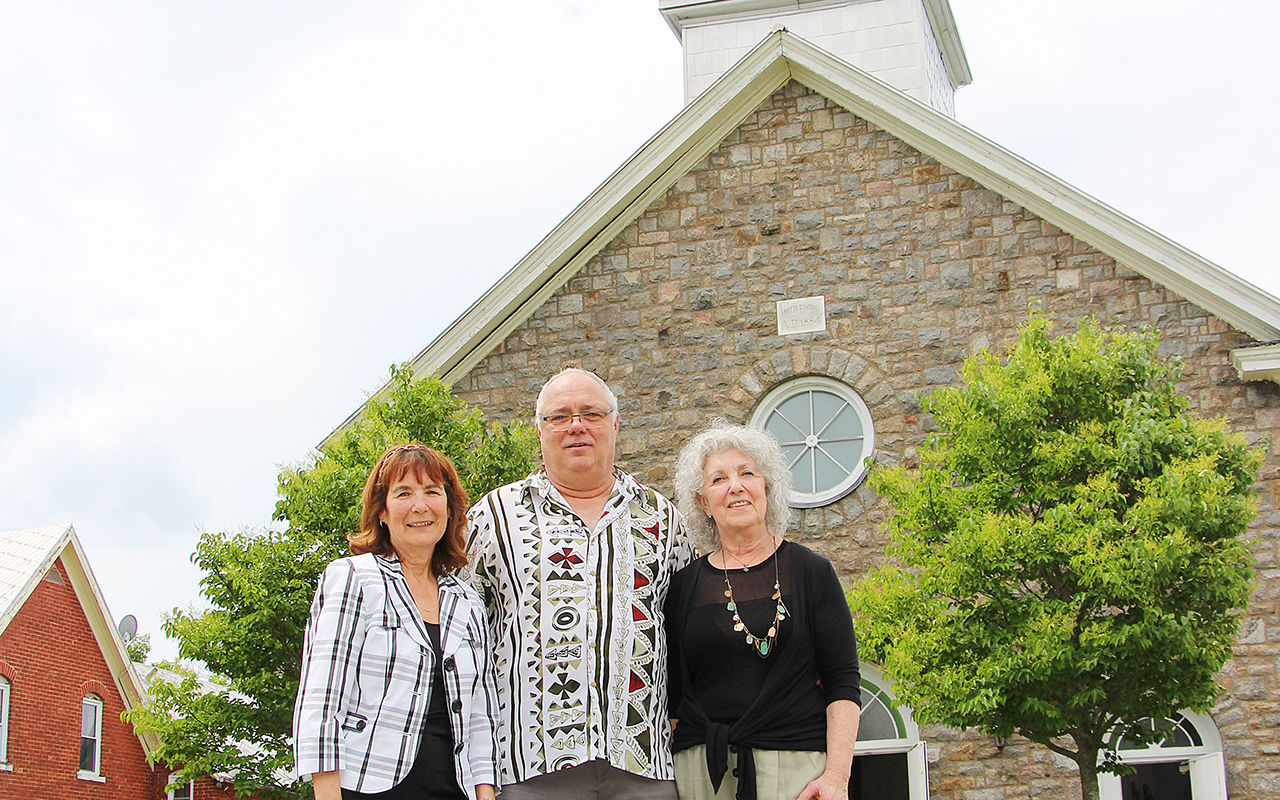



Since 1884, the Saint-Dominique Catholic church has stood in Luskville’s core, its walls made of stones pulled from the very Gatineau hills that tower over it.
Over the years, the church has become a bastion of hope for many of its parishioners, a place of worship that has doubled as a community gathering space for church dinners, concerts, and theatre performances put on by the church’s board of volunteers.
But now, after a period of financial decline, those volunteers are entrusting the municipality with giving the heritage building new life.
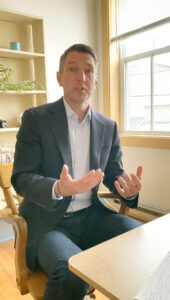
“Due to the deceased priests and the low turnout of our parishioners we were facing a major battle for finances,” said Geoffrey Garceau, president of La Fabrique, the church’s board of volunteers. “We came to realize that we could no longer support the church.”
The church stopped holding regular masses during the pandemic, and since the parish’s dedicated priest passed away last year, the space has only been home to the occasional service, mostly funerals and burials.
“We only make money when there’s funerals now,” said Garceau on Saturday after the latest of those funerals.
After posting deficits in each of the last two years, board members were afraid they would no longer be able to afford to use the church, and that they may have to abandon it.
But about two years ago, members began talks with officials from the Municipality of Pontiac about the future of the heritage site.
The municipality expressed interest in using the church and adjoining presbytery building as a community space, and for the past few years have been working on an agreement to acquire the space free of charge from the parish.
Board members said they were excited the municipality wanted to get on board, but made sure to emphasize they wanted it to continue being used as a community space.

“The municipality has the same responsibility as we have had [ . . . ] in terms of offering to the community a place where they can still get together and have different options of activities,” said Hélène Bélisle, a board member and longtime church-goer.
Members say a study ordered by the municipality gave the building a clean bill of health, impressive for a building of its age.
“From day one it’s always been kept up to that kind of standard, so to bring it up to that standard that is required, [the municipality has] very little to invest in the church,” Bélisle said.
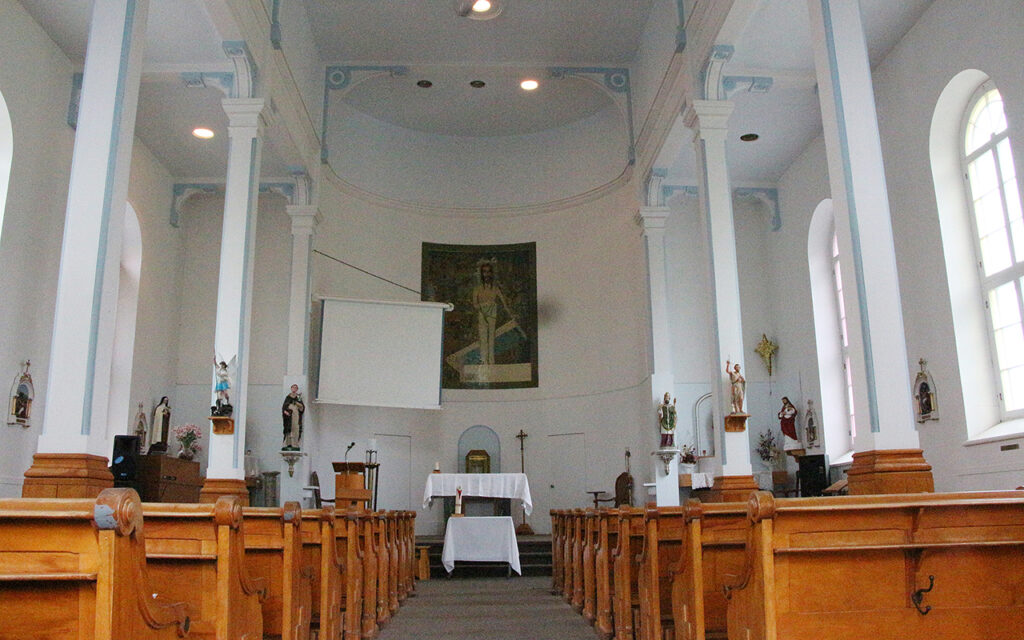
Pontiac mayor Roger Larose said the municipality plans to use the church and adjoining presbytery building as community space for concerts, or as a library. In the future the municipality plans to move its outdoor rink into the back yard of the church, where it is closer to the school across the road where kids can enjoy it.
“Right now our goal is to close things up for the winter and have a little [space] inside the church for people if they go skate, to have a little warm building for them,” he said, adding that the municipality will look for cultural funding down the road to improve the space and do what few repairs are needed, mostly filling cracks in the walls.
“All we want to do now, we want to save the building, to take it over. Then next year, we’ll be able to go look for grant money,” he said.
Church volunteer Nicole Lavigne said while seeing the space continue to be used is a positive development, for many people it’s a still bittersweet decision.
“For certain people who have been in the community [ . . . ] there’s a positive aspect of seeing that it’s not going to be abandoned, that the rest of the community will be able to take advantage of it, but at the same time it’s this loss of what used to be, and also a bit of a lonely feeling about past times,” she said.

The municipal council passed a draft at its last council meeting of the memorandum of understanding that the municipality and the parish will sign before making the changeover official. The official change will not happen until later this fall after a notary has had a chance to look at the official agreement.
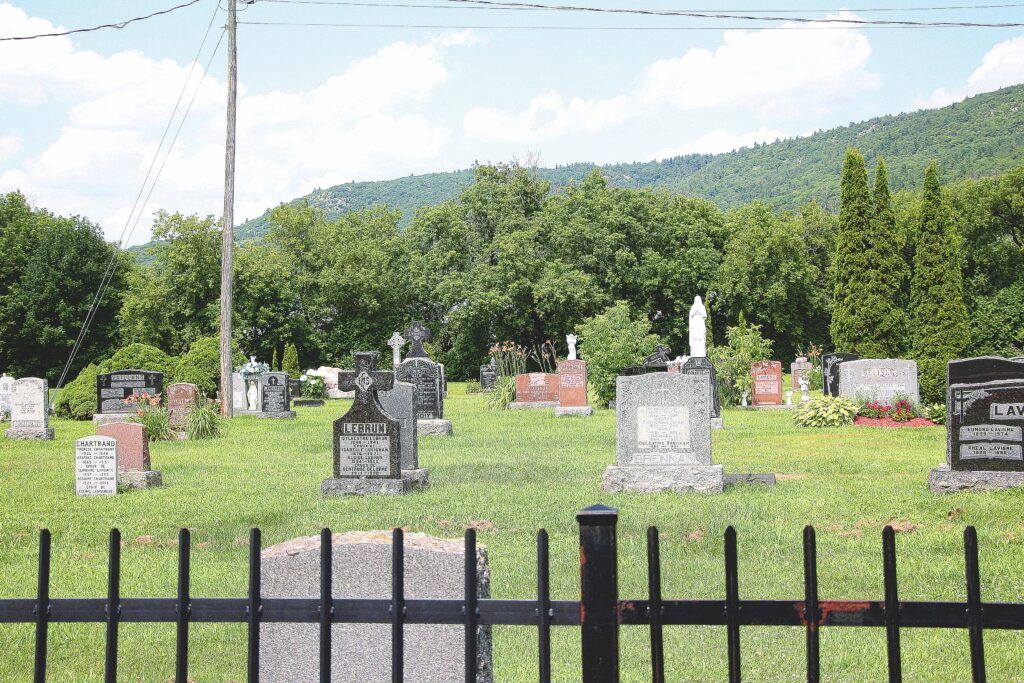
While the two major buildings on the property are changing hands, Garceau emphasized that the cemetery will remain in the capable hands of the board.
“We did not want to get rid of the cemetery, because our costs are one of the lowest in the area, and we wanted to keep that for our community members,” he said.
Garceau added that while some people may feel bittersweet seeing their church change hands, the board felt it was the right decision.
“We know the church is going to be staying in good hands through the municipality,” he said.
The church’s likely final service while still owned by the Fabrique group will be an annual ceremony for the deceased, which will be held Aug. 24 at 2 p.m. and will feature a picnic. Everyone is encouraged to attend.
Depuis 1884, l’église catholique Saint-Dominique se dresse au cœur de Luskville, ses murs faits de pierres extraites des collines de la Gatineau qui la surplombent.
Au fil des ans, l’église est devenue un bastion d’espoir pour nombre de ses paroissiens, un lieu de culte qui a également servi de lieu de rassemblement communautaire pour des soupers paroissiaux, des concerts et des représentations théâtrales organisées par le conseil de bénévoles de l’église.
Mais aujourd’hui, après une période de déclin financier, ces bénévoles confient à la municipalité la tâche de donner un nouveau souffle à cet édifice patrimonial.
« En raison des prêtres décédés et de la faible participation de nos paroissiens, nous étions confrontés à une bataille financière majeure », a déclaré Geoffrey Garceau, président de La Fabrique, le conseil de bénévoles de l’église. « Nous avons réalisé que nous ne pouvions plus soutenir l’église. »
L’église a cessé de tenir des messes régulières pendant la pandémie et, depuis le décès du prêtre attitré de la paroisse l’année dernière, l’espace n’a accueilli que des services occasionnels, principalement des funérailles et des inhumations.
« Nous ne faisons de l’argent que lors des funérailles maintenant », a dit M. Garceau samedi après la dernière de ces funérailles.
Après avoir affiché des déficits au cours des deux dernières années, les membres du conseil craignaient de ne plus pouvoir se permettre d’utiliser l’église et de devoir l’abandonner.
Mais il y a environ deux ans, les membres ont entamé des discussions avec les représentants de la Municipalité de Pontiac concernant l’avenir du site patrimonial.
La municipalité a exprimé son intérêt à utiliser l’église et le presbytère attenant comme espace communautaire et, au cours des dernières années, a travaillé à un accord pour acquérir l’espace gratuitement auprès de la paroisse.
Les membres du conseil se sont dits ravis que la municipalité veuille s’impliquer, mais ont tenu à souligner qu’ils souhaitaient que l’espace continue d’être utilisé comme lieu communautaire.
« La municipalité a la même responsabilité que nous avons eue [ . . . ] d’offrir à la communauté un endroit où elle peut encore se rassembler et avoir différentes options d’activités », a déclaré Hélène Bélisle, membre du conseil et fidèle de longue date.
Les membres affirment qu’une étude commandée par la municipalité a donné à l’édifice un bilan de santé positif, ce qui est impressionnant pour un bâtiment de son âge.
« Dès le premier jour, il a toujours été maintenu à ce niveau de qualité, donc pour le mettre aux normes requises, [la municipalité a] très peu à investir dans l’église », a dit Mme Bélisle.
Le maire de Pontiac, Roger Larose, a déclaré que la municipalité prévoit d’utiliser l’église et le presbytère attenant comme espace communautaire pour des concerts ou comme bibliothèque. À l’avenir, la municipalité prévoit de déplacer sa patinoire extérieure dans l’arrière-cour de l’église, où elle sera plus proche de l’école de l’autre côté de la route pour que les enfants puissent en profiter.
« Pour l’instant, notre objectif est de tout fermer pour l’hiver et d’avoir un petit [espace] à l’intérieur de l’église pour les gens qui iront patiner, pour qu’ils aient un petit bâtiment chauffé », a-t-il dit, ajoutant que la municipalité cherchera des fonds culturels plus tard pour améliorer l’espace et effectuer les quelques réparations nécessaires, principalement le remplissage des fissures dans les murs.
« Tout ce que nous voulons faire maintenant, c’est sauver le bâtiment, en prendre possession. Puis l’année prochaine, nous pourrons chercher des subventions », a-t-il dit.
Nicole Lavigne, bénévole de l’église, a déclaré que si le fait de voir l’espace continuer à être utilisé est une évolution positive, pour beaucoup de gens, c’est une décision encore douce-amère.
« Pour certaines personnes qui ont été dans la communauté [ . . . ] il y a un aspect positif à voir qu’il ne sera pas abandonné, que le reste de la communauté pourra en profiter, mais en même temps c’est cette perte de ce qui était, et aussi un sentiment un peu solitaire à propos des temps passés », a-t-elle dit.
Le conseil municipal a adopté lors de sa dernière séance un projet de protocole d’entente que la municipalité et la paroisse signeront avant d’officialiser le transfert. Le changement officiel n’aura lieu que plus tard cet automne, après qu’un notaire aura eu l’occasion d’examiner l’accord officiel.
Alors que les deux bâtiments principaux de la propriété changent de mains, M. Garceau a souligné que le cimetière restera entre les mains compétentes du conseil.
« Nous ne voulions pas nous débarrasser du cimetière, car nos coûts sont parmi les plus bas de la région, et nous voulions le conserver pour les membres de notre communauté », a-t-il dit.
M. Garceau a ajouté que si certaines personnes peuvent ressentir un sentiment doux-amer en voyant leur église changer de mains, le conseil a estimé que c’était la bonne décision.
« Nous savons que l’église restera entre de bonnes mains grâce à la municipalité », a-t-il dit.
Le dernier service de l’église, alors qu’elle sera encore la propriété de La Fabrique, sera probablement une cérémonie annuelle pour les défunts, qui aura lieu le 24 août à 14 h et comprendra un pique-nique. Tout le monde est encouragé à y assister.