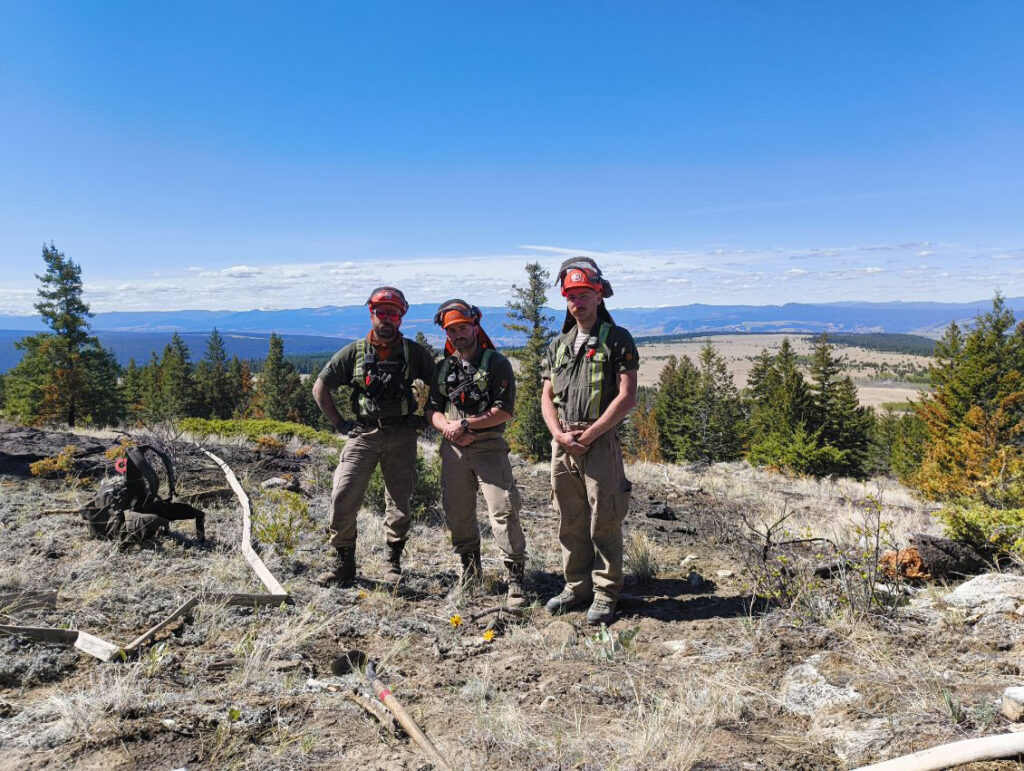





A Pontiac native is among the teams of firefighters fighting the raging wildfires in British Columbia this summer.
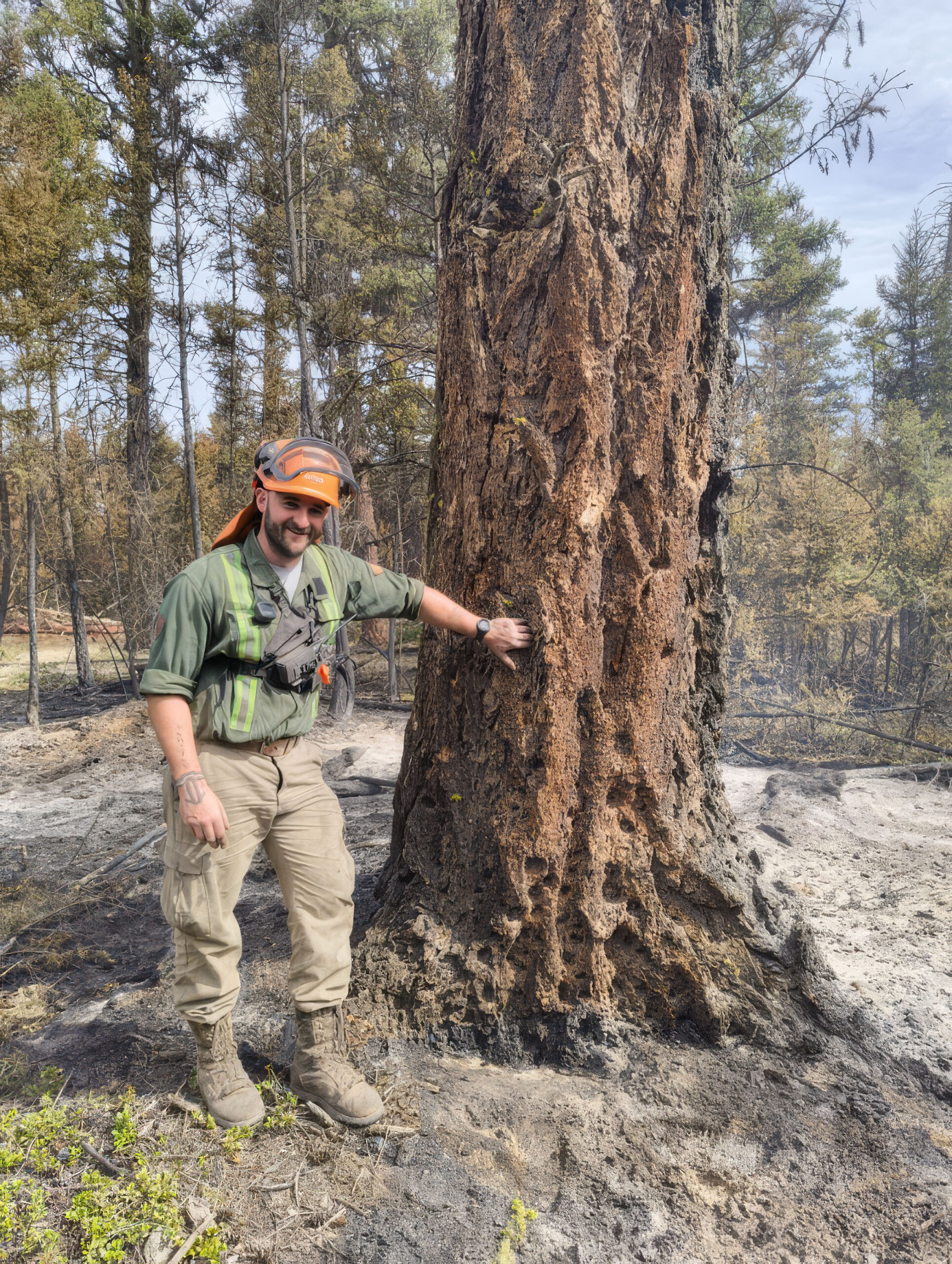
When THE EQUITY caught up with Jeremiah Bastien in late July, he was working near 100 Mile House, where there were several fires active.
“Oh man, you wouldn’t believe the smoke I’m in,” he said.
Originally from Shawville, Bastien moved to Arnprior in grade 6 and upon graduation found work out west in tree planting, which he did for around five years.
He explained that the tree planting company he worked for also tapped its personnel for firefighting, which is how he got his start in the industry.
“You tree planted until it got to the point of demand, or when the season was over you switched over to firefighting,” he said. “I did that with them [for several years] . . . then took a break from it for a few years.”
On the recommendation of a friend, he joined his current employer, Carmanah Wildfire, and is in his second year with them. He said that the company sets a high bar when it comes to safety and professionalism, pointing to the fact that they have a five-day boot camp before every season.
“Carmanah has the intention of doing things better, we train our people to higher standards,” he said.
Bastien said a full shift is typically 14 days straight of 12-hour days. “It is probably one of the hardest things I’ve done.”
He added that within the crews, there is a wide variety of roles, from operating chainsaws to directing aircraft, to coordinating logistics.
Bastien works as a crew lead and a power saw operator. He said that in addition to learning technical skills, they’re also given leadership training.
“In order to run a crew because it’s a high-stress environment, you have some level of leadership course, just the logistics of working with people, the emotional side of it, how to avoid burnout, how to recognize burnout, and just ways to work with people for a high-stress environment for a long time,” he said.
This year, the fire season started May 1, which Bastien called “terrifyingly early.” At the time he spoke with THE EQUITY, conditions were ripe for fires forming.
“We’re at the point where every day there’s something called crossover, where the temperature is higher than the relative humidity,” he explained. “When that happens, fire danger is very high. With repeated days of crossover, there’s also thundercells, we’ve been having tons of cells . . . that’s what we attribute most of our starts at this point. If you have crossover and you get hit with lighting, nothing’s going to stop that fire from forming.”
Based in Duncan, B.C., on Vancouver Island, Carmanah responds province-wide, and even takes contracts in other provinces and territories.
Bastien explained that once a fire is spotted, provincial authorities will send in a team to conduct an initial assessment.
“The ministry will send an initial attack. If they can’t handle it or suppress it themselves, they’ll send back a request for resources, either more people or aircraft, depending on the situation,” he said. “If the request for resources is a service request to our company, we’ll jump on it and drive right there.”
Bastien said the work he does typically involves cutting a strip called a fireguard through the forest to impede the fire’s progress by removing fuel sources. It also acts as a path for fire crews to get hoses and equipment closer to where they need to be, but only once it’s been decided that it’s safe for humans to move forward and attempt to contain the fire.
“If the fire’s too hot we’ll leave it to aircraft only until it calms down. We don’t put anyone in danger unnecessarily,” he said. “If it is workable, we’ll wrap it, so we’ll try and establish the entire perimeter of the fire and wrap it in hose, so that we can access any part of the fire with water.”
He said that they often work in close coordination with aircraft while on the scene, from helicopters to larger water bombers. He added that once a fire is contained, they move in and hose everything down.
“Once we suppress it enough, to the point where it’s not actively burning, we’ll start working the land a little bit more thoroughly, not just the major hotspots but we’ll be hosing every area,” he explained. “We’ll have a scan above, with drones or helicopters looking for heat, they go at night and they scan it.”
Another aspect of the job that he’s gotten into is fire mitigation, which he did for Carmanah in the off-season, in Keno City, Yukon. He said it usually involves pruning trees, removing deadwood and moving potential fuel sources away from houses.
“There’s a whole other side to firefighting that doesn’t exist when there’s fires, which is fire mitigation, firesmarting,” he said. “Preparing land and homes to make it a little more fire resilient. We do a lot of that in the offseason.”
He recommends that anyone interested in forest firefighting try out some forestry related work to see if they are up for the challenge.
“Bushwork in general is a good way in, and it would give you an idea of the standard,” he said.
“It’s a very fulfilling job and very seldom do you meet bad people. [ . . . ] I can’t speak for other people, there’s definitely some yahoos out there, but it’s a hard-working industry with really good people if you want to get into it.”