





by Guillaume Laflamme
Shawville
Apr. 11, 2024
The Connexions Resource Centre held a presentation on how to diminish the risk of developing Alzheimer’s disease on Thursday at the St. Paul’s Anglican Church Hall to bring awareness and remove fear around the disease, and help people understand how to reduce its impact on day-to-day life.
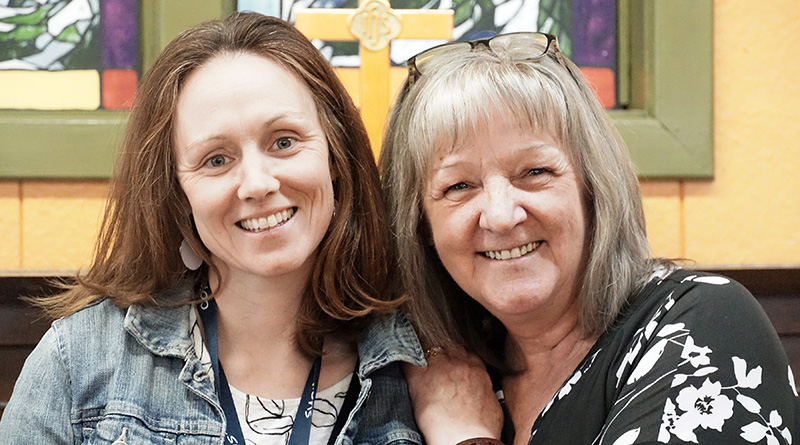
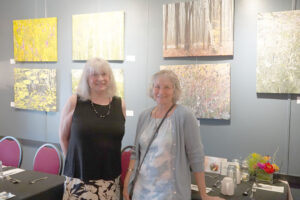
Maude Villeneuve-Legros, who gave the presentation, is a clinical supervisor for Société Alzheimer Outaouais. She has been working with the group for eight years. For her, working with people who have Alzheimer’s is a way to keep their stories alive.
“Just being the one who continues to share their lives, their stories and what they did for a living. Being the one passing on their memory and what they did, I love it,” Villeneuve-Legros said.
In her presentation, she explained that Alzheimer’s disease is a type of dementia that affects not only the memory, but also judgement, language, emotion and behaviour. She said 60 per cent of people who develop dementia will develop the Alzheimer’s variant.
Villeneuve-Legros explained one of the best ways to diminish the risk of Alzheimer’s is to keep your brain active through simple brain games and puzzles, such as Sudoku. She also explained that social isolation is a significant risk factor for the development of Alzheimers.
Diane Wheatley, organizer of the event, has worked with Connexions for two years. She joined Connexions after the COVID-19 pandemic as a way to work with the community. She herself has Alzheimers.
“I never knew I had it until my mother passed away,” Wheatley shared. “She passed away in 2018. I was diagnosed with Alzheimer’s in 2019. By that time, I was already at stage two. And 15 months later, I was diagnosed at stage four, which I’m still at right now.”
For Wheatley, the diagnosis didn’t come as a surprise as both her parents were genetically predisposed to the disease.
Wheatley has never let the diagnosis stop her. She said she stays organized thanks to the help of a rigorous schedule and her husband who helps her get ready in the morning.
“I get to annoy him all the time,” Wheatley joked.
She believes it’s important to reduce any stigma around the disease.
“I think that the more we educate people, the less afraid they are.”
For Wheatley, learning to deal with Alzheimer’s has sometimes been trial and error, but she explained the secret is to stay positive and not let the diagnosis stop her from living her life.
“There’s no reason just to sit down and wait for that disease to move on to the next stage without me doing something about it. I have a very active life,” Wheatley said. “I get on my husband’s nerves every day and if it lasts for another 20 years I’ll go for it.”