





Brett Thoms
PONTIAC March 3, 2022
Agriculture is one of the most dangerous industries in Canada, with around 114 people killed and another 1,500 seriously injured in farming accidents each year, according to the Canadian Agricultural Safety Program.
Given that this week is Canadian Agricultural Safety Week, and farming is so central to the livelihoods of many residents of the Pontiac, THE EQUITY asked local farmers about what . . .
specific safety issues are on their minds and what can be done to keep farmers safe on the job.
Machinery is one of the main causes of accidents in the Pontiac, according to Scott Judd, President of the Pontiac chapter of the L’Union des Producteurs Agricoles(UPA).
This can range from tractors, bale elevators, logging equipment and other farming equipment commonly used on farms in the region.
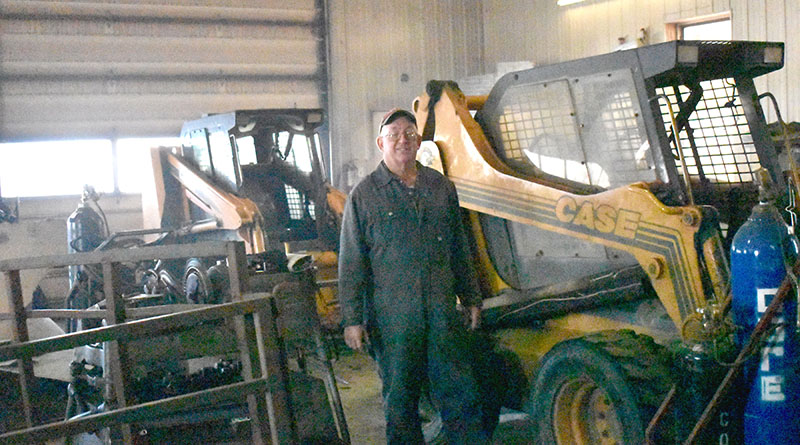
“When accidents happen, it’s usually because something is not right with the machine, because usually everyone is pretty safe,” said Ron Hayes, a local farmer who runs a welding shop that performs repairs on farming equipment.
The older the equipment, the more dangerous it is, as newer equipment have a lot more safety features, according to both Judd and Hayes.
“Now the tractors have a lot of safety features like built-in roll bars and air conditioning for lung safety,” said Hayes, whose father had to be on oxygen the last 10 years of life due to farmer’s lung, which is caused by breathing in the dust whipped up from farming equipment over a long period of time.
Improvements like roll bars and better balanced wheels made accidents like tractor rollovers, a relatively common occurrence, less dangerous, according to Judd and Hayes.
Injuries caused by livestock are also a danger that has been lessened by improving technology.
“The old vets talk about going to a farm and the cattle being tied to a post in the middle of the field in order to work on it,” said Judd.
Now when they get to the farm they often work in spaces designed with the safe handling of livestock in mind.These facilities make farmers safer, according to Judd. However he emphasized how a greater understanding of livestock behavior also significantly minimizes risks.
Farmers are also increasingly becoming aware of underlying safety conditions.
“I’ve been farming for 45 years. I have my fingers. I have my limbs. And I’m alive,” said David Gillespie, 63, who farms in the Upper Pontiac.
“If you get injured and you’re alone, that’s a big problem,” said Gillespie.
While cell phones have made it so that an injured farmer can call for help, this isn’t the case in places without reliable cell phone service, like in the Upper Pontiac.
For this reason Gillespie believes that greater investment in cell service in the Upper Pontiac would be a big help. He also emphasizes how farmers need to be mindful when they are working alone by taking their time and not taking any unnecessary risks.
Mental health and workload management are also major issues for farm safety.
“Anytime we’ve had accidents on the farm are during times of the year when you’re too busy and not getting enough sleep,” said Judd. “It kind of hit me that mental health plays a bigger role in farm safety than we acknowledge.”
“Something that I’m very mindful of right now with lambing is that I’m only getting two hours of sleep a day with little spurts in between,” said Gillespie.
Stress and fatigue can therefore be a huge contributor to farm accidents, especially when other factors like machinery and livestock are involved.
However the stresses involved in farming can also lead to deaths not directly related to work.
“There are people here that have committed suicide,” said Gillespie. “That’s a mental health issue and that’s a part of farm safety.”
Some of the factors contributing to mental health problems among farmers, including economic and time pressures, unpredictable weather and family issues, according to Gillespie.
Farmers are therefore encouraged to work together as much as possible to stay safe.
“Stay informed on everything from your mental health, to your equipment, to meetings on farm safety,” said Gillespie.
“Ask for help; whether it’s a neighbor or a friend, or whatever, don’t hesitate to reach out,” said Judd. “Whether it’s repairs on machinery or help with cows or you got a frustration or something’s bugging you, reach out and ask for help.”
The Pontiac UPA hasn’t been able to hold its annual safety awareness event it normally hosts every summer due to COVID-19 restrictions, but Judd hopes to start doing it again once the restrictions end.
“The good part of the UPA is that you get that sharing of knowledge and camaraderie,’’ said Judd. “It gives us a chance to get together and talk about what’s on our minds.”