





Thinking about death and dying isn’t comfortable.
Many would do almost anything to keep these thoughts off their mind, locked up in the deepest cellar of their subconscious.
A terrifying prospect, but that’s why it’s a relief to know that there’s a group of volunteers at the Pontiac Community Hospital (PCH) committed to improving quality of life for patients with life-threatening illnesses and their families.
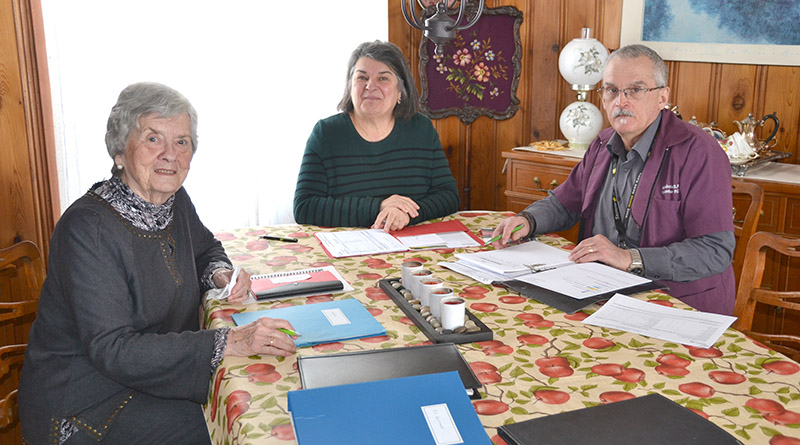
Shirley Green retired to Norway Bay in 2006 after a long nursing career in Ottawa. Since her husband, Dr. Gerald Green, had worked at the PCH for a decade, Shirley felt she had to give back as a volunteer.
“I go back to the 70s when palliative care was introduced to Ottawa,” she said. “In my day, it was lumped in with critical care. It caught on very quickly because people that were dying on an active treatment floor were put in what we called the silent room. It was not a very nice place to be; palliative care was obviously needed.”
The palliative care movement started gaining attention in England in the late 1960s after Dame Cicely Saunders founded St. Christopher’s Hospice in south London. When Saunders recognized that patients with terminal illnesses weren’t having their pain managed adequately, she pioneered the movement, which prioritizes the physical, emotional and spiritual well-being of the patient.
In 1975, Canadian physician Dr. Balfour Mount (who incidentally went to high school with Shirley) coined the term as it is currently used, after meeting and working with Saunders at St. Christopher’s. Mount went on to become known as the father of palliative care in North America, founding the Royal Victoria Hospital Palliative Care Service in Montreal.
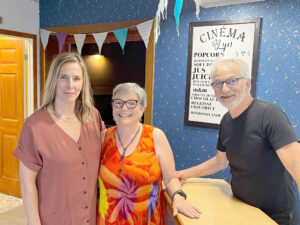
Shirley helped establish the palliative care unit at PCH in 2006 and became volunteer coordinator shortly after. More recently, Shirley has been in the process of passing the torch to Rick and Carole Valin, but will remain as an advisor with the program.
“I’m backing off a bit,” she explained. “I’ve had some health issues, so that’s where the Valins come in.”
“It’s tough getting volunteers,” she added. “Palliative care is not for everybody.”
“When I started three years ago, we were about 35, now we’re down to 22, 23,” noted Rick. “It’s hard on people … It’s a small community, so it’s very likely you know the person that’s in palliative care.”
“It’s always harder emotionally when you know the people, which is like 80 per cent [of the time],” Carole added.
The palliative volunteers act to supplement the work done by doctors, nurses and support staff. Shirley stressed that they don’t deal with the medical side of things, only providing care, comfort and companionship to those in the palliative unit.
“I would say our volunteers spend about as much time with the family as they do with the patient,” she said. “The medical care is directed by the physicians and the nurses.”
The palliative unit is made up of three rooms located in a quiet section of the hospital’s second floor. The rooms are spacious and include a partitioned area where the patient’s family can stay.
Some days, the rooms can double as overflow for newborns and their mothers.
Volunteers work in three shifts, from 9 a.m. to 9 p.m. (except in winter, when they don’t have an evening shift), and take meticulous notes on the patient’s condition, preferences and needs. Shirley explained that the group clocks several thousand hours worked each year.
They handle anything from fetching coffee for family members to holding a patient’s hand or singing to them.
“You might be incredibly busy or you might be incredibly bored,” Rick said, noting that depending on the number of patients, or how medicated they are, workload can vary quite a bit.
Volunteers have a contact list for the patient’s family, as well as a host of local faith groups. The hospital even has its own small chapel just around the corner, if patients desire to pray.
Volunteers also coordinate with a group of local knitters, who provide blankets and other garments for use in the unit.
“I always use the phrase, ‘If they want their hair dyed purple, we’ll do that too,’” Shirley said with a laugh. “You
get to know the person and then there’s a trust that builds up between you and the patient. Very often, we’re the one that they confide in.”
“The objective of the team is to remove the fear,” she added. “It’s not nice being pushed through those doors. … It’s just to create a peacefulness, a peacefulness that doesn’t exist on the main floor.”
Shirley explained that potential volunteers first undergo an interview process, to ensure they have the proper motivations and constitution for the work.
“One thing that I really stress is, ‘Have you suffered any recent losses?’” Shirley said. “People need a good year to get over a death of a loved one in their family … This is not going to cure it.”
She said that volunteers adhere to a strict code of confidentiality, and “sightseers” are quickly weeded out.
“You have to respect the privacy of the patient and you don’t want someone coming as a curiosity seeker, especially in a small town,” she said. “I used to get stopped in the grocery store. People mean well, out of curiosity, but they don’t understand what we have to live with.”
“Motivation is key thing,” Rick added.
“One of the things you have to deal with is that somebody is probably going to die on your shift,” he added. “The worst shift I ever had was two. Two people died in a four hour period. Some people are only in there for minutes, literally minutes and others for weeks.”
On a more positive note, Rick said that in rare cases he’s seen patients released from hospital after a stint in palliative.
“Sometimes, we’ll get miracles,” he said.
After the interview process, volunteers take a two-day course with nurses and are then paired with a mentor for their first few shifts.
Rick noted that they have a training course planned for the spring and encouraged anyone interested to sign up. Carole encouraged those that might be hesitant to give the course a try to see if volunteering might be right for them.
“That’s what so many people say when they find out I’m in palliative care, ‘Oh I couldn’t do that,’” she said. “Well, never underestimate, because I was one of those people.”
Shirley emphasized that while the demands on volunteers are great, the relationships you build are even more rewarding.
“You get back more than you give,” she concluded.