





Donald Teuma-Castelletti
BRISTOL Dec. 15, 2018
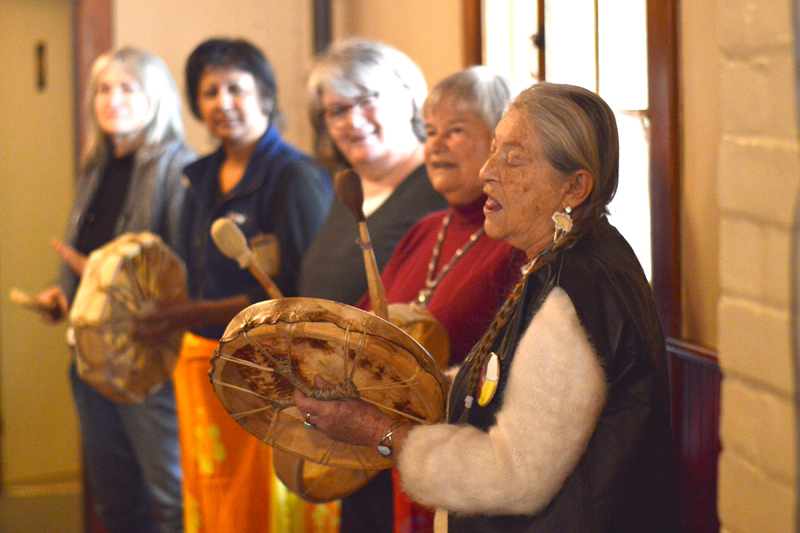
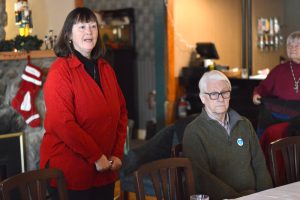
A coalition of groups dedicated to stopping the installation of a near surface disposal facility at Chalk River’s nuclear research facility met at Bristol’s Pine Lodge on Saturday, seeking to develop an action plan for the coming year.
Over 30 individuals gathered at the meeting, organized by Ottawa’s National Capital Peace Council (NCPC), where four panelists led the roundtable meeting before the afternoon gave way to open discussion and the development of their strategy.
“What we want to do is come up with an action plan for the year, as to how we can get public policy changed,” said Daniel Stringer, event organizer and founder of the NCPC. “Or, how we can impact on politicians. Those two expressions are important because one way to get public policy changed is to be polite and to work the lobbying kind of networks and the government … and the other way is to get out on the street with placards and banners and go to constituency offices.”
Stringer added that though the groups represented have done the latter, it’s a hope that more will be done in the former, if they’re to see actual change take place. Especially in an election year, it is hoped the groups will work with candidates to have their concerns addressed, so policy will be adapted to reflect these issues.
He explained that the groups are beyond the point of educating the public and are now looking to see actual change implemented in government policy.
“We’re going to do some brainstorming, we’re going to hear some people talk about how we can work with Indigenous groups better and in the afternoon we’re going to [develop a] game plan,” said Stringer, of the day’s objective.
Groups represented at the meeting included the Concerned Citizens of Renfrew County and Area, the Water Care Allies of Ottawa’s First United Church, the Old Fort Williams Cottagers’ Association, the Coalition Against Nuclear Dumps on the Ottawa River, the Sierra Club Canada Foundation, Free the Falls, the NCPC, and more.
The four panelists included Michael Swinwood, a lawyer with a focus on Indigenous justice, Judith Matheson of Water is Sacred, Dr. Peter Stockdale of the Ottawa Peace Festival and Pamela Schreiner of Free the Falls. The event was moderated Dr. Cynthia Stirbys.
Concerns for the group stem from the way low-level radioactive waste is planned to be stored in the near surface disposal facility, especially with the distance it is to be located from the Ottawa River. As well, issues arise with what many of the worried parties describe as a short-term solution to radioactive waste, as the site will be dealing with materials that have half-lives of thousands of years.
“We’re talking about issues that are not one or two years,” said Don Paskovich, a member of the NCPC. “It’s thousands of years.”
Canadian Nuclear Laboratories, who operate the site in Chalk River, have maintained that the facility will be safe for generations to come.
Lynn Jones, of the Concerned Citizens of Renfrew County and Area, summarized what the day’s coalition agreed would be the ideal situation to come.
“We will know we have succeeded in our struggle when all political parties commit attention and funding to ensure that Canada’s federally owned wastes are carefully packaged, labelled and stored in state-of-the-art facilities away from drinking water sources,” said Jones, in an email. “Such a commitment will make Canada a world leader in managing radioactive waste [and] will also stimulate the economy and provide many good jobs for generations of Ottawa Valley residents. We also hope to see development of policies and strategies for decommissioning and managing radioactive wastes, and improvements to Canada’s system of nuclear governance.”
As for the short-term plan, Stringer said it relies on educating government officials and getting more politicians on their side.
“The issue right now is politicians and we need as many politicians to become aware of this issue quickly and speak up against it,” said Stringer.
Jones shared that the coming year would see the coalition meet with candidates and attend candidates meetings to see where they stand on the issue. The hope is to see the candidates take a firm stance on their concerns with the facility and to agree to develop a new plan for such a site, if elected.
“We also discussed a strategy for getting more young people involved in the coalition through more liaison with colleges and universities,” said Jones. “We will also be developing a teaching kit for civics teachers in high schools.”