






One year out from the next municipal election, scheduled for Nov. 2, 2025, THE EQUITY checked in with the 20 people who have been voted in to lead the communities from Luskville to Rapides des Joachims, including the MRC Pontiac warden.
We will be publishing these interviews to offer readers a sense of what these local leaders feel they’ve accomplished since their term began, and what they hope to do with the last year before their seat is once again up for grabs. We will publish three interviews each week, working our way through the Pontiac from east to west.
Alain Gagnon — Bryson
Interview by K.C. Jordan.
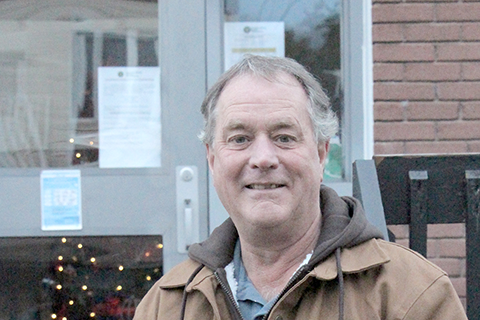
When you ran for mayor three years ago, what were your main priorities?
In 2013, the town had accumulated a $360,000 deficit, and things weren’t going that great money-wise. I’ve been in town since 1983, and some people said to me, “Well, why don’t you run?” And I said, “Well, why not?” The deficit came from the government forcing the previous councillors to build our water treatment plant. And the same year, the sewage plant over there. And the company that built the water treatment plant built it, and now we know that they used the cheapest materials. They built it and then they went bankrupt. No warranty, so they spent over $300,000 fixing it.
In 2021, we still had some additions to make to our water treatment plant, where we take the water from the river, lots of sand coming in and that’s like sand, wet sandpaper. So it’s using the whole treatment plant faster than it should. So what we did now two summers ago, we installed a decanting box. It’s a big cement box where the water goes in and sits there for a while. The sand goes to the bottom, the sand is pumped out every 12 hours. So that’s helping the treatment plan, OK, but that’s almost $500,000. That’s the gas tax.
How much of this have you achieved?
When I first started in 2013, my feeling was that the community wasn’t as close as they were before, so I went to see a lady in town that was organizing different things, and I wanted her to make a revitalization committee, which she did. And I was telling her don’t forget that in 2023, the town will be 150 years old, so we need money to kick off and organize something. And we had a good year, the full year.
We’ve been upgrading our ballpark and the rink is new since I’ve been here. We’re changing the LED lights now in the park, the lights for the ball field itself, and the streetlights. We’re upgrading the beach also.
What do you think has been your greatest accomplishment this term so far?
I think [the revitalization] committee; that brings people together. We have an amazing group of ladies now taking care of the revitalization. They work hard, they raise money, and we work together to improve. We have the new rink now. They put in a net around the ballpark completely. That’s new this fall. Of course, resolving the problem with the deficit.
What do you believe are your municipality’s greatest needs?
Well, infrastructure. Like I said, all the filtration plant is, we’ll call it new, but the pipes under the streets, they’re 50 or 60 years old or older. That has to be all redone or patched or upgraded. There’s lots of money that can be spent there.
What are the challenges in meeting these needs?
Money. We have to apply to get grants from the federal, the provincial and all over the place, so it’s a lot of paperwork. It’s hard to fill in those papers. You need the engineer’s plan. You need this. You need that. Bigger towns, where they have engineers working for them, they‘ve got the file already done. Boom. First come, first serve. So by the time we can do it, we have all the info that they want, but after the envelope is gone, there’s no more money in there.
What do you hope to accomplish in this last year before the next municipal election?
[Last week we were doing] the budget at the MRC. From there, we’ll be doing the budget of all the municipalities. So in December we’re gonna sit down and do a budget for 2025.
We’re doing some engineering planning with the leftover money [from the gas tax]. We have to replace or improve some of the water mains. They’re 50-60 years old, so lots of breaks. So it’s either digging, changing it or putting what they call a sock in, kind of patching it up from the inside. It’s supposed to improve the pipe for almost 100 years.
After three years as a member of MRC Pontiac’s Council of Mayors, what do you believe the county should prioritize?
It’s kind of a hard question. Is it the chicken or the egg? If you want tourism, you need a place for them to sleep. So do you build hotels or rooms or whatever for them to come? But then they might be, I won’t say empty, but by the time people are here, you’ve got to survive that. Or you bring people over and they don’t have any place to stay, so they might not come back. Of course, we need jobs. We need industries. We need workers, we need schools, housing.
Odette Godin — Mansfield and Pontefract
Interview by Sophie Kuijper Dickson.
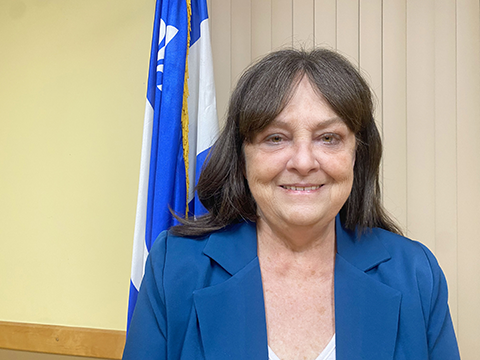
When you ran for mayor three years ago, what were your main priorities?
I didn’t know what I could accomplish, because everything seemed to always be the same. I thought I would have some input, but I didn’t really know how much because Fern [ Waltham’s former DG] ran the meetings, and that’s how it had always been. The mayor sat beside him, but we didn’t hear much from the mayor unless it was time to do his mayor’s report.
I thought even though I wouldn’t make a difference in changing bylaws and stuff, I thought maybe I could do something for the community. I wanted to do things for kids that would keep them busy and involved.
How much of this have you achieved?
I put in for a grant under the vitalization and made a priority of fixing the parts of the ball field that had to be fixed. We got some skateboards and equipment, and we bought a container to store all that equipment so the RA could take them whenever they wanted for these kids.
Another thing is we always had that Waltham sign in the centre of town that you could see from the highway. And it had been removed because I guess it got beaten down, so it wasn’t there anymore. And I always loved that sign, so we got a new sign put there, with a community contest for what the residents think would be a nice sign.
What do you think has been your greatest accomplishment this term so far?
What I’m proudest of is that [ . . . ] I knew there was wrongdoing, and maybe it would have been easier to just be quiet, and sit and collect my $700 or $800 a month, but I didn’t do that. There was wrongdoing in the municipality and I was going to get it fixed, even if it cost me, and I’m proud of that. Because my mother would be proud of that. I stood firm. One councillor said to me, and it was a councillor who liked me, that as far as a lot of people see, Waltham was quiet, it wasn’t in the news, everything was running smoothly, there was no fighting, and the taxes were kept low, and that’s all they really saw. So I understand that’s how it appears, but we also didn’t get anything. Waltham stayed stagnant. But yeah, it has cost me.
What do you believe are your municipality’s greatest needs?
We need businesses. We need a way to finance small business startups. We used to have three stores at one time in Waltham, and a garage and a post office. When they talk at the MRC about tourism and van life, I try to explain to them that that does nothing for us. It costs us money for people to go tubing, because we’re not getting any money for those roads. They’re not taxpayers. It costs us money. There’s no need for them to stop in Waltham. You can’t pick up milk or a pop or chips, nothing. We need vitalization, we need young businesses to get a grant or a loan, interest-free.
What are the challenges in meeting these needs?
We don’t have enough money to give them. We can’t be the ones to give them a loan. And like I say, it’s hard for us to get big enough grants to help businesses get going. But I think a lot of that is the role of the Quebec government and the MRC.
What do you hope to accomplish in this last year before the next municipal election?
What I hope to accomplish is to quiet the negative talk and instead get them to realize that I just want the best for this town. I was born in this town. I want to have ideas. I don’t need attacks when [residents] come to council meetings. Give us ideas on how we can help. Stop revisiting the past.
After three years as a member of MRC Pontiac’s Council of Mayors, what do you believe Pontiac leaders should be prioritizing to improve the quality of life for the people who live here?
I think that more attention needs to be paid to the English people that live in the Pontiac. I never thought we would get to that point where we were fighting to be heard just because we were English. So there’s work to be done in the Pontiac and they better start treating Pontiac people not as English, not as French, just as human beings. And I don’t think the MRC is putting up a big enough fight for that.
Corey Spence — Allumette Island
Interview by K.C. Jordan
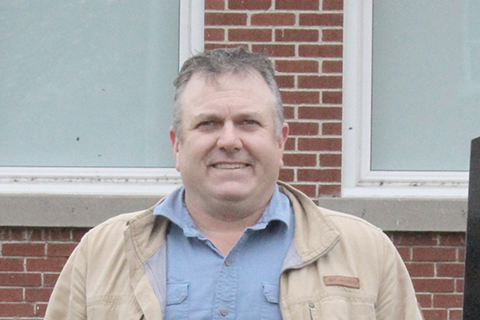
When you ran for mayor in 2021, what were your main priorities?
My main priorities were to focus on infrastructure, particularly the road, internet and cell phone infrastructure. I strongly believe that infrastructure is a key economic driver, meaning that if you don’t have good roads, and if you don’t have Internet service, if you don’t have cell phone service, people will stay away from the area. Infrastructure is key to bringing in small businesses, even large businesses.
How much of this have you achieved?
As far as the Internet goes, the Quebec government put high-speed internet across the province, which was good. As far as cell phone service goes, there’s some parts of the island that received an improvement in their service with new towers going up. And I expect by the end of this year, beginning of next, we should be close to having satellite to cell phone service for texting.
As for our road infrastructure, we’re kind of a special case compared to most other municipalities within the MRC. Anyone who has water and sewer in the MRC, the government of Quebec gives out monies towards their infrastructure and municipalities are allowed to spend it, pending certain conditions. One of the conditions is that if you have water and sewer, they grade your water and sewer on how well it’s kept. If you’re graded poorly, they force you to spend monies to upgrade it before you spend it on other infrastructure such as roads. So on Allumette Island, we have water and sewer in the village of Chapeau and it needed to be upgraded. It was way out of date. We were pushing toward water and sewer infrastructures for the village, and we’re getting very close to having it completed. So hopefully next year the village of Chapeau will be totally up to date. This will allow funding to go toward other areas of the municipality.
What do you think has been your greatest accomplishment this term so far?
I think my greatest accomplishment so far is building relationships.
I’m also very proud of what we’ve done in the past little while, of the amount of incoming grant money and spending that came into the community. I don’t think that has ever been seen before and I’m proud of that. And I’m proud of our not-for-profits. They have done fantastic on their own bringing funding into the community.
What do you believe are your municipality’s greatest needs?
I think the municipality’s greatest needs are to continue focusing on giving what is required for living for our constituents, and I still believe that focus has to remain on providing quality infrastructure. That’s one of them; the other one is that we need to convince the Quebec government to provide better services for our community, otherwise I could see members of our community relocating somewhere else where the services are better. We’re so closely tied to Ontario, and the contrast is very different as soon as you cross the border. This is a provincial thing, where the Quebec government does not want to invest in our area. They continue to deprive our area and every service possible. They’re moving the healthcare out, they don’t want to spend on the infrastructure here.
What are the challenges in meeting these needs?
The challenge of meeting those needs is getting the attention of the ministers in government, getting them to realize that. It’s working with the Quebec provincial ministers to work with us. We have a great member André Fortin, and he’s a great advocate for our area, however when you’re not the main party in governance, it gets difficult to put monies in here. It’s an uphill battle.
What do you hope to accomplish in this last year before the next election?
There’s a few things I’d like to accomplish. Because we’re lacking so many resources, it’s difficult for each municipality, smaller municipalities to ensure all the proper governance is in place. We’re one of the lucky ones, where we’re a little bit bigger and that we do have proper governance in place, but some of the smaller ones, as you can see what happened with, say, Waltham, things didn’t go well for them. So I want to make sure that the proper bylaws, the proper processes and policies are in place so that good governance remains ongoing.
After three years as a member of MRC Pontiac’s Council of Mayors, what do you believe Pontiac leaders should be prioritizing to improve the quality of life for the people who live here?
Currently there’s a hot button issue with the comparative factor. There are some things that the MRC as a whole can do, similar with the municipality. However, when things are done at provincial level, we just need to, you know, follow those laws, right? And there’s only so much tools that the municipality has to govern. And there’s only so many tools that the MRC has to govern. So we can only do what we can. It seems a lot of people within the county don’t have a good understanding of that and it causes a lot of hectic issues, sometimes for no reason.
À un an des prochaines élections municipales, prévues le 2 novembre 2025, THE EQUITY a pris des nouvelles des 20 personnes élues pour diriger les communautés de Luskville à Rapides-des-Joachims, y compris le préfet de la MRC de Pontiac.
Nous publierons ces entrevues afin de donner aux lecteurs une idée de ce que ces leaders locaux estiment avoir accompli depuis le début de leur mandat, et de ce qu’ils espèrent faire au cours de la dernière année avant que leur siège ne soit à nouveau en jeu. Nous publierons trois entrevues chaque semaine, en parcourant le Pontiac d’est en ouest.
Alain Gagnon — Bryson
Entrevue de K.C. Jordan.
Lorsque vous vous êtes présenté à la mairie il y a trois ans, quelles étaient vos principales priorités?
En 2013, la ville avait accumulé un déficit de 360 000 $, et les choses n’allaient pas très bien financièrement. Je suis dans la ville depuis 1983, et des gens m’ont dit : « Eh bien, pourquoi ne vous présentez-vous pas? » Et j’ai répondu : « Eh bien, pourquoi pas? » Le déficit provenait du fait que le gouvernement avait forcé les conseillers précédents à construire notre usine de traitement de l’eau. Et la même année, la station d’épuration là-bas. Et l’entreprise qui a construit l’usine de traitement de l’eau l’a construite, et maintenant nous savons qu’elle a utilisé les matériaux les moins chers. Elle l’a construite puis elle a fait faillite. Pas de garantie, alors ils ont dépensé plus de 300 000 $ pour la réparer.
En 2021, nous avions encore des ajouts à faire à notre usine de traitement de l’eau, où nous prélevons l’eau de la rivière, beaucoup de sable y pénètre et c’est comme du sable, du papier sablé humide. Ainsi, cela use toute l’usine de traitement plus rapidement qu’il ne le devrait. Alors ce que nous avons fait il y a deux étés, nous avons installé une boîte de décantation. C’est une grande boîte en ciment où l’eau entre et reste là pendant un certain temps. Le sable va au fond, le sable est pompé toutes les 12 heures. Cela aide donc le plan de traitement, OK, mais c’est presque 500 000 $. C’est la taxe sur l’essence.
Dans quelle mesure avez-vous atteint ces objectifs?
Quand j’ai commencé en 2013, j’avais le sentiment que la communauté n’était pas aussi unie qu’avant, alors je suis allé voir une dame en ville qui organisait différentes choses, et je voulais qu’elle crée un comité de revitalisation, ce qu’elle a fait. Et je lui disais de ne pas oublier qu’en 2023, la ville aura 150 ans, nous avions donc besoin d’argent pour lancer et organiser quelque chose. Et nous avons eu une bonne année, toute l’année.
Nous avons amélioré notre terrain de balle et la patinoire est nouvelle depuis mon arrivée. Nous changeons maintenant les lumières DEL dans le parc, les lumières du terrain de balle lui-même et les lampadaires. Nous améliorons également la plage.
Selon vous, quelle a été votre plus grande réalisation au cours de ce mandat jusqu’à présent?
Je pense que le comité [de revitalisation]; cela rassemble les gens. Nous avons un groupe formidable de dames qui s’occupent maintenant de la revitalisation. Elles travaillent fort, elles amassent des fonds, et nous travaillons ensemble pour améliorer. Nous avons maintenant la nouvelle patinoire. Elles ont installé un filet tout autour du terrain de balle. C’est nouveau cet automne. Bien sûr, la résolution du problème du déficit.
Selon vous, quels sont les plus grands besoins de votre municipalité?
Eh bien, les infrastructures. Comme je l’ai dit, toute l’usine de filtration est, nous l’appellerons nouvelle, mais les tuyaux sous les rues ont 50 ou 60 ans ou plus. Tout cela doit être refait, réparé ou mis à niveau. Il y a beaucoup d’argent qui peut être dépensé là.
Quels sont les défis pour répondre à ces besoins?
L’argent. Nous devons faire des demandes pour obtenir des subventions du fédéral, du provincial et de partout, donc c’est beaucoup de paperasse. C’est difficile de remplir ces papiers. Il faut le plan de l’ingénieur. Il faut ceci. Il faut cela. Les grandes villes, où des ingénieurs travaillent pour elles, ont déjà le dossier prêt. Boom. Premier arrivé, premier servi. Alors, au moment où nous pouvons le faire, nous avons toutes les informations qu’ils veulent, mais après que l’enveloppe soit partie, il n’y a plus d’argent dedans.
Qu’espérez-vous accomplir au cours de cette dernière année avant les prochaines élections municipales?
[La semaine dernière, nous élaborions] le budget à la MRC. À partir de là, nous ferons le budget de toutes les municipalités. Donc, en décembre, nous allons nous asseoir et établir un budget pour 2025.
Nous faisons de la planification d’ingénierie avec l’argent restant [de la taxe sur l’essence]. Nous devons remplacer ou améliorer certaines des conduites d’eau. Elles ont 50-60 ans, donc beaucoup de bris. C’est donc soit creuser, la changer ou mettre ce qu’ils appellent une gaine, en quelque sorte la réparer de l’intérieur. C’est censé améliorer la conduite pour près de 100 ans.
Après trois ans en tant que membre du Conseil des maires de la MRC de Pontiac, que devrait prioriser, selon vous, le comté?
C’est une question difficile. Est-ce l’œuf ou la poule? Si vous voulez du tourisme, il faut un endroit pour les héberger. Alors, construisez-vous des hôtels ou des chambres ou quoi que ce soit pour qu’ils viennent? Mais alors ils pourraient être, je ne dirais pas vides, mais le temps que les gens soient là, il faut survivre à ça. Ou vous faites venir des gens et ils n’ont pas d’endroit où rester, alors ils pourraient ne pas revenir. Bien sûr, nous avons besoin d’emplois. Nous avons besoin d’industries. Nous avons besoin de travailleurs, nous avons besoin d’écoles, de logements.
Odette Godin — Mansfield-et-Pontefract
Entrevue de Sophie Kuijper Dickson.
Lorsque vous vous êtes présentée à la mairie il y a trois ans, quelles étaient vos principales priorités?
Je ne savais pas ce que je pouvais accomplir, car tout semblait toujours être pareil. Je pensais que j’aurais une certaine contribution, mais je ne savais pas vraiment à quel point, car Fern [l’ancienne DG de Waltham] dirigeait les réunions, et c’est comme ça que ça avait toujours été. Le maire s’asseyait à côté de lui, mais nous n’entendions pas grand-chose du maire, sauf quand il était temps de faire son rapport.
Je pensais que même si je ne ferais pas de différence en modifiant les règlements et tout ça, je pensais que je pourrais peut-être faire quelque chose pour la communauté. Je voulais faire des choses pour les enfants qui les maintiendraient occupés et impliqués.
Dans quelle mesure avez-vous atteint ces objectifs?
J’ai déposé une demande de subvention au titre de la vitalisation et j’ai donné la priorité à la réparation des parties du terrain de balle qui devaient être réparées. Nous avons obtenu des planches à roulettes et de l’équipement, et nous avons acheté un conteneur pour ranger tout cet équipement afin que l’Association récréative puisse les prendre quand elle le voulait pour ces enfants.
Une autre chose est que nous avons toujours eu ce panneau de Waltham au centre de la ville que l’on pouvait voir depuis l’autoroute. Et il avait été retiré parce que je suppose qu’il avait été endommagé, donc il n’était plus là. Et j’ai toujours aimé ce panneau, alors nous en avons fait installer un nouveau, avec un concours communautaire pour savoir ce que les résidents penseraient être un beau panneau.
Selon vous, quelle a été votre plus grande réalisation au cours de ce mandat jusqu’à présent?
Ce dont je suis la plus fière, c’est que [ . . . ] je savais qu’il y avait des actes répréhensibles, et peut-être qu’il aurait été plus facile de simplement rester silencieuse, de m’asseoir et de collecter mes 700 $ ou 800 $ par mois, mais je ne l’ai pas fait. Il y avait des actes répréhensibles dans la municipalité et j’allais les faire réparer, même si cela me coûtait, et j’en suis fière. Parce que ma mère en serait fière. J’ai tenu bon. Un conseiller m’a dit, et c’était un conseiller qui m’appréciait, que d’après ce que beaucoup de gens voyaient, Waltham était tranquille, n’était pas dans les nouvelles, tout fonctionnait bien, il n’y avait pas de bagarre, et les taxes étaient maintenues basses, et c’est tout ce qu’ils voyaient vraiment. Donc je comprends que c’est comme ça que ça apparaît, mais nous n’avons rien obtenu non plus. Waltham est resté stagnant. Mais oui, cela m’a coûté.
Selon vous, quels sont les plus grands besoins de votre municipalité?
Nous avons besoin d’entreprises. Nous avons besoin d’un moyen de financer les petites entreprises en démarrage. Nous avions autrefois trois magasins à Waltham, ainsi qu’un garage et un bureau de poste. Quand ils parlent à la MRC de tourisme et de vie en van, j’essaie de leur expliquer que cela ne nous apporte rien. Cela nous coûte de l’argent pour que les gens fassent du *tubing*, parce que nous ne recevons pas d’argent pour ces routes. Ce ne sont pas des contribuables. Cela nous coûte de l’argent. Il n’y a pas besoin qu’ils s’arrêtent à Waltham. On ne peut pas acheter de lait, de boisson gazeuse ou de croustilles, rien. Nous avons besoin de vitalisation, nous avons besoin que les jeunes entreprises obtiennent une subvention ou un prêt, sans intérêt.
Quels sont les défis pour répondre à ces besoins?
Nous n’avons pas assez d’argent pour leur en donner. Nous ne pouvons pas être ceux qui leur accordent un prêt. Et comme je le dis, il est difficile pour nous d’obtenir des subventions suffisamment importantes pour aider les entreprises à démarrer. Mais je pense qu’une grande partie de cela relève du rôle du gouvernement du Québec et de la MRC.
Qu’espérez-vous accomplir au cours de cette dernière année avant les prochaines élections municipales?
Ce que j’espère accomplir, c’est de faire taire les propos négatifs et de leur faire comprendre que je ne veux que le meilleur pour cette ville. Je suis née dans cette ville. Je veux avoir des idées. Je n’ai pas besoin d’attaques lorsque [les résidents] viennent aux réunions du conseil. Donnez-nous des idées sur la façon dont nous pouvons aider. Arrêtez de revenir sur le passé.
Après trois ans en tant que membre du Conseil des maires de la MRC de Pontiac, que devraient prioriser, selon vous, les leaders du Pontiac pour améliorer la qualité de vie des personnes qui y vivent?
Je pense qu’il faut accorder plus d’attention aux anglophones qui vivent dans le Pontiac. Je n’aurais jamais cru que nous en arriverions à nous battre pour être entendus juste parce que nous étions anglophones. Il y a donc du travail à faire dans le Pontiac et ils feraient mieux de commencer à traiter les gens du Pontiac non pas comme des anglophones, non pas comme des francophones, mais simplement comme des êtres humains. Et je ne pense pas que la MRC mène une lutte suffisamment importante pour cela.
Corey Spence — L’Isle-aux-Allumettes
Entrevue de K.C. Jordan
Lorsque vous vous êtes présenté à la mairie en 2021, quelles étaient vos principales priorités?
Mes principales priorités étaient de me concentrer sur les infrastructures, en particulier les infrastructures routières, d’Internet et de téléphonie cellulaire. Je crois fermement que l’infrastructure est un moteur économique clé, ce qui signifie que si vous n’avez pas de bonnes routes, et si vous n’avez pas de service Internet, si vous n’avez pas de service de téléphonie cellulaire, les gens resteront loin de la région. L’infrastructure est essentielle pour attirer les petites entreprises, même les grandes.
Dans quelle mesure avez-vous atteint ces objectifs?
En ce qui concerne Internet, le gouvernement du Québec a déployé Internet haute vitesse dans toute la province, ce qui était une bonne chose. En ce qui concerne le service de téléphonie cellulaire, certaines parties de l’île ont vu leur service s’améliorer avec l’installation de nouvelles tours. Et je m’attends à ce que d’ici la fin de cette année, début de l’année prochaine, nous soyons près d’avoir un service de satellite à cellulaire pour les messages textes.
Quant à nos infrastructures routières, nous sommes un cas un peu particulier par rapport à la plupart des autres municipalités de la MRC. Toute municipalité qui a l’eau et les égouts dans la MRC, le gouvernement du Québec octroie des fonds pour leurs infrastructures et les municipalités sont autorisées à les dépenser, sous certaines conditions. L’une des conditions est que si vous avez l’eau et les égouts, ils évaluent leur état. Si votre évaluation est mauvaise, ils vous obligent à dépenser des fonds pour les améliorer avant de les dépenser pour d’autres infrastructures comme les routes. Ainsi, sur L’Isle-aux-Allumettes, nous avons l’eau et les égouts dans le village de Chapeau et cela devait être mis à niveau. C’était complètement désuet. Nous nous efforcions d’améliorer les infrastructures d’eau et d’égouts pour le village, et nous sommes très près de les achever. Donc, nous espérons que l’année prochaine, le village de Chapeau sera entièrement à jour. Cela permettra de diriger des fonds vers d’autres secteurs de la municipalité.
Selon vous, quelle a été votre plus grande réalisation au cours de ce mandat jusqu’à présent?
Je pense que ma plus grande réalisation jusqu’à présent est d’avoir bâti des relations.
Je suis également très fier de ce que nous avons accompli ces derniers temps, du montant des subventions et des dépenses qui sont arrivés dans la communauté. Je ne pense pas que cela ait déjà été vu auparavant et j’en suis fier. Et je suis fier de nos organismes à but non lucratif. Ils ont fait un travail fantastique en apportant des fonds à la communauté par leurs propres moyens.
Selon vous, quels sont les plus grands besoins de votre municipalité?
Je pense que les plus grands besoins de la municipalité sont de continuer à se concentrer sur la fourniture de ce qui est nécessaire à la vie de nos administrés, et je crois toujours que l’accent doit rester mis sur la fourniture d’infrastructures de qualité. C’en est un; l’autre est que nous devons convaincre le gouvernement du Québec de fournir de meilleurs services à notre communauté, sinon je pourrais voir des membres de notre communauté se déplacer ailleurs où les services sont meilleurs. Nous sommes si étroitement liés à l’Ontario, et le contraste est très différent dès que l’on traverse la frontière. C’est une affaire provinciale, où le gouvernement du Québec ne veut pas investir dans notre région. Il continue de priver notre région de tous les services possibles. Ils retirent les services de santé, ils ne veulent pas dépenser pour les infrastructures ici.
Quels sont les défis pour répondre à ces besoins?
Le défi de répondre à ces besoins est d’attirer l’attention des ministres du gouvernement, de leur faire comprendre cela. Il s’agit de travailler avec les ministres provinciaux du Québec pour qu’ils travaillent avec nous. Nous avons un excellent député, André Fortin, et il est un grand défenseur de notre région, cependant, lorsque vous n’êtes pas le principal parti au pouvoir, il devient difficile d’investir des fonds ici. C’est une bataille difficile.
Qu’espérez-vous accomplir au cours de cette dernière année avant les prochaines élections?
Il y a quelques choses que j’aimerais accomplir. Parce que nous manquons de tant de ressources, il est difficile pour chaque municipalité, les petites municipalités, de s’assurer que toute la bonne gouvernance est en place. Nous sommes parmi les chanceux, où nous sommes un peu plus grands et que nous avons une bonne gouvernance en place, mais pour certaines des plus petites, comme vous pouvez le voir ce qui est arrivé avec, disons, Waltham, les choses ne se sont pas bien passées pour elles. Je veux donc m’assurer que les bons règlements, les bons processus et les bonnes politiques sont en place afin qu’une bonne gouvernance se poursuive.
Après trois ans en tant que membre du Conseil des maires de la MRC de Pontiac, que devraient prioriser, selon vous, les leaders du Pontiac pour améliorer la qualité de vie des personnes qui y vivent?
Actuellement, il y a un enjeu brûlant avec le facteur comparatif. Il y a certaines choses que la MRC dans son ensemble peut faire, de la même manière que la municipalité. Cependant, lorsque les choses sont faites au niveau provincial, nous devons simplement, vous savez, suivre ces lois, n’est-ce pas? Et il n’y a que tant d’outils dont la municipalité dispose pour gouverner. Et il n’y a que tant d’outils dont la MRC dispose pour gouverner. Nous ne pouvons donc faire que ce que nous pouvons. Il semble que beaucoup de gens dans le comté n’en aient pas une bonne compréhension et cela cause beaucoup de problèmes agités, parfois sans raison.