




Our federal election is over, except for a few recounts where votes were very close. We have made our collective decision about who we want to guide our country through this very troubled time. Every candidate and leader of the different parties made promises on a wide variety of subjects. When the votes were counted, win or lose, each leader vowed to “work together” with the party that collected the most votes to get this most desired country in the world through some very troubling times.
In Pontiac County there are dozens of nationalities, religions, and different languages spoken (mainly French and English). We have worked together, played together, and even married and raised families that were very happy to be a blend of great Pontiac people. When one party leader and their local party representative promised to intervene when the controversial language Bill 96 came to the supreme court of Canada, it seemed to make a strong impression on Pontiac voters. They chose that representative to be their Pontiac County Member of Parliament. In 2022, when Pope Francis visited Quebec City, he declared, “Never again can the Christian community allow itself to be infected by the idea that one culture is superior to others.” Pontiac County will be watching that court case very closely.
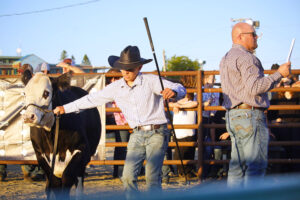
Every resident in the Ottawa Valley and other rural areas in Canada knows the importance of Canada’s supply management system of marketing dairy and eggs that assures a safe, stable supply to all Canadian residents. They also experience the fluctuations in meat prices with an open market. They also know that when food safety is too lax, like when vegetables and meat are recalled because of E. coli contamination, it causes both food shortages and health scares for consumers. Right now, we are experiencing very high meat prices because the North American cow herd has gotten too small. When cattle prices are very high, farmers near retirement, without family members who will “farm on”, are tempted to sell all their cattle and retire. Before supply management of dairy, there were also those giant swings in prices, with surpluses bought up by the federal government and sometimes dumped in the ocean when there was nowhere to sell or even give butter, cheese, skim milk powder, or eggs to. When too many momma cows are sold for slaughter, there are not enough cows left to rebuild the national cow numbers back up. It takes about three-to-five years to bring back a cattle herd. First the cows that are left must be bred, which might take two or more attempts before the cow becomes pregnant. Then there is nine months’ gestation, and only about half the resulting calves will be a heifer calf. It takes more than a year before a heifer calf is big enough and old enough to breed. Then it’s another nine months before that heifer has her calf and begins to produce milk. That’s a total of about three years. When the national beef herd becomes depleted, it also takes years before it is built back up.
Canada can buy both dairy products and beef from another country, if they have any to sell, but their safety regulations on food may not be the same as ours. That’s why, when one political party declared that supply management will not on the bargaining table when trade talks resume with the United States. Some countries, such as New Zealand, Ireland, and other parts of the European Union, have given up their supply management and, for a few months, consumers noticed a small drop in dairy prices in stores. But within less than a year, dairy prices went back even higher than when supply management was in place. The chain stores began making great profits, and thousands of farmers took to the streets in major cities (London, Paris, Dublin, etc.). Extreme stress and even suicides escalated in rural areas. Some farmers had built larger barns and brought their sons home with hopes of larger incomes, but milk prices dropped drastically and many farmers declared bankruptcy. That’s why, in Canadian rural areas, when one political party promised to defend supply management, that party got more votes.
Another huge promise made by different political parties was to remove provincial barriers to allow Canadian products to flow freely between provinces. This will require cooperation from all provincial groups that defended their borders from products coming in from other provinces, such as beer, wine, and even meat from abattoirs that are under different provincial inspection rules. In Newfoundland, it costs a lot more to produce milk. It’s hard to grow crops on a rock! In different provinces there are also different laws for language, trucking, construction materials and workers.
Let’s see if our newly-elected political parties really want to work together, or will we witness the same gong show antics in the House that we have watched for years?