


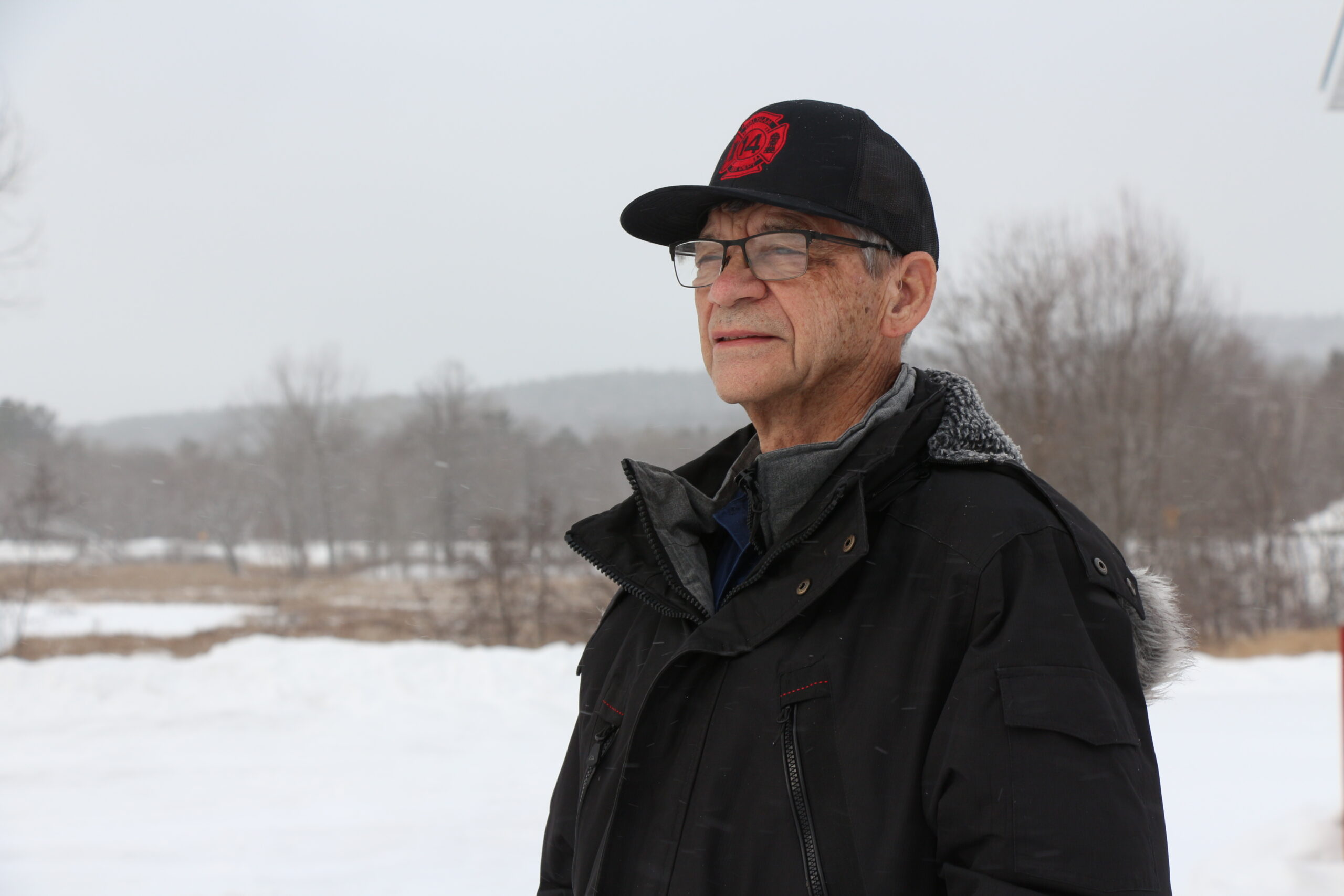



On the day Larry Perry married his wife Helen, a fire hall stood across the street from their wedding chapel in Cornwall, Ont. As the couple nervously stood at the altar, preparing to read their vows, a siren went off next door.
Wee-ooo. Wee-ooo.
They paused, shared a glance, and waited for the noise to fade. Thinking nothing of it at the time, the lovers got on with their ceremony and returned to Perry’s hometown of Waltham, Que., to begin their married life.
But this wouldn’t be the last time a siren cut through the Perrys’ lives. Over the next five decades, fire calls would interrupt dinners, family holidays and sleep as the Waltham Fire Department’s founder and longtime chief dropped whatever he was doing to go help his neighbours.
Next month, Perry will retire after more than 50 years of service with that department.
His departure marks more than the end of a storied career. He leaves at a moment when the very future of Waltham’s department hangs in the balance.
With nine fire departments, nine sets of trucks and gear and strained budgets, MRC Pontiac municipalities are exploring amalgamation as a way to save money and improve efficiency. And Waltham, thanks to Perry’s work, is one of the last independent departments in the county.
As those conversations continue, Perry’s story becomes a window into the generation of volunteer firefighters who built their services from scratch, and the legacy they leave when their time is up.
The origin story
The Waltham Fire Department was founded on a summer’s day in 1971, when a fire broke out at the home of the family of Buddy Chassie on Waltham’s rue Principale.
Perry, who was at the other end of town, leapt into action upon seeing the flames. Within a few minutes, he and some other keeners had opened up the municipal shed and hauled two old manual pumps into the lake nearest the house.
As flames threatened the home, Perry and company lowered the hose into the water and started the pump. No water was coming out. Loose mud had completely blocked the hose. By the time they had gotten one pump unblocked, the house had been reduced to ashes and their efforts too little and too late.
The nine occupants of the home – two parents and seven children – were taken in by neighbours. Fundraisers were held to get them back on their feet. Eventually, the house was rebuilt and the family remained in the community.
The fire lit a spark in the volunteers whose efforts went in vain that day. Perry and others wanted to be better prepared the next time, so they held an informal meeting to see who might want to join an official fire brigade.
“When we see somebody’s house burning, and we’re just standing there, and we’re helpless, surely in this day and age we can do better,” Perry said of their thinking at the time. “We weren’t trained, we didn’t have any knowledge. We were just a bucket brigade.”
Despite some opposition, Perry was able to get enough interest to form a fundraising committee. They held dinners, dances and raffles until they could afford what every fledgling fire department needed: water on wheels.
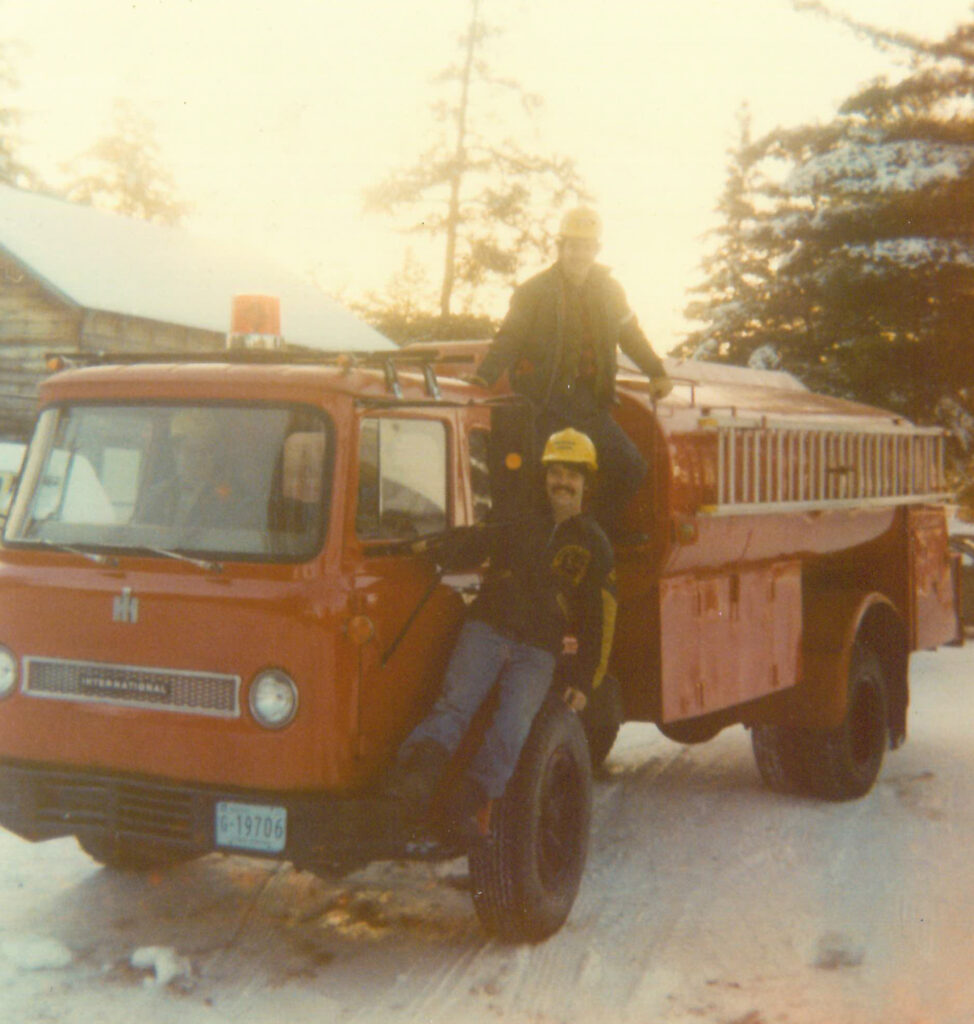
Their first truck was a used five-tonne logging truck they bought in Ottawa for $2,000. Perry and his rag-tag group drove the blue and green truck home at night, parked it in a garage, and painted it red before unveiling it to the town. They used an old oil tank to hold water.
Fundraising alone, however, wasn’t enough to support the upstart department. It needed support from Waltham council. Perry said some councillors saw a fire department as a frivolous expense, but as public support for their efforts grew, council came around.
The department was officially recognized by Waltham council on June 6, 1972 – a date immortalized on the charter Perry still has pinned to the fire station’s wall.
What Perry built
What started as a rapid response to a single emergency slowly grew into a fixture in Waltham’s civic life.
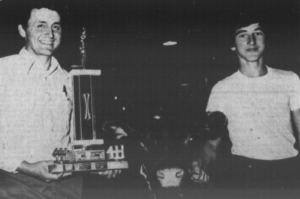
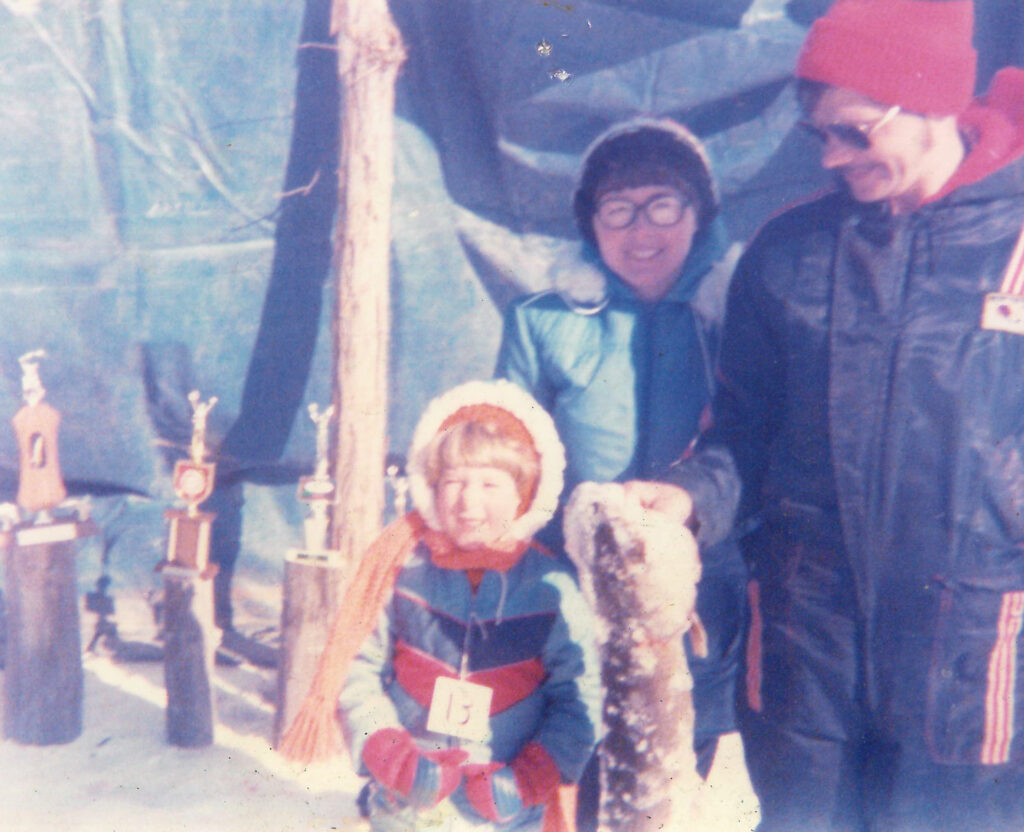
The bass tournaments hosted by the Waltham Fire Department became an annual tradition, lasting over 20 years and bringing in tens of thousands of dollars.
“We really did raise quite a bit of money which helped us with the second building and the newer trucks,” Perry said of the efforts.
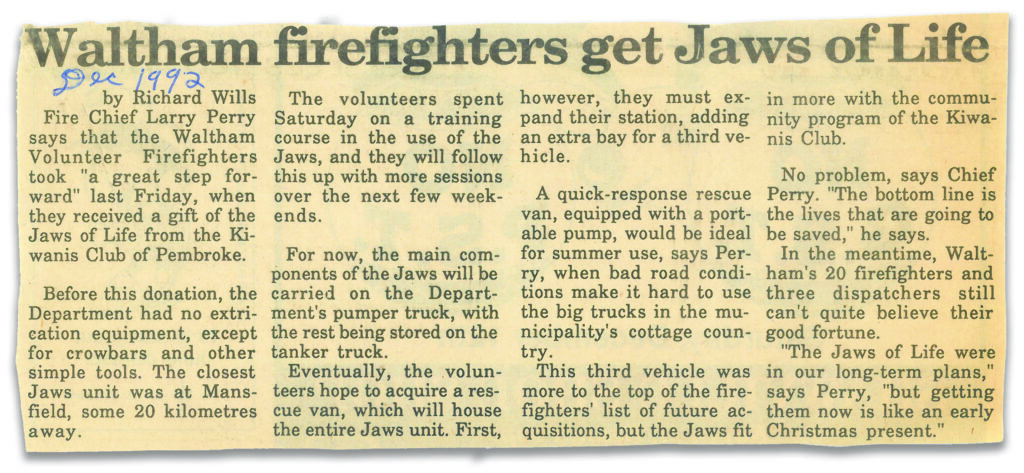
The tournaments, along with other fundraisers, a budget from council and a successful women’s auxiliary, allowed the department to expand its fleet. In 1981, the department purchased its first pumper. By 1992, it had its first Jaws of Life – an essential tool in many life-saving scenarios.
Perry and his team responded to some of the biggest moments in Waltham’s history. In 1994, Perry’s department helped respond to a fatal road accident near Dubeau’s Grocery on L’Isle-aux-Allumettes. A four-wheel drive truck had crossed the centre line and crushed an oncoming car, and Perry was one of the first on scene.
He heard a lone scream from the truck, where he found a woman – the accident’s only survivor. After extracting her from the vehicle, he returned to the car only to find the four occupants flattened from the impact.
“That was quite the shock, to go up to people, or what’s left of them, and verify their condition,” Perry said, adding that a few firefighters left the department following that incident.
Although the job had its tough moments, longtime firefighter Charles Ethier said Perry always remained steady.
“We went to a lot of bad scenes, but Larry was always calm,” he said.
Perry wanted to make sure his firefighters were prepared for all scenarios. When Gerald Chassie, a victim of the 1972 fire, joined the department 10 years later, he said Perry’s devotion to training his firefighters stood out.
Perry led live training sessions in burning buildings, ran first aid and first responder courses, and even offered to be the first aid dummy new recruits could train on.
Before firefighter training courses were mandated by the province, he said Perry had ordered books from the U.S. to teach his own firefighters.
“He went above and beyond. He wanted us to be trained as well as we possibly could be. Everybody in the fire department knew how to use every piece of equipment,” Chassie said.
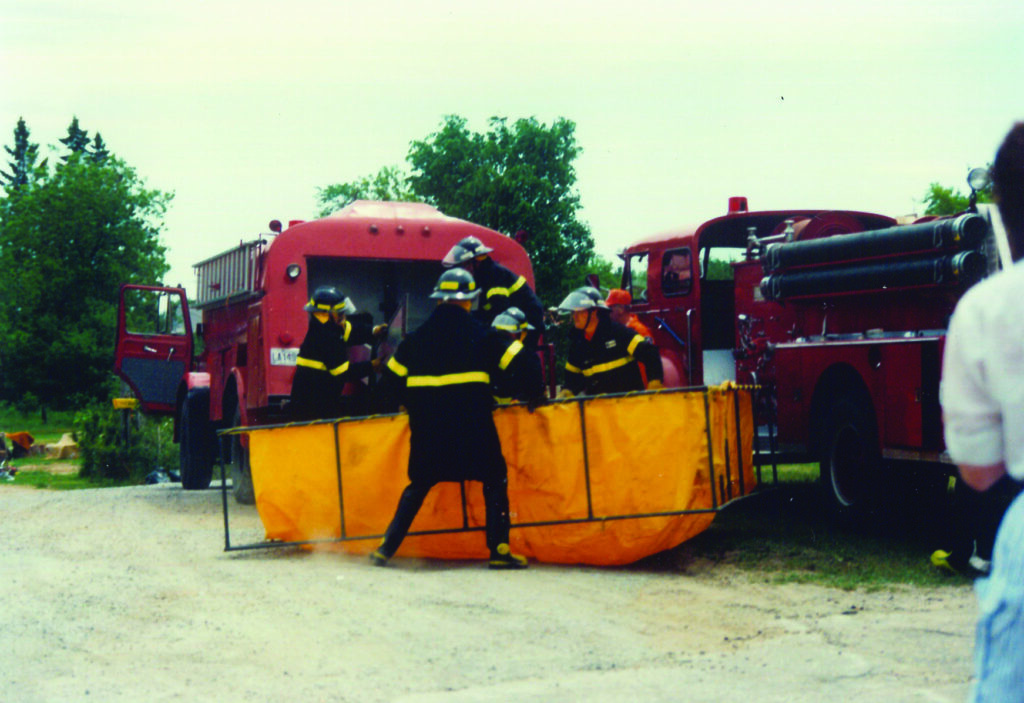
Through the years, Perry oversaw the acquisition of new trucks, new equipment, and the addition of a new bay to the fire hall. He became president of the Pontiac Fire Chiefs Association, and was a founding member of the Canadian Volunteer Fire Services Association.
His peers saw how much he gave to the service. Shawville-Clarendon chief Lee Laframboise, who came to know Perry through the chiefs’ association in the 90s, said Perry “lives and breathes the fire department.”
Perry had a strong department, fueled by old-fashioned volunteerism. When the province started to impose more rules and standards on rural fire departments, he saw this as oversight. As far as he was concerned, the province didn’t understand rural firefighting the way he did.
Campbell’s Bay-Litchfield chief Kevin Kluke remembers Perry being one of the first to respond when the province required basic Firefighter 1 training for chiefs.
“We know how to run our department,” he remembers Perry saying at the time.
Living life with a pager pinned to his hip didn’t come without sacrifices. Helen remembers family dinners cut short, evening walks abandoned and Christmas gifts left half-opened. She said they could never stray too far from home in case a call came in.
“You were always on guard from the back of your mind,” she said. “You’re always thinking, ‘What if there’s a call?’”
Where some saw a rude wake-up call, Perry saw a duty to his community. When someone needed help in Waltham, Larry Perry and the fire department were there.
“These guys didn’t want to be recognized as heroes, they just enjoyed helping people,” said Tom Dubreuil, who joined the department five years ago.
Age has caught up to Perry in recent years. At 77, he’s shed a few pounds, and his memory isn’t quite what it used to be. Earlier this year, Perry decided January would be his last month at the helm.
“Is there going to be a day when I arrive on a scene, and I am actually more of a problem than an asset?” he said of his reasoning.
But as Perry leaves the department he built, its survival may be at odds with a world that is forcing municipal councils to consider other options.
Department at a crossroads
Perry’s retirement comes at a time of strain for rural fire departments across Quebec. Earlier this year, public security minister Francois Bonnardel announced new fire safety policies for the province, including a rule that the fastest truck to the scene must respond to a call. The change is part of a push to improve fire service efficiency.
Julien Gagnon, head of public security at the MRC Pontiac, has been meeting with municipalities in the county to help them adapt to these changes. The numbers, he said, are hard to ignore. The MRC’s total fire protection budget has increased by 485 per cent since 2002, far outpacing population growth or municipal revenues.
Equipment costs have risen, and manpower is also strained. Of the region’s 233 firefighters, only 50 are available during weekday daytime hours. Seven of the county’s nine departments require mutual aid – support from neighbouring departments – and three rely on it 24/7.
“Everyone works out of town,” Gagnon said of Waltham and other smaller municipalities, adding that departments simply do not have the staffing needed to guarantee fastest response times.
For Gagnon, these realities point toward some sort of regionalized fire service. That could mean several larger regional departments, or a single county-wide service with sub-stations.
While many municipalities across the county have agreed to some form of shared fire services in recent years, Waltham is one of the last to the table. Since earlier this year, the municipality has been weighing whether it can continue operating its own fire department – which had a budget of $121,555 last year – or whether it would be better off sharing services with its neighbours.
Earlier this year, Waltham was presented with a fire services offer from neighbouring Mansfield-et-Pontefract, which would effectively assign Waltham’s fire protection into a neighbouring service.
Perry pushed back. These discussions threatened the existence of the department he has spent decades building, recruiting and maintaining. The province’s new rules, he said, don’t account for the value that volunteers like him provide.
“Sometimes amalgamation might make sense, but I think there’s a bigger question here. I think there’s a question of community pride and community involvement and culture, and I don’t think federal or provincial governments think in those terms.”
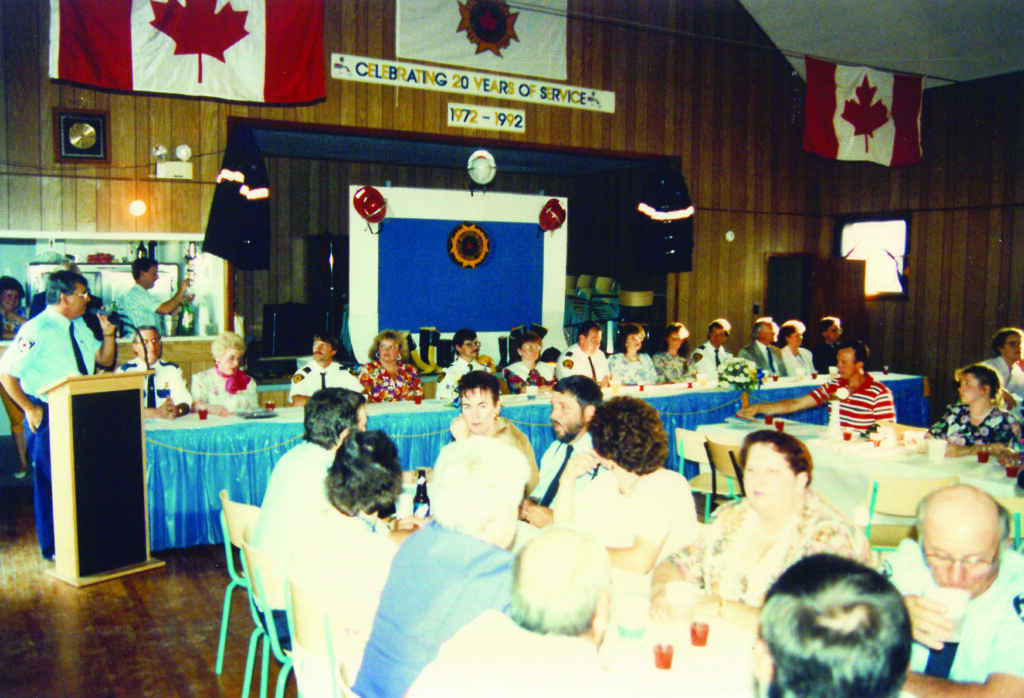
These conversations served as a rallying cry for Waltham firefighters. Firefighters felt as if they were not being adequately consulted, and that their contributions were being erased.
Community BBQs were held in support of the department. Recruitment efforts intensified in an effort to reverse the trend. The issue became a hot-button topic around election time in November. Jordan Evans, who ran in part on a pro–fire department platform, was elected mayor with 71 per cent of the vote.
With a new mayor whose platform priorities included keeping the fire department alive, council remains divided over Waltham’s future. Some councillors believe the status quo is still workable; others argue that sharing services may be unavoidable.
Shifting tides
Waltham is not the only Pontiac municipality to consider the question of amalgamation in recent years.
The Campbell’s Bay-Litchfield department entered a service agreement with two neighbouring municipalities in July. Chief Kevin Kluke said the agreement has boosted numbers.
“Sometimes we don’t have our eight here. So by putting it together, we’re going to hit our eight 100 per cent of the time, and that’s the biggest problem,” he said in June.
Chief Lee Laframboise of the Shawville-Clarendon department said pressure has been building for over a decade, even if councils are slow to act. In some cases, he said, history and pride get in the way of practical decisions.
He pointed to Fort-Coulonge, a municipality of less than three square kilometres, and surrounding Mansfield as a possible pairing.
“The two fire stations aren’t even a mile apart,” Laframboise said. “But Fort-Coulonge has had a fire department forever, so there’s pride there too.”
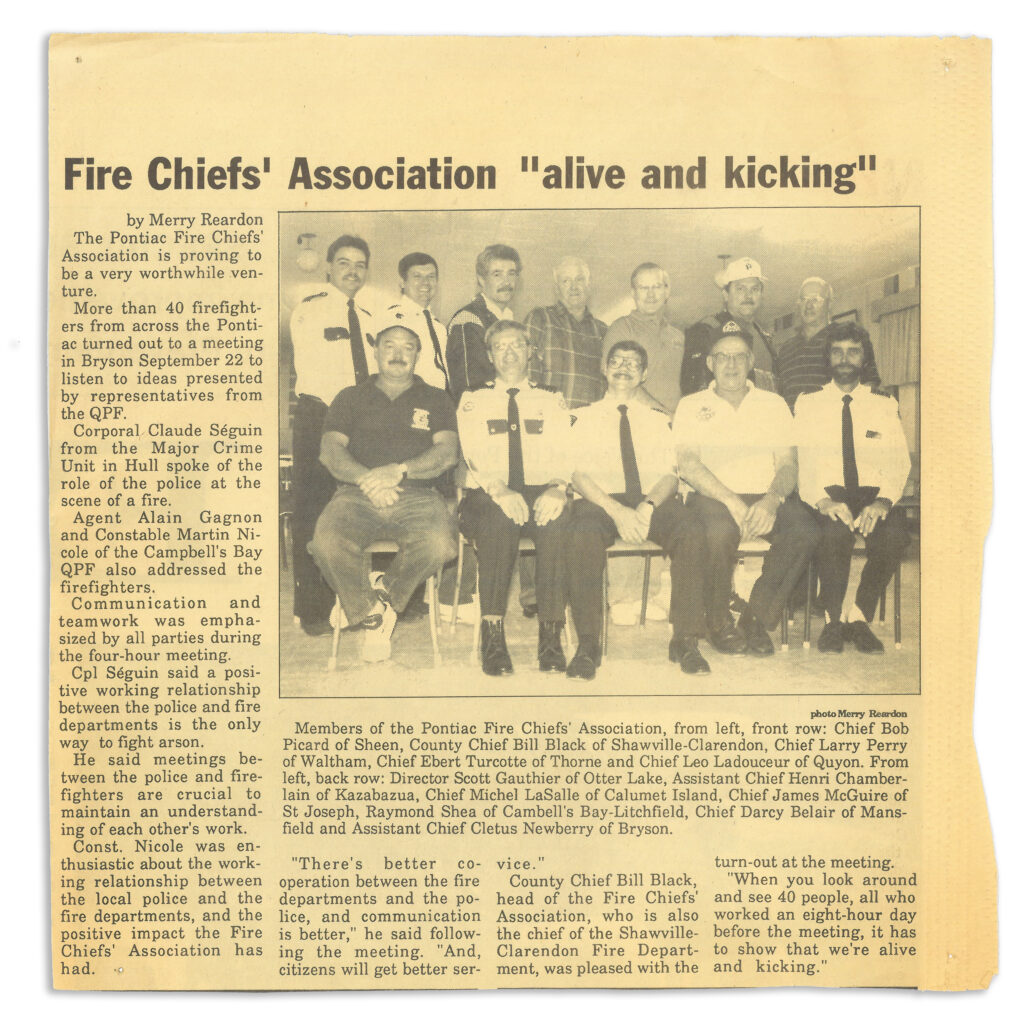
Gagnon said this tension has deep roots. In the 1990s, Quebec ranked among the worst provinces in the country for fire safety, with high numbers of civilian and firefighter deaths. In 2001 the province created the Fire Safety Act, which required municipal councils to adopt structured fire safety plans.
“The fire department’s always operated under the terms of, ‘We will respond with what we have, when we have it. And if we don’t, well, we just don’t,’” said Gagnon. “And the government said ‘That’s enough.’”
But when councils inherited that responsibility, many hesitated to overhaul long-standing departments or challenge local traditions. “As a politician the last thing you want to do is alienate 30 or so members of a fire department,” he said.
Today, Gagnon said, the province’s priorities are blind to municipal boundaries; response time is all that matters.
“As a resident you just don’t care where the fire truck comes from, as long as it’s got some water in it, it’s a big red fire truck and it puts water on your house as soon as possible.”
While departments around him join forces, Perry continues to fight for his department’s survival.
“We’re not going to do better under someone else’s management. I think we’re going to do better right here.”
Retirement and the future
Waltham council struck a special meeting last week Two councillors wanted to discuss the possibility of joining the neighbouring Pontiac Ouest department, which includes Chichester, Sheenboro and L’Isle-aux-Allumettes.
For councillor Brendan Adam, the calculation is simple: We can save around $30,000 by joining Pontiac Ouest.
But for many in attendance, the fire department represents more than just a budget item. It’s a tradition, built on the backs of volunteers who consistently show up for their communities. They keep the skating rink filled and cleared for the kids. They help old ladies shovel snow off their driveway.
Tyler Rochon, who voted down a motion last month to explore mutual-aid talks with Pontiac Ouest, said the community impact of those volunteers cannot be overstated.
“It might be one of the last tethers of community spirit left here. We’re talking about grandkids and people who grew up watching their grandparents on the fire department – that’s a sense of pride for people.”
Council appears split on the issue. Some are open to the idea of amalgamation, others remain more status quo. Longtime councillor Elwood Allard said at the meeting that the department is doing just fine by itself.
“I’ll never merge with Chapeau,” he said.
But the firefighters’ message to the council was strong: We don’t want amalgamation. Perry’s potential successor, Michelle Venasse, expressed concern that the Waltham fire hall could become a ghost town under a new agreement.
Tom Dubreuil said as Waltham loses services and businesses, the fire department is one of the few things the community has left.
“We had one of the first fire houses in the Pontiac, raised by these guys here. There’s a lot of history here,” he said.
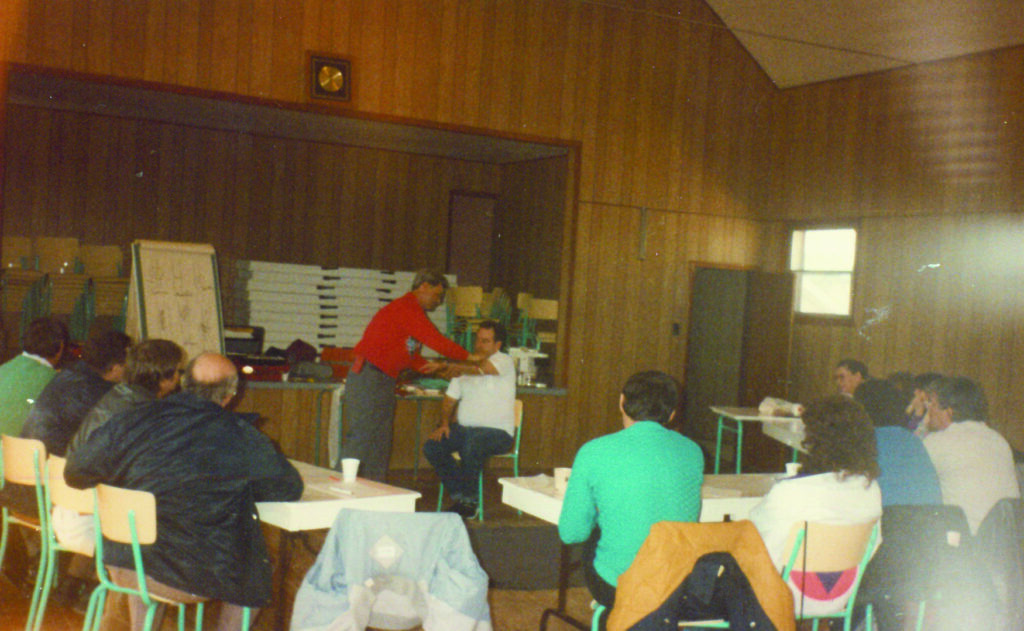
Finally, the floor belonged to Perry. While the future of his department was unclear, his message to the council was anything but. We’re fine right here.
“You asked for input – that’s the input,” he told the council, after his firefighters had made their position known.
As the council debate continues, Perry still shows up to the fire hall. Regular equipment checks are on the to-do list. Bunker suits are neatly folded. Trucks are ready to go.
On the fire station’s walls, plaques and memorabilia stand as testimony of a department built piece by piece.
One plaque, labelled The MacGyver Award, commemorates the time a few core members went to collect a new truck in Drummondville – and improvised a fix when the gas pedal failed before they’d even left town. They made it home anyway, the contraption immortalized on the plaque.
When Perry retires next month, his successor won’t have lived through the MacGyver moments. The coffee shared after tough calls. The elbow grease that fueled the department over decades.
But whether their bunker suit reads Waltham, Pontiac Ouest, or the name of a service not yet conceived, they will inherit a history shaped by volunteers who showed up for their community, led in part by Perry.
As the chief comes to grips with leaving the department, he reflects on 50 years of firefighting – a job whose cost few can truly appreciate.
“Those things that I look back on so vividly now, and were pivotal at a particular moment, they’re kind of meaningless now to other people. It’s a totally silent legacy. It’s a job that expires.”
Le jour où Larry Perry a épousé Helen, sa femme, une caserne de pompiers se trouvait en face de leur chapelle de mariage à Cornwall, en Ontario. Alors que le couple se tenait nerveusement à l’autel, se préparant à lire ses vœux, une sirène s’est déclenchée juste à côté.
Wee-ooo. Wee-ooo.
Ils ont fait une pause, échangé un regard et attendu que le bruit s’estompe. N’y pensant plus sur le moment, les amoureux ont poursuivi leur cérémonie et sont retournés dans la ville natale de Perry, Waltham, au Québec, pour commencer leur vie conjugale.
Mais ce ne serait pas la dernière fois qu’une sirène traverserait la vie des Perry. Au cours des cinq décennies suivantes, les appels pour des incendies interrompraient les soupers, les vacances en famille et le sommeil, alors que le fondateur et chef de longue date du Service des incendies de Waltham laissait tomber tout ce qu’il faisait pour aller aider ses voisins.
Le mois prochain, M. Perry prendra sa retraite après plus de 50 ans de service au sein de ce service.
Son départ marque plus que la fin d’une carrière légendaire. Il part à un moment où l’avenir même du service de Waltham est en jeu.
Avec neuf services d’incendie, neuf ensembles de camions et d’équipement et des budgets serrés, les municipalités de la MRC de Pontiac étudient la possibilité d’une fusion afin d’économiser de l’argent et d’améliorer l’efficacité. Et Waltham, grâce au travail de M. Perry, est l’un des derniers services indépendants du comté.
Au fur et à mesure que ces conversations se poursuivent, l’histoire de M. Perry devient une fenêtre sur la génération de pompiers volontaires qui ont construit leurs services à partir de rien, et sur l’héritage qu’ils laissent lorsque leur temps est écoulé.
L’histoire d’origine
Le Service des incendies de Waltham a été fondé un jour d’été 1971, lorsqu’un incendie s’est déclaré au domicile de la famille de Buddy Chassie, sur la rue Principale de Waltham.
M. Perry, qui se trouvait à l’autre bout de la ville, a sauté dans l’action en voyant les flammes. En quelques minutes, lui et d’autres volontaires avaient ouvert le cabanon municipal et transporté deux vieilles pompes manuelles dans le lac le plus proche de la maison.
Alors que les flammes menaçaient la maison, M. Perry et compagnie ont abaissé le tuyau dans l’eau et démarré la pompe. Pas d’eau ne sortait. De la boue détachée avait complètement bloqué le tuyau. Au moment où ils avaient réussi à débloquer une pompe, la maison avait été réduite en cendres et leurs efforts étaient trop faibles et trop tardifs.
Les neuf occupants de la maison — deux parents et sept enfants — ont été accueillis par des voisins. Des collectes de fonds ont été organisées pour les aider à se remettre sur pied. Finalement, la maison a été reconstruite et la famille est restée dans la communauté.
L’incendie a allumé une étincelle chez les bénévoles dont les efforts ont été vains ce jour-là. M. Perry et d’autres voulaient être mieux préparés la prochaine fois, alors ils ont tenu une réunion informelle pour voir qui voudrait se joindre à une brigade de pompiers officielle.
« Quand nous voyons la maison de quelqu’un brûler, et que nous sommes juste là, impuissants, nous pouvons sûrement faire mieux à notre époque », a dit M. Perry à propos de leur réflexion de l’époque. « Nous n’étions pas formés, nous n’avions aucune connaissance. Nous n’étions qu’une chaîne de seaux. »
Malgré une certaine opposition, M. Perry a réussi à susciter suffisamment d’intérêt pour former un comité de collecte de fonds. Ils ont organisé des soupers, des danses et des tirages au sort jusqu’à ce qu’ils puissent s’offrir ce dont chaque jeune service d’incendie avait besoin : de l’eau sur roues.
Leur premier camion était un camion forestier usagé de cinq tonnes qu’ils avaient acheté à Ottawa pour 2 000 $. M. Perry et son groupe hétéroclite ont ramené le camion bleu et vert à la maison la nuit, l’ont garé dans un garage et l’ont peint en rouge avant de le dévoiler à la ville. Ils ont utilisé un vieux réservoir d’huile pour contenir l’eau.
La collecte de fonds à elle seule, cependant, n’était pas suffisante pour soutenir le service naissant. Il avait besoin du soutien du conseil de Waltham. M. Perry a déclaré que certains conseillers considéraient un service d’incendie comme une dépense frivole, mais à mesure que le soutien public à leurs efforts augmentait, le conseil a fini par adhérer.
Le service a été officiellement reconnu par le conseil de Waltham le 6 juin 1972 — une date immortalisée sur la charte que M. Perry a toujours épinglée au mur de la caserne.
Ce que Perry a bâti
Ce qui a commencé comme une réponse rapide à une seule urgence est lentement devenu un élément permanent de la vie civique de Waltham.
Les tournois de pêche à l’achigan organisés par le Service des incendies de Waltham sont devenus une tradition annuelle, durant plus de 20 ans et rapportant des dizaines de milliers de dollars.
« Nous avons vraiment recueilli pas mal d’argent, ce qui nous a aidés pour le deuxième bâtiment et les nouveaux camions », a déclaré M. Perry à propos de ces efforts.
Les tournois, ainsi que d’autres collectes de fonds, un budget du conseil et une auxiliaire féminine efficace, ont permis au service d’agrandir sa flotte. En 1981, le service a acheté son premier fourgon-pompe. En 1992, il disposait de ses premières pinces de désincarcération — un outil essentiel dans de nombreux scénarios de sauvetage.
M. Perry et son équipe ont répondu à certains des plus grands moments de l’histoire de Waltham. En 1994, le service de M. Perry a aidé à intervenir lors d’un accident de la route mortel près de l’épicerie Dubeau sur L’Isle-aux-Allumettes. Un camion à quatre roues motrices avait franchi la ligne médiane et écrasé une voiture venant en sens inverse, et M. Perry a été l’un des premiers sur les lieux.
Il a entendu un cri solitaire provenant du camion, où il a trouvé une femme — la seule survivante de l’accident. Après l’avoir extraite du véhicule, il est retourné à la voiture pour ne trouver les quatre occupants aplatis par l’impact.
« Ça a été tout un choc, d’aller voir des gens, ou ce qu’il en reste, et de vérifier leur état », a déclaré M. Perry, ajoutant que quelques pompiers avaient quitté le service après cet incident.
Bien que le travail ait eu ses moments difficiles, le pompier de longue date Charles Ethier a déclaré que M. Perry était toujours resté stable.
« Nous sommes allés sur beaucoup de scènes difficiles, mais Larry était toujours calme », a-t-il dit.
M. Perry voulait s’assurer que ses pompiers étaient préparés à tous les scénarios. Lorsque Gerald Chassie, une victime de l’incendie de 1972, a rejoint le service 10 ans plus tard, il a déclaré que le dévouement de M. Perry à la formation de ses pompiers était remarquable.
M. Perry a dirigé des séances de formation en direct dans des bâtiments en feu, a dispensé des cours de premiers soins et de premiers répondants, et a même offert d’être le mannequin de premiers soins sur lequel les nouvelles recrues pouvaient s’entraîner.
Avant que les cours de formation des pompiers ne soient obligatoires par la province, il a déclaré que M. Perry avait commandé des livres des États-Unis pour former ses propres pompiers.
« Il a dépassé toutes les attentes. Il voulait que nous soyons aussi bien formés que possible. Tout le monde au service d’incendie savait utiliser chaque pièce d’équipement », a déclaré M. Chassie.
Au fil des ans, M. Perry a supervisé l’acquisition de nouveaux camions, de nouveaux équipements et l’ajout d’une nouvelle travée à la caserne. Il est devenu président de l’Association des chefs de pompiers du Pontiac et a été un membre fondateur de l’Association canadienne des services d’incendie volontaires.
Ses pairs ont constaté à quel point il s’est dévoué au service. Le chef de Shawville-Clarendon, Lee Laframboise, qui a connu M. Perry par le biais de l’association des chefs dans les années 90, a déclaré que M. Perry « vit et respire le service d’incendie ».
M. Perry avait un service solide, alimenté par le volontariat à l’ancienne. Lorsque la province a commencé à imposer plus de règles et de normes aux services d’incendie ruraux, il y a vu une ingérence. Pour lui, la province ne comprenait pas la lutte contre les incendies en milieu rural comme lui.
Le chef de Campbell’s Bay-Litchfield, Kevin Kluke, se souvient que M. Perry a été l’un des premiers à réagir lorsque la province a exigé une formation de base de pompier 1 pour les chefs.
« Nous savons comment gérer notre service », se souvient-il que M. Perry avait dit à l’époque.
Vivre avec un téléavertisseur accroché à sa hanche n’est pas venu sans sacrifices. Helen se souvient de soupers de famille écourtés, de promenades du soir abandonnées et de cadeaux de Noël laissés à moitié ouverts. Elle a dit qu’ils ne pouvaient jamais s’éloigner trop de la maison au cas où un appel arriverait.
« On était toujours sur ses gardes, au fond de son esprit », a-t-elle dit. « On se dit toujours : « Et s’il y a un appel ? » »
Là où certains voyaient un signal d’alarme brutal, M. Perry y voyait un devoir envers sa communauté. Quand quelqu’un avait besoin d’aide à Waltham, Larry Perry et le service d’incendie étaient là.
« Ces gars-là ne voulaient pas être reconnus comme des héros, ils aimaient simplement aider les gens », a déclaré Tom Dubreuil, qui a rejoint le service il y a cinq ans.
L’âge a rattrapé M. Perry ces dernières années. À 77 ans, il a perdu quelques kilos, et sa mémoire n’est plus tout à fait ce qu’elle était. Plus tôt cette année, M. Perry a décidé que janvier serait son dernier mois à la barre.
« Y aura-t-il un jour où j’arriverai sur une scène, et je serai en fait plus un problème qu’un atout ? », a-t-il dit à propos de son raisonnement.
Mais alors que M. Perry quitte le service qu’il a bâti, sa survie pourrait être en contradiction avec un monde qui force les conseils municipaux à envisager d’autres options.
Le service à la croisée des chemins
Le départ à la retraite de M. Perry survient à un moment de tension pour les services d’incendie ruraux à travers le Québec. Plus tôt cette année, le ministre de la Sécurité publique, François Bonnardel, a annoncé de nouvelles politiques de sécurité incendie pour la province, y compris une règle selon laquelle le camion le plus rapide sur les lieux doit répondre à un appel. Ce changement fait partie d’une volonté d’améliorer l’efficacité des services d’incendie.
Julien Gagnon, chef de la sécurité publique à la MRC de Pontiac, a rencontré les municipalités du comté pour les aider à s’adapter à ces changements. Les chiffres, a-t-il dit, sont difficiles à ignorer. Le budget total de protection incendie de la MRC a augmenté de 485 % depuis 2002, dépassant largement la croissance démographique ou les revenus municipaux.
Les coûts d’équipement ont augmenté, et les effectifs sont également sous pression. Sur les 233 pompiers de la région, seulement 50 sont disponibles pendant les heures de jour en semaine. Sept des neuf services du comté nécessitent de l’entraide — un soutien des services voisins — et trois en dépendent 24 heures sur 24, 7 jours sur 7.
« Tout le monde travaille à l’extérieur de la ville », a déclaré M. Gagnon à propos de Waltham et d’autres petites municipalités, ajoutant que les services n’ont tout simplement pas le personnel nécessaire pour garantir les temps de réponse les plus rapides.
Pour M. Gagnon, ces réalités pointent vers une sorte de service d’incendie régionalisé. Cela pourrait signifier plusieurs grands services régionaux, ou un seul service à l’échelle du comté avec des sous-stations.
Alors que de nombreuses municipalités du comté ont accepté une forme de services d’incendie partagés ces dernières années, Waltham est l’une des dernières à se joindre à la discussion. Depuis le début de cette année, la municipalité évalue si elle peut continuer à exploiter son propre service d’incendie — qui avait un budget de 121 555 $ l’année dernière — ou s’il serait préférable de partager les services avec ses voisins.
Plus tôt cette année, Waltham a reçu une offre de services d’incendie de Mansfield-et-Pontefract, municipalité voisine, ce qui affecterait effectivement la protection incendie de Waltham à un service voisin.
M. Perry a résisté. Ces discussions menaçaient l’existence du service qu’il a passé des décennies à bâtir, à recruter et à maintenir. Les nouvelles règles de la province, a-t-il dit, ne tiennent pas compte de la valeur que des bénévoles comme lui apportent.
« Parfois, la fusion peut avoir du sens, mais je pense qu’il y a une question plus importante ici. Je pense qu’il y a une question de fierté communautaire, d’implication communautaire et de culture, et je ne pense pas que les gouvernements fédéraux ou provinciaux pensent en ces termes. »
Ces conversations ont servi de cri de ralliement pour les pompiers de Waltham. Les pompiers avaient l’impression de ne pas être suffisamment consultés et que leurs contributions étaient effacées.
Des barbecues communautaires ont été organisés en soutien au service. Les efforts de recrutement se sont intensifiés dans le but d’inverser la tendance. La question est devenue un sujet brûlant à l’approche des élections de novembre. Jordan Evans, qui s’est présenté en partie sur une plateforme pro-service d’incendie, a été élu maire avec 71 % des voix.
Avec un nouveau maire dont les priorités de plateforme incluaient le maintien en vie du service d’incendie, le conseil reste divisé sur l’avenir de Waltham. Certains conseillers croient que le statu quo est encore viable; d’autres soutiennent que le partage des services pourrait être inévitable.
Changement de cap
Waltham n’est pas la seule municipalité du Pontiac à avoir envisagé la question de la fusion ces dernières années.
Le service de Campbell’s Bay-Litchfield a conclu un accord de service avec deux municipalités voisines en juillet. Le chef Kevin Kluke a déclaré que l’accord avait augmenté les effectifs.
« Parfois, nous n’avons pas nos huit ici. Donc, en mettant les choses ensemble, nous allons atteindre nos huit 100 % du temps, et c’est le plus gros problème », a-t-il déclaré en juin.
Le chef Lee Laframboise du service de Shawville-Clarendon a déclaré que la pression s’accumulait depuis plus d’une décennie, même si les conseils tardent à agir. Dans certains cas, a-t-il dit, l’histoire et la fierté entravent les décisions pratiques.
Il a montré du doigt Fort-Coulonge, une municipalité de moins de trois kilomètres carrés, et Mansfield, la municipalité environnante, comme un jumelage possible.
« Les deux casernes de pompiers ne sont même pas à un mille de distance », a déclaré M. Laframboise. « Mais Fort-Coulonge a un service d’incendie depuis toujours, alors il y a aussi de la fierté là-bas. »
M. Gagnon a déclaré que cette tension a des racines profondes. Dans les années 1990, le Québec se classait parmi les pires provinces du pays en matière de sécurité incendie, avec un nombre élevé de décès de civils et de pompiers. En 2001, la province a créé la Loi sur la sécurité incendie, qui exigeait des conseils municipaux d’adopter des plans de sécurité incendie structurés.
« Le service d’incendie a toujours fonctionné selon les termes suivants : « Nous répondrons avec ce que nous avons, quand nous l’aurons. Et si nous ne l’avons pas, eh bien, nous ne l’avons tout simplement pas » », a déclaré M. Gagnon. « Et le gouvernement a dit : « Ça suffit ». »
Mais lorsque les conseils ont hérité de cette responsabilité, beaucoup ont hésité à réorganiser des services de longue date ou à remettre en question les traditions locales. « En tant que politicien, la dernière chose que vous voulez faire est d’aliéner une trentaine de membres d’un service d’incendie », a-t-il dit.
Aujourd’hui, a déclaré M. Gagnon, les priorités de la province sont aveugles aux limites municipales; le temps de réponse est tout ce qui compte.
« En tant que résident, vous ne vous souciez pas d’où vient le camion de pompiers, tant qu’il contient de l’eau, que c’est un gros camion de pompiers rouge et qu’il met de l’eau sur votre maison le plus tôt possible. »
Alors que les services autour de lui unissent leurs forces, M. Perry continue de se battre pour la survie de son service.
« Nous ne ferons pas mieux sous la direction de quelqu’un d’autre. Je pense que nous ferons mieux ici même. »
La retraite et l’avenir
Le conseil de Waltham a tenu une réunion spéciale la semaine dernière. Deux conseillers voulaient discuter de la possibilité de se joindre au service voisin de Pontiac Ouest, qui comprend Chichester, Sheenboro et L’Isle-aux-Allumettes.
Pour le conseiller Brendan Adam, le calcul est simple : nous pouvons économiser environ 30 000 $ en rejoignant Pontiac Ouest.
Mais pour de nombreuses personnes présentes, le service d’incendie représente plus qu’un simple poste budgétaire. C’est une tradition, bâtie sur le dos de bénévoles qui se présentent constamment pour leurs communautés. Ils maintiennent la patinoire remplie et dégagée pour les enfants. Ils aident les vieilles dames à déblayer la neige de leur entrée.
Tyler Rochon, qui a rejeté une motion le mois dernier visant à explorer des discussions d’entraide avec Pontiac Ouest, a déclaré que l’impact communautaire de ces bénévoles ne peut être surestimé.
« C’est peut-être l’un des derniers liens de l’esprit communautaire qu’il reste ici. Nous parlons de petits-enfants et de gens qui ont grandi en regardant leurs grands-parents au service d’incendie — c’est une source de fierté pour les gens. »
Le conseil semble divisé sur la question. Certains sont ouverts à l’idée d’une fusion, d’autres restent plus attachés au statu quo. Le conseiller de longue date Elwood Allard a déclaré lors de la réunion que le service se débrouille très bien seul.
« Je ne fusionnerai jamais avec Chapeau », a-t-il dit.
Mais le message des pompiers au conseil était fort : nous ne voulons pas de fusion. La successeure potentielle de M. Perry, Michelle Venasse, a exprimé sa crainte que la caserne de pompiers de Waltham ne devienne une ville fantôme en vertu d’un nouvel accord.
Tom Dubreuil a déclaré qu’à mesure que Waltham perd des services et des entreprises, le service d’incendie est l’une des rares choses qu’il reste à la communauté.
« Nous avons eu l’une des premières casernes de pompiers du Pontiac, construite par ces gars-là. Il y a beaucoup d’histoire ici », a-t-il dit.
Enfin, la parole appartenait à M. Perry. Si l’avenir de son service était incertain, son message au conseil ne l’était pas. Nous sommes bien ici.
« Vous avez demandé des commentaires — voilà les commentaires », a-t-il dit au conseil, après que ses pompiers eurent fait connaître leur position.
Alors que le débat du conseil se poursuit, M. Perry se présente toujours à la caserne. Les vérifications régulières de l’équipement sont à l’ordre du jour. Les tenues de combat sont soigneusement pliées. Les camions sont prêts à partir.
Sur les murs de la caserne, des plaques et des souvenirs témoignent d’un service bâti pièce par pièce.
Une plaque, intitulée Le prix MacGyver, commémore le moment où quelques membres clés sont allés chercher un nouveau camion à Drummondville — et ont improvisé une réparation lorsque la pédale d’accélérateur a lâché avant même qu’ils ne quittent la ville. Ils sont rentrés chez eux quand même, le stratagème immortalisé sur la plaque.
Quand M. Perry prendra sa retraite le mois prochain, son successeur n’aura pas vécu les moments MacGyver. Le café partagé après des appels difficiles. L’huile de coude qui a alimenté le service pendant des décennies.
Mais que leur tenue de combat indique Waltham, Pontiac Ouest, ou le nom d’un service pas encore conçu, ils hériteront d’une histoire façonnée par des bénévoles qui se sont présentés pour leur communauté, dirigée en partie par M. Perry.
Alors que le chef se résigne à quitter le service, il réfléchit à 50 ans de lutte contre les incendies — un travail dont le coût est peu apprécié.
« Ces choses sur lesquelles je me penche si vivement maintenant, et qui ont été essentielles à un moment précis, elles sont en quelque sorte dénuées de sens maintenant pour d’autres personnes. C’est un héritage totalement silencieux. C’est un travail qui expire. »