





CALEB NICKERSON
SHAWVILLE June 12, 2018
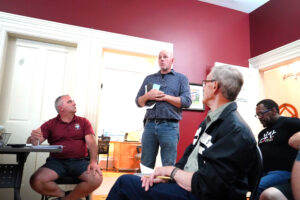
On June 12, around 20 people turned up to Shawville United Church to hear from Pontiac Warden Jane Toller about the various ongoing projects around the region.
Dubbed by Toller as her listening tour, the evening was one of a series that took place in various locales over the course of the past two weeks.
Though listening was the theme of the evening, Toller admitted that she had not consulted local councils before putting the tour together, noting that the meeting on June 11 in Campbell’s Bay had a less than stellar attendance.
“When I put this schedule together, I didn’t consider when the council meetings were,” she said, noting that when she had conducted similar consultations during her tenure on Toronto City Council, the attendance had started low and grown over time.
She began by going over the current state of the Pontiac and then addressing each of the 11 priorities identified by the council of mayors.
“They’re MRC priorities in the sense that we are working on these priorities, but the priorities come from the people of the Pontiac. I wanted to make that point clear,” she said.
The priorities touch on a number of subjects, from improving cellphone and internet service to repairing local roads and infrastructure.
She reiterated the MRC’s commitment to the forestry sector, noting that she currently sits on the Federation of Quebec Municipalities (FQM)’s Forestry Committee. She pointed to various projects that would eventually look to process the lumber coming out of the local forests, such as the cogeneration plant proposal at the Davidson Mill and discussions with Commonwealth Plywood in Rapides des Joachims.
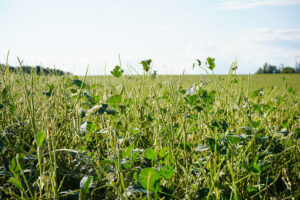
Agriculture, being the largest industry in the region, was also an item of focus and Toller detailed the recent application for special agricultural status, along with $2 million in provincial funding. She also spoke about the ARTERRE program, which seeks to find solutions for aspiring farmers who might not have the start-up capital to buy a farm or equipment outright. The aspirants would be paired with an existing farmer to share land, equipment or even just advice.
She said that they were looking to introduce a French CEGEP and more French trades programs for the region. In addition, she said there would be training made available for locals to learn how to grow medical cannabis, as there will be numerous positions needed at the LiveWell facility currently under construction in Litchfield.
“All we’ve heard about this so far is that there is a possibility by September,” she said. “It wouldn’t be a two year diploma course yet, it would be a [certificate]. This would be specifically on the growing of medical marijuana. About 50 per cent of the LiveWell staff will be working in the greenhouses.”
Clarendon Mayor John Armstrong asked whether training would be available in both English and French. Toller said she was unsure, but promised to look into the issue.
“That’s an interesting point John, I hadn’t even thought about that,” she said, adding that she would be very surprised if training wasn’t bilingual.
Toller also discussed efforts to expand the local roads available for ATVs in order to link existing trails.
“What this is, in a nutshell, is taking federated trails and linking to municipal roads in some instances and some places along Hwy. 148,” she explained. “Between Mansfield and Waltham, it just requires the speed being reduced from 90 to 80, two signs would need to be changed.”
She closed out the evening with a discussion of a local pool, a non-profit project she was getting off the ground before she was a candidate for the warden’s seat. The previous council of mayors had given their support in principal to the project at their meeting on June 20, 2017.
She showed an architect’s rendering of the proposed facility, which would include a 25 m, four lane pool for laps, as well as a warm therapy pool that could hold 25 people and a 15 person hot tub.
She said that the funding would come through federal and provincial grants, selling memberships and partnerships with local businesses.
“For the capital money or the operating of it, we will not be requesting money from the municipalities or shares,” she said, adding that the estimated construction cost is around $12 million.
She said she chose the location in Fort Coulonge due to the fact that it is central in the region, has a large population and is economically depressed in relation to other municipalities.
When asked about estimated operating costs, Toller said it would be inappropriate to speculate at this point.