





Zainab Al-Mehdar
Shawville July 13, 2022
Native to the western and central United States the western bean cutworm is considered a major pest of corn and dry beans and was discovered in Quebec in 2009. Over the past few years, it has been closely monitored to better understand it and prevent it from impacting corn producers’ crops.
Julien Saguez, an entomologist at Quebec’s Centre de recherche sur les grains (CÉROM) spoke to THE EQUITY and said they have been closely studying the pest since its arrival in the province. The first goal highlighted by Saguez was to evaluate if the western bean cutworm could survive through the province’s winter conditions.
From 2017 through 2018, field experiments were conducted at three sites in the municipalities of Saint-Anicet (Montérégie), Shawville (Outaouais), and Cookshire-Eaton (Estrie). The research team set up storage totes containing mature western bean cutworm larvae placed in the soil.
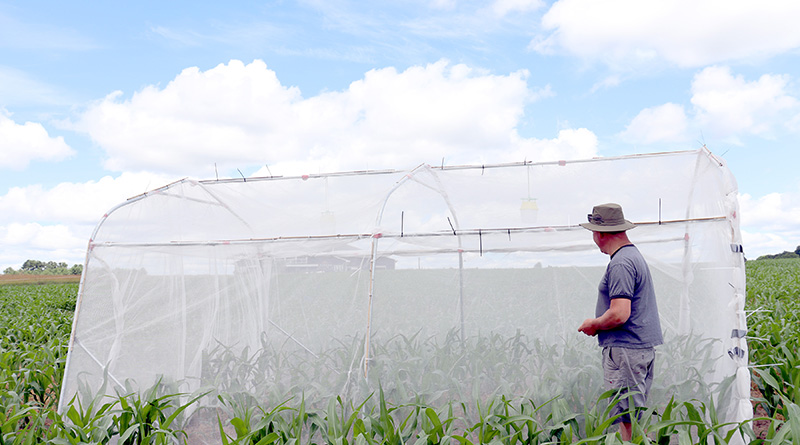
The storage totes were removed from the soil on different dates to estimate winter survival. Emergence cages were installed over the totes in the spring of the following year to determine whether the western bean cutworm could complete its life cycle, as highlighted in Saguez’s research.
The way they selected the sites of the emergence cages was based on the historical abundance of western bean cutworm moth captures and in places where damage to corn crops was observed in the regions during the previous years.
The origin of the moths captured in the province of Quebec is still unknown, according to Saguez’s research. But it has been suggested that western bean cutworm moths could be carried by the winds each year from regions where the species is established in the U.S., much like how other non-native pests in Canada migrate.
“The main concern is that the insect could affect the crop, so we want to limit the risk of damage. That is why we monitor the pest and we work with the agronomist in order to find solutions to control the pest and to limit the damage,” said Saguez.
In 2020 the research team was able to confirm that in fact the western bean cutworm can survive through the winter and complete its developmental cycle. He added that they continue to carry out experiments to see if different weather conditions and climate change could impact the overwintering of insects as well as the percentage of insects that emerge from the soil.
“We are studying the biology and the behaviour of the insects in the field, depending on the weather conditions,” said Saguez.
For Saguez being a part of the research on this new pest that entered the region almost 10 years ago has been an exciting time because he learned so much. When they first reported the pest was able to survive the winter it was big news because of its direct impact on producers, noted Saguez. “It’s a really important discovery for Quebec and for Canada.”
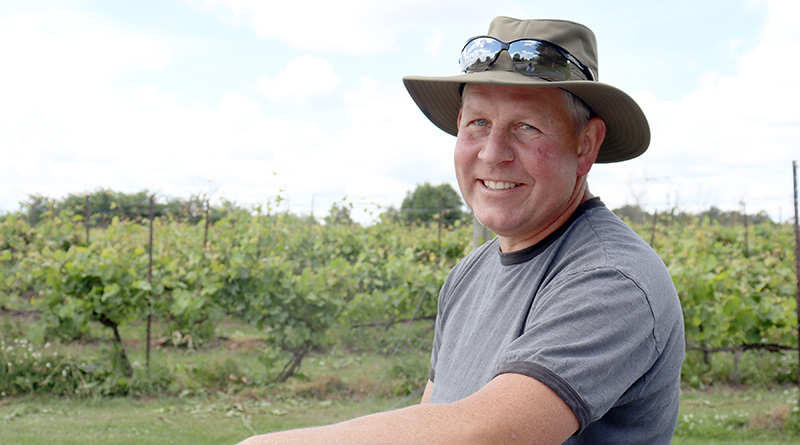
Anyone driving past the Little Red Wagon Winery owned by Jennifer Dale and Scott Judd, can see one of the cages installed on their property for research.
Speaking with Judd he explained that not only does the pest impact the corn but it could harm his whole production cycle. The difference between these worms and cob worms is cob worms often enter from the top of the corn plant and then will get eaten by crows or birds, and that’s how they get controlled.
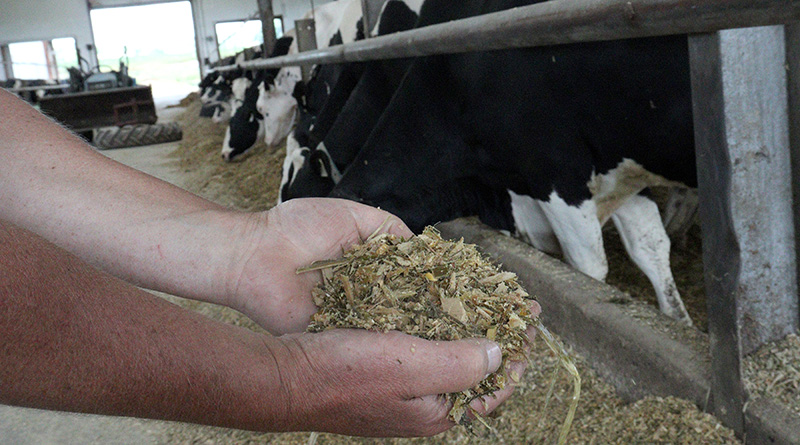
But the western bean cutworm enters from the side and eats its way and comes out the top. Doing so the worm has penetrated the protective leaves on a cob of corn which protected it from mould. “So it’s not just, ‘Oh we got a bug problem and it’s eating the crop.’ What you got is a bit of a yield problem, you also have a mould problem, and then you have a sick cow problem,” explained Judd.
When he first learned about the pest he explained that they travelled through a jet stream from three rivers, came through the Pontiac and went to Southern Ontario.
“The moths go up and travel in the jet stream until they see what they like and they drop out on land and they find something they like to eat, so that’s how they got here,” said Judd.
The other part of this project is in collaboration with agronomists from MAPAQ, who are well versed to advise or recommend farmers in terms of protecting their crops against this pest.
Judd’s and Dales’s farm became an experimental plot where researchers would set up every summer and collect data for almost the past 11 years and for Judd he highlighted it was just as beneficial for their farm as it was for the researchers as they learned a lot from the findings.
This year when they reached the threshold of egg masses and larvae, MAPAQ advised them to spray for control, and he added it is something he is possibly going to consider given how expensive the process is.
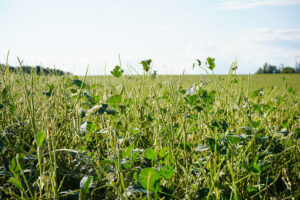
One of the things Judd tried this year, which is still a bit experimental is planting seven acres of test plot of corn that is resistant to the western bean cutworm, as a way to hopefully not have to spray. Although he isn’t sure it will work it was an opportunity to try it out and he went for it, said Judd. He added that MAPAQ is interested in seeing if it will work and how well it fends off the larvae.
For the past couple of years, researchers have been working away to figure out this pest and it wasn’t until last year that Judd was advised as to how to protect his crop.
It won’t be until fall that Judd will know for sure if he has to move forward with spraying or not, because he still has 150 acres of regular corn.
The reason Judd felt it was important to bring this issue to the forefront is because of the work that has gone into it in the past 11 years.
“I think it’s great to see that the researchers are out there, whether they’re checking hay crops, or alfalfa crops or corn or soybeans, they’re doing insect counts, and they’re, you know, down on their hands and knees and it’s all for the benefit of the consumer. Right. And farmer,” said Judd.