





Zainab Al-Mehdar
Pontiac Oct. 25, 2022
Horse owners in Quebec are struggling to receive on-site veterinarian care for their animals. The region’s shortage of vets licenced to practice in the region has been a serious issue for many equine farmers/breeders as driving a big animal like a horse back and forth to the city for basic care is tough on many.
A group of about eight to tenconcerned residents who own horses and small animals started a Facebook page called ‘Solutions for Outaouais equine vet shortage’ as a way to come together and reach out to government officials and vets to shine a light on the tragic reality faced by animal owners but also veterinarian technicians alike.
This comes in light of the recent death of one of the vets who has served the Pontiac animal owners for the past 10 years. On August 1, 36-year-old Doctor Andrea Kelly took her own life, which sent a shock wave through the vet community and shone a light on the pressure and stress put on vets.
Dr. Kelly was unique in that she was a Kemptville-based veterinarian who was also licensed to practice in Quebec. She owned the Ottawa Valley Large Animal Clinic and served close to 600 clients in the Pontiac and Ottawa surrounding area.
The Equity spoke with some of the founders of ‘Solutions for Outaouais equine vet shortage’ a few weeks ago who explained that not having a vet on standby illuminated how much the system needed changing.
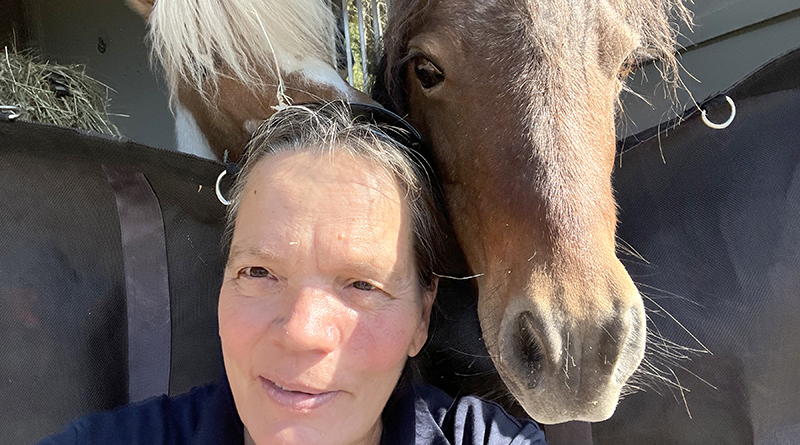
Siri Ingebrigtsen runs Ferme Equestre Avant-Garde in Luskville. She explained that losing Dr. Kelly and getting the news that Dr. Mel Jowett can no longer practice in Quebec due to the language laws, put a strain on her because she runs a big farm.
She has about 27 horses, many rescues, broodmares, young horses and horses that have special needs. She teaches and trains horses up to international levels and in 2018 diversified and got into shipping horses commercially.
The major issue in Quebec is the lack of big animal veterinarians, but also the idea that no vet is taking new patients making it hard to get the necessary help animal owners need. Ingebrigtsen was lucky she was able to get her horses in at Rideau-St Lawrence Veterinary Service for treatment or vaccinations, but explained she has to drive 27 horses three times a year down to Prescott to get examined because those vets are not licensed to practice in Quebec. “It’s not sustainable. I’m going to wear out,” she said.
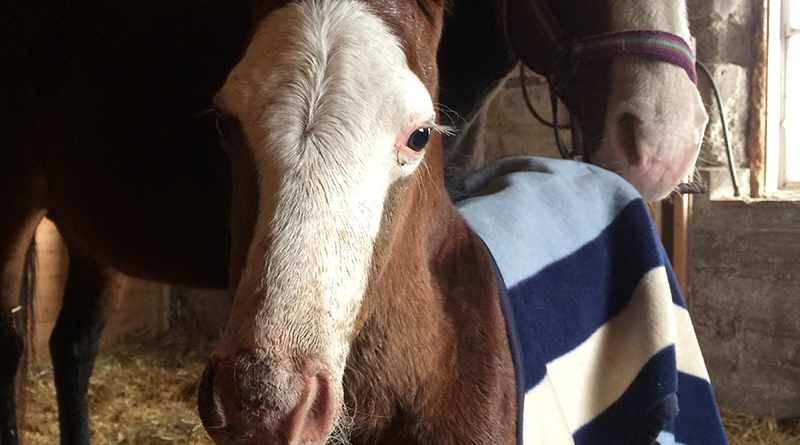
The last time Ingebrigtsen saw Dr. Kelly was in July when she was there after the birth of twin horses and was a crucial part of their survival, she said. Dr. Kelly was a young, kind and compassionate vet who loved her work and the animals. Losing her meant they had no one to replace her.
“Not only did we lose her in a horrific way, but we are now completely without a vet. Like there’s nobody licensed to come on-site that is taking new patients,” said Ingebrigtsen.
The group’s goal is to partner with equine vet clinics, either private or academic, to develop an immediate solution to this crisis through a combination of telemedicine and on-site veterinary care. They are also hoping to look into political/administrative obstacles that prevent equine vets and technicians from working in this region.
“We have two points maybe three that we’re trying to present both to the Order of Veterinarians in Quebec and the government. So I’ve been in contact with the Canadian Food Inspection Agency (CFIA) just from the biohazard aspect of things,” said Ingebrigtsen.
Coming together they hope the government would allow a temporary license to an Ontario vet that is willing to come to the area while they work on their French and licensing in Quebec. Another step would be to organize an outreach program to serve farms that are remote that can’t bring their animals to local areas. And long term is to get a vet, that is their main objective. “We don’t have any short-term solutions, besides shipping down to Ontario vets that are willing to take us,” she explained.
For Ingebrigtsen the catalyst to join the group and start looking into solutions was losing Dr. Kelly. As of now, they estimated that over 100 horses in the Aylmer and Municipality of Pontiac region alone are without any access to veterinary care. This not including all the dogs and cats and other animals on numerous farms that also don’t have a vet. This puts especially horses at great risk because they are harder to transport and when horses do not get immediate treatment they can die from serious injuries or accidents.
Horse owners have no choice but to drive their horses back and forth to their appointments, and between Ingebrigtsen and two other colleagues who have trailers they can do it but it’s not a viable option.“So we’re willing to do it for emergencies, but we’re not willing to take everybody down for maintenance. We just can’t,” she said.
The grim reality and what has been scary and stressful for many of the group members is for instance a horse breaking a leg and having to worry about not getting the right care for the animal. “I can’t get a vet out here to euthanize so what do I do, call a farmer to come and shoot it? I don’t have enough drugs to kill it. Would I be comfortable doing it? I don’t think so.”
As the group was put together everyone took on different tasks looking for ways as they all worked together to ultimately find a solution to get a vet in the region for onsite visits.
A challenge with getting a vet not only concerns the language law but the stress and pressure of being an equine vet because once they’re on your farm they treat small and any other farm animals as well.
Being a horse owner for so long, Ingebrigtsen has seen vets being treated badly, blamed for things and yelled and snapped at by horse owners who have to make hard decisions for their animals.
She acknowledged that this sort of behaviour is what pushes vets from entering this field. “We need to correct our behaviour to make the profession more inviting to the vets so that we have somebody who wants to come and do it.”
“I believe I speak for all of us saying that we all are struggling with the loss of Dr. Kelly, and the realities it brought to us. Because we knew we were vulnerable before she passed away. Because she was the only one and we could see her getting tired,” said Ingebrigtsen.
A little outside the Pontiac Stephanie Sitzberger runs Moylinny Farm with her husband. They mainly operate a grass-fed beef herd and breed horses. Sitzberger does not consider herself a huge breeder, it’s more of a hobby for her, nonetheless, she has horses that will feel the impact of not having their vet around.
She joined the group because she also felt the impact of Dr. Kelly’s loss. Being part of this group was a way to help one another get through these unknown times.
“I think it’s important for people who have a problem to be involved in finding a solution. So you know, it’s easy to sort of sit around and say, oh, woe is me, somebody needs to fix this. But the reality is, nobody’s going to fix it unless we get together and try to do it ourselves. So I think that’s the genesis of the group,” said Sitzberger.
Hoping to utilize her husband’s connections as a producer and a member of the UPA (union des producteurs agricoles), Sitzberger aims to benefit by getting suggestions or is pointed in the right direction as well as getting the attention of policymakers.
For the short term, most horse owners are going to use the toolbox of knowledge they have but there needs to be change because they can only do so much, she said.
“I hope that we’re able to solve our problem. I hope to be able to find a reliable source of veterinary care that does not come at the expense of the provider’s physical or mental health,” said Sitzberger. “The system is broken as it is right now.”