





J.D. Potié
LUSKVILLE July 25, 2019
On July 25, a group of around 30 farmers and agronomists from the Pontiac and beyond gathered at Blueridge Farms in Luskville for an informative hands-on workshop on the importance of . . .
managing a farmlands foundation – its soil.
Dubbed “Talking Dirt”, the event consisted of a day-long information session where local agriculturalists learned important facts and tips regarding maintaining high-quality soil to grow substantial yields of healthy produce.
Organized by local environment consulting company Belanger Agro Consultant and subsidized by the Quebec Ministry of Agriculture Fisheries and Food (MAPAQ), the workshop involved experts in the field teaching local farmers and agronomists how to inspect their soil and reduce pesticides by growing organic products.
According to Bélanger Agro Consultant agronomist Claire Cossette, the idea behind the workshop was to inform farmers and agronomists from the region about the proper practices of farming with the MAPAQ’s expertise.
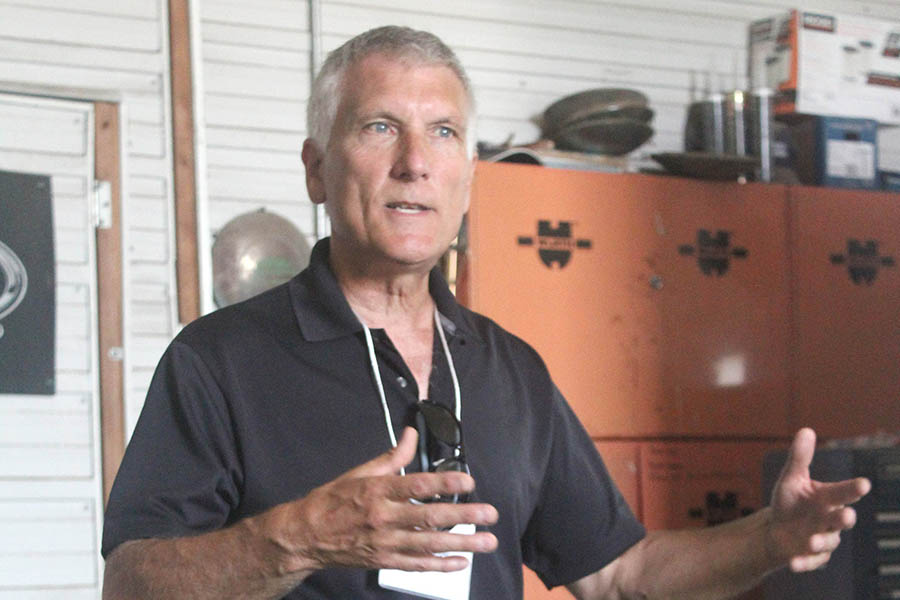
After a short period of sipping coffee, chewing pastries and socializing, the group gathered in the barn for a short power point presentation from the farms’ owner and operator Brandan Smith and Bélanger Agro Consultant representative Pierre Bélanger.
Smith opened up the workshop by thanking the MAPAQ for making the event possible as well as welcoming everyone to his farm, noting that he was surprised to see such a large crowd in the barn.
The rest of his presentation focused on an outline of his financial goals, his humble beginnings as a farmer and the challenge of transitioning his operation from a hog farm to a cash crop in the last several years.
Bélanger capped off the presentation by diving into the negative factors that come with use of pesticides, the long-term benefits of using organic matter and the importance of maintaining soil moisture.
After the presentation, the group headed outside where MAPAQ agricultural engineer Odette Ménard presented a rain-shower simulation to test three sets of soil samples from the field. One container was filled with residue soil, the second had soil exclusively and the third contained soil topped with vegetation.
After the simulation, the group proceeded towards the field where they were invited to roam the corn rows and get an up close look at how the plants grow under different combinations of herbicides and soil in the yard.
Then, the group surrounded a deep hole dug in the middle of the field to learn how to inspect the quality of the different levels of the dirt by conducting a soil profile using a variety of techniques.
From cutting parts of the soil with a pocket knife and squeezing it with the palms, or burying a pair of 100 per cent cotton underwear in the soil to see if microbes will eat them, Ménard showed the participants that consistently examining the state of ones soil is crucial to the sustainability and success of a farm.
After profiling the soil, participants headed back towards the barn for a cold lunch with refreshments to fuel up for the hands-on portion of the workshop.
Following the lunch period, participants were able to get their own hands dirty as they dug their own holes and conducted soil profiles in order to understand how it works and what to look for in soil.
For Ménard, the most important aspect of operating a farm and finding happiness for any crop grower is knowing everything about one’s soil as it’s the very foundation that makes success possible.
“The health of a society goes by the health of its soil,” she said. “The return of a business goes by the health of its soil. Happiness in agriculture goes by the health of one’s soil. Look at agricultural producers, when things aren’t growing well, they aren’t happy. The only problem is the health of the soil.”
According to Smith, hosting a group of local agricultural industry professionals at his farm for a little food for thought is very important for the growth and sustainability of crop growers in the Pontiac.
“It’s good to bring everybody together and chat,” he said. “I think it’s very important. I think we need more of it.”
For Smith, who’s always open to learning new tricks of the trade, the workshop proved itself very beneficial, as a lot of people possessing a wealth of knowledge on the subject attended the event
“When you have smart people around you, ask a lot of questions,”
Surprised with the number of folks who showed up, Smith was delighted with the variety of participants who attended with many coming from outside the Pontiac to jot some notes about plant growth.
“We’ve got some people from all over the world here,” he said. “Geneticists and plant breeders, soil scientists, engineers, so it’s a good mix.”