





Chichester’s Culbute locks have been out of operation for over a century, but one local group is making sure the legacy of the once-prosperous era they represent isn’t forgotten.
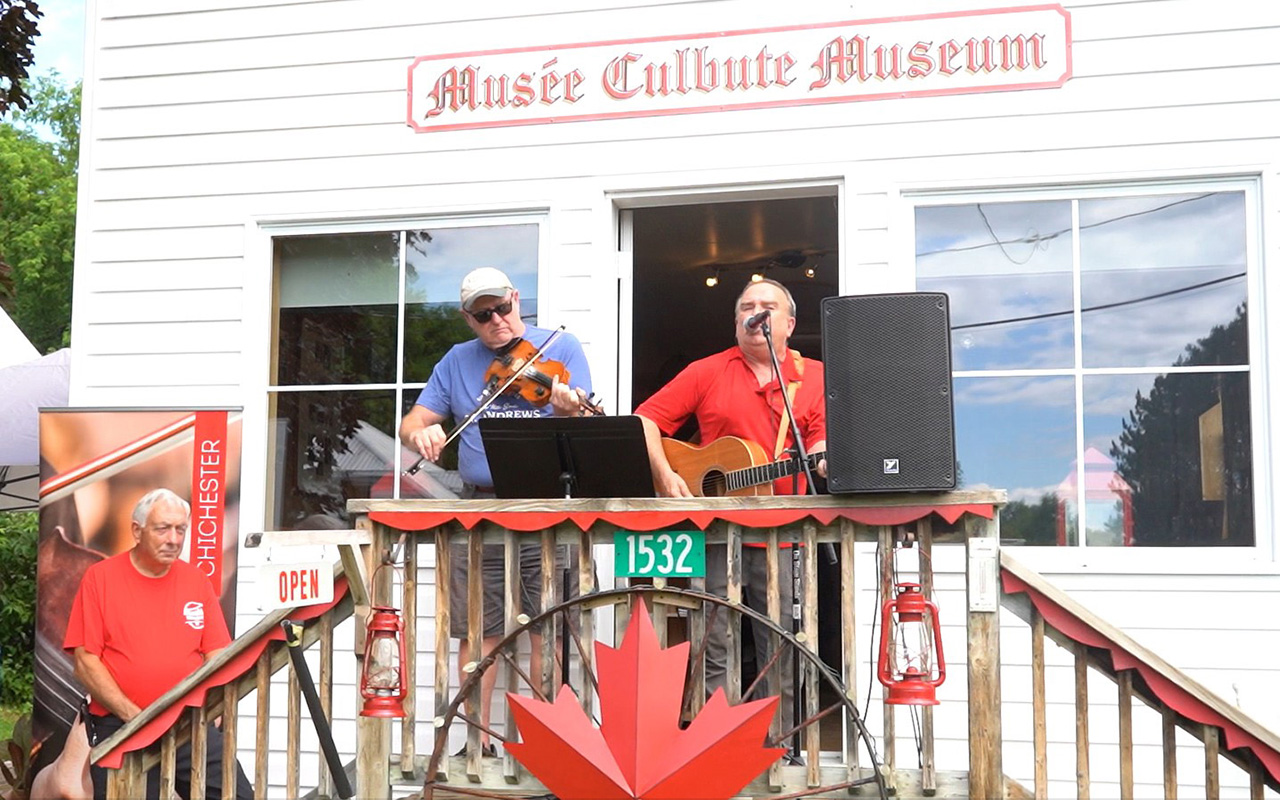
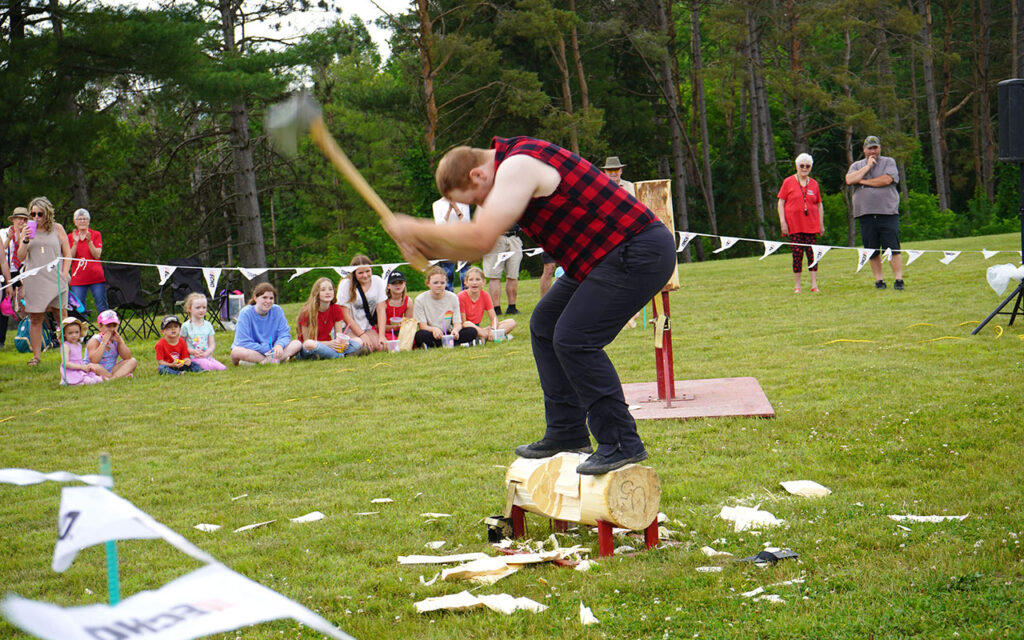
This weekend, a team of volunteers organized a festival on the 150th anniversary of the locks’ completion. Ottawa Valley country music, a lumberjack competition and boat tours of the locks all paid homage to the era of economic boom in which the locks were built.
But for some volunteers, the festival was more than just about the locks, it was about hanging on to a time and a place that once was.
“A lot of people who are from here aren’t really familiar with [the locks],” said Chantal Lair, a Chichester employee and volunteer behind the festival.
She said once the locks were closed in 1889, all of its builders and workers left the area, leaving the community with little in the way of local knowledge.
So she and other volunteers did as much research as they could to teach people about the locks through boat tours and in the Culbute Museum, a volunteer-run museum that is celebrating its 25th year.
“Celebrating the anniversary of the construction is a way of informing the locals that this place still exists,” she said of the vision behind the festival.
Short-lived, long abandoned
In 1873, the federal government began construction of the lock system, which consisted of two locks and three dams built between Allumette Island and Chichester, at the narrowest point on the northwestern side of the Island.
As steamboats were seen as the key to the Ottawa River’s economic expansion at the time, these new locks would ideally make it possible for those boats to get over the Calumet rapids, thereby shortening the passage between the upper and lower sections of the river.
Work was completed on the locks in 1876, but soon after low water levels began to cause problems. An account from the last lock-keeper said it was becoming more and more difficult to open and close the locks.
“It didn’t take them long to realize that this wasn’t working,” said Culbute Museum volunteer Donna Gagnon, who got the account from an ancestor of the last lock-keeper. “The water wasn’t high enough, they had to dredge all the time, and it didn’t take long for those locks to break down.”
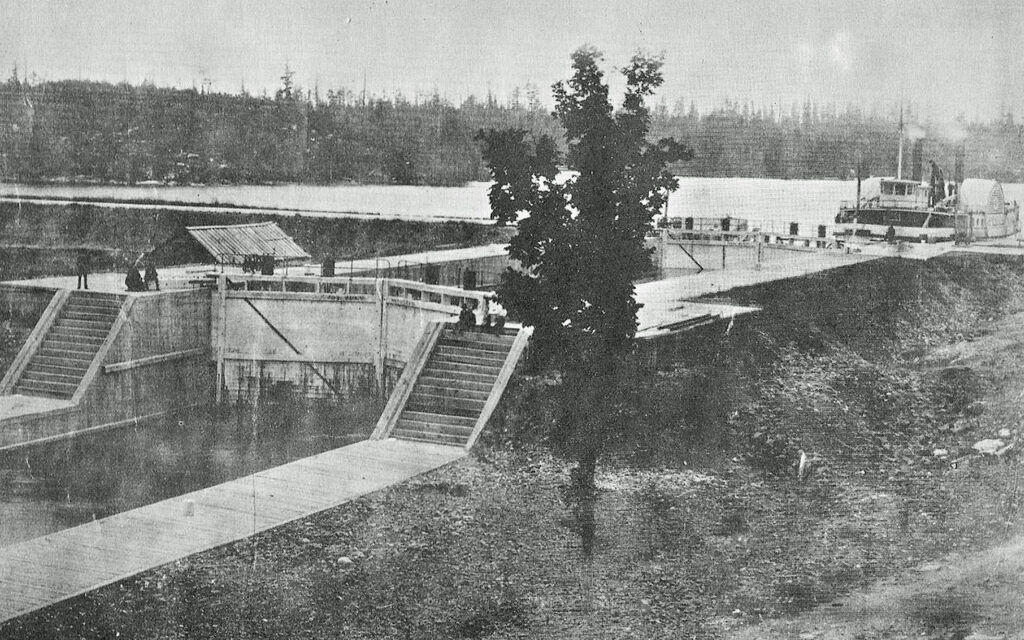
An 1882 report from the chief engineer said a plan to fix the water levels had been submitted for approval, but before long the federal government withdrew funding for the project altogether as the locks were beginning to deteriorate and ship traffic was low.
Besides, the railroad had already come to Pembroke, rendering practically all forms of water-based navigation inefficient.
This was the final blow to the locks — the Culbute channel, once seen as the key to the river’s economic expansion, was no longer the boon it was thought to be.
In 1889, after only 13 years in operation, the locks were decommissioned for good, and the water was returned to its normal level. The channel soon became a place for logging companies to send logs downstream toward Ottawa.
Very little remains of the locks today thanks to a mysterious fire in the early 1900s, but there have been some efforts to revive the locks over the years. Former Chichester resident and lock proponent Gil Dupuis took the MRC’s mayors on a tour of the site in the early 90s as part of a pitch to revive them into a tourist destination, but the price tag was too high and the plan fell through.
Never forgotten
Lair said life just kind of went back to normal after the locks left, leaving farmers and other workers in Chichester to go about their days with little knowledge of the ambitious project.
“Once everything was closed down and burned, the locals just went on with their regular lives,” she said, adding that when the river opened back up for logging, people wouldn’t have been able to visit the locks due to the log traffic.
Gagnon, who co-founded the Culbute Museum in 2000 with the vision of beautifying and informing the village of Chichester, said her family was one of many in the area that never bothered to learn more about the locks while they had the chance.
But, she said, she hopes their efforts through the museum and festival can play a role in filling that gap for others.
“We never got to hear the stories. We should have asked more questions, but most of those people are gone. That’s why I think it’s important for people to speak to their grandparents and find out where they came from.”
Gagnon said before the festival that’s one of the reasons why she was looking forward to sharing the information, in the hopes that the next generation of Chichester residents will pick up the same passion.

“I’m sure they’re going to come in, and they’re going to find something that belongs to one of their ancestors,” she said of the visitors to the festival.
The festival itself was a hit, with hundreds of people descending upon the village for one Saturday of fun. The boat tours were packed and the museum was bustling with people the entire day, including many former Chichester residents who were back visiting for the day.
Donnie Gagnon, Donna’s husband and mayor of Chichester for 30 years, said he was happy to share the village’s culture and heritage with its guests. “We’re so proud,” he said of the volunteer efforts behind the festival.
Donna said even though the locks have been long abandoned, with all talks of reviving them now quieted, she’s not just doing this work because she loves the locks, which are, admittedly, a thing of the past.
For her, it’s about recognizing a former time of prosperity in Chichester that gave her everything she cherishes today – her husband, her friends and her village.
“We probably wouldn’t have what we have now,” she said. “This is God’s country to us.”
She said although she has seen the village decline over the years, the work helps her remember times in the past when things were better.
“This is where we came from – the logs, the logging. Without the logging, Chichester wouldn’t be here,” she said.
“Chichester doesn’t have a lot of stuff. But we have the Culbute channel. That’s what we have to fall back on is our history, not what the future is going to be.”
Les écluses de Culbute de Chichester sont hors service depuis plus d’un siècle, mais un groupe local s’assure que l’héritage de l’époque autrefois prospère qu’elles représentent ne tombe pas dans l’oubli.
Ce week-end, une équipe de bénévoles a organisé un festival à l’occasion du 150e anniversaire de l’achèvement des écluses. La musique country de la vallée de l’Outaouais, une compétition de bûcherons et des excursions en bateau des écluses ont tous rendu hommage à l’époque de l’essor économique au cours de laquelle les écluses ont été construites.
Mais pour certains bénévoles, le festival était plus qu’une simple célébration des écluses ; il s’agissait de s’accrocher à un temps et à un lieu qui ont existé.
« Beaucoup de gens d’ici ne connaissent pas vraiment [les écluses] », a déclaré Chantal Lair, employée de Chichester et bénévole à l’origine du festival.
Elle a expliqué qu’une fois les écluses fermées en 1889, tous ses bâtisseurs et travailleurs ont quitté la région, laissant la communauté avec peu de connaissances locales.
C’est pourquoi elle et d’autres bénévoles ont fait autant de recherches que possible pour informer les gens sur les écluses grâce à des excursions en bateau et au Musée de Culbute, un musée géré par des bénévoles qui célèbre son 25e anniversaire.
« Célébrer l’anniversaire de la construction est une façon d’informer les habitants que cet endroit existe toujours », a-t-elle déclaré à propos de la vision derrière le festival.
Éphémère, longtemps abandonnée
En 1873, le gouvernement fédéral a entrepris la construction du système d’écluses, qui comprenait deux écluses et trois barrages construits entre l’île aux Allumettes et Chichester, au point le plus étroit du côté nord-ouest de l’île.
Les bateaux à vapeur étant considérés à l’époque comme la clé de l’expansion économique de la rivière des Outaouais, ces nouvelles écluses permettraient idéalement à ces bateaux de franchir les rapides de Calumet, raccourcissant ainsi le passage entre les sections supérieure et inférieure de la rivière.
Les travaux sur les écluses ont été achevés en 1876, mais peu après, de faibles niveaux d’eau ont commencé à causer des problèmes. Un témoignage du dernier éclusier a indiqué qu’il devenait de plus en plus difficile d’ouvrir et de fermer les écluses.
« Il ne leur a pas fallu longtemps pour réaliser que cela ne fonctionnait pas », a déclaré Donna Gagnon, bénévole du Musée de Culbute, qui a obtenu ce témoignage d’un ancêtre du dernier éclusier. « L’eau n’était pas assez haute, ils devaient draguer tout le temps, et il n’a pas fallu longtemps pour que ces écluses cessent de fonctionner. »
Un rapport de 1882 de l’ingénieur en chef a indiqué qu’un plan pour régler les niveaux d’eau avait été soumis pour approbation, mais peu après, le gouvernement fédéral a retiré tout financement pour le projet, car les écluses commençaient à se détériorer et le trafic maritime était faible.
D’ailleurs, le chemin de fer avait déjà atteint Pembroke, rendant pratiquement toutes les formes de navigation fluviale inefficaces.
Ce fut le coup de grâce pour les écluses — le canal de Culbute, autrefois considéré comme la clé de l’expansion économique de la rivière, n’était plus le bienfait qu’il était censé être.
En 1889, après seulement 13 ans de fonctionnement, les écluses ont été mises hors service définitivement, et l’eau a retrouvé son niveau normal. Le canal est rapidement devenu un endroit où les compagnies forestières envoyaient des billots en aval vers Ottawa.
Très peu de vestiges des écluses subsistent aujourd’hui en raison d’un mystérieux incendie au début des années 1900, mais des efforts ont été faits pour les ressusciter au fil des ans. Gil Dupuis, ancien résident de Chichester et partisan des écluses, a emmené les maires de la MRC en visite sur le site au début des années 90 dans le cadre d’une proposition visant à les transformer en destination touristique, mais le coût était trop élevé et le plan n’a pas abouti.
Jamais oubliées
Chantal Lair a déclaré que la vie est en quelque sorte revenue à la normale après la disparition des écluses, laissant les agriculteurs et autres travailleurs de Chichester vaquer à leurs occupations quotidiennes avec peu de connaissances de l’ambitieux projet.
« Une fois que tout a été fermé et brûlé, les habitants ont simplement repris leur vie normale », a-t-elle déclaré, ajoutant que lorsque la rivière a été rouverte à l’exploitation forestière, les gens n’auraient pas pu visiter les écluses en raison du trafic de billots.
Donna Gagnon, qui a cofondé le Musée de Culbute en 2000 avec la vision d’embellir et d’informer le village de Chichester, a déclaré que sa famille était l’une des nombreuses de la région qui n’a jamais pris la peine d’en apprendre davantage sur les écluses tant qu’elle en avait l’occasion.
Mais, a-t-elle dit, elle espère que leurs efforts à travers le musée et le festival pourront jouer un rôle pour combler ce vide pour d’autres.
« Nous n’avons jamais entendu les histoires. Nous aurions dû poser plus de questions, mais la plupart de ces gens sont partis. C’est pourquoi je pense qu’il est important pour les gens de parler à leurs grands-parents et de découvrir d’où ils viennent. »
Donna Gagnon a déclaré avant le festival que c’était l’une des raisons pour lesquelles elle avait hâte de partager l’information, dans l’espoir que la prochaine génération de résidents de Chichester reprenne la même passion.
« Je suis sûre qu’ils vont entrer et qu’ils vont trouver quelque chose qui appartient à l’un de leurs ancêtres », a-t-elle dit à propos des visiteurs du festival.
Le festival lui-même a été un succès, avec des centaines de personnes affluant dans le village pour un samedi de divertissement. Les excursions en bateau étaient complètes et le musée était animé toute la journée, y compris de nombreux anciens résidents de Chichester qui étaient de retour pour la journée.
Donnie Gagnon, le mari de Donna et maire de Chichester pendant 30 ans, a déclaré qu’il était heureux de partager la culture et le patrimoine du village avec ses invités. « Nous sommes si fiers », a-t-il dit des efforts bénévoles derrière le festival.
Donna a déclaré que même si les écluses ont été longtemps abandonnées, et que toutes les discussions pour les raviver se sont maintenant tues, elle ne fait pas ce travail uniquement parce qu’elle aime les écluses, qui sont, il est vrai, une chose du passé.
Pour elle, il s’agit de reconnaître une ancienne période de prospérité à Chichester qui lui a donné tout ce qu’elle chérit aujourd’hui – son mari, ses amis et son village.
« Nous n’aurions probablement pas ce que nous avons maintenant », a-t-elle déclaré. « C’est le pays de Dieu pour nous. »
Elle a dit que même si elle a vu le village décliner au fil des ans, le travail l’aide à se souvenir des moments passés où les choses étaient meilleures.
« C’est de là que nous venons – les billots, l’exploitation forestière. Sans l’exploitation forestière, Chichester ne serait pas là », a-t-elle déclaré.
« Chichester n’a pas beaucoup de choses. Mais nous avons le canal de Culbute. C’est sur notre histoire que nous devons nous appuyer, pas sur ce que l’avenir nous réserve. »