






A group of concerned citizens near Otter Lake are doing their best to preserve the population of monarch butterflies in . . .
their community. Several butterfly habitats have popped up around Clark Lake, part of a concerted effort to increase the local population of the beautiful insect. The screened in enclosures are piled with monarch’s sole food source, milkweed, and can hold more than 100 at a time.
“It’s really the kids that got things going,” said Sharon Gray, one of the instigators of the project. “There’s been people on the lake over the last couple of years that just had little projects going, but last year we did it and then the kids found out and they all got on board.”
One of these habitats is on the property of Marilyn Amyotte, and is taken care of by her grandchildren Kaleb and Michaela Accardi, along with their friend Wyatt White. Gray’s husband George Rioux built the box out of old window frames and screens, and it fits perfectly into a little shed.
Michaela explained that they take turns completing the daily chores, which include replacing the milkweed, misting them with water and cleaning up the surprisingly large amount of waste that the little bugs excrete while they’re caterpillars.
“They’re as proficient as doing that as the Canada geese,” Amyotte joked.
Numerous bright green chrysalises perch on the ceiling of the enclosure, and it features a hinged door for when they start to hatch. Michaela explained that the pods become transparent as they go through their life cycle, eventually exposing the bright orange and deep black wings that the species is known for. Once the temperature is right, they will hang upside down to get the fluid flowing in their wings, in preparation of fluttering off into the wild.
“The chrysalis gets lighter and lighter, until it’s almost transparent,” she said. “It’s just beautiful watching the butterflies hatch.”
Kaleb said that they go out for walks along the road around the lake to find both caterpillars and milkweed for their little pets to eat.
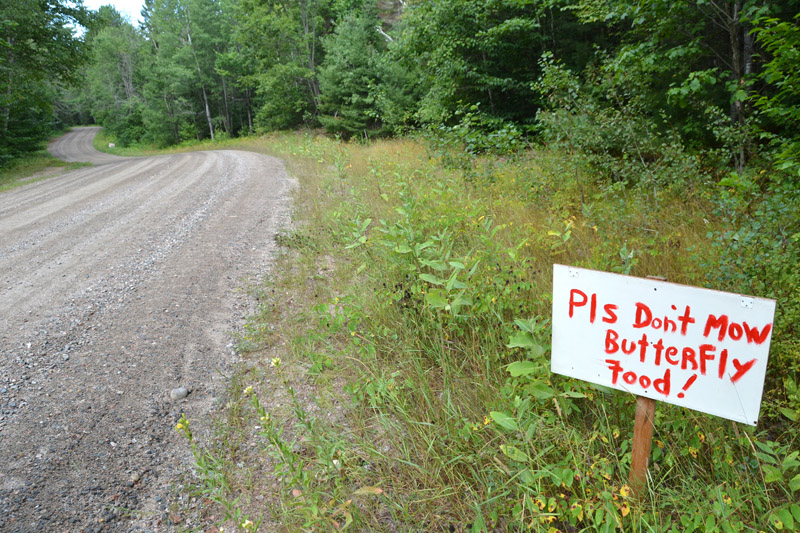
Gray explained that they don’t just take any caterpillars, but only those from areas along the road that are in danger of being mowed down. She said that the time to avoid is between the end of June and the middle of September. She praised the efforts of Kaleb and Michaela’s mother, Sarah Edge, for taking the issue to the local council.
“The big thing that we’re trying to get across to townships and municipalities, is that when they mow [the ditch], they just eliminate whole generations of monarchs,” she said. “This year we had quadruple the number of caterpillars found, because Sarah’s been instrumental about asking the town, Otter Lake from mowing around the lake.”A group of concerned citizens near Otter Lake are doing their best to preserve the population of monarch butterflies in their community. Several butterfly habitats have popped up around Clark Lake, part of a concerted effort to increase the local population of the beautiful insect. The screened in enclosures are piled with monarch’s sole food source, milkweed, and can hold more than 100 at a time.
“It’s really the kids that got things going,” said Sharon Gray, one of the instigators of the project. “There’s been people on the lake over the last couple of years that just had little projects going, but last year we did it and then the kids found out and they all got on board.”
One of these habitats is on the property of Marilyn Amyotte, and is taken care of by her grandchildren Kaleb and Michaela Accardi, along with their friend Wyatt White. Gray’s husband George Rioux built the box out of old window frames and screens, and it fits perfectly into a little shed.
Michaela explained that they take turns completing the daily chores, which include replacing the milkweed, misting them with water and cleaning up the surprisingly large amount of waste that the little bugs excrete while they’re caterpillars.
“They’re as proficient as doing that as the Canada geese,” Amyotte joked.
Numerous bright green chrysalises perch on the ceiling of the enclosure, and it features a hinged door for when they start to hatch. Michaela explained that the pods become transparent as they go through their life cycle, eventually exposing the bright orange and deep black wings that the species is known for. Once the temperature is right, they will hang upside down to get the fluid flowing in their wings, in preparation of fluttering off into the wild.
“The chrysalis gets lighter and lighter, until it’s almost transparent,” she said. “It’s just beautiful watching the butterflies hatch.”
Kaleb said that they go out for walks along the road around the lake to find both caterpillars and milkweed for their little pets to eat.
Gray explained that they don’t just take any caterpillars, but only those from areas along the road that are in danger of being mowed down. She said that the time to avoid is between the end of June and the middle of September. She praised the efforts of Kaleb and Michaela’s mother, Sarah Edge, for taking the issue to the local council.
“The big thing that we’re trying to get across to townships and municipalities, is that when they mow [the ditch], they just eliminate whole generations of monarchs,” she said. “This year we had quadruple the number of caterpillars found, because Sarah’s been instrumental about asking the town, Otter Lake from mowing around the lake.”
by Caleb Nickerson