





Following the publication of a report on the state of seniors’ health across the Outaouais earlier this month, Outaouais healthcare authority CISSSO has shared Pontiac-specific statistics that offer greater insight into the health of residents aged 65 and older in this slice of the region.
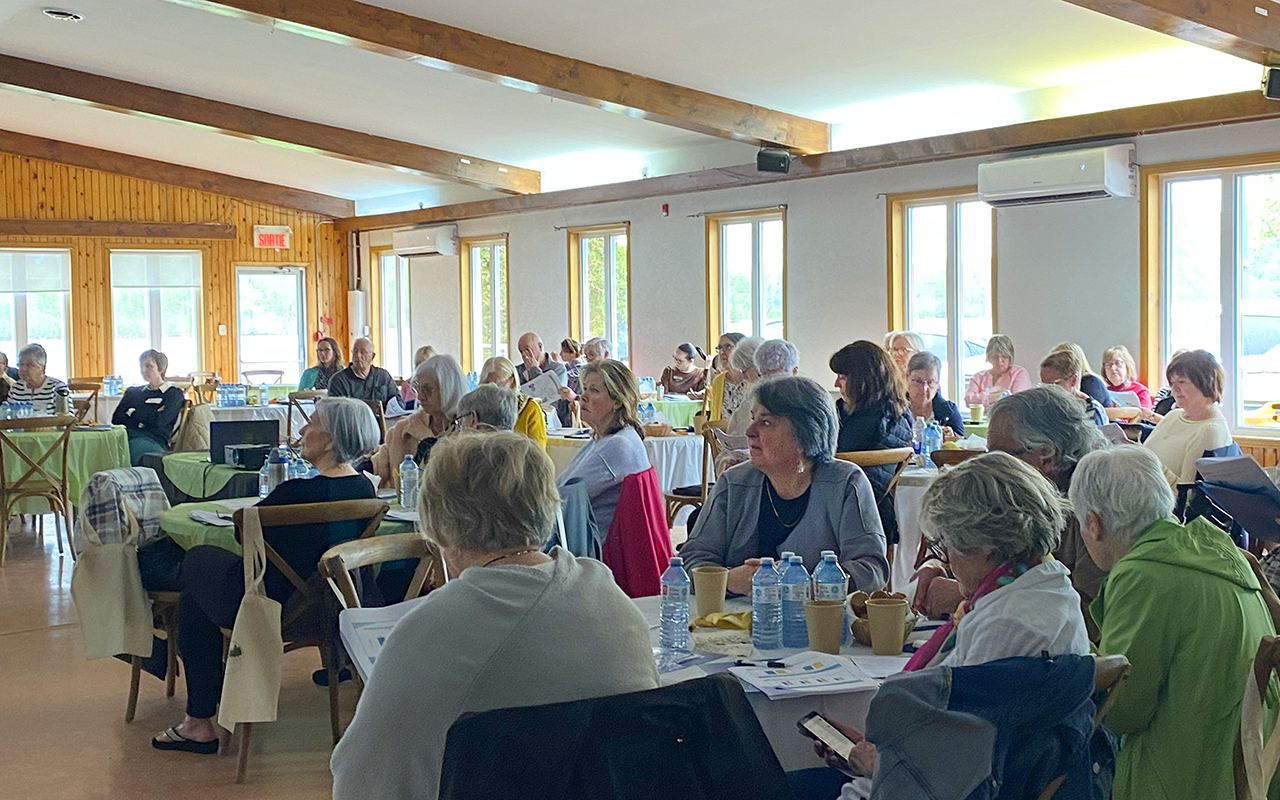
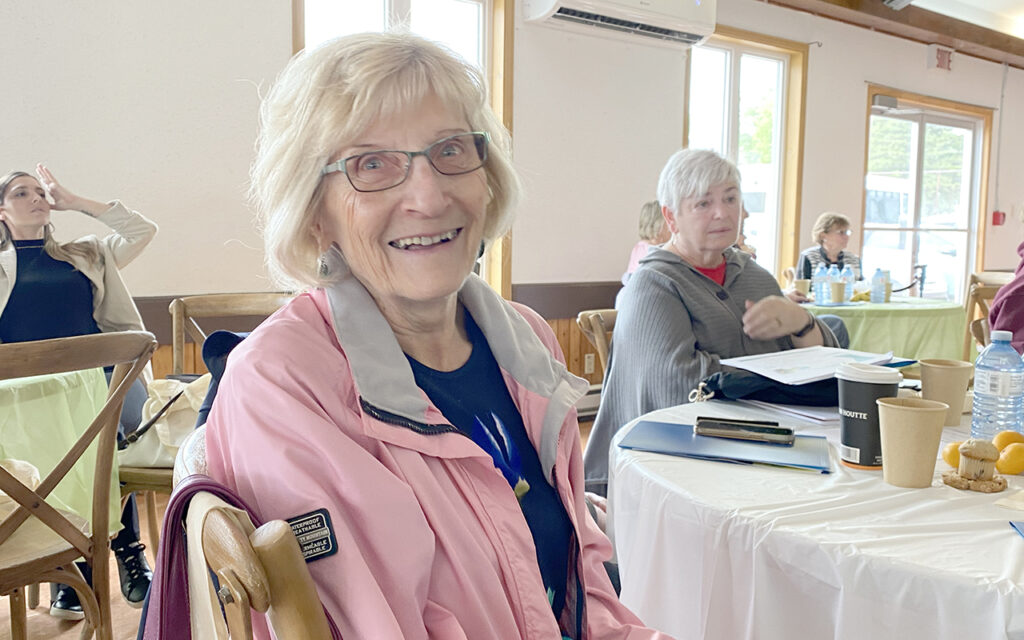
At an event hosted in Campbell’s Bay on May 22, representatives of the local healthcare network shared key findings with the 110 seniors from across the Pontiac who gathered to discuss challenges associated with aging in this region and brainstorm solutions.
Overall, the report found life expectancy in the Pontiac to be lower than the regional average (79.4 in the Pontiac vs. 81.1 across the Outaouais), the portion of people without a secondary degree to be higher (by 8 per cent), the percentage of smokers to be higher (20.9 per cent vs. 14.8 per cent), and the average income to be lower ($27,200 in the Pontiac vs. $31,400 Outaouais-wide).
On the other hand, 53.1 per cent of Pontiac seniors claim to be more or less satisfied with their social life, compared to 49.7 per cent Outaouais-wide.
“For us, it’s not new information, but to be able to put a number on certain things can help encourage partners and other organizations to work with us,” said Nicole Boucher-Larivière, CISSSO’s director of health and social services for the Pontiac.
“For example, the 40 per cent of people not having a high school diploma. Well it can help us pass the message that we need to adapt the way we communicate with our population to make sure the message is properly getting out there.”
She said the numbers that jump out for her are those that shine a light on the state of respiratory and cardiovascular illness in the region.
Short-term hospitalizations for chronic illness of the respiratory, digestive and circulatory systems are higher in the Pontiac than across the Outaouais.
Per 10,000 people, 397 short-term hospitalizations in the Pontiac were caused by chronic illness related to the circulatory system, as compared to 251.7 per 10,000 across the Outaouais.
Likewise, short-term hospitalizations for chronic respiratory illness are at 184 per 10,000 people in the Pontiac, while the Outaouais’ average is 129 per 10,000.
Boucher-Larivière said while these higher numbers are in part due to the fact that doctors at the Pontiac hospital may in some cases retain patients who live far from the hospital longer than needed to make follow-ups easier, there is more to the story.
“Some of the most important [numbers] for me are the problems with respiratory and heart conditions we have in the area. We’re above average by a lot, and we know that our consummation of cigarettes and vaping is through the roof, but they are directly related, and it’s not always seen that way,” she said.
“Our life expectancy is down by 1.5 years for that specific reason. So we need to work on cardiac issues and chronic respiratory diseases to bring back the healthy life expectancy for that population.”
In the Pontiac, 3.6 per cent more deaths of people 65 and over are caused by cancer than across the Outaouais, and 4.5 per cent more deaths are caused by heart disease.
Boucher-Larivière said one big challenge to improving the local population’s cardiac and respiratory health is the use of vapes instead of cigarettes.
“[People are] vaping in the car with their kids, in their house with their 85-year-old mom, people are vaping thinking because there’s no smell for the people around them, but it’s just as dangerous, if not more. That information is not out there.”
Lack of transport, communication key challenges
Following CISSSO’s presentation, attendees were invited to discuss strengths, challenges, and possible strategies for improving access to three key determiners of a healthy lifestyle: physical activity, isolation and loneliness, and food security.
At one table, a group from the Chapeau and Chichester area discussed the lack of exercise options for seniors in the upper Pontiac, as well as the lack of options for socialization. While the day centre offers weekly exercise classes, some felt they could use more frequent opportunities to get out of the house.
“We were hoping to get better service than we have in the west end of Pontiac. The service is not real bad, but it’s not good,” said 86-year-old Earl Lapine, who had traveled to the event with his 97-year-old brother and 87-year-old friend. “There’s not enough people [up there] to make it worthwhile for them to come. I think that is the problem [ . . . ] I’d like them to be up more to take us out.”
At another table, Georgette Robitaille of Bryson shared quite the opposite experience, noting the local Golden Age Club offers exercise classes several times a week, and then on the off days, she does exercises at home. She said this routine, combined with the frequent visits she has with her family and the time she spends with her friends make it possible for her to keep a positive outlook as she gets older.
“I’m never anxious of aging. I like to say I’m young at heart, as long as I can.”
While the region’s many support networks, including Golden Age clubs and Lions clubs, were highlighted as local strengths, most discussions eventually came back to the need for more transportation services to ensure seniors are able to get access to the many services they need, get groceries, and see their friends, and better communication strategies that can help seniors stay in the know.
Limitations to the numbers
The data used by CISSSO to produce this study was collected by the government of Quebec through various means but is largely based on numbers from the last census, conducted during the COVID-19 pandemic, and from information gathered through telephone surveys.
Bristol senior Val Twolan-Graham raised concerns with how the data was collected, asking specifically about how many people were surveyed, and in what age group.
“When it’s presented as data from just 65 on, there could be a huge amount of fluctuation between answers of a 66-year-old and an 87-year-old in a community,” she said explaining that, based on her work organizing various supports for seniors in her own community, she knows that the needs of a 66-year-old, such as her self, will be fairly different from the needs of older seniors.
She also flagged concerns with the age of the data used in the report, a concern echoed by Boucher-Larivière.
“The difficulty we have, because it’s done at a provincial level, is there’s a three year delay before we get the numbers, and then we need a year to analyse and put into a form that can be digested, so there’s always a four year delay,” Boucher-Larivière said, noting the pandemic will have skewed certain statistics used.
“We’d like to find funding to do a local survey so we could have the numbers right away.”
À la suite de la publication d’un rapport sur l’état de santé des aînés de l’Outaouais plus tôt ce mois-ci, le Centre intégré de santé et de services sociaux de l’Outaouais (CISSSO) a partagé des statistiques propres au Pontiac qui offrent un meilleur aperçu de la santé des résidents âgés de 65 ans et plus dans cette partie de la région.
Lors d’un événement organisé à Campbell’s Bay le 22 mai, des représentants du réseau de la santé local ont partagé les principales conclusions avec les 110 aînés de l’ensemble du Pontiac qui s’étaient réunis pour discuter des défis liés au vieillissement dans cette région et trouver des solutions.
Dans l’ensemble, le rapport a révélé que l’espérance de vie dans le Pontiac était inférieure à la moyenne régionale (79,4 ans dans le Pontiac contre 81,1 ans dans l’ensemble de l’Outaouais), que la proportion de personnes sans diplôme d’études secondaires était plus élevée (de 8 %), que le pourcentage de fumeurs était plus élevé (20,9 % contre 14,8 %) et que le revenu moyen était plus faible (27 200 $ dans le Pontiac contre 31 400 $ dans l’ensemble de l’Outaouais).
D’autre part, 53,1 % des aînés du Pontiac se disent plus ou moins satisfaits de leur vie sociale, comparativement à 49,7 % dans l’ensemble de l’Outaouais.
« Pour nous, ce n’est pas une information nouvelle, mais le fait de pouvoir chiffrer certaines choses peut aider à encourager les partenaires et les autres organisations à travailler avec nous », a déclaré Nicole Boucher-Larivière, directrice des services de santé et des services sociaux pour le Pontiac au CISSSO.
« Par exemple, les 40 % de personnes qui n’ont pas de diplôme d’études secondaires. Eh bien, cela peut nous aider à faire passer le message que nous devons adapter la façon dont nous communiquons avec notre population pour nous assurer que le message est bien compris. »
Elle a dit que les chiffres qui la frappent sont ceux qui mettent en lumière l’état des maladies respiratoires et cardiovasculaires dans la région.
Les hospitalisations de courte durée pour les maladies chroniques des systèmes respiratoire, digestif et circulatoire sont plus élevées dans le Pontiac que dans l’ensemble de l’Outaouais.
Pour 10 000 habitants, 397 hospitalisations de courte durée dans le Pontiac étaient causées par des maladies chroniques liées au système circulatoire, comparativement à 251,7 pour 10 000 habitants dans l’ensemble de l’Outaouais.
De même, les hospitalisations de courte durée pour les maladies respiratoires chroniques s’élèvent à 184 pour 10 000 habitants dans le Pontiac, tandis que la moyenne de l’Outaouais est de 129 pour 10 000.
Nicole Boucher-Larivière a dit que si ces chiffres plus élevés sont en partie dus au fait que les médecins de l’hôpital du Pontiac peuvent, dans certains cas, retenir plus longtemps que nécessaire les patients qui vivent loin de l’hôpital pour faciliter les suivis, l’histoire est plus complexe.
« Certains des chiffres les plus importants pour moi concernent les problèmes de maladies respiratoires et cardiaques que nous avons dans la région. Nous sommes bien au-dessus de la moyenne, et nous savons que notre consommation de cigarettes et de vapotage est excessive, mais ces problèmes sont directement liés, et ce n’est pas toujours perçu comme tel », a-t-elle déclaré.
« Notre espérance de vie est inférieure de 1,5 an pour cette raison spécifique. Nous devons donc travailler sur les problèmes cardiaques et les maladies respiratoires chroniques pour ramener une espérance de vie en bonne santé pour cette population. »
Dans le Pontiac, 3,6 % de décès de plus chez les personnes de 65 ans et plus sont causés par le cancer que dans l’ensemble de l’Outaouais, et 4,5 % de décès de plus sont causés par des maladies cardiaques.
Nicole Boucher-Larivière a affirmé qu’un défi majeur pour améliorer la santé cardiaque et respiratoire de la population locale est l’utilisation de vapoteuses au lieu de cigarettes.
« [Les gens] vapotent dans la voiture avec leurs enfants, dans leur maison avec leur mère de 85 ans, les gens vapotent en pensant qu’il n’y a pas d’odeur pour les personnes autour d’eux, mais c’est tout aussi dangereux, voire plus. Cette information n’est pas répandue. »
Manque de transport et de communication : des défis clés
À la suite de la présentation du CISSSO, les participants ont été invités à discuter des forces, des défis et des stratégies possibles pour améliorer l’accès à trois déterminants clés d’un mode de vie sain : l’activité physique, l’isolement et la solitude, et la sécurité alimentaire.
À une table, un groupe de la région de Chapeau et Chichester a discuté du manque d’options d’exercice pour les aînés dans le haut du Pontiac, ainsi que du manque d’options de socialisation. Bien que le centre de jour offre des cours d’exercice hebdomadaires, certains estimaient qu’ils pourraient bénéficier d’occasions plus fréquentes de sortir de la maison.
« Nous espérions obtenir un meilleur service que ce que nous avons dans l’ouest du Pontiac. Le service n’est pas vraiment mauvais, mais il n’est pas bon », a déclaré Earl Lapine, 86 ans, qui s’était rendu à l’événement avec son frère de 97 ans et son ami de 87 ans. « Il n’y a pas assez de monde [là-haut] pour que cela vaille la peine qu’ils viennent. Je pense que c’est le problème [ . . . ] J’aimerais qu’ils viennent plus souvent nous chercher pour nous emmener faire des sorties. »
À une autre table, Georgette Robitaille, de Bryson, a partagé une expérience tout à fait contraire, soulignant que le club de l’âge d’or local offre des cours d’exercice plusieurs fois par semaine, et que les jours de congé, elle fait des exercices à la maison. Elle a dit que cette routine, combinée aux visites fréquentes qu’elle rend à sa famille et au temps qu’elle passe avec ses amis, lui permet de garder une attitude positive en vieillissant.
« Je ne suis jamais inquiète de vieillir. J’aime dire que je suis jeune de cœur, aussi longtemps que je le peux. »
Bien que les nombreux réseaux de soutien de la région, y compris les clubs de l’âge d’or et les clubs Lions, aient été soulignés comme des forces locales, la plupart des discussions sont finalement revenues à la nécessité d’améliorer les services de transport pour que les aînés puissent accéder aux nombreux services dont ils ont besoin, faire leurs courses et voir leurs amis, et de meilleures stratégies de communication pour aider les aînés à rester informés.
Limites des chiffres
Les données utilisées par le CISSSO pour réaliser cette étude ont été recueillies par le gouvernement du Québec par divers moyens, mais sont largement basées sur les chiffres du dernier recensement, mené pendant la pandémie de COVID-19, et sur des informations recueillies par le biais d’enquêtes téléphoniques.
Val Twolan-Graham, une aînée de Bristol, a soulevé des préoccupations quant à la manière dont les données ont été recueillies, demandant spécifiquement combien de personnes ont été interrogées et dans quelle tranche d’âge.
« Lorsque les données sont présentées comme étant uniquement pour les 65 ans et plus, il peut y avoir une énorme fluctuation entre les réponses d’une personne de 66 ans et d’une personne de 87 ans dans une communauté », a-t-elle déclaré, expliquant que, d’après son travail d’organisation de divers soutiens pour les aînés dans sa propre communauté, elle sait que les besoins d’une personne de 66 ans, comme elle-même, seront assez différents de ceux des aînés plus âgés.
Elle a également soulevé des préoccupations concernant l’âge des données utilisées dans le rapport, une préoccupation partagée par Nicole Boucher-Larivière.
« La difficulté que nous avons, parce que c’est fait au niveau provincial, c’est qu’il y a un délai de trois ans avant que nous obtenions les chiffres, et ensuite nous avons besoin d’un an pour analyser et les présenter sous une forme qui peut être digérée, il y a donc toujours un délai de quatre ans », a déclaré Nicole Boucher-Larivière, ajoutant que la pandémie aura faussé certaines statistiques utilisées.
« Nous aimerions trouver du financement pour réaliser une enquête locale afin d’avoir les chiffres immédiatement. »