


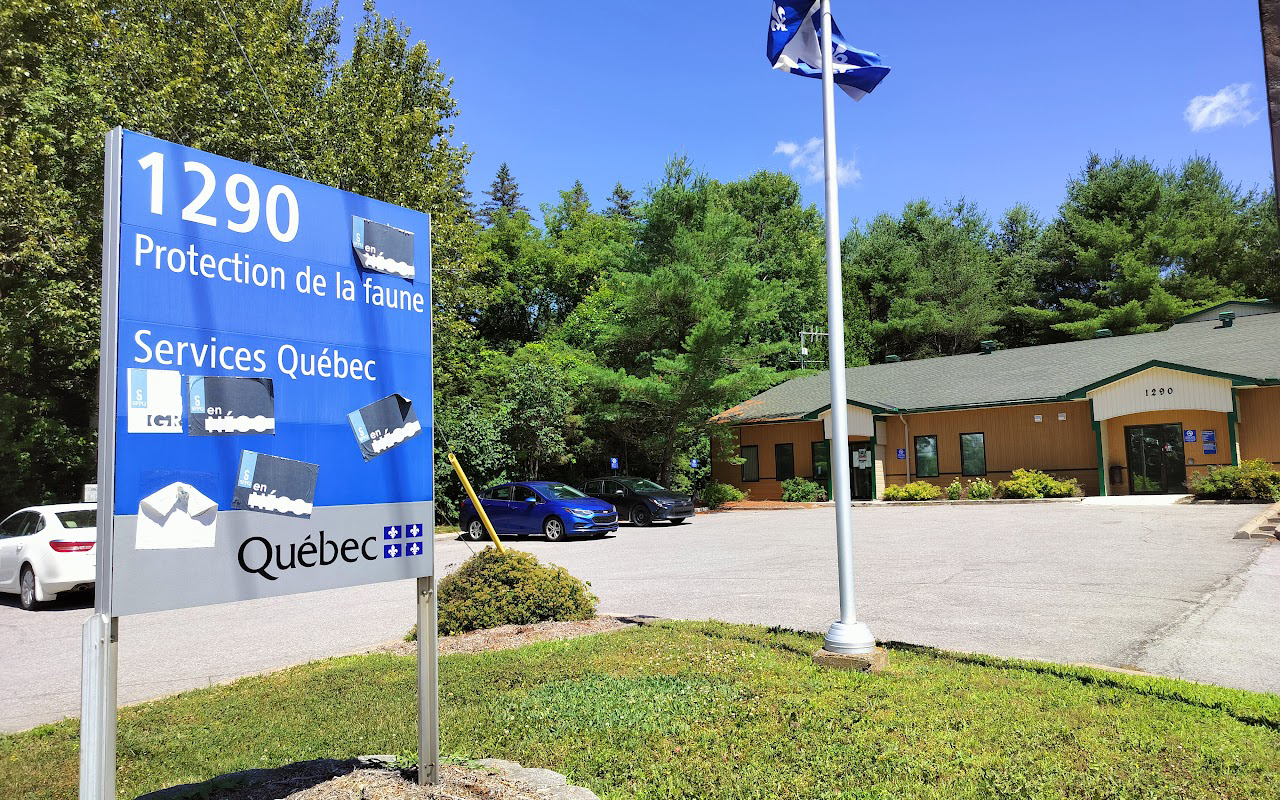



The Pontiac’s last wildlife protection office could be in jeopardy of closing, leaving the region without any employees working from inside the territory.
According to Quebec wildlife protection agents’ union president Martin Perreault, three weeks ago the province’s environment ministry announced to its regional managers that it plans to close certain offices, although he said it is not yet confirmed which ones will be chosen, or when they will close.
Perreault said the province plans to eventually close around 40 per cent of offices, including many with few or no employees left, including Campbell’s Bay.
“Campbell’s Bay, having zero agents, we’re pretty sure [it will be selected for closure],” he said, referring to staff assigned fully to the Campbell’s Bay office. One administrative employee remains working from the office a few days per week.
About 15 years ago the office in Rapides des Joachims met the same fate, with some of those agents ending up in Campbell’s Bay. At its peak, the office had more than 10 employees, some of which were game wardens, who patrolled the more than 14,000 square kilometres on the territory.
Two years ago, the last remaining agent left the Campbell’s Bay office, leaving the office unstaffed for at least a third of the working week and with no game wardens to cover the territory.
“He asked the regional commander what the outlook is to have agents in the office with him, and they told him in the short to long term there is no outlook to have anyone,” said Perreault about the last agent.
According to Perreault, game wardens are now sent to patrol the territory on a random basis according to need and availability. He is worried the closure of the Campbell’s Bay office will mean the region will not get the service it needs.
“We are already not many [agents in the province], and if the Campbell’s Bay office closes, people will not be able to be adequately covered,” he said.
Martin Riopel, a former game warden who worked in the Campbell’s Bay office until 2015, said in an area like the Pontiac, which he said is synonymous with hunting, fishing and trapping, wildlife protection agents are as essential as the police.
“Wildlife protection is an emergency service, an essential service. It is those agents who know the territory best outside of the road network,” he said.
Riopel said agents’ responsibilities range from public security issues such as in the case of an escaped animal or enforcing proper gun safety, to the enforcement of laws and quotas. He added that a lack of agents on the territory could mean that those things are no longer adequately enforced.
“Agents have a role to communicate with the public to explain what their role and function is, and the less people there will be on the ground to play that kind of role, the more people there will be on the ground to do what they want,” he said.
The province’s environment ministry maintains that there is no “rupture in service” and that the wildlife protection service “is making sure to have as wide a coverage as possible on the territory according to needs,” according to a statement in French sent by communications advisor Ève Morin Desrosiers.
“In no case is the objective to have fewer agents on the ground [ . . . ] A new cohort of 29 agents just graduated in June. Our organization is aware of the needs in terms of wildlife protection in Quebec and is cognizant of maintaining optimal coverage of Quebec’s territory, the statement read in part.
Perreault said while it is true that there are new graduates, they are being sent to the same few offices year over year, leaving many rural offices wanting for staff.
“They say these offices are going to lend a hand to the smaller office, but that’s not true – the small offices will only be running if there is a planned operation,” he said. “It’s not true that agents are sent out left and right every day.”
He said the department should be trying to spread out those agents over a broader territory to make sure all the province’s regions are well served.
“Complaints come in all the time, and even if you have 10 agents at the neighbouring office, you can’t cover the territory,” Perreault said of the government’s current strategy.
“If there’s no one on the territory, the file will end up in the trash and it will be treated the next day or the day after. But if it’s an emergency situation, it doesn’t work.”
Perreault said for his union the only way to adequately serve the needs of the public is to put people in seats near the territory it serves, not in a central office.
“They’re just looking at statistics and trying to get the job done with paperwork. It’s not the same, and it can only work by putting people in every office in the province.”
The ministry did not confirm if it has a date before which it will make a final decision on closures.
Le dernier bureau de protection de la faune du Pontiac pourrait être menacé de fermeture, laissant la région sans aucun employé travaillant à l’intérieur de son territoire.
Selon Martin Perreault, président du syndicat des agents de protection de la faune du Québec, il y a trois semaines, le ministère de l’Environnement de la province a annoncé à ses gestionnaires régionaux qu’il prévoit fermer certains bureaux, bien qu’il ait déclaré qu’il n’est pas encore confirmé lesquels seront choisis, ni quand ils fermeront.
M. Perreault a indiqué que la province prévoit fermer à terme environ 40 % des bureaux, dont plusieurs qui n’ont plus que peu ou pas d’employés, y compris celui de Campbell’s Bay.
« Campbell’s Bay, n’ayant aucun agent, nous sommes pas mal sûrs [qu’il sera choisi pour la fermeture], » a-t-il dit, faisant référence au personnel entièrement assigné au bureau de Campbell’s Bay. Une employée administrative continue de travailler depuis ce bureau quelques jours par semaine.
Il y a environ 15 ans, le bureau des Rapides-des-Joachims a connu le même sort, certains de ces agents se retrouvant à Campbell’s Bay. À son apogée, le bureau comptait plus de 10 employés, dont certains étaient des agents de la faune, qui patrouillaient les plus de 14 000 kilomètres carrés sur le territoire.
Il y a deux ans, le dernier agent restant a quitté le bureau de Campbell’s Bay, laissant le bureau sans personnel pendant au moins un tiers de la semaine de travail et sans agents de la faune pour couvrir le territoire.
« Il a demandé au commandant régional quelles étaient les perspectives d’avoir des agents au bureau avec lui, et ils lui ont répondu qu’à court et à long terme, il n’y avait aucune perspective d’avoir qui que ce soit, » a dit M. Perreault à propos du dernier agent.
Selon M. Perreault, les agents de la faune sont désormais envoyés pour patrouiller le territoire de manière aléatoire, selon les besoins et la disponibilité. Il craint que la fermeture du bureau de Campbell’s Bay signifie que la région n’obtiendra pas le service dont elle a besoin.
« Nous ne sommes déjà pas nombreux [agents dans la province], et si le bureau de Campbell’s Bay ferme, les gens ne pourront pas être adéquatement couverts, » a-t-il affirmé.
Martin Riopel, un ancien agent de la faune qui a travaillé au bureau de Campbell’s Bay jusqu’en 2015, a déclaré que dans une région comme le Pontiac, qu’il a qualifiée de synonyme de chasse, de pêche et de trappe, les agents de protection de la faune sont aussi essentiels que la police.
« La protection de la faune est un service d’urgence, un service essentiel. Ce sont ces agents qui connaissent le mieux le territoire en dehors du réseau routier, » a-t-il expliqué.
M. Riopel a précisé que les responsabilités des agents vont des questions de sécurité publique, comme en cas d’animal échappé ou pour faire respecter la sécurité des armes à feu, à l’application des lois et des quotas. Il a ajouté qu’un manque d’agents sur le territoire pourrait signifier que ces éléments ne sont plus adéquatement appliqués.
« Les agents ont un rôle de communication avec le public pour expliquer leur rôle et leur fonction, et moins il y aura de personnes sur le terrain pour jouer ce genre de rôle, plus il y aura de personnes sur le terrain pour faire ce qu’elles veulent, » a-t-il dit.
Le ministère de l’Environnement de la province maintient qu’il n’y a aucune « rupture de service » et que le service de la protection de la faune « s’assure d’avoir une couverture la plus large possible sur le territoire en fonction des besoins, » selon un communiqué en français envoyé par la conseillère en communications Ève Morin Desrosiers.
« En aucun cas l’objectif n’est d’avoir moins d’agents sur le terrain [ . . . ] Une nouvelle cohorte de 29 agents vient d’être diplômée en juin. Notre organisation est consciente des besoins en matière de protection de la faune au Québec et est soucieuse de maintenir une couverture optimale du territoire québécois, » peut-on lire en partie dans le communiqué.
M. Perreault a déclaré que s’il est vrai qu’il y a de nouveaux diplômés, ils sont envoyés aux mêmes quelques bureaux année après année, laissant de nombreux bureaux ruraux en manque de personnel.
« Ils disent que ces bureaux vont donner un coup de main aux plus petits bureaux, mais ce n’est pas vrai – les petits bureaux ne fonctionneront que s’il y a une opération planifiée, » a-t-il déclaré. « Ce n’est pas vrai que des agents sont envoyés à droite et à gauche tous les jours. »
Il a ajouté que le ministère devrait essayer de répartir ces agents sur un territoire plus vaste pour s’assurer que toutes les régions de la province sont bien desservies.
« Les plaintes arrivent tout le temps, et même si vous avez 10 agents au bureau voisin, vous ne pouvez pas couvrir le territoire, » a déclaré M. Perreault à propos de la stratégie actuelle du gouvernement.
« S’il n’y a personne sur le territoire, le dossier finira à la poubelle et sera traité le lendemain ou le surlendemain. Mais si c’est une situation d’urgence, ça ne fonctionne pas. »
M. Perreault a affirmé que pour son syndicat, la seule façon de répondre adéquatement aux besoins du public est de placer des personnes à des postes près du territoire qu’ils desservent, et non dans un bureau central.
« Ils ne font que regarder les statistiques et essaient de faire le travail avec de la paperasse. Ce n’est pas la même chose, et cela ne peut fonctionner qu’en mettant des gens dans chaque bureau de la province. »
Le ministère n’a pas confirmé s’il avait une date avant laquelle il prendra une décision finale concernant les fermetures.