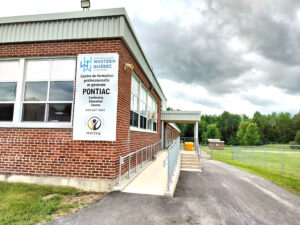



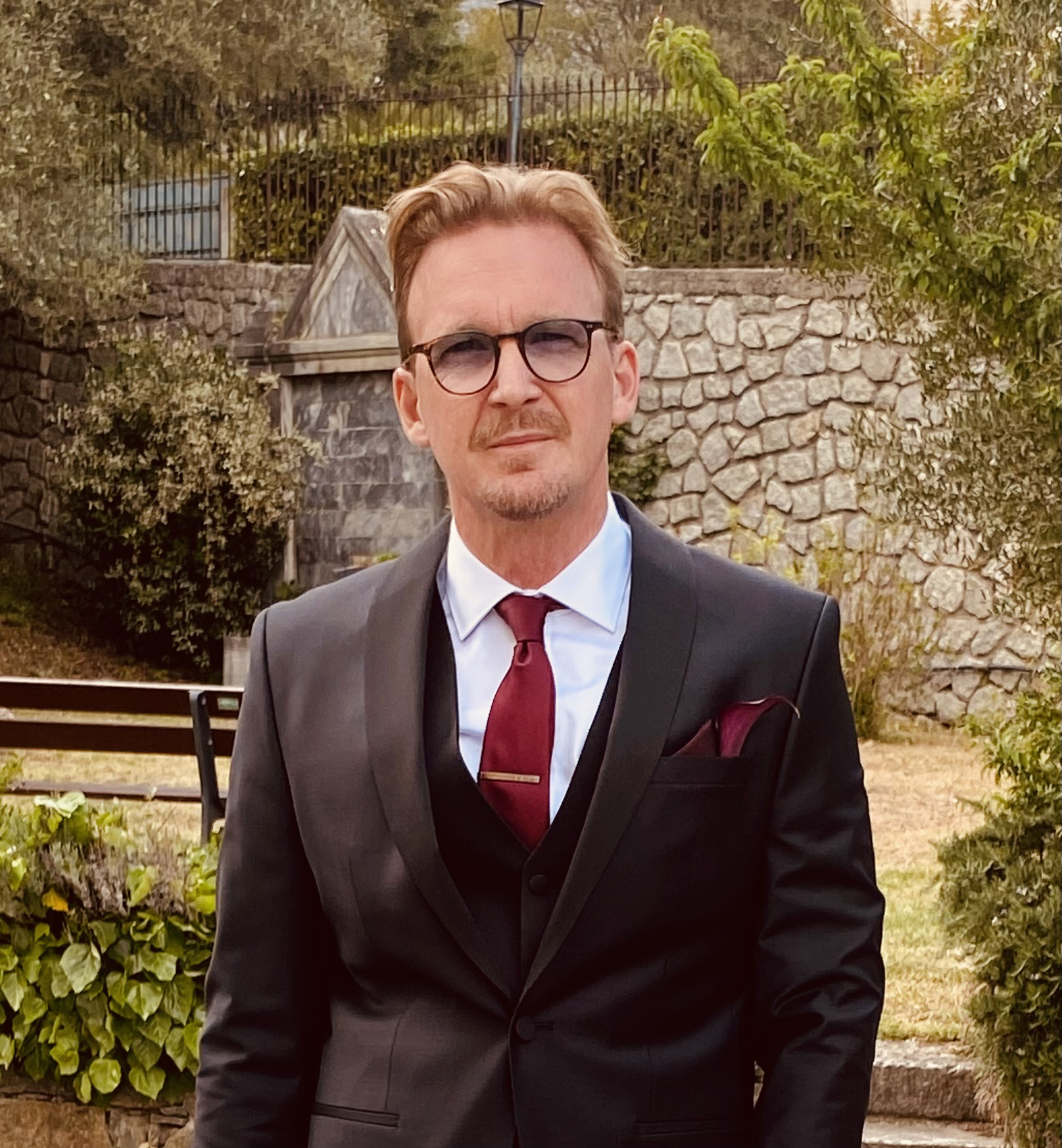



You might have seen a new face in the operating room at the Pontiac Hospital recently. Allow us to introduce you to Dr. Mathieu Lacroix, a native of France who comes to Shawville after a long international career as a surgeon.
Lacroix spent the first few years of his life in Madagascar before returning to his parents’ home country of France at the age of six. After high school, he decided to pursue a general medicine degree at the Université de la Timone in Marseille, France, where he got the idea to pursue a career in surgery.
“I was in the sixth year of medical school. I was on call at the university hospital in Marseille and I spent the night making sutures on patients that were injured, and I realized that I had an aptitude for the surgery side,” he said of the turning point in his career.
Then, he pursued his training in surgery at universities in Saint-Étienne and Lyon, France before working abroad in various locations. Dr. Lacroix worked on Reunion Island, a French overseas territory off the shore of Madagascar, as well as for the Red Cross in South America before returning to the island of Corsica, in the Mediterranean.
He lived in France a while longer before starting the process of coming to Canada, which involved taking an equivalency program in Montreal before being certified to work as a surgeon in Canada.
“My wife has family living in Montreal, so we got to know Quebec and we fell in love with the country [ . . . ] so when the opportunity came up, we seized it and did what we needed to do to come work here,” he said.
When he saw the job posting at the hospital, he and his wife Laetitia jumped on the opportunity to move to Shawville, where they have been living for about a month.
“After doing an inventory of the different regions we found the Pontiac region really magnificent, and it corresponds to the lifestyle we wanted,” he said.
Dr. Lacroix is on call every other week, and his weeks consist of doing various surgeries including gall bladder surgeries and colorectal surgeries, as well as doing consultations with patients who are undergoing surgery.
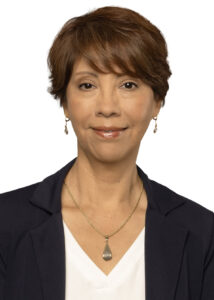
CISSSO’s Pontiac network director Nicole Boucher-Larivière said retaining a second surgeon to work alongside Dr. Freydoun Homayounfar allows the Pontiac Hospital to retain its status as a “trauma hospital” – a status she said few rural hospitals have because they don’t have the staff to maintain the 24/7 availability.
“It’s extremely important when you’re in an area of 14,000 square kilometres to be able to offer that proximity service in case of a trauma, so for us it was extremely important to find that second surgeon so we wouldn’t lose that,” she said, adding that with two surgeons alternating weeks on call, the hospital will retain its availability.
She added that the general wait time for surgery is very short in the Pontiac compared to other hospitals in the Outaouais, and the wait time in the OR is a far cry for where it used to be when there was only one surgeon on call 24/7 to service the area.
“By having two surgeons we’ll be able to maintain those wait times short enough so that the population of the Pontiac can have access quickly to general surgeries,” she said.
Lacroix said he had two mentors in particular while studying surgery in Lyon and Saint-Étienne who taught him the precision and stamina needed for the job. He said that in a precise craft such as surgery, the teacher-student relationship is an important one to learn the proper movements.
“Like an artisan that teaches certain movements to a child, there is a certain tradition of mentorship. To know how to practice surgery, you must first have a master that takes the time to teach you with kindness,” he said.
He said that while the operating room is a high-stakes environment, he has always enjoyed doing emergency surgery.
“That’s why I made these professional choices where I was in an isolated environment in case of emergency. That’s why I worked for the Red Cross, that’s also why I did a lot of training with the French military [ . . . ] because I had a knack for emergency surgery,” he said.
He said his experience working in various remote locations around the world has allowed him to develop a wider range of specialities, as opposed to medicine practiced in urban centres, which is much more specialized.
“I had the chance to be in a service where I had to be competent in these different specialities [ . . . ] I had to be able to have a great range of skills and be able to deal with situations that are quite different,” he said.
Meanwhile, he said while working in rural environments has allowed him to develop a greater skillset, there are also certain challenges to rural medicine including knowing when to transfer the patient to a more specialized surgeon.
“You have to strike the right balance between providing service to the local population and knowing the limits of your knowledge and when you must transfer the patient to a more specialized surgeon,” he said.
Boucher-Larivière said the surgeries that require a transfer to a larger urban hospital are managed by a college for specialists.
“We can do anything that’s considered a general surgery, but there are certain types of surgeries that require a specialist in that field, depending on the complexity of the surgery. We do day surgeries, or surgeries where you’re in for a night, maybe two, but we don’t have surgeries that require a long, complex stay,” she said.
Dr. Lacroix said that while Shawville is definitely a change of scenery from the mostly tropical locations where he has worked before, he got the travel bug and wanted to experience life in Canada.
“It’s a family virus [ . . . ] when I returned to France our house was filled with furniture and decorations from Madagascar, some of which I still have with me today.”
Outside of work, he said he and his wife enjoy their life at home with their dog Pascal. “We like the quiet moments that we can’t find in the city,” he said, adding that he enjoys working with his hands doing things like clearing the house or mowing the lawn.
Boucher-Larivière said the recruitment of general doctors as well as specialists to the region has been successful due to the collaboration of community partners such as the MRC Pontiac, the Groupe de médecine familiale du Pontiac (GMF), and other partners who are helping attract young professionals to the region.
“Everybody puts their effort in to do a little bit of seduction to help them discover the area and help them get established, so I think that’s why we’ve had so much success because as a community we’re working together.”
Vous avez peut-être récemment aperçu un nouveau visage dans la salle d’opération de l’Hôpital du Pontiac. Permettez-nous de vous présenter le Dr Mathieu Lacroix, un natif de la France qui arrive à Shawville après une longue carrière internationale comme chirurgien.
Le Dr Lacroix a passé les premières années de sa vie à Madagascar avant de retourner dans le pays d’origine de ses parents, la France, à l’âge de six ans. Après le secondaire, il a décidé d’entreprendre un diplôme en médecine générale à l’Université de la Timone, à Marseille, en France, où l’idée de faire carrière en chirurgie lui est venue.
« J’étais en sixième année de médecine. J’étais de garde à l’hôpital universitaire de Marseille et j’ai passé la nuit à faire des sutures sur des patients blessés, et j’ai réalisé que j’avais une aptitude pour le côté chirurgical », a-t-il dit à propos du tournant de sa carrière.
Ensuite, il a poursuivi sa formation en chirurgie dans des universités de Saint-Étienne et de Lyon, en France, avant de travailler à l’étranger dans divers endroits. Le Dr Lacroix a travaillé à l’île de la Réunion, un territoire français d’outre-mer au large de Madagascar, ainsi que pour la Croix-Rouge en Amérique du Sud avant de retourner sur l’île de la Corse, en Méditerranée.
Il a vécu en France un peu plus longtemps avant d’entreprendre le processus de venir au Canada, ce qui a impliqué de suivre un programme d’équivalence à Montréal avant d’être certifié pour travailler comme chirurgien au Canada.
« Mon épouse a de la famille qui habite à Montréal, alors nous avons appris à connaître le Québec et nous sommes tombés amoureux du pays [ . . . ] alors quand l’occasion s’est présentée, nous l’avons saisie et avons fait ce qu’il fallait faire pour venir travailler ici », a-t-il dit.
Quand il a vu l’offre d’emploi à l’hôpital, lui et son épouse Laetitia ont sauté sur l’occasion de déménager à Shawville, où ils vivent depuis environ un mois.
« Après avoir fait un inventaire des différentes régions, nous avons trouvé la région du Pontiac vraiment magnifique, et cela correspond au style de vie que nous voulions », a-t-il dit.
Le Dr Lacroix est de garde une semaine sur deux, et ses semaines consistent à effectuer diverses chirurgies, y compris des chirurgies de la vésicule biliaire et des chirurgies colorectales, ainsi qu’à faire des consultations avec les patients qui subissent une intervention chirurgicale.
La directrice du réseau Pontiac du CISSSO, Nicole Boucher-Larivière, a affirmé que le maintien d’un deuxième chirurgien pour travailler aux côtés du Dr Freydoun Homayounfar permet à l’Hôpital du Pontiac de conserver son statut d’« hôpital de traumatologie » – un statut que, selon elle, peu d’hôpitaux ruraux possèdent parce qu’ils n’ont pas le personnel nécessaire pour maintenir la disponibilité 24 h/24, 7 j/7.
« C’est extrêmement important, lorsque vous vous trouvez dans une région de 14 000 kilomètres carrés, de pouvoir offrir ce service de proximité en cas de trauma, alors pour nous, il était extrêmement important de trouver ce deuxième chirurgien afin de ne pas perdre cela », a-t-elle déclaré, ajoutant qu’avec deux chirurgiens alternant les semaines de garde, l’hôpital conservera sa disponibilité.
Elle a ajouté que le temps d’attente général pour une chirurgie est très court au Pontiac par rapport à d’autres hôpitaux de l’Outaouais, et que le temps d’attente au bloc opératoire est bien loin de ce qu’il était lorsqu’il n’y avait qu’un seul chirurgien de garde 24 h/24 et 7 j/7 pour desservir la région.
« En ayant deux chirurgiens, nous pourrons maintenir des temps d’attente suffisamment courts pour que la population du Pontiac puisse avoir un accès rapide aux chirurgies générales », a-t-elle dit.
Le Dr Lacroix a déclaré qu’il avait eu deux mentors en particulier pendant ses études de chirurgie à Lyon et Saint-Étienne, qui lui ont enseigné la précision et l’endurance nécessaires pour ce travail. Il a ajouté que dans un métier aussi précis que la chirurgie, la relation enseignant-élève est importante pour apprendre les bons mouvements.
« Comme un artisan qui enseigne certains mouvements à un enfant, il y a une certaine tradition de mentorat. Pour savoir pratiquer la chirurgie, il faut d’abord avoir un maître qui prend le temps de vous enseigner avec bienveillance », a-t-il dit.
Il a ajouté que bien que la salle d’opération soit un environnement à enjeux élevés, il a toujours aimé faire de la chirurgie d’urgence.
« C’est pourquoi j’ai fait ces choix professionnels où j’étais en environnement isolé en cas d’urgence. C’est pourquoi j’ai travaillé pour la Croix-Rouge, c’est aussi pourquoi j’ai fait beaucoup de formations avec l’armée française [ . . . ] parce que j’avais un don pour la chirurgie d’urgence », a-t-il dit.
Il a dit que son expérience de travail dans divers endroits éloignés du monde lui a permis de développer un éventail plus large de spécialités, par opposition à la médecine pratiquée dans les centres urbains, qui est beaucoup plus spécialisée.
« J’ai eu la chance d’être dans un service où je devais être compétent dans ces différentes spécialités [ . . . ] Je devais pouvoir posséder une grande variété de compétences et être capable de faire face à des situations très différentes », a-t-il dit.
Parallèlement, il a dit que bien que travailler en milieu rural lui ait permis de développer un plus grand éventail de compétences, il y a aussi certains défis liés à la médecine rurale, notamment savoir quand transférer le patient à un chirurgien plus spécialisé.
« Il faut trouver le juste équilibre entre la prestation de services à la population locale et la connaissance des limites de vos connaissances et le moment où vous devez transférer le patient à un chirurgien plus spécialisé », a-t-il dit.
Mme Boucher-Larivière a affirmé que les chirurgies nécessitant un transfert vers un plus grand hôpital urbain sont gérées par un collège de spécialistes.
« Nous pouvons faire tout ce qui est considéré comme une chirurgie générale, mais il y a certains types de chirurgies qui nécessitent un spécialiste dans ce domaine, selon la complexité de l’intervention. Nous faisons des chirurgies d’un jour, ou des chirurgies où vous restez une nuit, peut-être deux, mais nous n’avons pas de chirurgies qui nécessitent un séjour long et complexe », a-t-elle dit.
Le Dr Lacroix a déclaré que bien que Shawville soit définitivement un changement de décor par rapport aux endroits majoritairement tropicaux où il a travaillé auparavant, il a eu la piqûre du voyage et voulait vivre l’expérience de la vie au Canada.
« C’est un virus familial [ . . . ] quand je suis rentré en France, notre maison était remplie de meubles et de décorations de Madagascar, dont certains que j’ai encore avec moi aujourd’hui. »
En dehors du travail, il a dit que lui et son épouse apprécient leur vie à la maison avec leur chien Pascal. « Nous aimons les moments tranquilles que nous ne trouvons pas en ville », a-t-il dit, ajoutant qu’il aime travailler de ses mains en faisant des choses comme ranger la maison ou tondre la pelouse.
Mme Boucher-Larivière a affirmé que le recrutement de médecins généralistes ainsi que de spécialistes dans la région a été un succès grâce à la collaboration de partenaires communautaires tels que la MRC de Pontiac, le Groupe de médecine familiale du Pontiac (GMF) et d’autres partenaires qui aident à attirer de jeunes professionnels dans la région.
« Tout le monde déploie des efforts pour faire un peu de séduction afin de les aider à découvrir la région et à s’y établir, alors je pense que c’est pourquoi nous avons eu tant de succès, car en tant que communauté, nous travaillons ensemble. »