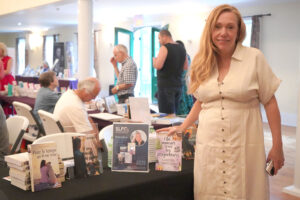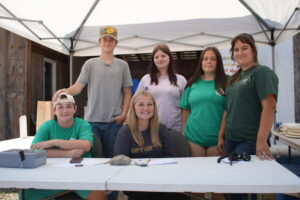






Four farms in the Municipality of Pontiac opened their doors to the public over the weekend for what has become a twice-annual farm hop event.
Leystone Farms, Mountain View Farm, Agape Gardens and Ferme Champlain invited the wider community to come and explore their properties and learn about their farm operations, an opportunity to both educate visitors about the agricultural production going on in their neighbours’ backyards, and diversify on-farm revenue streams.
“The big thing is for people in the community to kind of see what the different farms in the area are up to and be able to share their practices and their animals,” said event organizer Renée Savoie.
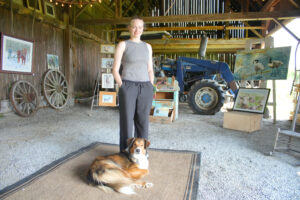
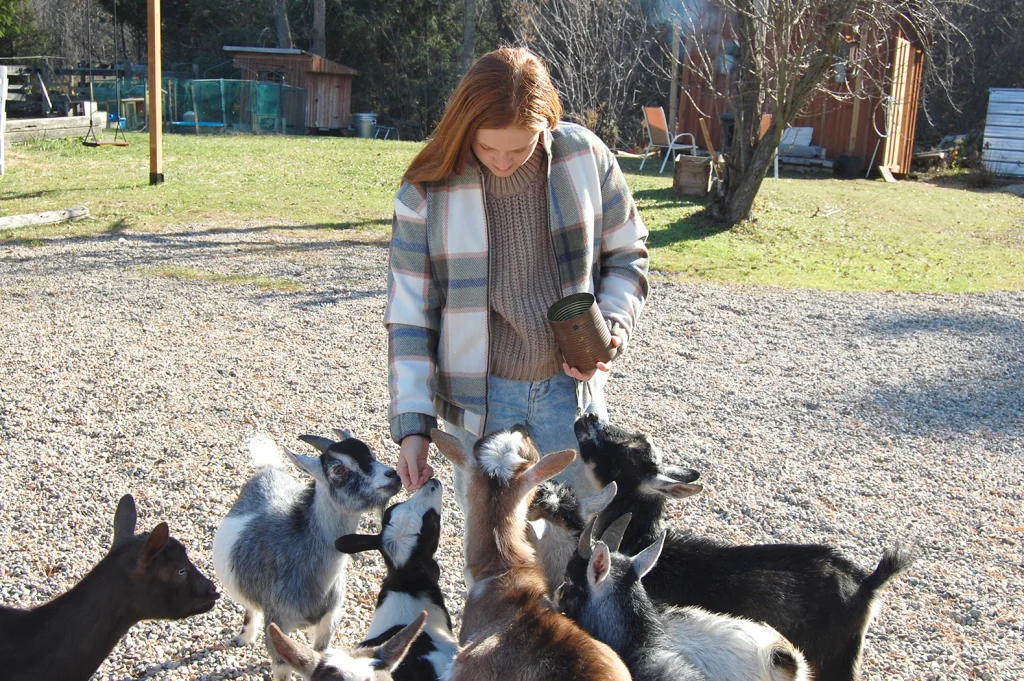
Savoie owns Mountain View Farm on chemin Crégheur in Luskville where she raises goats to produce a variety of goat milk products. She started the farm tour event in 2021 with the goal of bringing more attention to the farmers and vendors in Luskville, and this year for the first time, decided to host the annual farm hop over two days instead of just one.
“We go through so much time and effort preparing for just one day,” Savoie said. “I thought, we should try it for two days, then, and maybe we’ll do two days going forward.”
Savoie estimated that about 350 people participated in the hop over the two days. She hopes to do another full weekend in the spring.
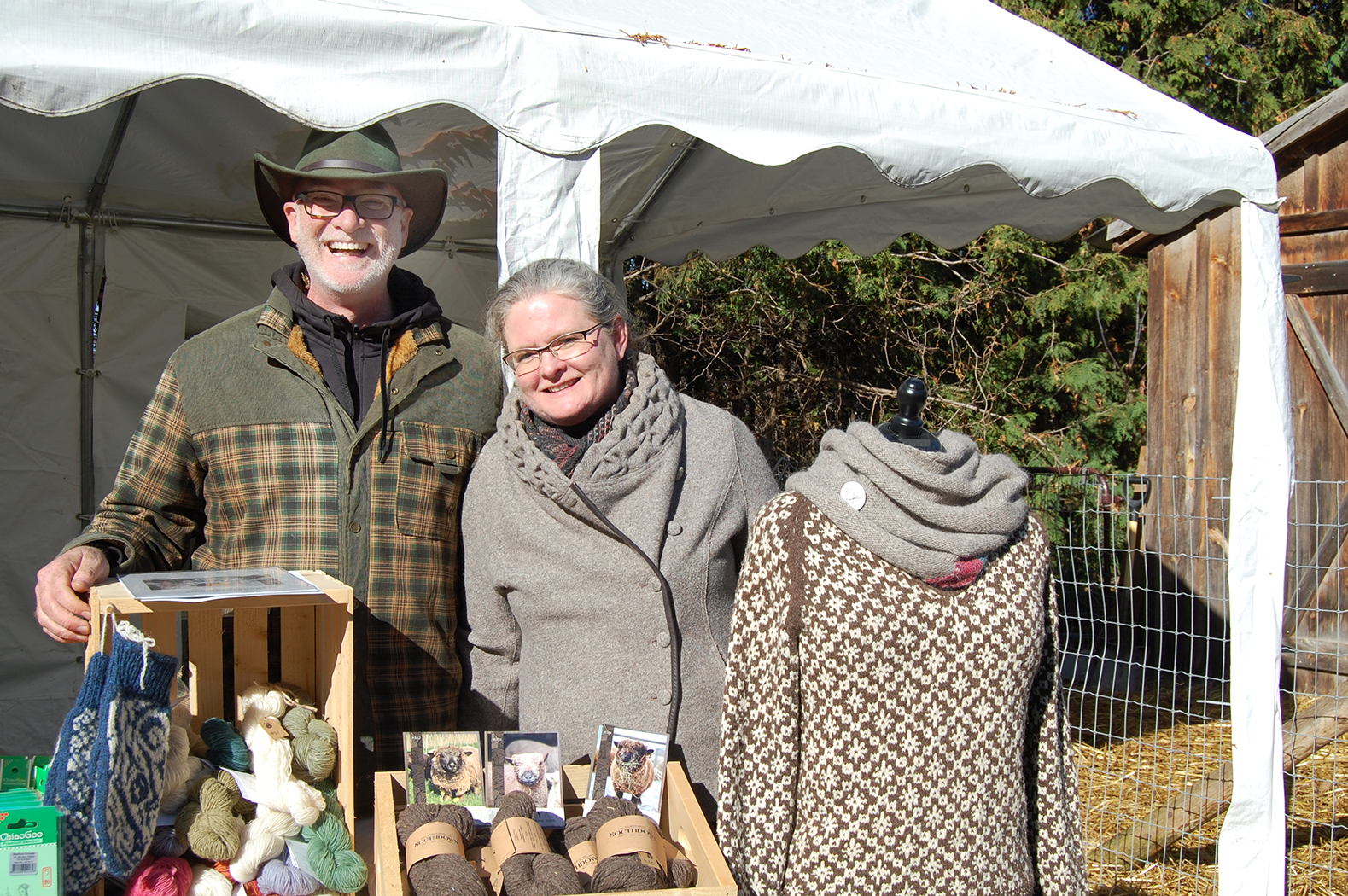
Trefor and Karri Munn-Venn moved their family to Luskville about four and a half years ago to start Leystone Farms, and joined the farm hop right away.
“The farm hop is a nice blend of local folks and people that come from the city to see what’s up,” Karri said. “Folks may not be aware of Luskville because it’s on the other side of the mountain.”
Leystone Farms has sheep, chickens, alpacas and one grumpy guardian llama named Loretta. The Munn-Venns use the wool to make yarn products.
They also collect unused wool from all over the region and transform it into wool pellets which can be used in gardens to help retain and distribute water, one in a number of efforts the Munn-Venns are making to prioritize environmentally sustainable agricultural practices.
Jeremy Mullen at Agape Gardens is also thinking about sustainability. He plants with a permaculture philosophy on his Mountain Road farm, which means he tries to work with nature and not against it.
“Instead of having a field of corn, what we do is observe how agriculture naturally works and base our farming techniques off those principles,” Mullen said. “We have multiple crops, we use natural fertilizers and we don’t kill the insects, we let them do their jobs.”
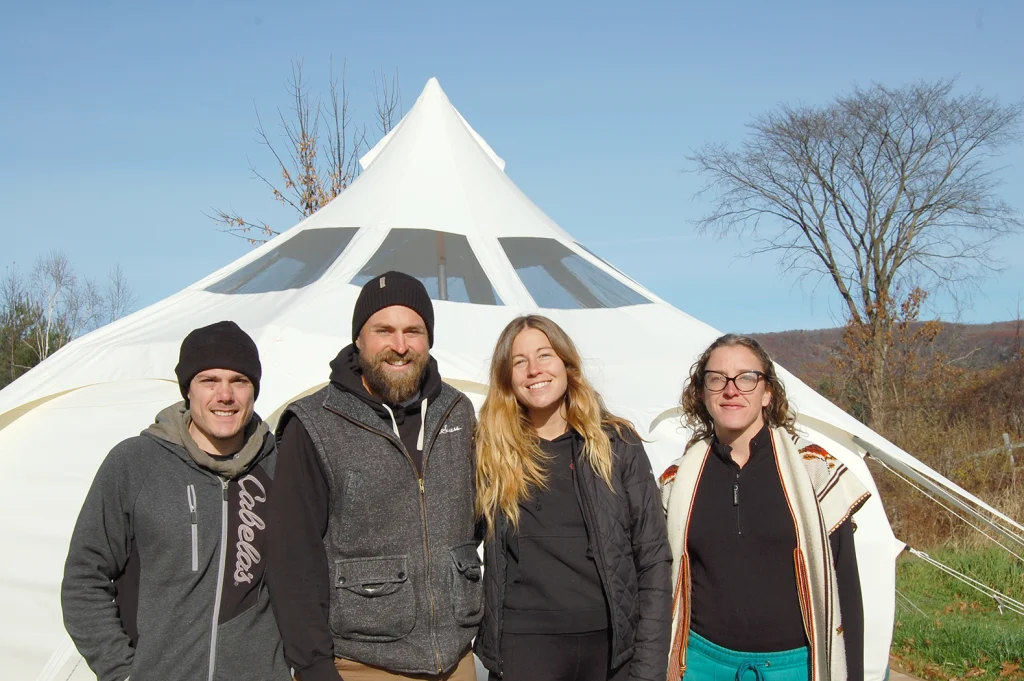
But the farmers participating in the weekend hop also noted that sustainability for them isn’t just about the environment, it’s also about economics. Mullen opened “glamping” accommodations on his farm this summer. So far, he has three three-season tents on the property, with plans to grow it to 10, and a small private spa.
“It’s a much more viable economic engine,” Mullen said. “We planted an orchard but, as you know, fruit trees don’t grow in a year.”
Savoie said she hopes to open a café at Mountain View Farm as another revenue stream.
“Nowadays, farmers are not capable of surviving on their own homestead,” she said. “It’s very important to welcome the community and to do the agritourism thing because it’s impossible to survive without it.”