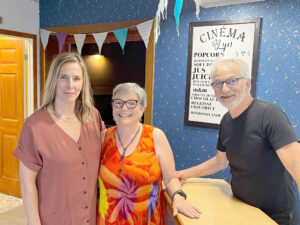



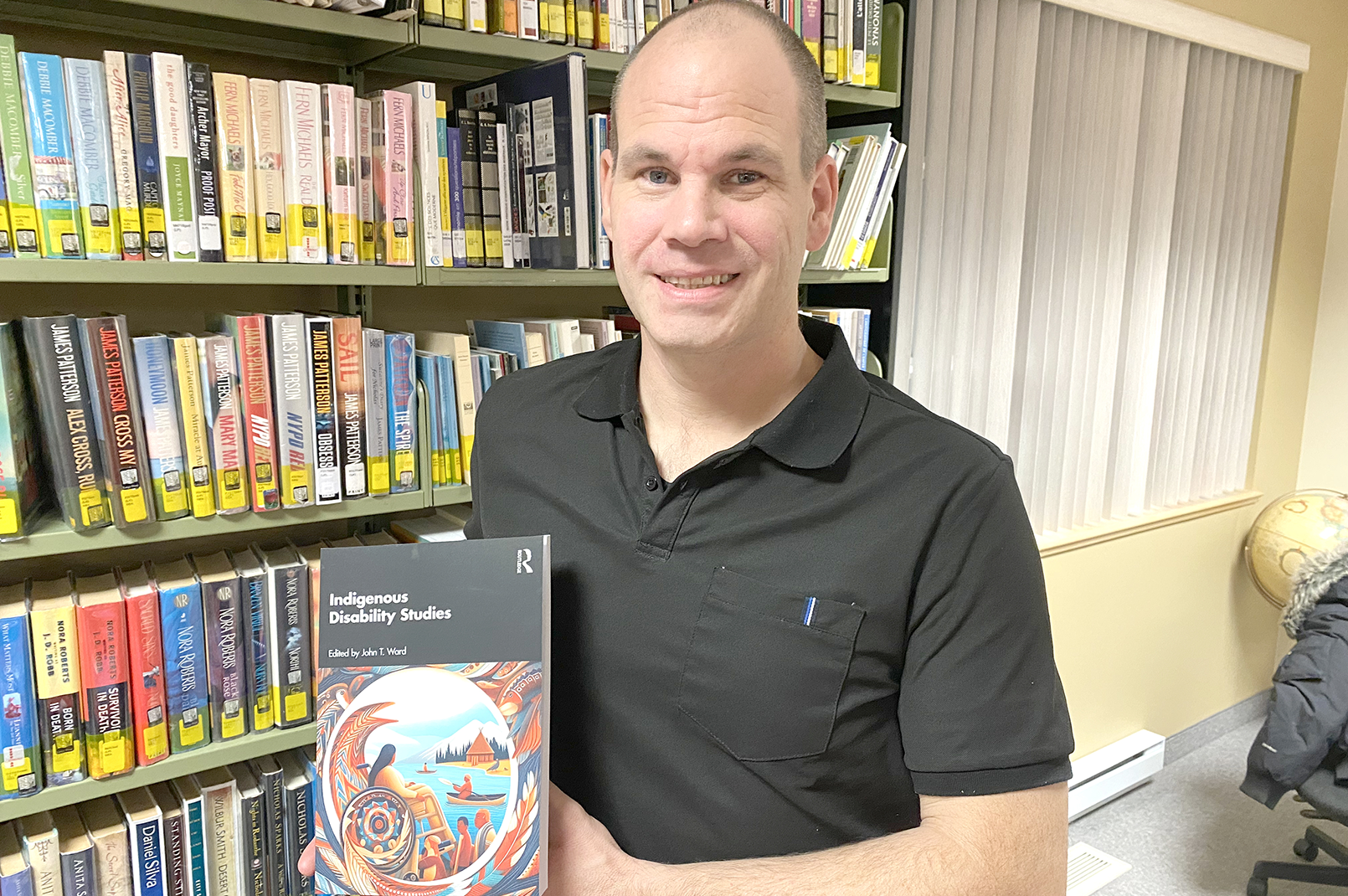

The Shawville-Clarendon Library hosted local scholar John Ward on Thursday evening for the launch of his new book, Indigenous Disability Studies.
In this book, which was both edited by Ward and contains several chapters written by him, Ward brings together international scholars and Indigenous elders to talk about different ways Indigenous cultures around the world think about and relate to disability, with the goal of expanding and challenging some Euro-centric ideas around what it means to live with a disability.
“Most of the research when it comes to Indigenous disability research or knowledge is often about the global north, which is Canada, the United States, Australia and New Zealand,” Ward said. “It often excludes South America, Africa and Asia.”
Ward said that he was able to connect with people from all over the world who think about disability studies in new ways.
“But I connected with people from Mexico, Venezuela, Colombia, Taiwan, Indonesia and seven people from Africa,” Ward said. “I tried to get it as global as possible.”
At the launch, Ward gave an example of how in some languages, there is no word for disability, there is only a word that refers to difference. He also noted that many Western countries do not always have proper means of assessing and diagnosing conditions in Indigenous cultures.
“Their measurements they have for assessing, they don’t always reflect Indigenous people,” Ward said.
In his conversation with THE EQUITY ahead of the launch, Ward noted how many Indigenous children were diagnosed with disabilities in residential schools simply because they couldn’t learn English quickly enough. He recounted an anecdote he heard shared from one elder, who suggested non Algonquin-speakers would likely also be labeled dyslexic after only six months of studying the language.
In another anecdote, Ward explained how in the Maori language, the word for autistic translates, roughly, to “a person who goes off and who’s alone so they can handle what they do,” a definition, he said, which offers a different understanding of living with autism.
Ward was raised in Aylmer before moving back to the Pontiac, where his father is from, this past summer.
“I have mixed Indigenous heritage, like a lot of people in the Pontiac,” Ward said. “On my mom’s side there’s a mix of French Canadian and Algonquin there.”
In Ward’s two chapters in the book, he writes about the language surrounding disability and about his own experiences with dyslexia and light sensitivity. When it comes to dyslexia, Ward said that it’s not often seen as a disability from an Indigenous perspective, but rather something positive.
Ward said that his mom was very supportive growing up while he struggled with dyslexia in school. She found alternative teaching methods and took him for testing in the United States when it wasn’t available in Canada.
Now, Ward has a bachelor of arts in history, a master’s degree in history specialized in Indigenous policy and gender equality, and a PhD in education, where he specialized in Indigenous disabilities, holistic learning and reconciliation.
The book builds on his doctoral research.
“The book connects people and communities,” Ward said. “It’s not just for Indigenous communities, but also lets people see what’s going on and what they can do. We can learn from these dialogues and engagements from around the world.”
Ward, who now lives in Ladysmith, currently teaches virtually at the University of Sydney in Australia. He’ll be traveling there in March to speak at a series of universities about his book.
But he hopes that this book becomes more than a university reference.
“I don’t want it just for libraries that university professors quote, or students use as a footnote,” Ward said. “I want it to be in First Nations friendship centres and community centres. I want it to be something anyone can pick up and think, ‘I’ve had a similar struggle too.’”