





Eva Baldi
Quyon June 7, 2023
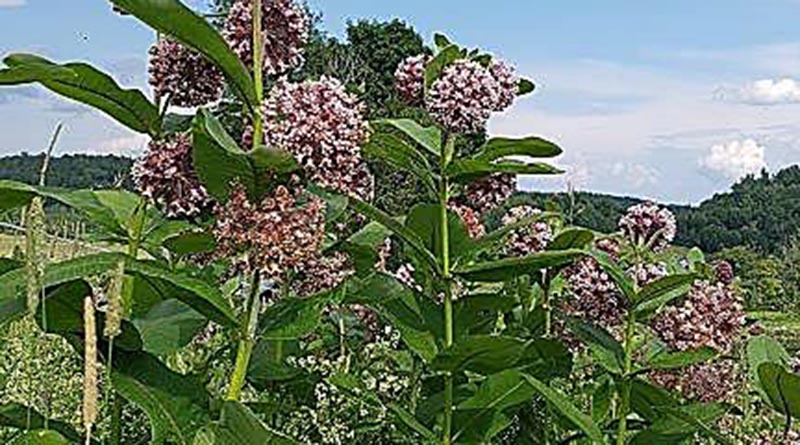
Ferme des Murmures is more than just a piece of land; it is a sanctuary for delicate orange and black wings, and a testament to the power of conservation. Nestled up Wolf Lake Road north of Quyon, this remarkable milkweed farm is transforming the landscape, one butterfly at a time.
When her brother passed away from cancer early into his retirement, Chantal Chrétien knew that she wanted to make sure she spent her time doing the things that she loved to do. At the time, Chrétien and her husband René Boily were living in Hull. Chrétien had recently discovered a love for horses and horseback riding, while Boily loved nature, hunting and the outdoors. The couple thought about what they hoped to do in their retirement, and came to the conclusion that moving to a farm would best serve what they both wanted.
In 2016, the couple bought a property on Wolf Lake Road. As they walked the property, they were stunned by the number of milkweed plants that called their land home.
“As former wildlife technicians, we knew that this plant was something special,” explained Chrétien.
The more research the couple did, the more they . . .
realised that milkweed not only allowed them to have a unique crop but also supported their values when it came to environmental conservation.
“We like to protect the environment, and protecting the environment is also protecting, who’s living in it. The monarch butterfly, that’s the only plant they eat to become a butterfly. So I think it’s reaching our values,” said Chrétien.
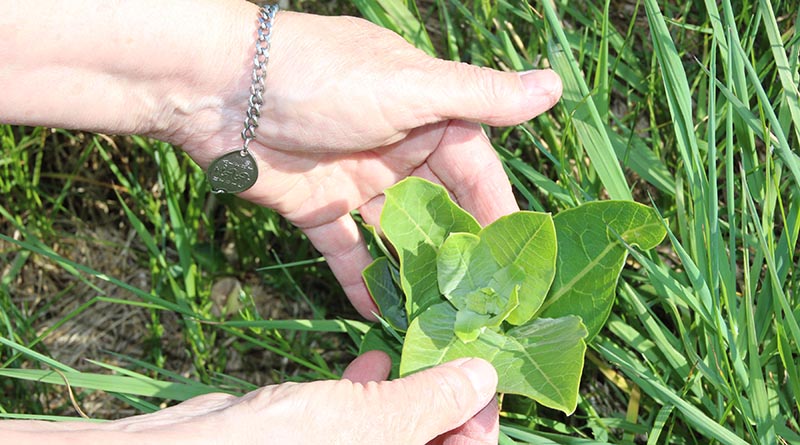
The milkweed plant first sprouts in the first few weeks of June. It takes two and a half months until the pods are mature. Milkweed producers know that it is time to harvest when the seeds inside the pods have turned from white to brown in the middle of September.
Though there is machinery available to harvest the milkweed pods, Chrétien and Boily prefer to hire people to pick the milkweed pods by hand in order to avoid harming the butterfly chrysalises attached to the leaves.
“There are three generations of butterflies each summer” explained Chrétien, “the first generation that comes from Mexico. They lay their eggs and they die. The second generation does the same. But, the third one has it in their genes to live longer. They live for three months as opposed to one month like the other generations. So if you go in your field with the machinery while the cocoons are hatching you will kill them. So you’re not protecting the butterflies. You’re killing them. You’re killing the generation that flies back to Mexico.”
Chrétien hires local people looking to make some extra cash to harvest milkweed. She admits that the job is physically strenuous. With the plant growing to between two feet and four feet high, most pickers will spend the day bent over picking. Despite the challenge, in 2016 they were able to harvest over 15,000 kilos in three weeks.
A few years ago, Chrétien’s hens began brooding in December. For those unfamiliar with the average behaviour of chickens, it is far more common for chickens to sit on their nests in the spring, as the light and warm weather signals for them to begin raising chicks.
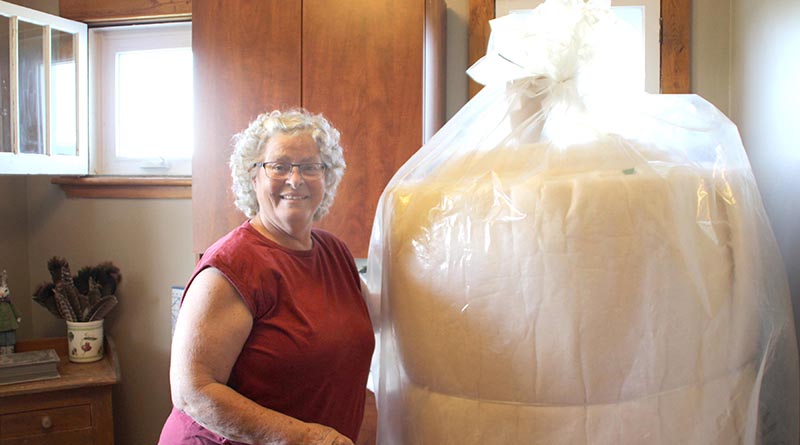
Chrétien was worried that her chicks would freeze in the cold weather. So, she made a milkweed fibre nesting box pads to keep the chicks warm without having to install more electric heaters. Her experiment worked, and Chrétien claims she now has to kick her hens out of the nesting boxes because they are so comfortable and warm sitting on their milkweed pads. Chrétien has moved on to making larger pads for dogs, cats, and humans to sit on during cold days, and even prototyping milkweed gloves.
The insulation of milkweed fabric has been tested on Mount Everest.
The milkweed fabric’s insulation properties have undergone testing on Mount Everest. According to Chrétien, a climber approached the company that purchases her milkweed pods, highlighting the significant impact the number of sleeping bags required to stay warm during overnight climbs. Once used, these sleeping bags retain a considerable amount of moisture and fail to dry out through the journey. As a solution, the company devised a waterproof sleep suit for the climber, incorporating insulation made from milkweed fibre.
“And he came back saying ‘it’s too warm’,” exclaimed Chrétien.
Milkweed fibre is considered to be three times as warm as goose down, while being three times lighter, hypoallergenic and waterproof.
Chrétien and Boily have received some backlash for their planting of milkweed. Despite this, they believe in the plant, the fibre that it makes, and its ability to keep the monarch butterfly population healthy.
“Because we were growing milkweed, a plant that everyone wants to kill. One farmer told me that if I was his neighbour, he would sue me, right away, because he spends thousands of dollars trying to kill that plant,” said Chrétien, “So I said, ‘well, luckily, I’m not your neighbour.’ And I’m not going to stop growing milkweed.”