


It’s Saturday morning and this intrepid reporter is on assignment. Today’s mission: photograph people at the Ski at School event in Campbell’s Bay.
As I get out of my car, the -30 winter Ottawa River wind whipping my face, I think to myself: surely nobody is crazy enough to be outside skiing in this weather.
But I decided to go take a look. I enter the Ski at School shack right beside the Carrefour jeunesse-emploi and am immediately greeted by Katelyn Bertrand, a native of the Bay who works for the organization.
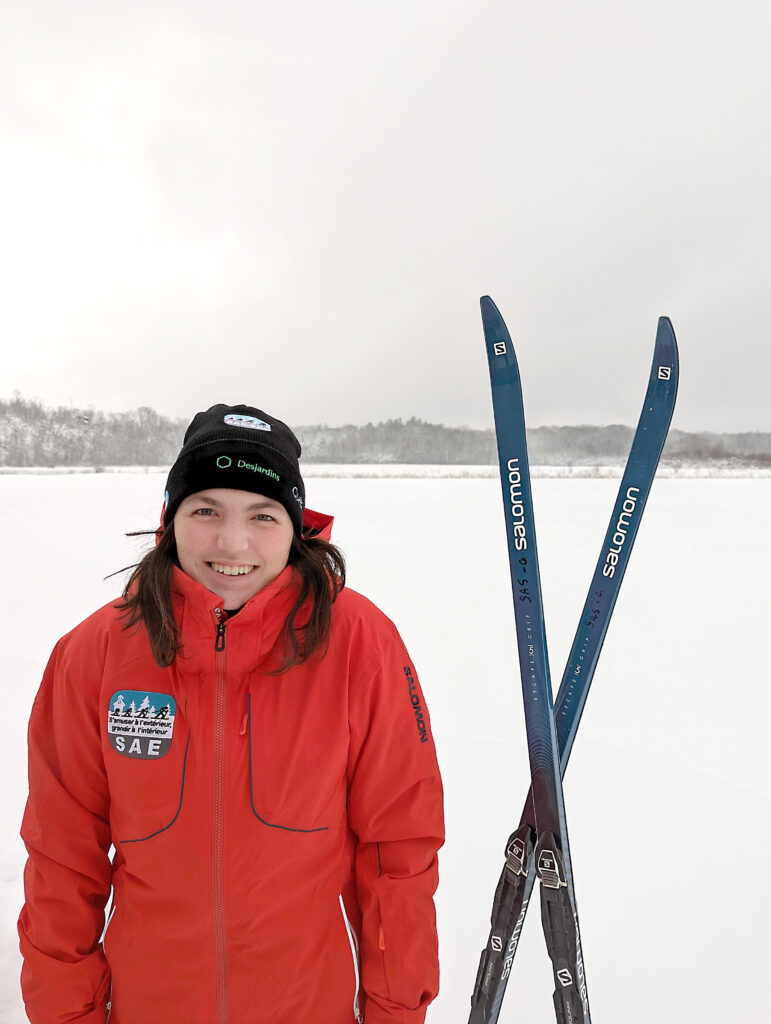
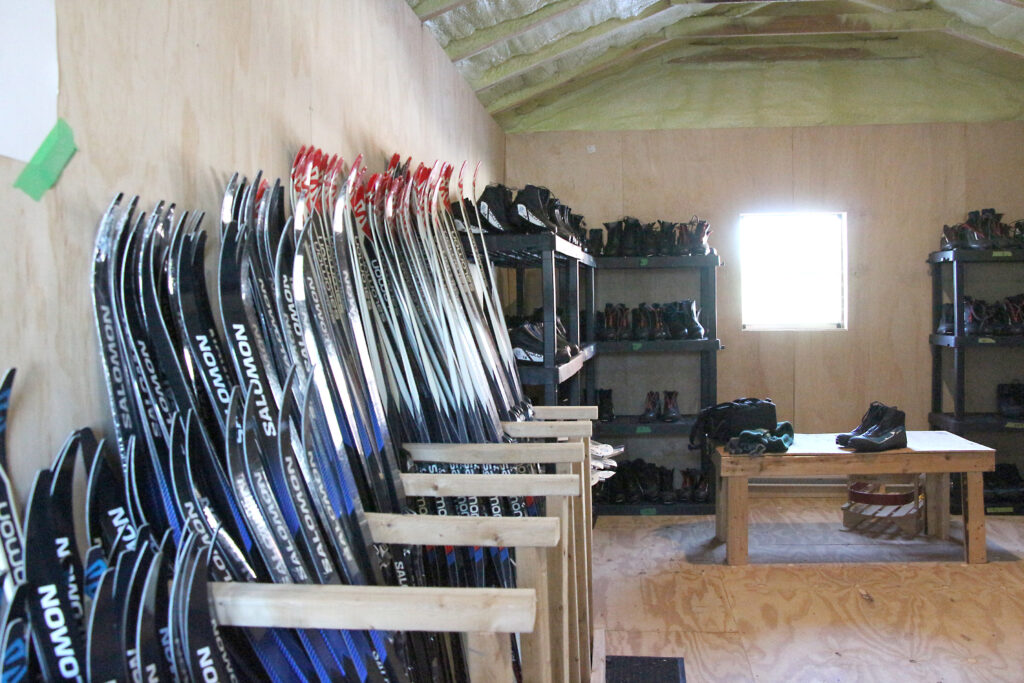
Katelyn, who is decked out in Salomon ski gear, said I was her first visitor. It appeared nobody wanted to brave the -30 degree weather to come learn to ski, which is understandable. We chatted for a bit about the organization and what they do. She tells me they loan equipment to schools in the area and teach kids how to ski. She said they also travel around to different winter carnivals so that everyone has an opportunity to try out cross-country skiing.
There is nobody there to take photos of, so I drive off. But as I’m driving I think to myself what a shame it would be to see Katelyn, so full of energy, standing around in the cabin all day with nobody to teach. Besides, I’d never learned how to cross-country ski – and what better opportunity than a frigid Campbell’s Bay afternoon!
So I swallowed my pride, turned around, and asked Katelyn if she’d teach me. Naturally she said yes, and immediately got to work outfitting me with some gear.
First were the boots. I ask why the flap and zipper cover up the laces. “It keeps [the boot] very streamlined, and it also keeps the snow out,” she said, adding that I might fall and it would be a good idea to keep myself as snow-proof as possible.
Then, the poles – which need to be slightly less than shoulder-height – and then finally the skis. She tells me one of the schools of thought is to place the ski upright on the ground, and extend your arm in the air alongside it. She said the ski should reach at least your wrist.
As she’s outfitting me with gear, we get to talking. I learned that Katelyn has been skiing since the age of seven, and practically had to beg her school during parent-teacher sessions to take the kids on a ski trip. In high school, she got even more hooked when her outdoor education teacher Martin Bertrand led a several-day ski trip to Parliament Hill – an endeavor helped in large part by Ski at School.
Now, Katelyn loves everything to do with outdoor adventure. In the summer she works in the whitewater industry, which has taken her as far as British Columbia and Zambia. She occasionally works at some of the local rafting companies here in the Pontiac as well, adding that the rapids here are world-class.
But I was there to ski, not flap my gums. Out we went into the cold, where Katelyn first showed me how to fall – an essential skill for a beginner. “I’ll probably be doing a lot of that,” I half-joked.
She taught me to bend my knees to brace for impact. Then, once on the ground, she showed me to put my skis next to each other, then inch my feet forward so that my weight is on top of my skis, and then get up.
Then, she showed me how to propel myself forward on the skis. Usually you’d use the poles for propulsion but she wanted to make sure I got the skiing motion down pat before relying on the poles too much. “It’s very much a skating motion,” she says.
Knowing how to skate already, I think it’s going to be a breeze. I propel myself forward, putting one ski in front of the other, but I lose my balance. I fall backwards, landing flat on my arse.
“You always have to keep a bit of a bend in your knees,” Katelyn said, adding that it helps to keep your weight stacked over your feet so that you can be more reactive.
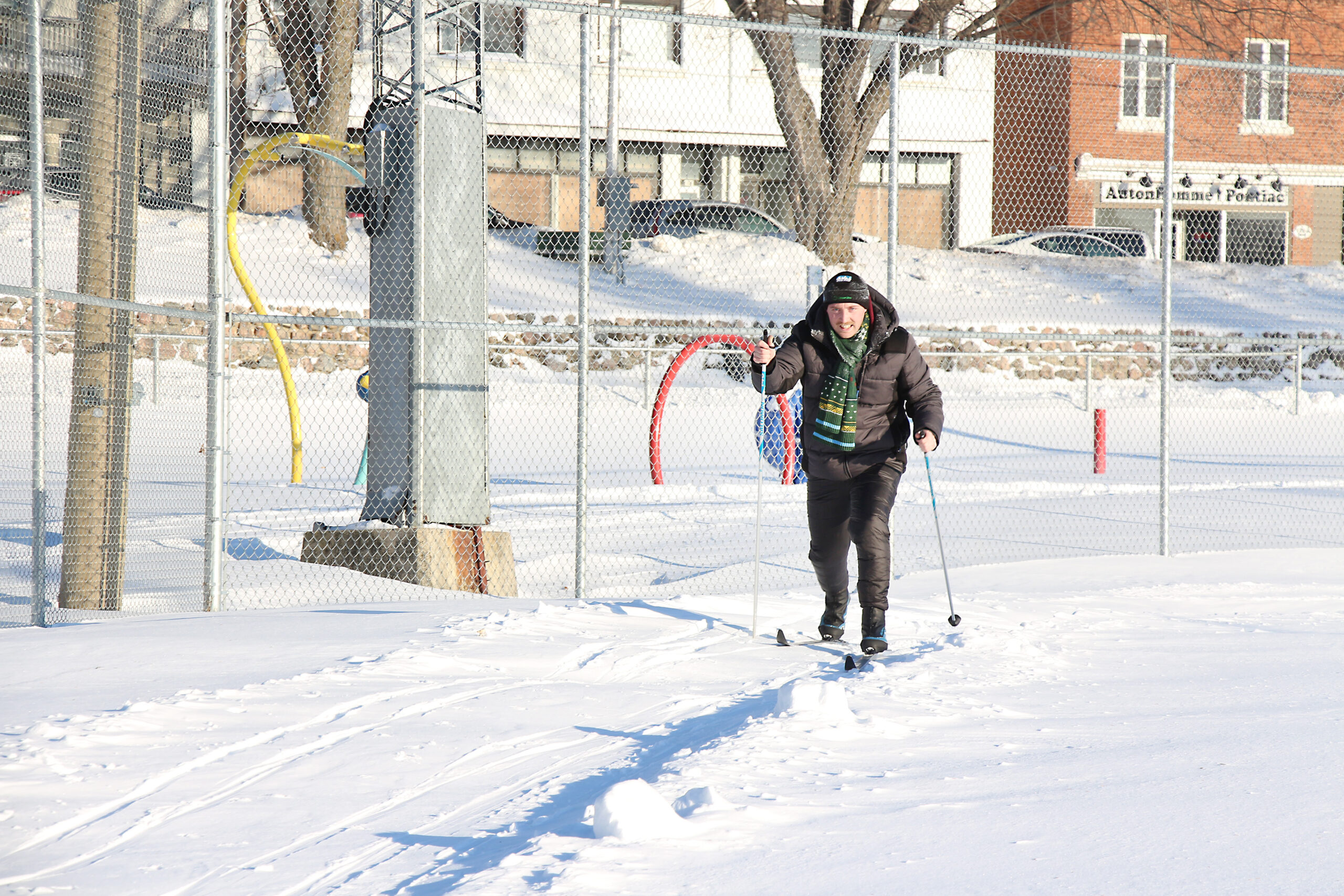
Once I get the skating motion down, we add in the poles. It takes me a few reps to get the motion down (left foot forward, right arm forward, then the inverse), but soon enough I’m zipping along the track.
As I get faster, I also make more mistakes. Now, my falls are more frequent. I probably ended up on the ground a half-dozen times, including once when Katelyn had to untangle my skis because they were criss-crossed underneath me.
“I promise you’re doing really good, and I’m explaining stuff that I don’t usually explain right away,” she reassured me.
This vote of confidence keeps me pushing forward. Soon enough, I’ve got the rhythm down and we’re doing laps around the ballfield. The movements are becoming automatic, and I didn’t fall once! Katelyn fist-bumps me for a job well done, and I’m feeling pretty damn good. I wasn’t even that cold, and I even shed a layer.
Our cheeks rosy and fingers tingling, we decide to call it a day. Katelyn said she was impressed with my attention to detail, and had a bit of constructive criticism for me to remember for next time. “Your legs are a bit too bent,” she said gently. I took it in stride, saying I’d work on it.
As we’re taking off our gear in the shack, I tell Katelyn that I moved here two years ago and have had a hard time finding outdoor recreation options. She nodded knowingly. “It can be hard if you don’t know where to look,” she said, adding that organizations like Ski at School are trying to make it more accessible.
So next time Ski at School sets up for the day, please go visit Katelyn. Well, maybe not if it’s -30 outside – it’s best you keep your extremities intact. Not everyone is as crazy as a reporter. But you’ll learn a lot, and you’ll have fun while you’re at it.
She says she’ll be at the Danford Lake winter carnival on Jan. 31 as well as the Otter Lake fishing derby on Feb. 7. Take her up on it – she’s a great teacher! And maybe you’ll learn a thing or two more about the outdoor fun there is to be had in the Pontiac.
C’est samedi matin et votre intrépide journaliste est en mission. Mission du jour : photographier des gens à l’événement Ski à l’école à Campbell’s Bay.
Alors que je sors de ma voiture, le vent glacial de la rivière des Outaouais à -30 degrés fouettant mon visage, je me dis : personne n’est assez fou pour faire du ski dehors par un tel temps.
Mais j’ai décidé d’aller voir. J’entre dans le chalet de Ski à l’école, juste à côté du Carrefour jeunesse-emploi, et je suis immédiatement accueillie par Katelyn Bertrand, une native de la Baie qui travaille pour l’organisation.
Katelyn, vêtue de son équipement de ski Salomon, m’a dit que j’étais sa première visiteuse. Il semblait que personne ne voulait braver les -30 degrés pour venir apprendre à skier, ce qui est compréhensible. Nous avons discuté un peu de l’organisation et de ce qu’elle fait. Elle m’a dit qu’ils prêtent du matériel aux écoles de la région et enseignent aux enfants comment skier. Elle a ajouté qu’ils se déplacent également dans différents carnavals d’hiver afin que chacun ait l’occasion d’essayer le ski de fond.
Il n’y avait personne à photographier, alors je suis partie. Mais en conduisant, je me suis dit que ce serait dommage de voir Katelyn, si pleine d’énergie, à ne rien faire dans le chalet toute la journée sans personne à qui enseigner. De plus, je n’avais jamais appris à faire du ski de fond – et quelle meilleure occasion qu’un après-midi glacial à Campbell’s Bay !
J’ai donc ravalé ma fierté, fait demi-tour et demandé à Katelyn si elle voulait bien m’enseigner. Naturellement, elle a dit oui et s’est immédiatement mise au travail pour m’équiper.
Il y a eu d’abord les bottes. J’ai demandé pourquoi le rabat et la fermeture éclair couvraient les lacets. « Ça garde [la botte] très profilée, et ça empêche aussi la neige d’entrer », a-t-elle dit, ajoutant que je pourrais tomber et qu’il serait bon de me garder aussi étanche à la neige que possible.
Ensuite, les bâtons – qui doivent être légèrement en dessous de la hauteur des épaules – puis finalement les skis. Elle m’a dit qu’une des écoles de pensée est de placer le ski à la verticale sur le sol et d’étendre le bras en l’air le long du ski. Elle a dit que le ski devrait atteindre au moins le poignet.
Pendant qu’elle m’équipait, nous nous sommes mises à discuter. J’ai appris que Katelyn skie depuis l’âge de sept ans et qu’elle a pratiquement dû supplier son école lors des rencontres parents-enseignants pour emmener les enfants en voyage de ski. Au secondaire, elle est devenue encore plus accro lorsque son professeur d’éducation en plein air, Martin Bertrand, a dirigé un voyage de ski de plusieurs jours à la colline du Parlement – une entreprise largement facilitée par Ski à l’école.
Maintenant, Katelyn aime tout ce qui touche à l’aventure en plein air. L’été, elle travaille dans l’industrie de l’eau vive, ce qui l’a menée jusqu’en Colombie-Britannique et en Zambie. Elle travaille aussi occasionnellement pour certaines des entreprises de rafting locales ici dans le Pontiac, ajoutant que les rapides ici sont de classe mondiale.
Mais j’étais là pour skier, pas pour bavarder. Nous sommes sorties dans le froid, où Katelyn m’a d’abord montré comment tomber – une compétence essentielle pour une débutante. « Je vais probablement beaucoup tomber », ai-je plaisanté à moitié.
Elle m’a appris à plier les genoux pour amortir l’impact. Puis, une fois au sol, elle m’a montré à mettre mes skis l’un à côté de l’autre, puis à avancer mes pieds petit à petit pour que mon poids soit sur mes skis, et ensuite à me relever.
Ensuite, elle m’a montré comment me propulser vers l’avant sur les skis. Normalement, on utilise les bâtons pour la propulsion, mais elle voulait s’assurer que je maîtrisais bien le mouvement de ski avant de trop compter sur les bâtons. « C’est très similaire à un mouvement de patinage », dit-elle.
Sachant déjà patiner, je pense que ce sera un jeu d’enfant. Je me propulse vers l’avant, mettant un ski devant l’autre, mais je perds l’équilibre. Je tombe en arrière, atterrissant à plat sur les fesses.
« Il faut toujours garder les genoux un peu fléchis », a dit Katelyn, ajoutant que ça aide à maintenir le poids au-dessus des pieds pour être plus réactif.
Une fois que je maîtrise le mouvement de patinage, nous ajoutons les bâtons. Il me faut quelques répétitions pour bien saisir le mouvement (pied gauche en avant, bras droit en avant, puis l’inverse), mais assez vite, je file le long de la piste.
Plus je vais vite, plus je fais d’erreurs. Maintenant, mes chutes sont plus fréquentes. J’ai probablement terminé au sol une demi-douzaine de fois, y compris une fois où Katelyn a dû démêler mes skis parce qu’ils étaient croisés sous moi.
« Je te promets que tu te débrouilles très bien, et j’explique des choses que je n’explique pas habituellement tout de suite », m’a-t-elle rassurée.
Ce vote de confiance me pousse à continuer. Assez vite, j’ai le rythme et nous faisons des tours autour du terrain de balle. Les mouvements deviennent automatiques, et je ne suis pas tombée une seule fois ! Katelyn me donne un « fist-bump » pour le travail bien fait, et je me sens plutôt bien. Je n’avais même pas si froid, et j’ai même retiré une couche.
Les joues roses et les doigts picotants, nous décidons d’arrêter là. Katelyn m’a dit qu’elle était impressionnée par mon souci du détail, et m’a donné une petite critique constructive à retenir pour la prochaine fois. « Tes jambes sont un peu trop pliées », a-t-elle dit gentiment. Je l’ai pris avec philosophie, en disant que j’y travaillerais.
Alors que nous retirions notre équipement dans le chalet, je dis à Katelyn que j’ai déménagé ici il y a deux ans et que j’ai eu du mal à trouver des options de loisirs en plein air. Elle a hoché la tête avec un sourire entendu. « Ça peut être difficile si on ne sait pas où chercher », a-t-elle dit, ajoutant que des organisations comme Ski à l’école essaient de rendre la chose plus accessible.
Alors la prochaine fois que Ski à l’école s’installera pour la journée, n’hésitez pas à aller voir Katelyn. Bon, peut-être pas s’il fait -30 degrés dehors – il vaut mieux garder vos extrémités intactes. Tout le monde n’est pas aussi fou qu’une journaliste. Mais vous apprendrez beaucoup et vous vous amuserez en même temps.
Elle a dit qu’elle serait au carnaval d’hiver du lac Danford le 31 janvier ainsi qu’au derby de pêche d’Otter Lake le 7 février. Profitez-en – c’est une excellente professeure ! Et peut-être apprendrez-vous une chose ou deux de plus sur le plaisir en plein air qu’il y a à découvrir dans le Pontiac.