


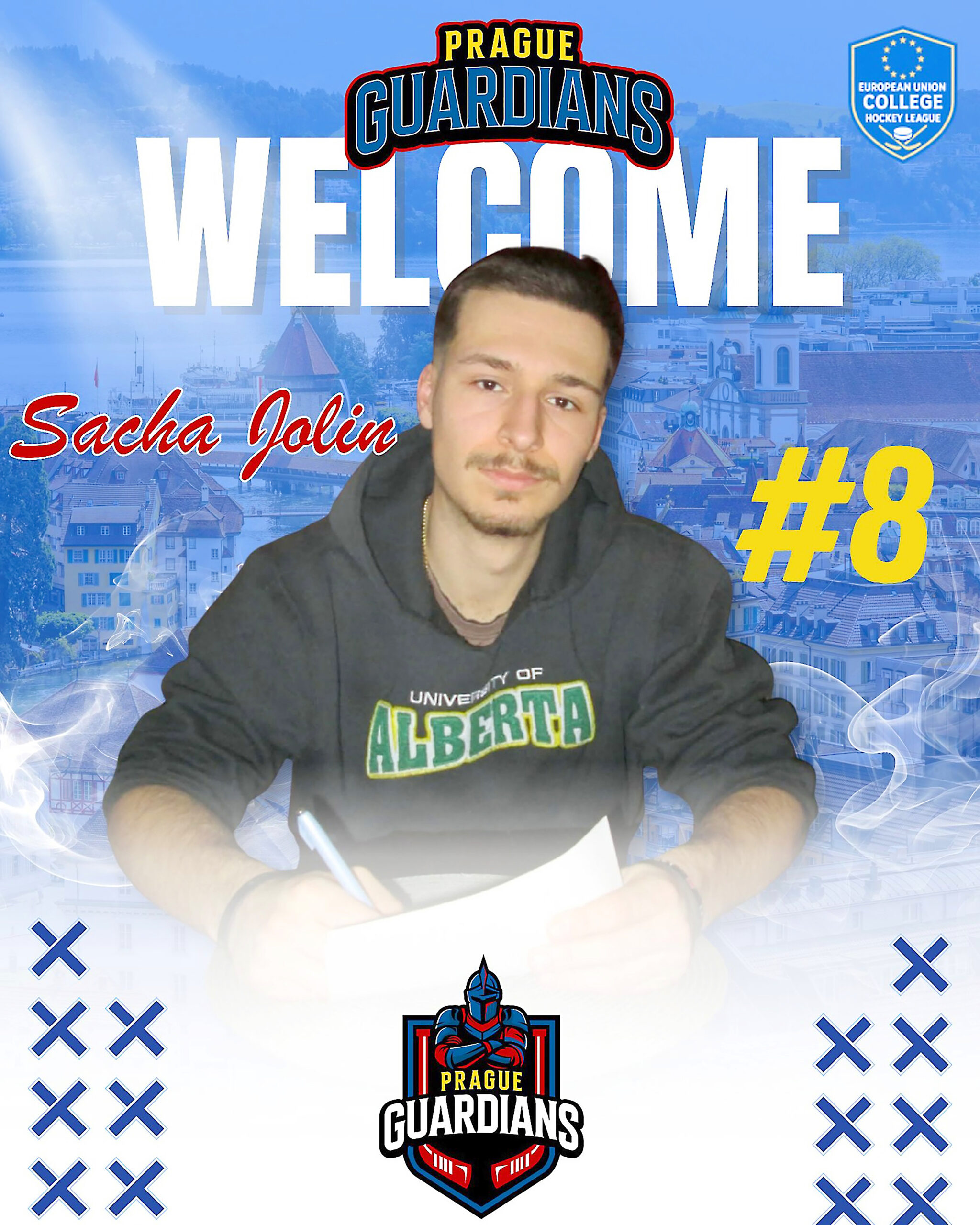



Fort-Coulonge hockey player Sacha Jolin is used to going the distance for the game he loves. Growing up, his dad would drive him to regular practices as far as Deep River and Gatineau, depending on which team he was playing with.
Since completing an electromechanical technician program in Gatineau in 2024, Jolin has returned to playing with his hometown Comets, which he first joined at five years old. But this return will be short-lived.
Now 20 years old, Jolin will be hitting the road once again for the sport, this time travelling a little further afield, with plans to move to Czechia in August to play for a college-level team that recently recruited him.
“The offer came kind of out of the blue. It kind of felt unreal,” Jolin said, explaining he believes he was scouted during a recent game he played with his Comets Juvenile team in Gatineau. “I was shocked. I was just really happy.”
Jolin said he received offers from three college teams after that game – two from Michigan, and one from the Prague Guardians, one of six teams in the newly formed European Union College Hockey League (EUCHL) which will host its first games this fall.
The league was created to offer young Canadian and American players more options for continuing their hockey careers after, in 2024, the National Collegiate Athletic Association (NCAA) changed its amateurism rules for who could play college hockey, opening it up to players who were already playing in the Canadian Hockey League.
“Increased competition for roster spots, coupled with NCAA Division I roster limitations and the reduction of partial scholarship opportunities, has left many players with fewer options to continue their athletic and academic careers,” the EUCHL website explains, of the need for its creation.
“Designed specifically for those players impacted by the NCAA’s evolving landscape, the league combines world-class education with competitive hockey and a clear pathway to European professional leagues.”
Jolin said because the league is so new, he doesn’t know much about his or the other teams he’ll be up against, but is excited for the opportunity.
“I’ve never been to Europe, and I think going there, the experience is going to be crazy,” he said. “I know a few people that did, and they all had fun, had a great time.”
Jumping in the deep end for the sake of getting better is not new to Jolin. When he was 11 years old, and barely spoke English, he joined the Deep River Knights for two seasons, coached by David Miller.
“Sacha didn’t have a huge English background. It was more nods and smiles that I would get from him, but he seemed to understand hockey quite well,” Miller recalled. “And we didn’t mind having him because he would have been our best forward out there.”
Miller said he immediately recognized the young Jolin to have a good hockey sense about him.
“He just kind of knew where to go and what to do. On the ice, do you really need to be able to speak French and English? No you don’t. You’re acting on instinct. His skating was good, his shot was good, and I said, ‘Hm, yep. It’s going to be enjoyable having him on our team.’”
Miller said he hasn’t seen many of his former players go on to play college-level – in fact only Jolin and his own daughter, who now plays with the Carleton University team.
“It’s tough, because you have to make that commitment, and usually for anybody around here it requires you to travel. You have to put in the time to do it and you have to have the parents that are willing to do it as well.”
The dedication from his own family isn’t lost on Jolin.
“My dad, he drove me all around. I think if I would have refused [this opportunity], it would have been a little punch to his face. I think this is a good accomplishment for me, but my dad is also really, really happy.”
Lucky for Jolin, he won’t have to learn Czech before he hops the Atlantic this fall, so will be able to focus on his game and his schooling.
He said he plans to study finance at the University of Finance and Administration while he’s there, and knows the academics are as important to his success abroad as his performance on the ice.
“My goal there is to try to dominate at everything – dominate on the ice and also in school. Because when you play there you also have to be good in school.”
He said once he completes the four-year program, he hopes to be able to play professionally in Europe before returning to Canada, something he’s long dreamt of doing.
“When I was five, my goal was to be a professional hockey player, and now that goal is even closer,” he said.
Le joueur de hockey de Fort-Coulonge, Sacha Jolin, a l’habitude de parcourir de longues distances pour le sport qu’il aime. En grandissant, son père le conduisait régulièrement à des entraînements aussi loin que Deep River et Gatineau, selon l’équipe avec laquelle il jouait.
Après avoir terminé un programme de technicien en électromécanique à Gatineau en 2024, Jolin est retourné jouer avec les Comètes de sa ville natale, qu’il avait rejointes pour la première fois à l’âge de cinq ans. Mais ce retour sera de courte durée.
Maintenant âgé de 20 ans, Jolin reprendra la route pour le sport, cette fois en voyageant un peu plus loin, avec l’intention de déménager en Tchéquie en août pour jouer pour une équipe collégiale qui l’a récemment recruté.
« L’offre est arrivée un peu de nulle part. C’était un peu irréel », a déclaré Jolin, expliquant qu’il croit avoir été repéré lors d’un récent match qu’il a joué avec son équipe juvénile des Comètes à Gatineau. « J’étais sous le choc. J’étais juste très heureux ».
Jolin a déclaré avoir reçu des offres de trois équipes collégiales après ce match – deux du Michigan et une des Prague Guardians, l’une des six équipes de la nouvelle European Union College Hockey League (EUCHL) qui disputera ses premiers matchs cet automne.
La ligue a été créée pour offrir aux jeunes joueurs canadiens et américains plus d’options pour poursuivre leur carrière de hockey après qu’en 2024, la National Collegiate Athletic Association (NCAA) ait modifié ses règles d’amateurisme concernant les joueurs pouvant évoluer au niveau collégial, l’ouvrant aux joueurs qui évoluaient déjà dans la Ligue canadienne de hockey.
« La concurrence accrue pour les places sur les listes, combinée aux limitations de listes de la Division I de la NCAA et à la réduction des possibilités de bourses partielles, a laissé de nombreux joueurs avec moins d’options pour poursuivre leur carrière sportive et universitaire », explique le site web de l’EUCHL, au sujet de la nécessité de sa création.
« Conçue spécifiquement pour les joueurs touchés par l’évolution du paysage de la NCAA, la ligue combine une éducation de classe mondiale avec un hockey compétitif et une voie claire vers les ligues professionnelles européennes ».
Jolin a déclaré que, comme la ligue est si nouvelle, il ne savait pas grand-chose de son équipe ou des autres équipes qu’il affrontera, mais qu’il était enthousiasmé par cette opportunité.
« Je n’ai jamais été en Europe, et je pense qu’y aller, l’expérience va être folle », a-t-il dit. « Je connais quelques personnes qui l’ont fait, et elles se sont toutes amusées, ont passé un excellent moment ».
Se jeter à l’eau pour s’améliorer n’est pas nouveau pour Jolin. Quand il avait 11 ans et qu’il parlait à peine anglais, il a rejoint les Deep River Knights pour deux saisons, entraîné par David Miller.
« Sacha n’avait pas une grande connaissance de l’anglais. C’était plus des hochements de tête et des sourires que j’obtenais de lui, mais il semblait très bien comprendre le hockey », a rappelé Miller. « Et ça ne nous dérangeait pas de l’avoir parce qu’il aurait été notre meilleur attaquant sur la glace ».
Miller a déclaré qu’il avait immédiatement reconnu chez le jeune Jolin un bon sens du hockey.
« Il savait juste où aller et quoi faire. Sur la glace, avez-vous vraiment besoin de pouvoir parler français et anglais ? Non. Vous agissez par instinct. Son patinage était bon, son tir était bon, et j’ai dit : « Hmm, oui. Ce sera agréable de l’avoir dans notre équipe ».»
Miller a déclaré qu’il n’avait pas vu beaucoup de ses anciens joueurs atteindre le niveau collégial – en fait, seulement Jolin et sa propre fille, qui joue maintenant avec l’équipe de l’Université Carleton.
« C’est difficile, car il faut prendre cet engagement, et généralement, pour quiconque dans la région, cela exige de voyager. Il faut y consacrer du temps et il faut aussi que les parents soient prêts à le faire ».
Le dévouement de sa propre famille n’échappe pas à Jolin.
« Mon père, il m’a conduit partout. Je pense que si j’avais refusé [cette opportunité], cela aurait été comme un coup de poing au visage pour lui. Je pense que c’est un bel accomplissement pour moi, mais mon père est aussi très, très heureux ».
Heureusement pour Jolin, il n’aura pas à apprendre le tchèque avant de traverser l’Atlantique cet automne, il pourra donc se concentrer sur son jeu et ses études.
Il a dit qu’il prévoyait d’étudier la finance à l’Université de finance et d’administration pendant qu’il y sera, et il sait que les études sont aussi importantes pour son succès à l’étranger que sa performance sur la glace.
« Mon objectif là-bas est d’essayer de dominer en tout – dominer sur la glace et aussi à l’école. Parce que quand tu y joues, tu dois aussi être bon à l’école ».
Il a dit qu’une fois le programme de quatre ans terminé, il espérait pouvoir jouer professionnellement en Europe avant de retourner au Canada, une chose dont il a toujours rêvé.
« Quand j’avais cinq ans, mon objectif était d’être un joueur de hockey professionnel, et maintenant cet objectif est encore plus proche », a-t-il dit.