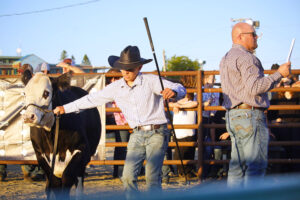







Everybody enjoys going to a good old country fall fair. Many people don’t realize that many of the best county fairs are organized and manned by volunteers. Many of our citizens volunteer their time to help make those fairs happen. We also have many organizations like Kinsmen, Lions, Rotary, Knights of Columbus, hospital boards and foundations, church groups, cemetery committees, many farm organizations for beef, dairy, hogs, eggs, chicken, fish, maple syrup and a dozen other groups. I have had or still have the privilege to sit on some of those committees and noticed the best committees are those who don’t pay the members. Non-paid members are dedicated to making the committee work.
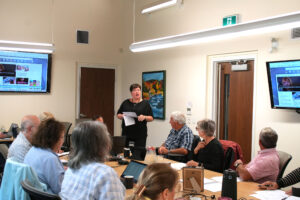
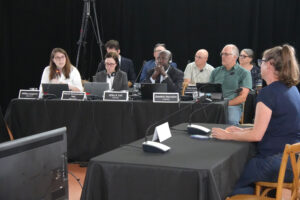
I was privileged to attend a two-day conference with work sessions in Montreal last week. There were about 100 participants from all corners of Quebec. The director of our hospital and the owner of THE EQUITY was there, as well as many elected officials from both the provincial and federal governments. Participants were volunteers who were not paid except for mileage and accommodations. There were five different workshops to attend. I was very interested in AI and how it does and can be used in agriculture. We discussed opportunities and dangers of AI. There are no restrictions on how the technology is used. Recently, it may have played a part in the mass killing of eight people in B.C.. AI has recently been used by special interest groups and governments in feeding false information to citizens about collective marketing of farm products. It is often used to promote one make of car, variety of seed, chemical spray, or even the safety or danger of climate change. The Supreme Court of Canada is just starting to look at the dangers of AI and how it can be used as a weapon. AI is only as accurate as the basic information that is fed into the computer. The technology can help gather information about the best succession plans for transferring farms from one generation to the next, but every case is different and the goals of different farmers and their families are also different. Succession planning done right may take several years and everyone should start thinking about it and writing down ideas and goals years before it is inked onto a legal document.
We looked at the high cost of today’s farm equipment and the possibility of using equipment co-ops to allow more than one farm to collectively own and use those very expensive pieces of farm equipment. A good manager of an equipment co-op or a custom farming operation can save clients thousands of dollars every year. The date of harvest of a crop must be decided at the same time as planting. Even huge equipment cannot cut 10 thousand acres in one day. Scheduling must be completed long before the farmer wants the field work done. Psychology and learning how to work together must be learned.
The agri-waste workshop was also very interesting. Making electricity from manure gas can be both profitable and good for our environment. Maybe some farms can collect manure gas and pipe it to a central location to turn it into electricity? The process of making electricity from manure gas can be very expensive. At least one U.S. state has implemented a program that allows electricity users to volunteer paying a premium for electricity if that premium is used to subsidize some of the cost of constructing those expensive “on-farm” projects that make electricity from manure. Some people are very concerned about our future environment, while others are not. Just by collecting all manure and spreading it on the land where it is needed most can save more than 75 per cent of purchased fertilizer cost. Most nitrogen loss and smell from manure is released at time of mixing liquid manure or spreading. Both solid and liquid manure can be composted to stabilize nitrogen and reduce smell. If a liquid manure pond can be stirred without exposing it to air, most nitrogen can be stabilized and the smell reduced. Stirring liquid manure a few days prior to spreading can almost eliminate nitrogen loss and the smell of the manure when spreading.
Used plastic is a very big pollutant on farms as well as in the household. Some municipalities have started a process to save and bale plastic used for covering corn piles and wrapping bales. Many years ago, the plastic that our farm used to bag silage was made from corn. That plastic was safe to use for fuel or compost. The plastic film used to cover newly planted corn (sweet corn) to keep frost off early planted corn is also made from corn and it will decompose without picking it up. Why can’t all plastic be made from corn? Most plastic today is made from oil. A very controversial local radio announcer once said, “we should keep the rest of our oil for oiling the gears (no more whale oil because the whales are extinct) and use electricity or hydrogen to power our cars.”
Chris Judd is a farmer in Clarendon on land that has been in his family for generations.