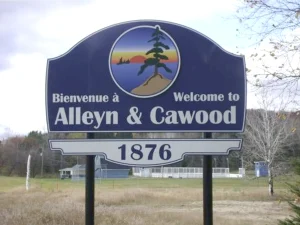



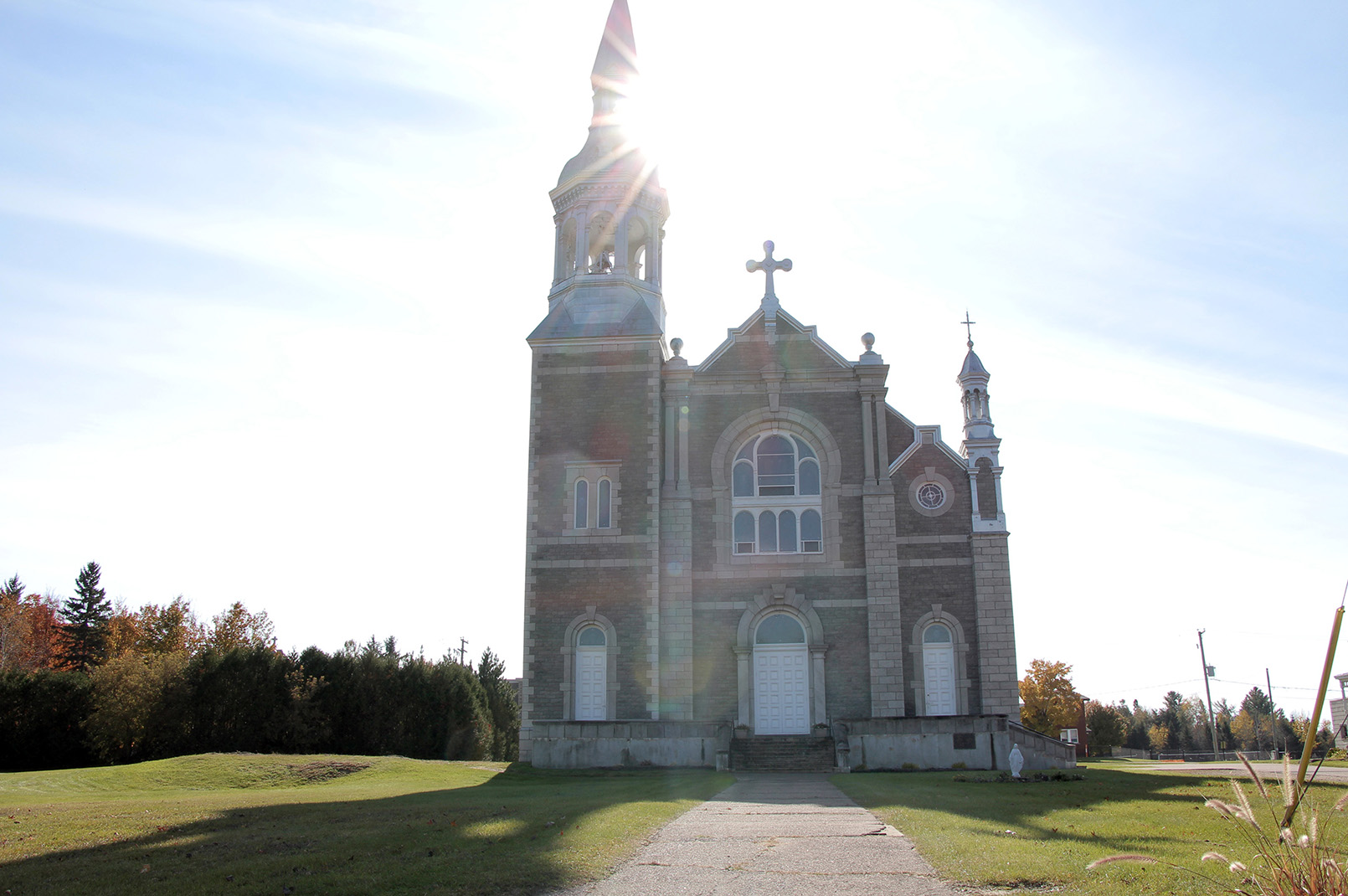



Allumette Island is celebrating a win after new money was released for an affordable housing complex in Chapeau’s lower town, which the municipality hopes can start construction sometime in the next year.
Federal and provincial governments announced last week that the 24 units would be one of 11 projects to receive money as part of Quebec’s affordable housing program (PHAQ).
The buildings will be located on a parcel of land near Centennial Street and Rochon Street in the lower town of Chapeau. They will be owned and managed by non-profit organization l’Office d’habitation de l’Outaouais (OHO).
Allumette Island director general Alicia Jones said discussions began with the OHO this spring to bring this project to the island.
“We had to agree to give certain things in order for [the project] to be eligible,” she said. “One of them was the donation of the land because we own the land where it’s proposed to be built [ . . . ] and to run a water and sewer network to the building.”
Antoine Bélanger-Rannou, who works in real estate development with the OHO, said his organization saw an opportunity to expand its offerings outside the Gatineau city core.
“It’s not just in the cities that we have a housing crisis right now, there are also rural areas,” he said.
The OHO will be required to limit rent amounts, according to rates the provincial program determines. Bélanger-Rannou said base rents are $603 a month for a one-bedroom, $744 for a two-bedroom, and $821 for a three-bedroom, plus a yearly cap set by the program.
Jones said a study conducted by the municipality this winter for the program helped to get a better picture of its residents’ housing needs, including a need for affordable housing.
“We learned that there is a big housing need in the area, and it was a lot of seniors,” she said.
Winston Sunstrum, manager of Chapeau’s senior housing complex Résidence Meilleur, said the facility currently has a waitlist of 32 people and he expects affordable units will draw interest from some of them.
“The aging population is looking to downsize from their primary homes, and that bears out today in terms of people that I talked to who are looking towards that in the next few years,” he said.
Bélanger-Rannou said while the exact size of the units is still to be determined, his organization will work with the Société d’habitation du Québec to choose a prefabricated building that best fits the community’s needs.
“What we’re doing right now is to define a little bit about the design of the building. So the design phase, what type of unit, the size of the building, the size of the units [ . . . ] that’s really where we’re at,” he said.
Jones said they cannot break ground on the project until the municipality extends the existing water and sewer network to reach the site. Currently, the municipality is waiting on an application to the Community Housing Infrastructure Fund (CHIF) for the $1 million required to do the work.
“They’ve already done all the environmental studies, the geotechnical studies, the engineering. We’re ready to go, we just need the money,” she said.
L’Isle-aux-Allumettes célèbre une victoire après que de nouveaux fonds aient été débloqués pour un complexe de logements abordables dans le Bas-Chapeau, dont la municipalité espère que la construction pourra débuter au cours de la prochaine année.
Les gouvernements fédéral et provincial ont annoncé la semaine dernière que les 24 logements seraient l’un des 11 projets à recevoir des fonds dans le cadre du Programme d’habitation abordable du Québec (PHAQ).
Les bâtiments seront situés sur une parcelle de terrain près des rues Centennial et Rochon, dans le Bas-Chapeau. Ils seront la propriété et gérés par l’organisme à but non lucratif l’Office d’habitation de l’Outaouais (OHO).
La directrice générale de L’Isle-aux-Allumettes, Alicia Jones, a déclaré que les discussions avec l’OHO avaient commencé ce printemps pour amener ce projet sur l’île.
« Nous avons dû accepter de céder certaines choses afin que [le projet] soit admissible, a-t-elle dit. L’une d’entre elles était le don du terrain, puisque nous sommes propriétaires du terrain où il est proposé de construire [ … ] et d’aménager un réseau d’aqueduc et d’égout vers le bâtiment. »
Antoine Bélanger-Rannou, qui travaille au développement immobilier avec l’OHO, a déclaré que son organisme avait vu une occasion d’étendre ses offres en dehors du cœur de la ville de Gatineau.
« Ce n’est pas seulement dans les villes que nous avons une crise du logement en ce moment, il y a aussi des zones rurales », a-t-il affirmé.
L’OHO sera tenue de limiter le montant des loyers, conformément aux taux déterminés par le programme provincial. M. Bélanger-Rannou a indiqué que les loyers de base sont de 603 $ par mois pour un logement d’une chambre, de 744 $ pour deux chambres et de 821 $ pour trois chambres, plus un plafond annuel fixé par le programme.
Mme Jones a mentionné qu’une étude menée par la municipalité cet hiver pour le programme a permis d’avoir une meilleure idée des besoins en logement de ses résidents, y compris un besoin en logements abordables.
« Nous avons appris qu’il y a un grand besoin de logements dans la région, et qu’il s’agissait de beaucoup de personnes âgées », a-t-elle déclaré.
Winston Sunstrum, gérant de la Résidence Meilleur, un complexe de logements pour personnes âgées de Chapeau, a déclaré que l’établissement a actuellement une liste d’attente de 32 personnes et il s’attend à ce que les logements abordables suscitent l’intérêt de certains d’entre eux.
« La population vieillissante cherche à réduire la taille de son logement principal, et cela se vérifie aujourd’hui en ce qui concerne les personnes avec qui j’ai discuté et qui envisagent cela au cours des prochaines années », a-t-il dit.
M. Bélanger-Rannou a affirmé que bien que la taille exacte des logements reste à déterminer, son organisme travaillera avec la Société d’habitation du Québec pour choisir un bâtiment préfabriqué qui répond le mieux aux besoins de la communauté.
« Ce que nous faisons en ce moment, c’est de définir un peu la conception du bâtiment. Donc, la phase de conception, le type de logement, la taille du bâtiment, la taille des logements [ … ] c’est vraiment là que nous en sommes », a-t-il expliqué.
Mme Jones a déclaré qu’ils ne peuvent pas commencer les travaux du projet avant que la municipalité n’étende le réseau d’aqueduc et d’égout existant pour atteindre le site. Actuellement, la municipalité attend la réponse à une demande de subvention auprès du Community Housing Infrastructure Fund (CHIF) pour le million de dollars nécessaire à la réalisation des travaux.
« Ils ont déjà fait toutes les études environnementales, les études géotechniques, l’ingénierie. Nous sommes prêts, nous avons juste besoin de l’argent », a-t-elle conclu.