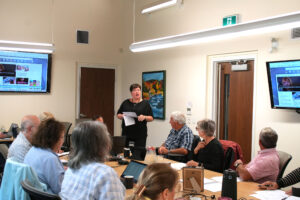







Last week, a group of farmers, young and old, got together with some professors for a few hours of thinking and discussing some very soon-to-be problems that our college students and young farmers will have to deal with, such as artificial intelligence, “greening” in agriculture, and new technology. One of the first subjects that came up was that some things we were taught in college have proven to be wrong within a few years after graduating.
Fifty years ago, we were taught that instead of spreading manure on the fields, it was more economical to push it over the hill or into a river and instead buy chemical fertilizer. I can still remember vividly when our professors and crop input salesmen told us that a new weed-killer was the best thing since sliced bread, and so safe that you could drink it. After a few years had gone by, many weeds became immune to it, and some people who had worked with it mysteriously died with cancer. It was discovered that animals couldn’t digest feed made from the crop that it was sprayed with. Residues from it would reduce the beneficial bacteria in their digestive systems and even affect their brain because the biome that helped digest their food and repair their gut could be reduced enough that they would die. The weed-killer could also reduce the number of microscopic bacteria in the soil that decompose compost and even turn minerals in the soil into crop food. We found out that you couldn’t drink it after all.
An injection that became very popular among USA dairymen was later discovered to reduce the ability of cattle treated with it to become pregnant, and hence were culled prematurely. It was also found never to have been tested to assure safety to humans who drank the milk of the injected cows, and was never sold in Canada. Many things are approved by government safety officials and sold years before adequate testing is completed.
The “greening” thing in Canada has already begun. Many farmers now plant a cover crop where corn, grain, soybeans, etc. have been harvested to keep the ground covered, reduce wind and water erosion, and add a “green manure” when that cover crop is incorporated into the soil before next year’s crop is planted. Today, animals produce more milk, grow faster and hence reduce the amount of greenhouse gas per unit of milk or meat produced per acre used to feed them. The largest source of greenhouse gas today on animal farms occurs when agitating manure lagoons. Work is being done to reduce the release of gas by adding chopped straw while agitating lagoons, feeding seaweed to animals and other experiments.
Canadian dairy farmers have promised to be carbon neutral by 2050. Some farmers have already enrolled in a preliminary study on becoming carbon neutral. Our farmers wonder how the other industries are doing. Universities and colleges are working on reducing the need to add unnecessary chemicals to our crops and foods. Many plastics are being removed from the market, carbon emissions are being reduced before our planet becomes uninhabitable. Universities are teaching our new farmers how to be more environmentally conscious and take even better care of our animals, soils, water, air, and our future.
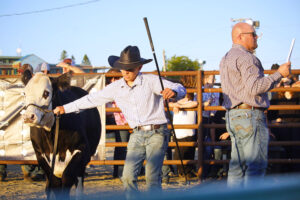
We were told decades ago that it was easy to get the best performance from any animal just by removing every stress in that animal’s life. Provide the best feed nutrition that is possible (often much better than humans can get, with all the processing and additives in our food). Provide the best temperature: the ideal cow temperature is 42 degrees Fahrenheit. Provide shade from hot sun. Provide adequate ventilation. Provide clean, safe water as close to the animals as possible. Keep them clean, and on comfortable footing (rubber covered floors). Provide grooming brushes, eliminate annoying flies, provide dry, comfortable beds to lie on and enough for every cow. Eliminate noise such as dogs barking or shouting at the animals, and harsh sounds. Avoid harsh punishment such as beating with sticks, forks, etc. Provide time management that ensures animals have time to rest, eat, drink, socialize, and exercise.
Artificial intelligence is using computers to very quickly analyze information already known. How intelligent it is depends on how that known information is loaded and who provided it, and when. One thing became quite evident at our brainstorming session in Montreal, on which professors and farmers agreed: we attend kindergarten, school, college, and university to learn how to learn and seek out information. Some do it better than others and never stop.