





CALEB NICKERSON
Shawville July 10, 2019
The new Abattoir les Viandes du Pontiac in Shawville has grown in the six months it has been in operation, but co-owner Alain Lauzon said that they will continue to seek out new markets for their clients.
“We’re working hard on marketing,” he said in a phone interview with The Equity.
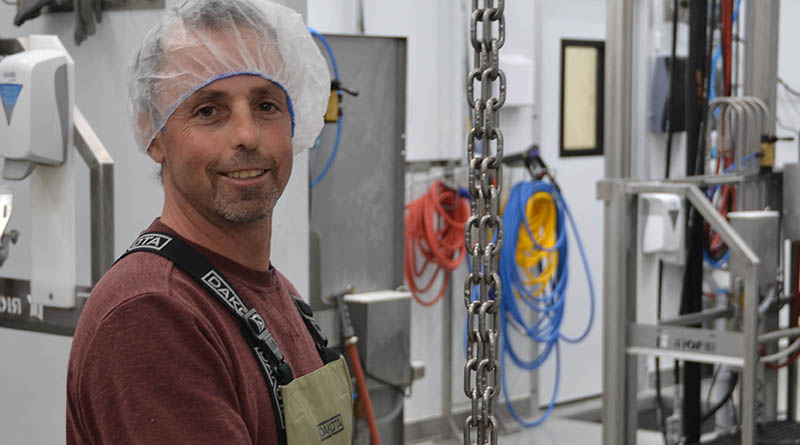
The staff at the facility now numbers 13, drawing mainly from the local community. The abattoir opened its doors to the press in June, to tour the facility while it was in operation.
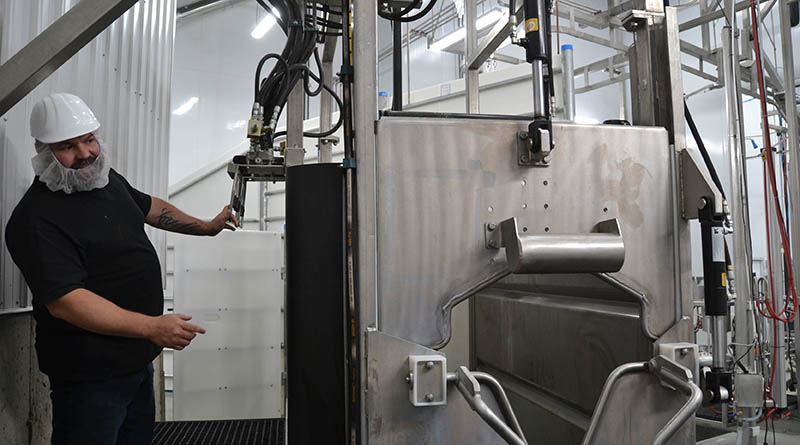
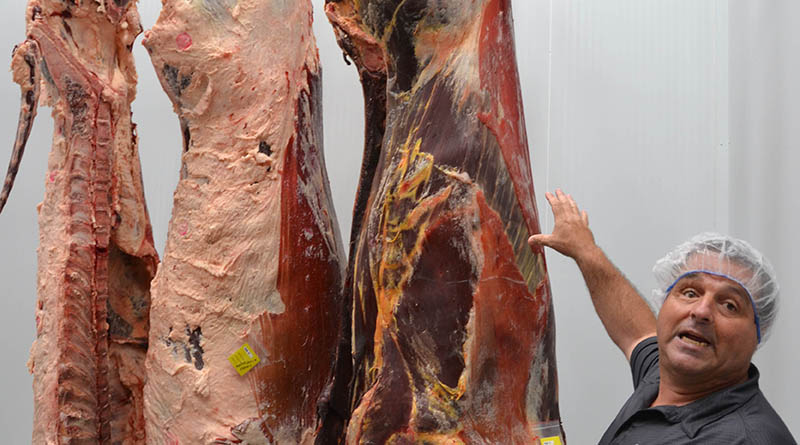
The animals are led in through a loading dock on the eastern corner of the building into a series of pens. They funnel into a chute that leads to a hydraulically-controlled pen where the animal is secured for slaughter. The carcass is then lowered onto a grated area and hung up on hooks attached to a rolling track that traverses the killing floor and continues into a series of coolers.
Mario Lavigne grew up on a farm in Luskville, and now works on the killing floor. Lauzon said that his expertise with livestock is a huge asset, which is why Lavigne works in the receiving area for the animals.
“I guide them in, receive them and tag them,” he said, and abattoir operations manager Eric Chartrand, who is leading the tour of the facility, noted that every animal is monitored closely the entire way through the process. A veterinarian and an inspector from MAPAQ are on-site any time an animal is killed.
Chartrand is a well-known butcher from the Aylmer region with over 20 years in the business. Lauzon noted in the follow-up interview that they are currently looking for another butcher of Eric’s calibre.
“We have Eric but we will need another butcher with 20, 25 years experience, you know, to help these guys,” he said. “Take some off Eric’s back.”
The meat is cut to order, and Lauzon estimated that they’re currently slaughtering 35 sheep and 25 cows per week. The animals are typically sourced from local farms, but the abattoir has also processed several bears for clients and even an alpaca. He said about 40 per cent of the meat is Halal-certified, with the rest processed normally.
The abattoir is hiring locally as much as possible and Lauzon noted that they had a co-op student from the Pontiac High School, Tyler Stewart, who is currently employed at the abattoir – even working on the killing floor.
Stewart said that he does a lot of cleaning and packaging, and said this job was unlike any other he’s previously had.
“You have to really pay attention, multi-task a lot,” he said.
Willow Hollow Farm owner Rick Younge has recently started supplying the abattoir with some Prime beef cattle.
“About a month ago they got an order for a real good, finished, well-developed beef [cow],” he said. “Their customer seemed quite pleased so then last week he asked for a second one.”
Younge’s herd numbers 250 head and he currently sends a load of 40 animals, three to four times a year to Toronto to be slaughtered and sold to high end restaurants. He said that each trip costs him $1,600 in transportation fees, so if he could sell more through the abattoir, whose facility sits across the road from Willow Hollow, it would cut down his expenses considerably.
“I believe he’s got a pretty reasonable market for lamb,” Younge noted. “Hopefully he’ll get the same type of thing with the beef. It just takes time.”