





Owners hope to mill first batch of local grain this fall
by Camilla Faragalli
Quyon
Feb. 25, 2024
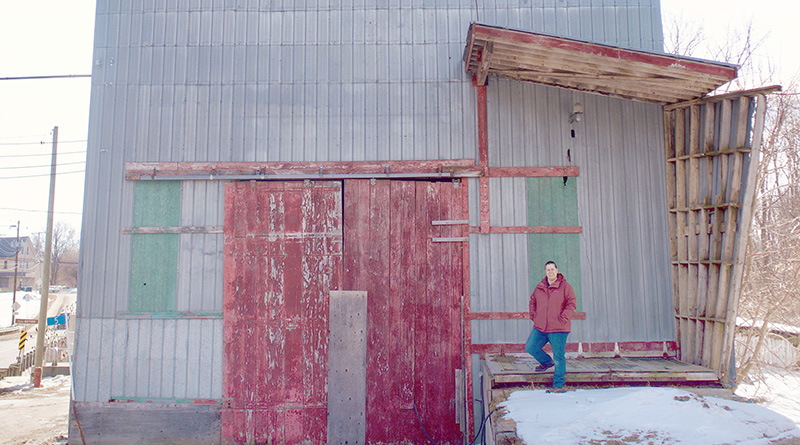
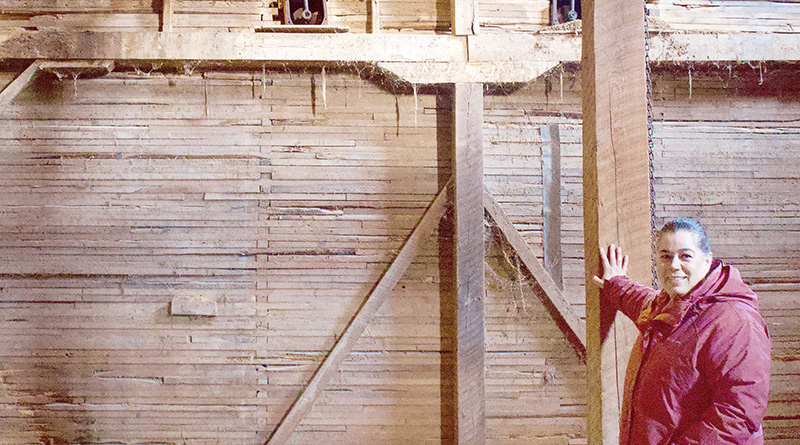
From the outside, the old mill on Egan Road in Quyon may look as it has for many years; run-down and abandoned. Inside however, a transformation is underway.
In 2022, Isabelle Lajoie and Marc Bergeron of Bristol’s La Paysannerie Farm bought the building with a vision of converting it into a flour mill for locally grown grains and a farm store where the couple could sell their own products as well as those from farmers throughout the region.
At the time, they hoped to mill their first wheat that fall, but restoring the building, which is over 100 years old, has proven to be a . . .
bigger project than first imagined.
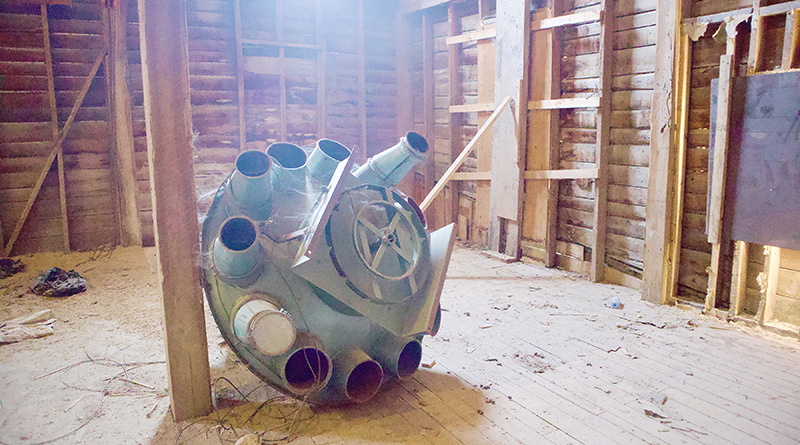
“It was abandoned for 10 years, so a lot of things were rusted and past due,” Lajoie told THE EQUITY, explaining that lots of old equipment needed to be moved and disposed of before they could even begin renovations.
“But we have a good potential,” Lajoie said, explaining that once up and running, the new Egan Mill will be able to produce up to 800 kilograms of flour an hour.
“We’re working really hard behind the curtains to make this project happen as quickly as possible,” Lajoie said, adding that all of the necessary equipment, including a new grain separator from Denmark, has already been purchased and is ready for installation.
“It’s just a matter of putting the building up to code and starting production.”
Miling local grain
Lajoie said that if everything goes well this year, the couple hopes to use the fall harvest to do a flour milling test, “so then in the winter we can start selling the flour more widely.”
The mill will receive treated grain from local producers, which will be milled on stone grinding equipment before being dispatched to various purchasers.
She added that the new business will create 10-12 jobs in its first year.
While neither Lajoie nor her husband are from families that make flour, she said the couple has plenty of experience in business and automation.
“We’re highly qualified technically for the support of this mill,” she said, adding that as they have been producers since 2012, they’ve developed a network of clients and connections with local markets.
“We’ve been able to take in the weaknesses and the strengths of our food chain in the area.”
Lajoie said that long term, she wants to produce a variety of flour, but that for the immediate future she plans on starting with a more “day to day” flour, to make their name and product known to the community.
“We want to promote organic flour, [but] it’s not everybody that’s equipped to do organic right now. We like to support the local producers, whether they’re small or big, we want to be able to use the grain from here . . . and to eliminate all the transport that‘s being done to Montreal,” she said, explaining that some of the quality of grain can be lost in shipping.
“We know it’s a different way of doing things, but it might motivate [farmers], if they get a better price locally [to go organic],” she said.
The ‘perfect’ location
Lajoie said that she and Bergeron looked at various commercial properties when they started looking for a place to mill their grain.
“But it was so obvious to me that it needed to come here,” she said. “The mill is known everywhere in the area. I think it was a perfect location for it.”
The couple has big plans for the space. Lajoie said that once the mill is up and running, she and her husband plan to create a public museum on the second floor to showcase its history, displaying old photos and artifacts, such as the grain separator used by its previous owners.
“I studied architecture, so for me it was like two dreams [coming] together, turning an old building into something new,” she said.
Lajoie said they hope to extend the property eventually, and open a store where they will sell local agricultural products.
She believes the mill is in an ideal location to do this.
“We’re right beside the ferry, everyone crosses here. So we want people to stop in, have a drink, try the products, then dispatch them [the people] to the area.”