





CALEB NICKERSON
DAVIDSON June 20, 2020
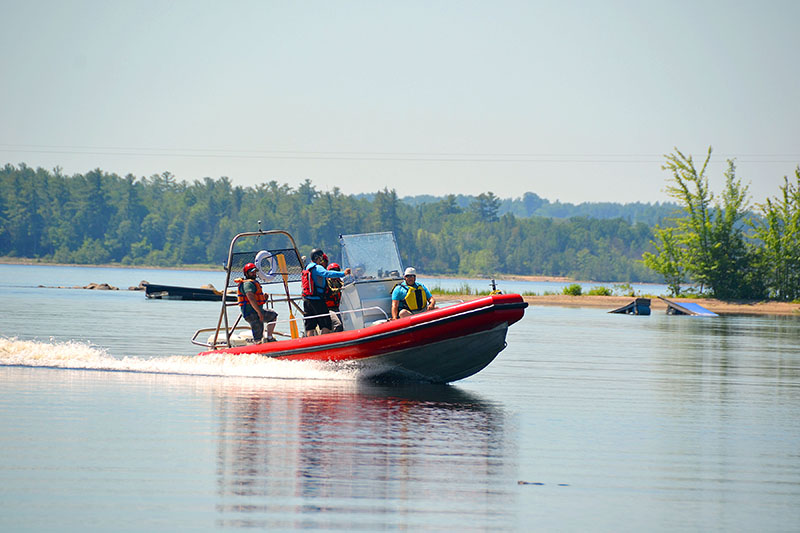
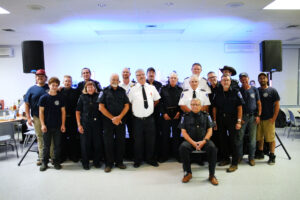
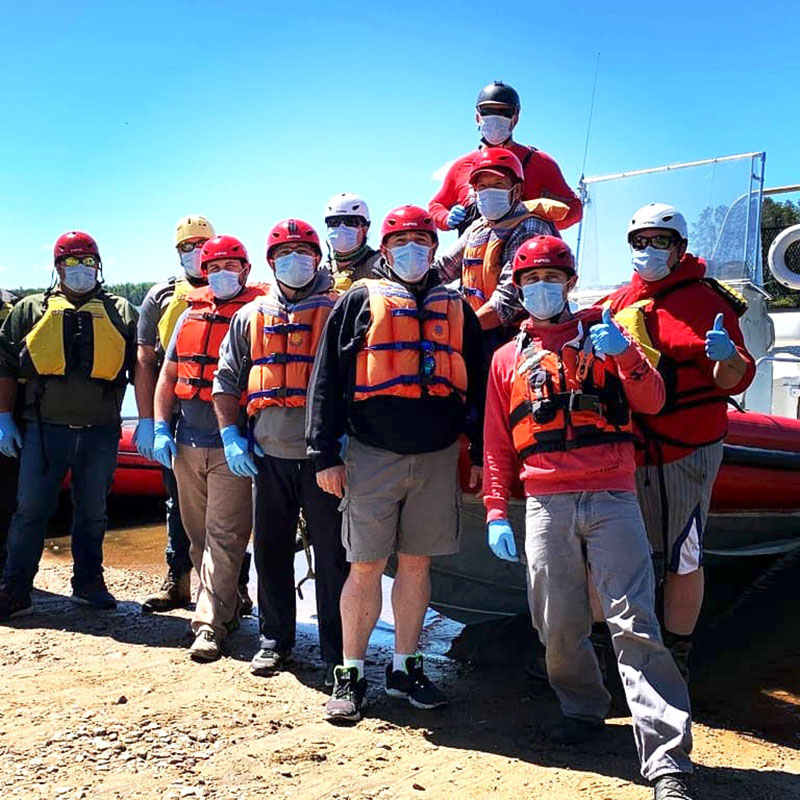
A group of local firefighters from several departments have been getting some training in water rescue techniques over the past few weeks. Prioritizing members of departments that border on the Ottawa River, the course is one that
has been needed for some time, according to Bryson Grand Calumet Portage (BGCP) Fire Chief Martin Bertrand.
“The Pontiac is very rich in lakes and rivers, especially the Ottawa River,” he said. “A lot of our municipalities live along the Ottawa River and it’s been the desire for a while to have a water rescue training.”
Bertrand said the aim is to have 40 firefighters across the Pontiac complete the course, divided among this session and another planned for the early fall. The current group is made up of 10 members of the Mansfield department, eight from Pontiac Ouest and another five from the BGCP department.
The three departments are currently the only ones with boats, and are also responsible for large sections of the Ottawa River.
“Pontiac Oust has a rescue zodiac, they’ve had that for a few years now,” Bertrand said. “Grand Calumet has a very large rescue zodiac that we purchased last year, which makes sense, the two municipalities are islands, they’re surrounded by water. Mansfield has access to a small zodiac as well at the moment, which does not belong to them, it belongs to the people working on the Red Bridge.”
The trainers were from a Gatineau-based company Formarisk, which conducts similar training with numerous municipal fire departments. Bertrand, who has a considerable amount of experience as a whitewater guide, said that he offered some of his own insights as well.
“I’m personally assisting them with the instruction and training because you know, water is my background,” he said. “Hopefully, I might be able to give this course locally eventually. It’s been a very good relationship between the instructors and I, they definitely value my extra input and my knowledge of whitewater.”
The training involved the participants learning about the protective gear they’re supposed to wear during these rescues, as well as techniques to pull people from the water whether they’re responsive or not. There is also a night rescue training session planned for later in the summer.
Bertrand said that the course has been needed for some time, and pointed to the recent airplane crash near Constance Bay, where local citizens rushed to the aid of the downed pilot with their boats.
“It is definitely a need, because we have so much water, to have proper equipment and trained people,” he said. “I live on the river and the past two years, the boat traffic on the river has multiplied by five at least. More and more and more pleasure craft on the river … with more traffic obviously comes more chances of an accident or [people] needing assistance.”
He added that it was extremely beneficial to have the training involve multiple departments, as they could practice their skills on bodies of water that they were not familiar with and meet firefighters from neighbouring municipalities.
MRC Pontiac Fire and Public Safety Coordinator Julien Gagnon explained that training has been a priority for some time, and is funded through a provincial financial aid program, doled out through the ministry of public security.
“That’s been going on for a few years,” he said. “The government introduced it because there are a lot of volunteer fire departments that weren’t trained because the funding wasn’t available … Each course is several thousand dollars. The government wants the firefighters to be trained to do the work they’re asked to do. What they’ve done is created this program where they have up to $3,000 per firefighter, per course that they take, that can be reimbursed by the government.”
Gagnon said that initially the focus was to ensure every member of the local departments had their Firefighter One, which is their basic training course. From there they could move on to pump operator courses, ladder truck courses and eventually specializations like water and off-road rescue.
“Last year we did off-road rescue, four-wheelers and snowmobiles and stuff like that,” he said. “This year [we’re] focusing on water rescue. Nobody really comes up with a request … there’s no step-by-step training that we should prioritize over another, we just go by what the municipalities have for equipment. They just happen to have boats and we don’t want anyone using equipment that they’re not trained on.”
He said that the training would be open to other departments as well, since the MRC is full of lakes and smaller rivers that could become the scene of an emergency.
“After that, we’ll get the other fire departments trained as well, so even if they have to go out on a really quick rescue, even if [they] have to borrow a boat from somebody at the boat launch, they can get out and do it properly,” he said.