





Air, water, food, shelter, and a reason to live were and still are the basic necessities of life. If any of these five necessities are missing both man and animal will move on.
In earliest times man was responsible for each of these things. As long as he put the outhouse downwind from where the family spent most of their time, the air was pretty good.
In early times whether our ancestors lived in a cave or a teepee they could be found close to good clean water. When the earliest settlers came to this continent in little wooden ships the most important cargo was an adequate supply of drinking water.
The leader in each family or tribe was responsible for finding a supply of clean, drinkable water. Then as civilization advanced, specific people were chosen to be in charge of adequate clean water. If the right person was chosen that little corner of civilization was healthy and advanced. If, as in many areas of life, the person chosen to watch over the supply of clean, safe water was not diligent then eventually sickness and sometimes death came to that family, tribe, or town.
In my grandparents’ time people in the community knew which family had a good well, spring or other source of drinking water.
Grandma knew that to make a good cup of tea you needed good water. Some places that we visited grandma didn’t drink tea and no one drank the water either.
Once the water was strained through a cow usually the milk was okay if it was kept cold.
Many of the cow stables built in the early 1900s were built close to a creek and a hydraulic ram was placed in that creek to pump water up to the house and barn. A hydraulic ram was an early water pump powered by water running through it creating pressure to slowly pump water sometimes several hundred feet up to the buildings.
Because the ram was deep in the creek water it did not freeze and provided water year round with no electricity or gas motor required to power it.
Before any new barn is constructed a well is drilled and tested for water quality and capacity. I know of some farms that have spent more than a million dollars building a state of the art dairy barn and within a week of the milk cows moving in the well went dry. After drilling several dry holes over a couple weeks, the cows were returned to the old barn until water was found. Eventually that farm piped water a half a mile from the old facility to supply water to cattle in the new million dollar barn.
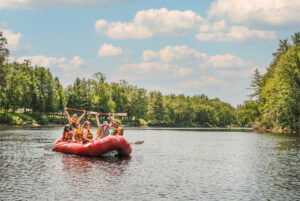
Water in the rivers and lakes provided a means of transportation for everything that moved a great distance in our country before a network of trails, train tracks and roads were constructed. Towns and cities eventually appeared close to these waterways.
The waterways were used for transporting goods from early times when the Indigenous arrived by canoe with furs, to when timber and lumber were shipped back to England. Often these same rivers and lakes provided a source of drinking water for towns and cities, powered early saw mills, flour mills, and industry.
In early times everyone was responsible for their own water and its quality. Then as our country became more civilized, we appointed people to look after water for us. Some of these people were more responsible than others.
Then we began to use these same lakes and rivers as dumping grounds for our industrial waste and sewerage. We even see contaminated waste and nuclear waste being dumped in close proximity to these same rivers whose water is used to supply drinking water to millions of people downstream. In a country with more fresh water than any other country in the world we are now buying more bottled water to drink than milk. Some of this bottled water does not test as safe to drink as tap water.
While billions of dollars have been spent by farmers and governments to get farms to better use their cattle waste and commercial fertilizer to provide necessary soil nutrients to all fields on the farm and not just those close to the barn many towns, cities and industries continue to pollute our water because it is almost financially impossible to clean them up.
When visiting Europe a half a century ago our group of 18 young farmers were advised not to drink the water. Coming from a farm where I often drank water from a water trough that the cows used I had a hard time getting my mind around that. Apparently that’s what happens after centuries of advancement in civilization.
With more than half of our body weight made up of water we must be critical of what we drink. Many restaurants offer a glass of water even before they take your order for food. If the water don’t taste too good, the rest of the meal might not meet your expectations either.
When we see farmers in California being restricted in water use to grow food while their neighbour’s lawns are green and the golf courses that they play on are irrigated we should begin to wonder if all our priorities are straight concerning water use.
Chris Judd is a farmer in Clarendon
on land that has been in
his family for generations.
gladcrest@gmail.com