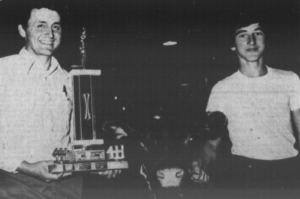






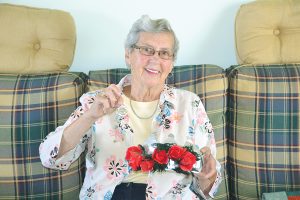
You’d be hard pressed to find a more experienced attendee at this year’s Shawville Fair than Phyllis (Stewart) Wilson. Back in 1958 she was crowned as the very first Dairy Queen, which was the precursor to the Fair Ambassador position.
Wilson grew up on a farm in Bristol and always looked forward to the fair, which was held in mid-September in those days.
“We had horses, a couple of work horses and a couple of show horses and Hostein cows,” she said. “We tried to milk between 20 and 25, which back then was quite a few.”
At the time, she was working in foreign exchange at the Bank of Nova Scotia in Ottawa and commuting home on the weekends to help out with chores.
“I loved the farm, I worked in Ottawa for five years and only two weekends in five years I didn’t make it home,” she said.
She credited her entry in the contest to local farmer Gordon Browlee.
“That year I was going to show grain and he asked me if I would be a candidate,” she explained. “I said sure. The criteria was 50 per cent on milking – preparing a cow and milking – and 50 per cent on presentation and your speech.”
She explained how she gained a competitive edge in the practical portion, purely by (bad) luck.
“The weekend before the Shawville Fair we had a power outage you see,” she said. “We had to milk all the cows by hand so I had quite a bit of practice when it came to the fair … If you’re not used to it, it’s hard on the wrists.”
She said that giving her speech was the tougher portion of the two, as it took place on a big outdoor stage for all the attendees to see.
“I was nervous,” she said. “There was a platform put up there and we had to speak to the crowd. The stands were full. It was the opening night of the Shawville Fair.”
“I’m usually pretty gifted with the gab, but never when I have to,” she added with a laugh.
Several other members of Stewart’s family have followed in her footsteps.
“It’s kind of a family tradition I guess. My daughter, she ran for Ms. Shawville Fair, can’t remember the year, she came in second,” she said. “I had three granddaughters that ran as well. Two won and one was a runner-up.”
In 1959 she competed at the provincial show in Montreal and placed second. She said it was a big step up to compete in the arena.
“I thought it was scary to speak here then I went to Montreal. It was way over my head,” she said. “Again we had to milk a cow and we had 15 minutes to go from our farm clothes to looking like a lady.”
“Everyone gave their speech in French, I was the only one that gave it in English,” she continued. “The girl that won it, she was a very nice girl. She helped me a lot.”
Even before she competed, Wilson recalled that the fair was a major event in the family’s yearly calendar.
“Saturday night my parents would come out to the fair. They’d come out early, we’d have to start milking early in the afternoon to get out there and get a place for our car,” she said. “My brother and I would rip to the rides and the candy floss and that. We didn’t do the merry -go-round. That was for kids, even though we were only seven or eight.”
After they were spent on rides and treats they would venture back to the warmth of their parent’s car, since the mid-September weather could turn quite cold.
“I remember freezing at the fair,” she said with a laugh.
She recalled how the fair gradually grew in size over the years, adding rides, buildings and eventually an entertainment lineup.
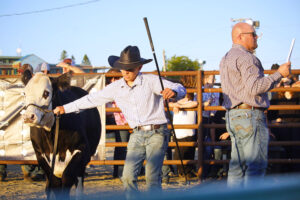
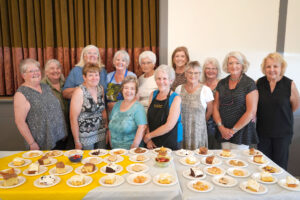
Wilson said her favorite event is the light horse show and she typically tries to stay for the whole afternoon. In addition, she also volunteers in the homecraft division and submits wine for judging.
“I’ve submitted for a good many years and I’ve won once,” she said. “I’m going to keep going every year until I win it again.”
One of the things she looks forward to as a volunteer is the excitement that the younger generation brings to the completion, which is palpable on the night where entries are submitted.
“In the [homecraft] building, there’s a section for the children,” she said. “They can hardly wait till the doors are open. Their eyes are like saucers.”
She emphasized that the young participants are key to carrying on the traditions that have shaped the fair over the last century and a half.
“There’s a lot of people there volunteering,” she said. “It’s good for the town and it’s good for the community.”