





On Oct. 28 the Quebec Farmer’s Association, which advocates for the English-speaking agricultural community in Quebec, hosted a virtual talk on the subject of how the agricultural industry is being affected by ongoing trade dispute with the U.S..
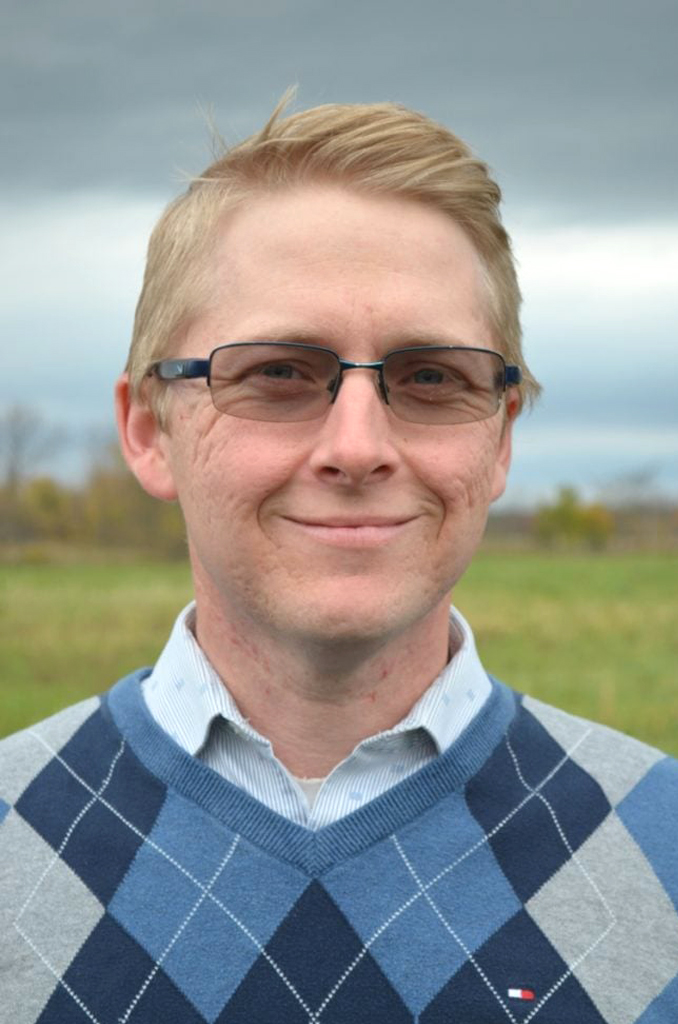
The talk was hosted by Tyler McCann, the managing director of the Canadian Agri-Food Policy Institute, an agriculture-focused think-tank, who happens to also be a beef producer in Clarendon. McCann was a federal political staffer in the Harper era, primarily working for the Minister of Agriculture and specializing in trade.
He started by quoting the infamous “known unknowns and unknown unknowns” line by former U.S. Defence Secretary Donald Rumsfeld in regards to the uncertainty that President Trump’s negotiating strategy has created.
“This is a giant disclaimer for everything I’m about to say,” he said. “I’m going to speak to what I know are the known knowns and what I think are the known unknowns, but there’s a whole bunch of things that we just don’t know anymore. For example, I don’t think anybody knew that an ad campaign was going to lead to the breakdown in trade negotiations between Canada and the United States.”
McCann also spoke about how the U.S. treated its agricultural sector as a bargaining chip in trade negotiations during Trump’s first term, and just compensated its farmers for any losses.
“This idea that you can just pay farmers off, which I think they used that approach relatively successfully in the first administration, just isn’t as effective now, there’s too many moving parts, too many things being disrupted at the same time,” he said, pointing to reporting from Forbes that showed compensation to U.S. farmers exceeded spending on the U.S. nuclear weapons program.
McCann said that despite the focus being paid to the president’s social media posts, this fixation on tariffs and the rejection of the bipartisan free-trade consensus that dominated U.S. trade policies in the recent past is part of a larger ideological movement.
“It isn’t just the president and his tweets, but it is a movement of people that have come behind him that are taking advantage of his popularity and they’re using that to re-write how global trade works,” he said, pointing to the book No Trade is Free by Robert Lighthizer, the U.S. trade representative during Trump’s first term, as an articulation of this worldview.
“If you look and understand what’s going on behind, I think it’s much worse, because this isn’t about a president that doesn’t like how the world works, this is like a movement of people that are looking for generational change in how global trade politics work,” he continued. “This is not something that will go away when the U.S. president changes and goes away, this is something that as long as the Republicans keep getting elected – and it looks like the Republicans will keep getting elected – it’s likely to be the predominant view.”
He added that while there has been domestic opposition to how the president implemented his tariff scheme (including a case before the Supreme Court), he was sceptical that it would change much.
“I think there’s this hope that the Supreme Court will come to the rescue, but even if they do that’s likely to be short-lived because the president will just use some other powers and that will have to go through the courts and that will go through this whole process again,” he said.
The four Ds
As far as the primary focus of trade talks between Canada and the U.S., McCann said they were focused around the “four Ds”: drugs, defence, the digital services tax and dairy.
He said that on drugs and defence, the Canadian government had moved aggressively, making moves to beef up border security and pledging to increase its defence spending to five per cent of GDP.
He added that the government also quickly scrapped the digital services tax in June, which would have taxed large tech companies, many based in Silicon Valley, on the revenues they generate from Canadians. With those out of the way, the only irritant that remains, in the view of U.S. representatives, is dairy.
“It seems like the old rules, where you just have to make the U.S. dairy stakeholders happy [ . . . ] That may not work anymore because the president’s got a different fixation,” he said. “We’re waiting to see what this looks like.”
In the question period following the talk, McCann expanded on his view of how the U.S. dairy industry sees the Canadian market, as compared to the president’s bluster. He said that their specific demands relate mostly to the access that they have already been granted in previous negotiations, through what are called tariff rate quotas (TRQs).
“It reflects that they don’t want to flood our market, they don’t want to see supply management disappear,” he said. “They view the Canadian market as a high value, high margin market. If they destroy supply management it just becomes a little more of the U.S. market and that doesn’t benefit them in the same way. They need, to be honest, our high milk prices to be maintained in order to really be able to benefit from access to the Canadian market. That’s why I don’t think you see the U.S. dairy industry itself really aggressively asking for the type of concessions that would disrupt supply management.”
He said that while Canada is living up to the letter of the law in regard to dairy TRQs, likely isn’t living up to its spirit.
“The way we gave this access is with these tariff rate quotas, which said for these agreed-to volumes, the United States will get access to the Canadian market. But we limited how the U.S. could get access into that market by saying only, effectively, processors could get access to that quota,” he explained. “And that meant that retailers, who were ultimately, you would have thought would often be the ones that would be getting the access to it and selling it, couldn’t get access to it. The preference for U.S. dairy exporters was to be able to deal directly with Canadian retailers, which would mean, kind of, one less middleman in the way, more money for the U.S. exporter, more money for the retailer. It would give them a chance to go after higher value products, but Canada put in place a set of rules that meant that that couldn’t happen.”
McCann said discussions around whether supply management should be on or off the table are beside the point, as the decision is out of Canadian hands.
“You know, we’ve had this big debate in Canadian agriculture, Canadian ag policy over the last year about whether supply management should be on or off the table, and I don’t think that’s a relevant debate. If the U.S. says, ‘We want to talk about dairy,’ Canada’s going to talk about dairy, and that’s just the practical reality of the situation,” he said. “This isn’t about whether we should make concessions or not, but this recognition that governments only make concessions when it’s necessary. I don’t know of any government that goes into a negotiation and willingly gives things up, but if they have to make concessions, governments are going to make concessions.”
McCann said that Canada has a lot more at stake in these negotiations than other countries, which is why he believes that Canadian negotiators are moving slower than some of their counterparts who have already secured trade agreements. He said that calculating what constitutes the national interest is really difficult.
“The space I think we’re getting into is, how do you decide what’s a good deal for Canada at the end of the day, and that math is really hard to do and that math really depends on where you sit,” he said.
Le 28 octobre, l’Association des agriculteurs du Québec, qui défend la communauté agricole anglophone du Québec, a tenu une conférence virtuelle sur la manière dont l’industrie agricole est affectée par le conflit commercial en cours avec les États-Unis.
La conférence était animée par Tyler McCann, directeur général de l’Institut canadien des politiques agroalimentaires, un groupe de réflexion axé sur l’agriculture, qui est également producteur de bœuf à Clarendon. M. McCann a été un membre du personnel politique fédéral à l’époque de Harper, travaillant principalement pour le ministre de l’Agriculture et se spécialisant dans le commerce.
Il a commencé en citant la tristement célèbre phrase « les inconnues connues et les inconnues inconnues » de l’ancien secrétaire américain à la Défense, Donald Rumsfeld, concernant l’incertitude créée par la stratégie de négociation du président Trump.
« Il s’agit d’un avertissement majeur pour tout ce que je vais dire », a-t-il déclaré. « Je vais parler de ce que je connais des connues connues et de ce que je pense des connues inconnues, mais il y a un tas de choses que nous ne savons tout simplement plus. Par exemple, je ne pense pas que quiconque savait qu’une campagne publicitaire allait entraîner la rupture des négociations commerciales entre le Canada et les États-Unis. »
M. McCann a également parlé de la façon dont les États-Unis ont traité leur secteur agricole comme une monnaie d’échange dans les négociations commerciales pendant le premier mandat de Trump, et ont simplement indemnisé leurs agriculteurs pour toutes pertes.
« Cette idée que l’on peut simplement payer les agriculteurs, ce qu’ils ont fait, je crois, avec un succès relatif lors de la première administration, n’est tout simplement plus aussi efficace maintenant, il y a trop d’éléments en mouvement, trop de choses sont perturbées en même temps », a-t-il déclaré, citant un reportage de Forbes montrant que les compensations versées aux agriculteurs américains dépassaient les dépenses du programme d’armes nucléaires des États-Unis.
M. McCann a déclaré que malgré l’attention portée aux publications du président sur les médias sociaux, cette fixation sur les tarifs douaniers et le rejet du consensus bipartite en faveur du libre-échange qui a dominé les politiques commerciales américaines dans un passé récent fait partie d’un mouvement idéologique plus vaste.
« Il ne s’agit pas seulement du président et de ses tweets, mais d’un mouvement de personnes qui se sont ralliées à lui et qui profitent de sa popularité pour réécrire le fonctionnement du commerce mondial », a-t-il déclaré, citant le livre No Trade is Free de Robert Lighthizer, représentant commercial des États-Unis pendant le premier mandat de Trump, comme une articulation de cette vision du monde.
« Si vous regardez et comprenez ce qui se passe en coulisses, je pense que c’est bien pire, car il ne s’agit pas d’un président qui n’aime pas le fonctionnement du monde, c’est comme un mouvement de personnes qui recherchent un changement générationnel dans la façon dont la politique commerciale mondiale fonctionne », a-t-il poursuivi. « Ce n’est pas quelque chose qui disparaîtra lorsque le président américain changera et partira, c’est quelque chose qui, tant que les Républicains continueront d’être élus – et il semble que les Républicains continueront d’être élus – sera probablement la vision prédominante. »
Il a ajouté que s’il y a eu une opposition interne à la façon dont le président a mis en œuvre son système tarifaire (y compris une affaire devant la Cour suprême), il était sceptique quant à l’ampleur du changement que cela apporterait.
« Je pense qu’il y a cet espoir que la Cour suprême viendra à la rescousse, mais même si elle le fait, cela sera probablement de courte durée, car le président utilisera simplement d’autres pouvoirs et cela devra passer par les tribunaux et tout ce processus recommencera », a-t-il déclaré.
Les quatre « D »
Quant à l’objet principal des discussions commerciales entre le Canada et les États-Unis, M. McCann a déclaré qu’elles s’articulaient autour des « quatre D » : drogues, défense, taxe sur les services numériques et produits laitiers.
Il a dit qu’en ce qui concerne les drogues et la défense, le gouvernement canadien avait agi agressivement, prenant des mesures pour renforcer la sécurité des frontières et s’engageant à augmenter ses dépenses de défense à cinq pour cent du PIB.
Il a ajouté que le gouvernement avait également rapidement annulé la taxe sur les services numériques en juin, qui aurait taxé les grandes entreprises technologiques, dont beaucoup sont basées dans la Silicon Valley, sur les revenus qu’elles génèrent auprès des Canadiens. Cela étant réglé, le seul irritant qui subsiste, de l’avis des représentants américains, est la question des produits laitiers.
« Il semble que les anciennes règles, où il fallait simplement satisfaire les acteurs de l’industrie laitière américaine [ . . . ] cela pourrait ne plus fonctionner, car le président a une fixation différente », a-t-il déclaré. « Nous attendons de voir à quoi cela va ressembler. »
Lors de la période de questions qui a suivi la conférence, M. McCann a développé sa vision de la façon dont l’industrie laitière américaine perçoit le marché canadien, par rapport aux fanfaronnades du président. Il a déclaré que leurs demandes spécifiques concernent principalement l’accès qui leur a déjà été accordé lors de négociations antérieures, par le biais de ce qu’on appelle les contingents tarifaires (CT).
« Cela reflète le fait qu’ils ne veulent pas inonder notre marché, ils ne veulent pas voir la gestion de l’offre disparaître », a-t-il déclaré. « Ils considèrent le marché canadien comme un marché à forte valeur et à marge élevée. S’ils détruisent la gestion de l’offre, cela ne devient qu’une partie un peu plus grande du marché américain et cela ne les avantage pas de la même manière. Ils ont besoin, pour être honnête, que nos prix élevés du lait soient maintenus pour pouvoir réellement bénéficier de l’accès au marché canadien. C’est pourquoi je ne pense pas que l’industrie laitière américaine elle-même demande vraiment agressivement le type de concessions qui perturberaient la gestion de l’offre. »
Il a dit que si le Canada respecte la lettre de la loi en ce qui concerne les CT laitiers, il ne respecte probablement pas son esprit.
« La façon dont nous avons donné cet accès est avec ces contingents tarifaires, qui stipulaient que pour ces volumes convenus, les États-Unis obtiendraient un accès au marché canadien. Mais nous avons limité la façon dont les États-Unis pouvaient obtenir un accès à ce marché en disant que seuls, en fait, les transformateurs pouvaient obtenir l’accès à ce contingent », a-t-il expliqué. « Et cela signifiait que les détaillants, qui, en fin de compte, auraient souvent été ceux qui obtiendraient l’accès et le vendraient, ne pouvaient pas y avoir accès. La préférence des exportateurs laitiers américains était de pouvoir traiter directement avec les détaillants canadiens, ce qui signifierait, en quelque sorte, un intermédiaire de moins, plus d’argent pour l’exportateur américain, plus d’argent pour le détaillant. Cela leur donnerait une chance de viser des produits à plus forte valeur, mais le Canada a mis en place un ensemble de règles qui empêchaient cela. »
M. McCann a déclaré que les discussions sur la question de savoir si la gestion de l’offre devrait être sur la table ou non sont hors de propos, car la décision ne dépend pas du Canada.
« Vous savez, nous avons eu ce grand débat dans l’agriculture canadienne, dans la politique agricole canadienne au cours de la dernière année, sur la question de savoir si la gestion de l’offre devrait être sur la table ou non, et je ne pense pas que ce soit un débat pertinent. Si les États-Unis disent : “Nous voulons parler des produits laitiers”, le Canada va parler des produits laitiers, et c’est juste la réalité pratique de la situation », a-t-il déclaré. « Il ne s’agit pas de savoir si nous devrions faire des concessions ou non, mais de cette reconnaissance que les gouvernements ne font des concessions que lorsque c’est nécessaire. Je ne connais aucun gouvernement qui entre dans une négociation et abandonne volontairement des choses, mais s’ils doivent faire des concessions, les gouvernements vont faire des concessions. »
M. McCann a déclaré que le Canada avait beaucoup plus en jeu dans ces négociations que d’autres pays, c’est pourquoi il estime que les négociateurs canadiens avancent plus lentement que certains de leurs homologues qui ont déjà conclu des accords commerciaux. Il a déclaré que calculer ce qui constitue l’intérêt national est vraiment difficile.
« Le domaine dans lequel nous nous aventurons, je pense, est de savoir comment décider ce qui est une bonne affaire pour le Canada à la fin de la journée, et ce calcul est vraiment difficile à faire et ce calcul dépend vraiment de votre position », a-t-il déclaré.