





In late August the provincial government announced it would be introducing a ban on prayer.
“This fall, we will therefore introduce a bill to strengthen secularism in Quebec, in particular by banning street prayers,” Secularism Minister Jean-Francois Roberge said in public in a statement on Aug. 28, though he offered no further details on how such a law would work in practice.
Premier François Legault had floated the idea of a ban in Dec. 2024, following a report on breaches of Quebec’s secularism code by Muslim staff at a school in Laval.
“Seeing people praying in the streets, in public parks, is not something we want in Quebec,” he said, adding in that same conference that he wanted to send “a very clear message to the Islamists.”
The government also plans to strengthen its existing secularism laws, which already prohibit teachers and other public employees from donning religious symbols, to include anyone who has contact with students, including support workers and parent volunteers.
Quebec faith groups have denounced the potential ban and the Canadian Civil Liberties Union has called it an infringement on freedoms of expression, religion and association.
Several Pontiac clergy who spoke with THE EQUITY said that they were following the news, but had more questions than answers at this point.
Rev. Eric Morin with the Anglican Parish of West Quebec said that he was baffled by how such a rule would be enforced but was waiting to hear more details.
“I’m sure most organized religions are keeping an eye on this and seeing where it goes,” he said.
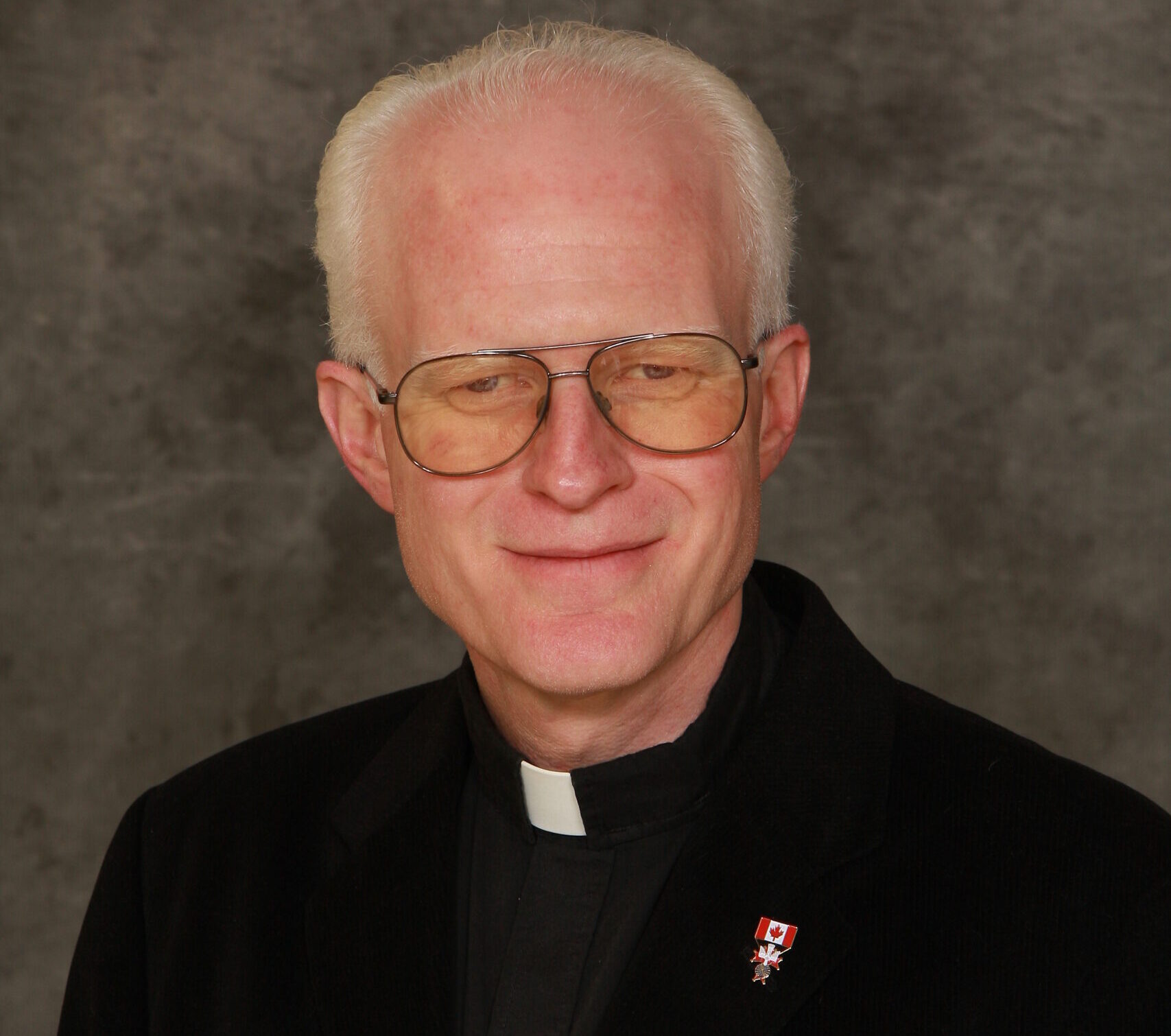
Father Michael Smith, the parish priest for Fort Coulonge, Waltham and Otter Lake, said that the move seemed like a response to ongoing pro-Palistinian marches in downtown Montreal, some of which have featured public Muslim prayers. He too questioned the feasibility of such a rule.
“From what I understand, it has its origin in a number of demonstrations by Muslims which involved the disruption of traffic,” he said. “My reading of the proposal is that it strikes me as an overreaction to what is essentially a public order issue. This isn’t a religious issue, it’s a public order issue. If any group is disrupting traffic, the laws we currently have in place are sufficient to deal with such matters.”
Smith added that there were some troubling undertones in the broader debates over laïcité, as some rules seem targeted at specific groups or cultures and not others.
“There seems to be a nervousness about other cultures, other traditions, and I think it’s really necessary to appeal to the more generous side of people’s nature and say that we are a pluralistic society where various groups of different persuasions have a right to express themselves in public,” he said. “That, to me, would be a very fair understanding of laïcité, where the government does not espouse any one religion, but where the various religions existing in the province, and people of no faith or agnostics, also have the right to express themselves in public.”
Both Morin and Smith said that their congregations occasionally have public processions or events that feature public prayer, but both coordinate with local municipalities if their actions might impede traffic. Morin pointed out that public prayer is common at otherwise secular events as well.
“Remembrance Day ceremonies, up in the Pontiac in particular, there is a moment for a prayer, which is part and parcel of all the presentations,” he said. “Now, is that a government sanctioned gathering to the point where they can enforce that you can’t pray publicly? I just have a lot of questions.”
He added that it’s also not clear how authorities will define the act of praying itself.
“It makes me go, ‘Ok, what do you mean by prayer?’ If you’re sitting quietly on a park bench, are you praying in public, is that public prayer?” he said.
‘Just a distraction’
Pontiac MNA André Fortin said that he saw the proposal as a desperate attempt for the Legault government to change the channel on the ongoing controversies surrounding the SAAQclic public inquiry and the loss of hundreds of millions of tax dollars in the scrapped Northvolt battery project. He said that public order issues don’t require this kind of sweeping legislation.
“Those powers are very much in the hands of municipalities, with the rules around certain types of gatherings and events,” he said. “So this to us is just a distraction, it’s just the CAQ looking to change the narrative from poor public services in health and education and poor performance on fiscal management.”
When asked if he thought Quebec’s existing secularism laws needed strengthening, Fortin said that his party voted against the existing laicite laws.
Smith, who has lived in various regions of Quebec since the 1970s, said he suspected the law wouldn’t get far.
“I doubt very much that [the law will move forward],” he said. “Reasonable opposition is being published to it in various newspapers and other media outlets and I really think the government is going to think twice. In fact, floating it now strikes me as more of a trial balloon than anything else, but that’s just my hunch.”
Fin août, le gouvernement provincial a annoncé qu’il allait instaurer une interdiction de la prière.
« Cet automne, nous déposerons donc un projet de loi pour renforcer la laïcité au Québec, notamment en interdisant les prières de rue », a déclaré publiquement le ministre de la Laïcité, Jean-François Roberge, dans un communiqué du 28 août, bien qu’il n’ait pas fourni de détails supplémentaires sur la manière dont une telle loi fonctionnerait en pratique.
Le premier ministre François Legault avait évoqué l’idée d’une interdiction en décembre 2024, à la suite d’un rapport sur des manquements au code de la laïcité du Québec par des membres du personnel musulmans dans une école de Laval.
« Voir des gens prier dans les rues, dans les parcs publics, ce n’est pas ce que nous voulons au Québec », a-t-il déclaré, ajoutant lors de cette même conférence qu’il voulait envoyer « un message très clair aux islamistes ».
Le gouvernement prévoit également de renforcer ses lois sur la laïcité existantes, qui interdisent déjà aux enseignants et autres employés publics de porter des symboles religieux, afin d’y inclure toute personne en contact avec les élèves, y compris les travailleurs de soutien et les parents bénévoles.
Des groupes confessionnels québécois ont dénoncé cette interdiction potentielle et l’Union canadienne des libertés civiles l’a qualifiée d’atteinte aux libertés d’expression, de religion et d’association.
Plusieurs membres du clergé du Pontiac qui se sont entretenus avec THE EQUITY ont déclaré qu’ils suivaient l’actualité, mais qu’ils avaient plus de questions que de réponses à ce stade.
Le révérend Eric Morin, de la paroisse anglicane de l’Ouest du Québec, a déclaré qu’il était déconcerté par la manière dont une telle règle serait appliquée, mais qu’il attendait d’en savoir plus.
« Je suis sûr que la plupart des religions organisées gardent un œil sur cette question et voient où cela va mener », a-t-il déclaré.
Le père Michael Smith, curé de paroisse pour Fort-Coulonge, Waltham et Otter Lake, a déclaré que cette mesure semblait être une réponse aux marches pro-palestiniennes en cours au centre-ville de Montréal, dont certaines ont présenté des prières musulmanes publiques. Lui aussi a remis en question la faisabilité d’une telle règle.
« D’après ce que je comprends, cela trouve son origine dans un certain nombre de manifestations de musulmans qui ont entraîné des perturbations de la circulation », a-t-il déclaré. « Ma lecture de la proposition est qu’elle me semble être une réaction excessive à ce qui est essentiellement une question d’ordre public. Ce n’est pas une question religieuse, c’est une question d’ordre public. Si un groupe quelconque perturbe la circulation, les lois que nous avons actuellement en place sont suffisantes pour gérer de telles situations. »
Smith a ajouté qu’il y avait des sous-entendus troublants dans les débats plus larges sur la laïcité, car certaines règles semblent cibler des groupes ou des cultures spécifiques et pas d’autres.
« Il semble y avoir une certaine nervosité à l’égard des autres cultures, des autres traditions, et je pense qu’il est vraiment nécessaire de faire appel au côté le plus généreux de la nature humaine et de dire que nous sommes une société pluraliste où divers groupes de différentes convictions ont le droit de s’exprimer en public », a-t-il déclaré. « Cela, pour moi, serait une compréhension très juste de la laïcité, où le gouvernement n’épouse aucune religion, mais où les diverses religions existant dans la province, et les personnes sans foi ou les agnostiques, ont également le droit de s’exprimer en public. »
Morin et Smith ont tous deux déclaré que leurs congrégations organisaient occasionnellement des processions ou des événements publics comportant des prières publiques, mais tous deux se coordonnent avec les municipalités locales si leurs actions peuvent entraver la circulation. Morin a souligné que la prière publique est également courante lors d’événements par ailleurs laïques.
« Les cérémonies du Jour du Souvenir, dans le Pontiac en particulier, incluent un moment de prière, qui fait partie intégrante de toutes les présentations », a-t-il déclaré. « Maintenant, s’agit-il d’un rassemblement sanctionné par le gouvernement au point où ils peuvent interdire de prier publiquement ? J’ai juste beaucoup de questions. »
Il a ajouté qu’il n’était pas non plus clair comment les autorités définiraient l’acte de prier lui-même.
« Cela me fait dire : “Ok, qu’entendez-vous par prière ?” Si vous êtes assis tranquillement sur un banc de parc, priez-vous en public, est-ce une prière publique ? », a-t-il dit.
« Juste une diversion »
Le député de Pontiac, André Fortin, a déclaré qu’il considérait la proposition comme une tentative désespérée du gouvernement Legault de changer de sujet concernant les controverses en cours autour de l’enquête publique sur la SAAQclic et la perte de centaines de millions de dollars des contribuables dans le projet de batterie Northvolt abandonné. Il a ajouté que les problèmes d’ordre public ne nécessitent pas ce genre de législation radicale.
« Ces pouvoirs sont en grande partie entre les mains des municipalités, avec les règles concernant certains types de rassemblements et d’événements », a-t-il déclaré. « Pour nous, ce n’est donc qu’une diversion, c’est juste la CAQ qui cherche à détourner l’attention des mauvais services publics en santé et en éducation et de la mauvaise performance en matière de gestion fiscale. »
Interrogé sur la nécessité de renforcer les lois existantes sur la laïcité au Québec, Fortin a répondu que son parti avait voté contre les lois actuelles sur la laïcité.
Smith, qui a vécu dans diverses régions du Québec depuis les années 1970, a déclaré qu’il soupçonnait que la loi n’irait pas très loin.
« Je doute fort que [la loi aille de l’avant] », a-t-il déclaré. « Une opposition raisonnable est publiée à son encontre dans divers journaux et autres médias et je pense vraiment que le gouvernement va y réfléchir à deux fois. En fait, la présenter maintenant me semble plus un ballon d’essai qu’autre chose, mais ce n’est qu’une intuition. »