





There is an unbroken maple sugaring tradition that goes back thousands of years in the Ottawa Valley. The Algonquin Anishinaabe people have been tapping maple trees, using the “sweetwater” as medicine, and processing it into syrup and sugar since time immemorial. Anishinaabe people consider maple sap, syrup and sugar to be gifts from the great spirit, Gitchi Manidoo.
Knowledge about maple sugaring was one of many gifts from Indigenous Peoples to European settlers in Eastern North America. Maple sap and its products were important survival foods for Indigenous peoples and settlers alike in late winter and early spring when food stores were depleted and snow still covered the ground.
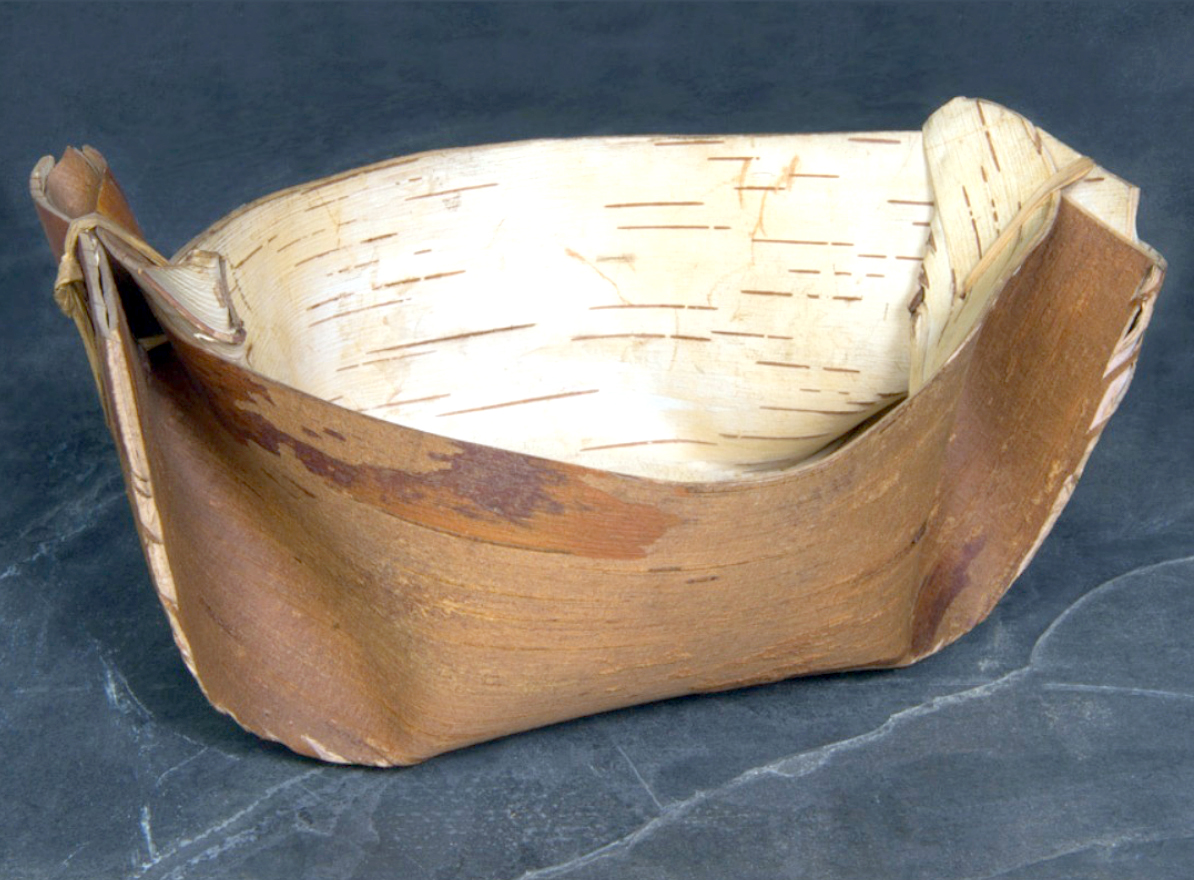
Maple sap runs in the early spring when the day time temperature rises above freezing and nighttime temperatures drop below freezing, during what is called the Sugar Moon. Traditionally, Anishinaabe people collected sap in birchbark baskets or moose-hide vats.
To process the sap, they heated smooth, dense river stones in a fire and transferred glowing-hot stones into the liquid-filled containers with wooden tongs. Each stone would cause vigorous boiling and steam evaporation.
Workers continuously replaced cooled stones with fresh ones to sustain the heat until the sap reduced to syrup.
Sap was often moved through a series of containers, with progressively thicker sap being finished in a smaller vessel, which helped control temperature and prevent burning. For granulated sugar, thickened syrup was poured into wooden or carved troughs, then stirred or paddled until it crystallized into sugar cakes that stored well.
Indigenous people used maple syrup to cure meats, as a sweetener for bitter drinks or medicines, an anesthetic and a spring tonic. Maple sugar contains nutritious minerals like phosphorus, magnesium, potassium, iron and calcium. Maple sugar was also used as a trade item as noted in this quote from the Globe and Mail article “As Anishinaabe as maple syrup.”
“The First Peoples of the 17th to 19th centuries sold maple sugar in blocks, packaged in birch bark containers known as makaks, that could weigh up to about 12 kilograms each, supplying fur trading companies who redistributed the sugar to their trading posts.”
In her wonderful book of Indigenous wisdom entitled “Braiding Sweetgrass”, Robin Wall Kimmerer notes that Indigenous people learned to make sugar from the squirrels. As legend goes, one spring day, a squirrel climbed up a maple tree, bit into a branch and drank. An young Indigenous boy looking up from under the tree wondered why the squirrel was doing this since there was a freshwater spring nearby. Deciding to imitate the squirrel, he made a slash in the tree with his knife and discovered the wonderful sweetwater running in the veins of the maple tree.
Maple sugaring by squirrels has been scientifically documented. In 1992, Bernd Heinrich published a paper in the Journal of Mammalogy entitled Maple Sugaring by Red Squirrels. Heinrich observed chisel-like grooves made by red squirrels on sugar maple trees at 22 sites in Vermont and Maine. He noted that the squirrels did not drink the sap immediately but returned to lick up the more concentrated sap after allowing for some of the water to evaporate.
Maple sugaring time will continue for a few more weeks in the Ottawa Valley, until nighttime temperatures are consistently above freezing. At that point, the flow of sap will be reduced and bitter flavours will start to be present. But, thanks to Indigenous knowledge, honed for millennia, and generously shared, we can enjoy the wonderful gifts of maple sugar and syrup from Gitchie Manidoo all year round.
Lynn Jones is a founding member of the Ottawa River Institute, a non-profit, charitable organization based in the Ottawa Valley. ORI’s mission is to foster sustainable communities and ecological integrity in the Ottawa River watershed.
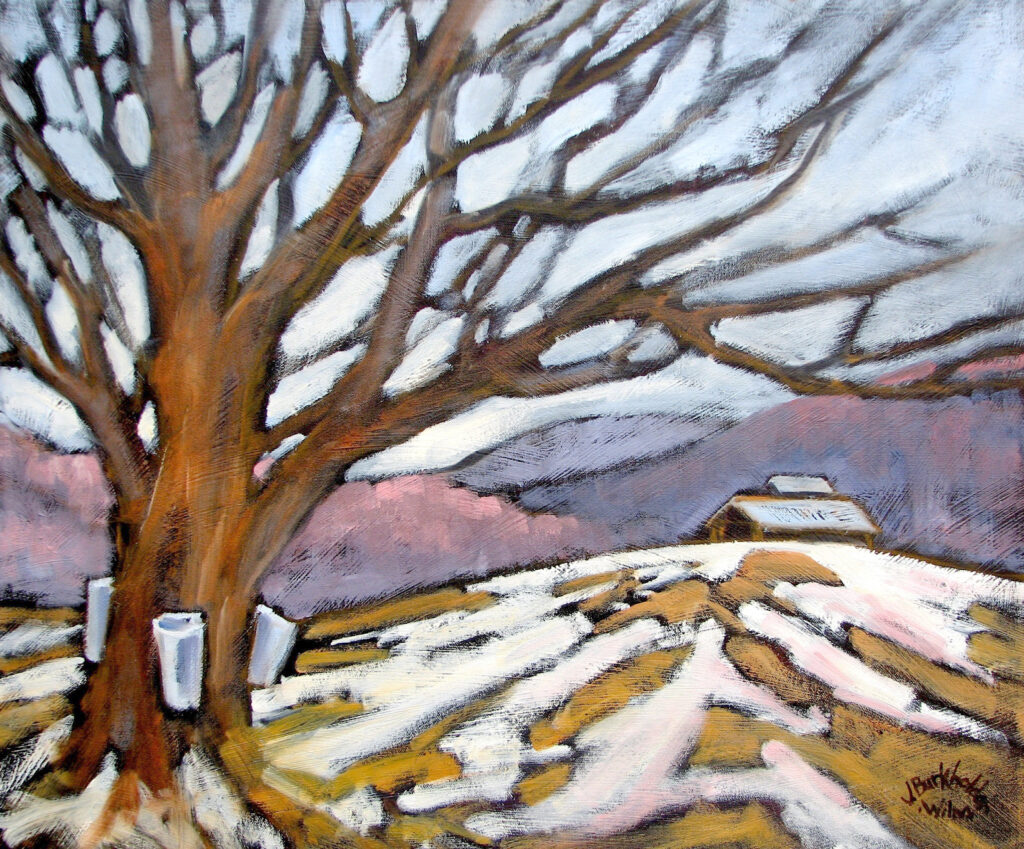
Il existe une tradition ininterrompue de l’acériculture qui remonte à des milliers d’années dans la vallée de l’Outaouais. Le peuple algonquin Anishinaabe entaille les érables, utilise la « douce eau » comme remède et la transforme en sirop et en sucre depuis des temps immémoriaux. Les Anishinaabe considèrent la sève, le sirop et le sucre d’érable comme des cadeaux du Grand Esprit, Gitchi Manidoo.
Le savoir sur l’acériculture est l’un des nombreux cadeaux des peuples autochtones aux colons européens de l’Est de l’Amérique du Nord. La sève d’érable et ses produits étaient d’importants aliments de survie pour les peuples autochtones et les colons à la fin de l’hiver et au début du printemps, lorsque les réserves de nourriture étaient épuisées et que la neige recouvrait encore le sol.
La sève d’érable coule au début du printemps, lorsque la température diurne monte au-dessus du point de congélation et que les températures nocturnes descendent en dessous du point de congélation, pendant ce qu’on appelle la Lune du Sucre. Traditionnellement, les Anishinaabe recueillaient la sève dans des paniers d’écorce de bouleau ou des cuves en peau d’orignal.
Pour transformer la sève, ils chauffaient des pierres de rivière lisses et denses dans un feu et transféraient les pierres incandescentes dans les récipients remplis de liquide à l’aide de pinces en bois. Chaque pierre provoquait une ébullition vigoureuse et une évaporation de la vapeur.
Les travailleurs remplaçaient continuellement les pierres refroidies par des nouvelles pour maintenir la chaleur jusqu’à ce que la sève se réduise en sirop.
La sève était souvent déplacée à travers une série de récipients, la sève de plus en plus épaisse étant finalisée dans un plus petit récipient, ce qui aidait à contrôler la température et à prévenir les brûlures. Pour le sucre granulé, le sirop épaissi était versé dans des auges en bois ou sculptées, puis remué ou agité jusqu’à ce qu’il cristallise en pains de sucre qui se conservaient bien.
Les peuples autochtones utilisaient le sirop d’érable pour conserver les viandes, comme édulcorant pour les boissons amères ou les médicaments, un anesthésique et un tonique printanier. Le sucre d’érable contient des minéraux nutritifs tels que le phosphore, le magnésium, le potassium, le fer et le calcium. Le sucre d’érable était également utilisé comme article de commerce, comme le mentionne cette citation de l’article du Globe and Mail intitulé « Aussi anishinaabe que le sirop d’érable ».
« Les Premiers Peuples des XVIIe au XIXe siècles vendaient le sucre d’érable en blocs, emballés dans des récipients d’écorce de bouleau appelés makaks, qui pouvaient peser jusqu’à environ 12 kilogrammes chacun, fournissant les compagnies de traite des fourrures qui redistribuaient le sucre à leurs postes de traite. »
Dans son merveilleux livre de sagesse autochtone intitulé « L’Herbe douce », Robin Wall Kimmerer note que les peuples autochtones ont appris à faire le sucre des écureuils. Selon la légende, un jour de printemps, un écureuil grimpa sur un érable, mordit une branche et but. Un jeune garçon autochtone, regardant d’en dessous de l’arbre, se demanda pourquoi l’écureuil faisait cela puisqu’il y avait une source d’eau douce à proximité. Décidant d’imiter l’écureuil, il fit une entaille dans l’arbre avec son couteau et découvrit la merveilleuse eau sucrée qui coulait dans les veines de l’érable.
L’acériculture par les écureuils a été scientifiquement documentée. En 1992, Bernd Heinrich a publié un article dans le Journal of Mammalogy intitulé « L’acériculture par les écureuils roux ». Heinrich a observé des rainures en forme de ciseau faites par des écureuils roux sur des érables à sucre sur 22 sites au Vermont et dans le Maine. Il a noté que les écureuils ne buvaient pas la sève immédiatement, mais revenaient lécher la sève plus concentrée après avoir laissé une partie de l’eau s’évaporer.
Le temps des sucres se poursuivra encore quelques semaines dans la vallée de l’Outaouais, jusqu’à ce que les températures nocturnes soient constamment au-dessus du point de congélation. À ce moment-là, le flux de sève sera réduit et des saveurs amères commenceront à apparaître. Mais, grâce au savoir autochtone, affûté pendant des millénaires et généreusement partagé, nous pouvons profiter des merveilleux cadeaux du sucre et du sirop d’érable du Gitchie Manidoo toute l’année.
Lynn Jones est une membre fondatrice de l’Institut de la rivière des Outaouais (IRO), une organisation sans but lucratif et caritative basée dans la vallée de l’Outaouais. La mission de l’IRO est de favoriser des communautés durables et l’intégrité écologique dans le bassin versant de la rivière des Outaouais.