






Caleb Nickerson
CAMPBELL’S BAY
Oct. 10, 2017
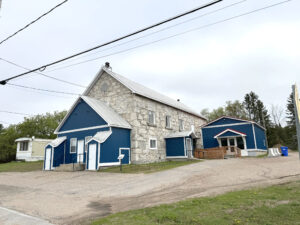
On Oct. 10 the Pontiac Chamber of Commerce hosted a forum with the five candidates running for warden of MRC Pontiac at the R.A. Hall in Campbell’s Bay. The event brought out an audience of over 200 people and opened with a greeting from Chamber President Mireille Alary, who thanked the candidates and all those that coordinated the evening.
She pointed out that the Chamber of Commerce had advocated for a warden elected by universal suffrage all the way back in 2008. The floor opened for the candidates to make opening statements.
Bilingual moderator Joanne Romain then asked a series of three questions, each with a preamble, that the candidates had received in advance and they each had roughly three minutes to respond.
The mission of the CISSS de L’Outaouais is to maintain, improve and restore the health and well-being of the Outaouais residents by providing them with high quality health and social services, thus contributing to the region’s social and economic development.
Question one: How can we support the addition and retention of new physicians in the Pontiac and expand specialized services in our health centre?
Pierre Fréchette: The former mayor of Calumet Island said that though healthcare is a provincial portfolio, the MRC has a role to play in the attraction and retention of doctors. He said there should be increased communication with CISSSO and added that there should be more partnerships with post-secondary institutions to attract and train new doctors.
Charlotte L’Écuyer: The former Pontiac MNA said that she had a lot of experience working the healthcare system and knew the issues well. She said that the local healthcare system is affiliated with McGill University for many years and that it would take a village to attract new doctors to the region.
Linda Davis: The former Ottawa Regional Councillor said that the province decides the amount of physicians that come to the region, based on the population and budget. She said she would examine the needs of the community when it comes to the number of doctors and said that she would work to partner with universities to attract young doctors.
Raymond Durocher: The current warden said that the problem facing the Pontiac is one similar to communities across the province. He said that Bill 10, which amalgamated the province’s healthcare services in 2015, destroyed local control over healthcare institutions in the Pontiac.
Jane Toller: The Fort Coulonge entrepreneur said that she would look into recreational infrastructure, like a municipal pool or a theatre would attract healthcare professionals to the region. She also said that a French Cegep in the region could be an incentive for doctors with families to move to the region.
The mandate of the MRC Pontiac is to enhance the economic well-being within its jurisdiction by working with local entrepreneurs and outside promoters to foster growth. In the past however, some criticism has been laid against the MRC in that too much attention has been paid to the latter in attempting to meet its mandate with little in the way of tangible results achieved.
Question two: If elected as warden, how will you work with local entrepreneurs in achieving the shared goal in the economic development of the Pontiac?
Charlotte L’Écuyer: She said that the first job of the warden is to provide leadership and generate ideas as well as support local projects once they get off the ground. “We have to follow through with them as the project develops because a lot of times we lost projects because once it was there, the people didn’t have any support groups,” she said. She also lamented the loss of jobs and resources to regions outside the Pontiac and said that she would work to improve accountability.
Linda Davis: She said that she supports shop local initiatives and would work to reduce systemic barriers for local businesses. “I don’t think there’s one solution that helps all businesses, it depends on the sector, it depends on the type of the business, the size of the business,” she said. She pointed to her experience as an Ottawa Regional Councillor, when she participated in the revitalization of Westboro, which is now a thriving community.
Raymond Durocher: He pointed to restructuring that the MRC has undergone in recent years to comply with provincial mandates as detrimental to growth in the region. “We had to change a lot of policies to fit their guidelines and the biggest fight right now is fighting with the government and asking for… the money that was taken away from us to invest it back in the communities,” he explained. He added that many provincial programs don’t work in a rural setting like the Pontiac and have to be adapted. He added that the economic SWAT team was a great opportunity.
Jane Toller: She criticized the past administrations for giving out funding without financial commitment by private investors or the proper government oversight. “Expectations of the people of the Pontiac are not fulfilled and there are zero jobs,” she said, referencing Michael Bartlett, a business owner that promised lots of investment and jobs, but didn’t deliver. She added that she would work to cut red tape and act as a champion for local entrepreneurs.
Pierre Fréchette: He stressed working to optimize the business of local partners as well as seeking out outside investors through organizations like the economic SWAT team. “I don’t see the world in pink colour,” he said, insisting that he would be cautious about promising too much. He added that he would work to promote local agricultural organizations like the Union of Agricultural Producers.
When an accident or other unexpected situation occurs, the communication systems are sometimes damaged and unusable for many hours. Consequently, the citizens have no access to emergency services.
Question three: If elected as warden, how do you plan to improve the safety of the Pontiac citizens in such cases?
Linda Davis: She said that it is Quebec law to have a public safety plan for disasters and emergencies. She added that residents had to take responsibility and have their own personal family plan in case things go wrong. She added that she would work to increase public education around this. “When we’re looking at this, I think that one thing we have to do is take responsibility for ourselves,” she said, pointing to her own personal experience caring for an ill family member.
Raymond Durocher: He said that this is his area of expertise, adding that creating a regional action plan is a top priority for the MRC staff and will be completed within a year, whether he is re-elected or not. “Right now, there are too many crises that [have] happened in the Pontiac since 2011, 2012. We need to fix it,” he said. He said that he would work to increase coordination between local fire departments and improve emergency responses to the non-organized territories (TNOs) in the region.
Jane Toller: She said that cell service must be added to existing towers in the region, pointing specifically to two in Sheenboro. She questioned the 20-year length of the MRC’s contract with the fibre company Picanoc. “The CRTC has mandated that the major cell phone companies need to improve cell communication along major highways coast to coast by the end of 2018. Unfortunately, Picanoc is not a major player,” she said. She added that communications companies need to share existing towers for the benefit of the region.
Pierre Fréchette: He said that emergency services need to coordinate their emergency planning in the case of all types of natural disasters. “What about other situations, we’ve gone through floods, could there be tornados? Could there be other natural elements that could have an impact on the safety and security of the population of Pontiac? Absolutely,” he said. He added that without the help of major communications companies, it will be difficult to attract businesses and keep residents safe. He said in the last nine years, five such emergency situations have occurred.
Charlotte L’Écuyer: She reiterated the importance of the communications system to the emergency preparedness of the entire region, adding that the current situation needs to change. “We just had [a situation] a few weeks ago and 500 families were without communication. It’s unacceptable,” she said. She said that communications are an essential service and improving access to residents is a top priority of hers.
After a brief intermission, the floor was opened up to questions from the public and a long queue formed quickly. The questions were on a broad variety of topics and eventually they had to be cut short for the sake of time.
Several students from École secondaire Sieur de Coulonge asked the candidates about bringing public transport and entertainment venues to the region. The candidates brought up different suggestions, from bringing in films from festivals to organizing group bus trips.
Local entrepreneur Jim Coffey asked the candidates what they thought about the proposed Near Surface Disposal Facility at Chalk River Laboratories and each candidate laid out their concerns and said they would keep a close eye on the issue.