




One year out from the next municipal election, scheduled for Nov. 2, 2025, THE EQUITY checked in with the 20 people who have been voted in to lead the communities from Luskville to Rapides des Joachims, including the MRC Pontiac warden.
We will be publishing these interviews to offer readers a sense of what these local leaders feel they’ve accomplished since their term began, and what they hope to do with the last year before their seat is once again up for grabs. We will publish three interviews each week, working our way through the Pontiac from east to west.
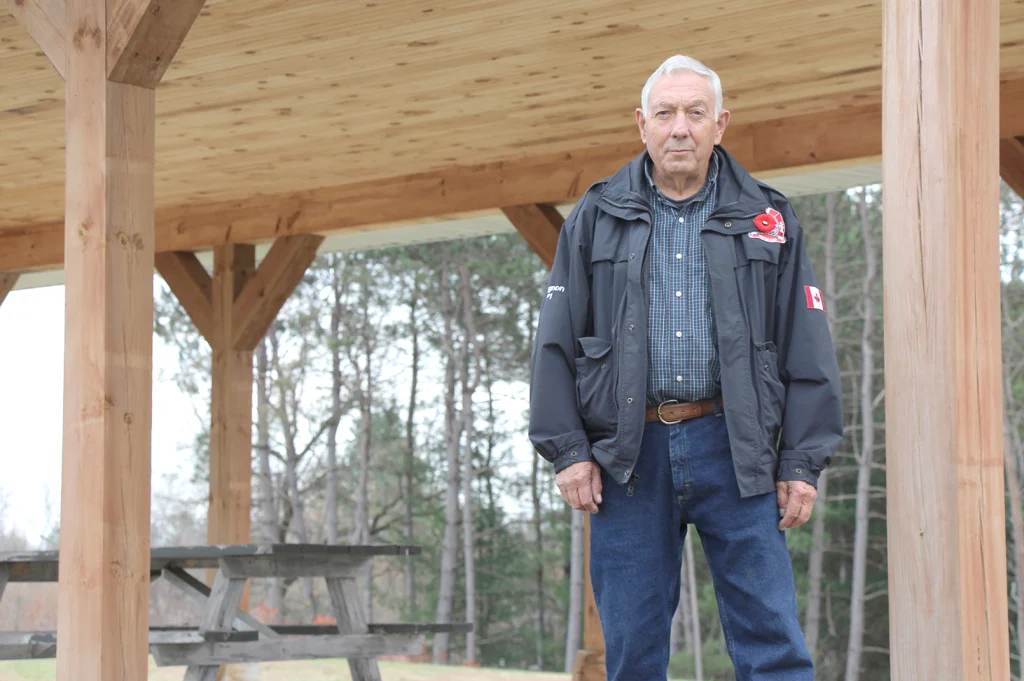
Donald Gagnon — Chichester
Interview by K.C. Jordan.
When you ran for mayor three years ago, what were your main priorities?
I’ve been mayor since 1995. Chichester has changed quite a bit. We’ve amalgamated our fire department, we’ve improved our road network. Now we’re working on composting. We’re working with the MRC to come up with a solution. Right now it’s in process. It’ll cut down on the weight of the garbage, and that way you’re reducing the costs. We formed an inter-municipal committee between Chichester, Allumette Island and Sheenboro, and Waltham is soon going to be on board. So we’re looking at ways where we can have better service and reduce our costs.
How much of this have you achieved?
A lot of it. We’ve got grants through the MRC, and used a little bit of our gas tax money. Our biggest priority was to keep our road network up to date, and as far as I’m concerned we have one of the best road networks in the county.
We were opening a municipal park. We’ve already put in a gazebo, we put a walking path to the river, we’re just trying to make it more accessible to our residents. We’re planning on an event next year for the grand opening.
And also part of our priority was to have a public works garage, which we have built. We store equipment, our trucks and everything else. We just had an old trailer, and we wanted to move to a more central location and have easier access for our employees.
We still want to add stuff for the kids, play structures, which we didn’t get to. But I think our biggest challenge with the evaluations so high, is to keep our costs down for our residents. Definitely the mill rate has to drop, that’s a priority.
What do you think has been your greatest accomplishment this term so far?
My biggest accomplishment is that the municipalities are working together. In our area, Pontiac Ouest, we’re working together and that is a big plus. It started with our fire department, and now we’re working towards more with shared services. We’re looking at every option.
What do you believe are your municipality’s greatest needs?
I think right now for most people it’s to keep our taxes down. Our road network is in good shape, I think that’s why we’re looking at shared services. That’s probably our greatest need right now, is for us to reduce costs and improve service by sharing services.
What are the challenges in meeting these needs?
You’ve got to remember, with Waltham [potentially now joining Pontiac Ouest], you’re dealing with four municipalities, 24 people sitting at a table, it’s a challenge. It’ll take time, but I think it’ll work. People are starting to see we can give better service by doing it together.
What do you hope to accomplish in this last year before the next municipal election?
Finish our park, and work with our intermunicipal committee. Those are the two main things for us.
After three years as a member of the MRC Pontiac’s Council of Mayors, what do you believe the county should prioritize?
I think waste management right now is a priority. In one year, I think it’s going to be a big enough challenge right there. I’m talking about your recycling, your composting, your garbage. Reducing the garbage so we can reduce our costs – I think in a year that’s a challenge. If we can accomplish that, I think we’re doing good.
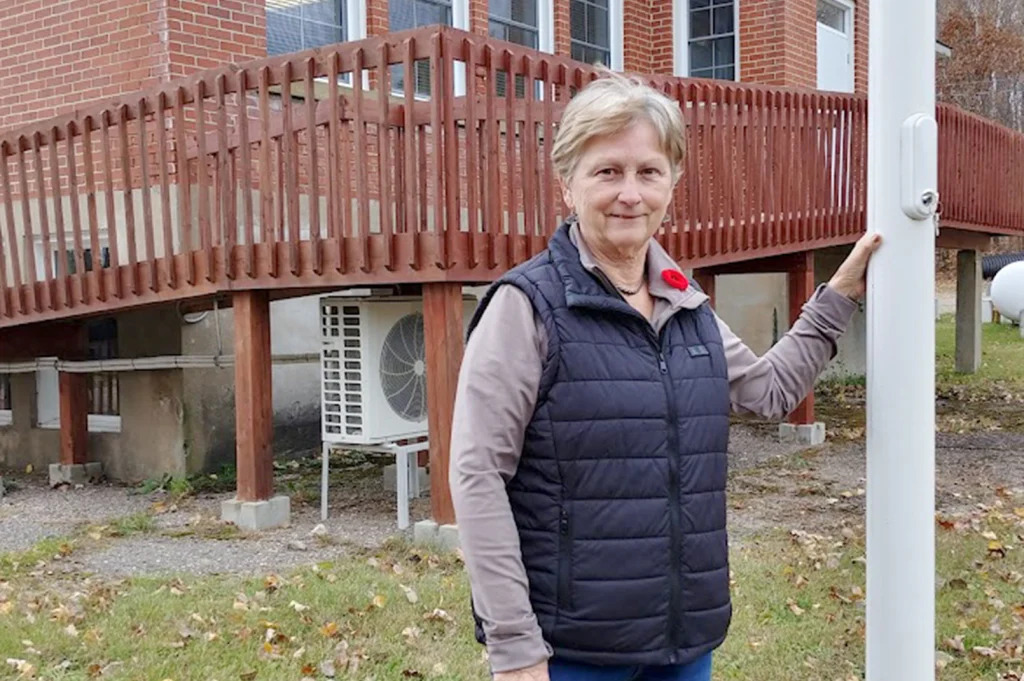
Doris Ranger — Sheenboro
Interview by K.C. Jordan.
When you ran for mayor three years ago, what were your main priorities?
Garbage and roads are always big concerns in Sheen. Probably with our new grant coming in we should be able to do more gravelling and hopefully some hard-topping.
How much of this have you achieved?
We worked on roads. We shared services along the way. Our last example of sharing of services would have been three municipalities [Sheenboro, Allumette Island and Chichester] going forth to do a website. We joined up, which made it affordable for a small municipality like ours to go forward and decide to upgrade our website on our own. There’s lots of information, and I think it’ll be great for people out of town, for people in town who want to know what’s happening. That’s one of our main achievements.
What do you think has been your greatest accomplishment this term so far?
We completed the dock at Fort William. When you live along the river it’s important to have a really good wharf and dock. We have some people who access their properties only by water, so really the Ottawa River is our highway between us and de Swisha. There’s one [dock] at Demers Centre, and two on Allumette Island, but there’s none above the locks here. Fort William has always had a wharf here, and maintenance has been very costly, so we were very fortunate to receive a [revitalization] grant which was $100,000 for all municipalities, and that’s where we put ours.
What do you believe are your municipality’s greatest needs?
Compared to all the world, and the shape the world is in, I’d say Sheenboro doesn’t have many needs. We’re doing well. But no, our greatest needs would be to keep going forward as a municipality to still be identified as Sheenboro. That’s a great need, and in order to do that we’ve got to be trying to be self-sufficient. And how do you do that? By sharing services.
What are the challenges in meeting these needs?
You never know what the government is going to hand down to you, so you need to have yourself prepared. Try to prepare yourself as much as you can, but all we can do is our best. Sharing services is a good way for our municipality to survive.
We found that out with our fire department. We amalgamated that, maybe five or six years ago. Sheenboro is a retired town, we’re all getting older. Right now we don’t have as many young people that are living here and if we would not have amalgamated our services and call it under one name, Pontiac West Fire Department, we wouldn’t have a fire department. We don’t even have one fireman here.
What do you hope to accomplish in this last year before the next municipal election?
Going forward we need to start spending our grant. For this year, we’re working on sharing services, which is very important for a small municipality like us. That’s something that we are working on, and probably our next one going forward for this year is that council is thinking about reducing to four councillors. I like to see a council that is set up with a difference of opinions, and sometimes in a small municipality it’s hard. We have to look towards the future, and when the government makes a recommendation that we are allowed to drop to four councillors, I think the municipality should take a good look at it.
I hope to have our roads up and gravelled, we’re hoping to do some hard-topping, as far as our money can take us.
After three years as a member of the MRC Pontiac’s Council of Mayors, what do you believe Pontiac leaders should be prioritizing to improve the quality of life for the people who live here?
As far as I’m concerned, we’re working on a garbage and composting solution. We should at least complete that. I’m sure there’s other things that can be brought to the table, but right now if we can at least nail down one thing that we can say successfully that we have that up and running, and that’s the sharing of services of all 18 municipalities under the umbrella of the MRC. This is the one that seems to be popping up in everyone’s mind.
Lucie Rivet Paquette — Rapides des Joachims
Interview by Sophie Kuijper Dickson.
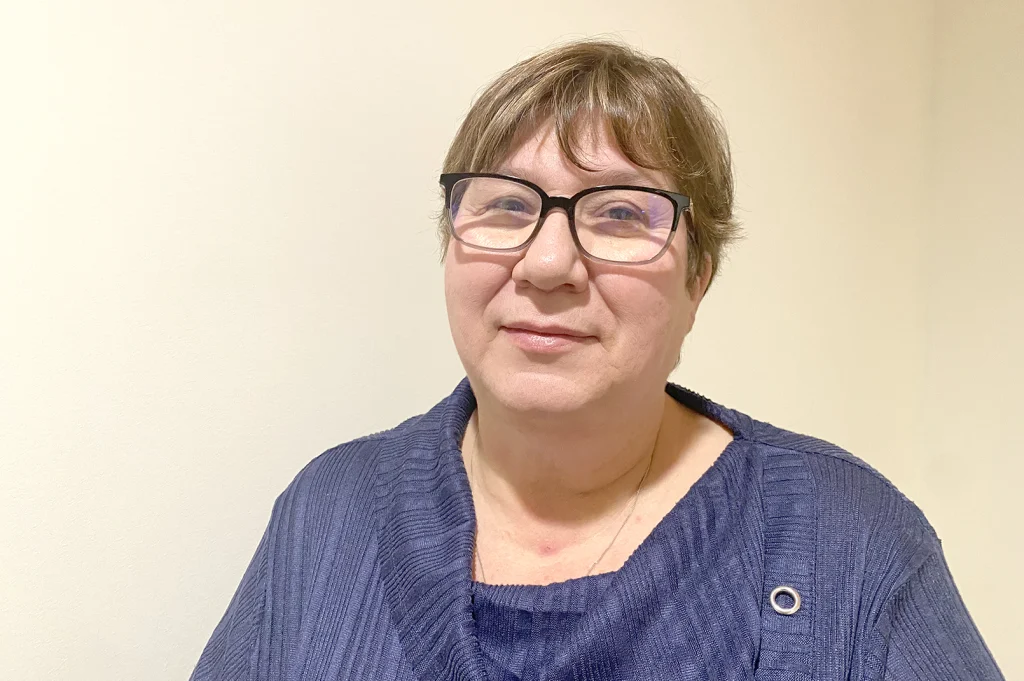
When you ran for mayor three years ago, what were your main priorities?
I have Rapides des Joachims in my heart. And if you want to be a good mayor you need to have Rapides des Joachims in your heart and work for the community, and work for everything, not for yourself. You have to work for the township. And that’s why I wanted to try to change some stuff, and try to have different things for kids. [ . . . ] I wanted to bring more activities for children and more activities for the older people, because we don’t have nothing.
How much of this have you achieved?
We did a lot this year, we did a splash pad. We put docks in. We did a Santa Claus parade for the kids. Luckily we do have a centre communautaire, and the program from Campbell’s Bay, they bring food every week. And if some people need food because they’re low income, they can go get some there.
When I arrived here in Nov. 2023, I said, in the municipal building, I can smell some smell. I said that’s mold, so I went to see my DG right away and said, “We need to make an inspection on that right away, now.” In not even two weeks we had the answer that it was black mold. [ . . . ] So we rented a trailer office for both the municipality and the CLSC, because we do have a CLSC in the municipal building, but that costs lots of money. And we cannot afford to pay too much. So now they’re fixing that.
What do you think has been your greatest accomplishment this term so far?
What I’m the most proud of is that we’re not going to put the tax too high because we managed the budget really well. The tax is going to be maybe $50 more per house, and I think that’s very good. And I think everybody worked well together.
What do you believe are your municipality’s greatest needs?
We have two. We have the building. This is a big must, the repairs and all of that stuff. And the second one, it’s the medical card. We live in Quebec, and all around us is Ontario. When we go to [Ontario] to get medication, it’s hard. We have to pay for the medication to receive it, or if we want to just pay what the government said to pay every month, we have to go to Quebec, and the closest place is Fort Coulonge. And some time when you go see the doctor in Deep River, some time you have to pay before they examine you. This is another must. In Rapides des Joachims, it’s all older people. I would say at least 80 per cent.
What are the challenges in meeting these needs?
I know Nicole Boucher-Larivière is working very, very hard for us and to find a way that maybe in Ontario we can go there and pay the same amount as in Quebec.
I did have a big meeting with health, and I said, ‘Well maybe, one thing we can do is, because we do have a CLSC, that lady can call everybody and see what kind of medication they need, and call someone to send one employee with all the medication for the whole town, two times a month or whatever, so the people can just go to the CLSC and get all their medication and go home. Rather than driving an hour and a half both ways.
What do you hope to accomplish in this last year before the next municipal election?
Well I’ll do my best to fix the problem with getting medications, to fix the municipal building, to fix the roof. [ . . . ] Hopefully we can also work with the community to do stuff for the older people, activities like card games to help them get out of the house. We’re also looking for a volunteer driver for TransporAction for Rapides des Joachims. But I’m not sure if I’m going to run again. I’ll make my decision in May 2025 if I go back or not. Because I work a lot. I drive a school bus 30 hours a week, I’m working at the ZEC, and I’m the mayor too.
After three years as a member of the MRC Pontiac’s Council of Mayors, what do you believe Pontiac leaders should be prioritizing to improve the quality of life for the people who live here?
I still think we should stick together and vote for the best for the community, not for ourself. Let’s go work together like a family. [ . . . ] We all have our own mind. Nobody forces us to say anything. We talk, we discuss, and we find the right answer.