





Are you or someone you know struggling to access healthcare or education services? Are you a caregiver? Someone living with a disability or special needs? Do you need assistance with transportation? Do you want to learn more about how to use your cell phone, or scan a QR code (if, say, you wanted to access your English voting information)?
These are just some of the many accessibility challenges people in the Pontiac experience on a daily basis. In just under a month’s time, community social service organizations from across the Pontiac and beyond will be gathering in Bryson with a single, unified goal: to connect people living with accessibility challenges, in whatever form they might take, with critical resources to make life easier.
The event, organized by the Connexions Resource Centre, will take place Oct. 14 at the Bryson RA and Lions Club. It will bring together over 30 local organizations and service providers who will be set up from 11 a.m. – 5 p.m., ready to answer questions.
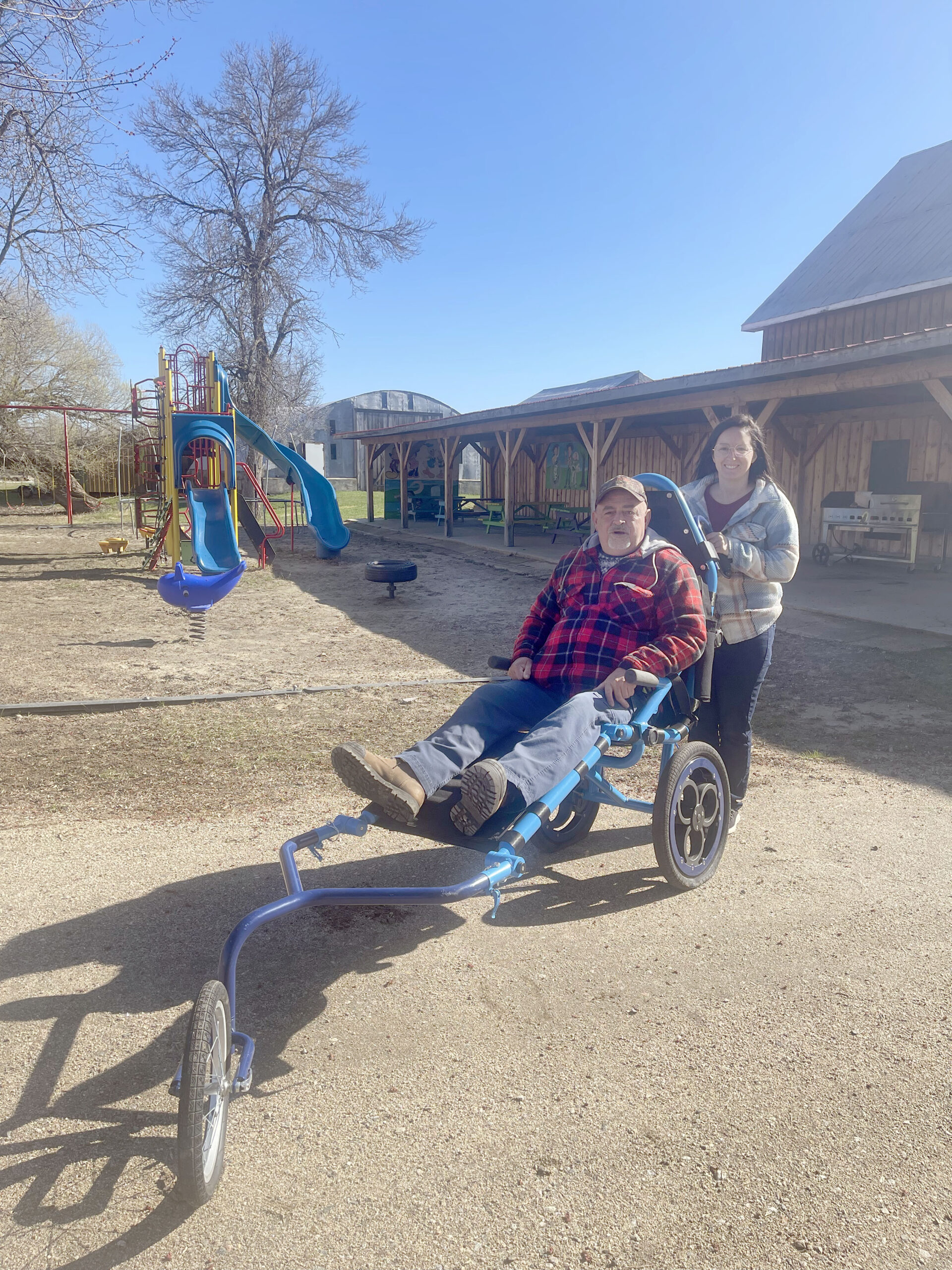
Five presentations will also be made throughout the day, in both French and English. RBC will be speaking about the Registered Disability Savings Plan for children and youth; the Connexions Resource Centre will talk about support for caregivers; Santé Québec will give a presentation on how to access services; Loisir Sports Outaouais will be giving demonstrations on how to rent and use various pieces of accessibility equipment; and the Caisses Desjardins bank will likely be talking about fraud, and how to avoid it. A full schedule for the day will soon be available at centreconnexions.org.
“My goal is really to help everyone in the Pontiac learn what exists here and how to access it,” said Shelley Heaphy, the Pontiac program coordinator for Connexions Resource Centre. She worked with a committee of local organizations to ensure people with direct links to people with accessibility needs were involved in planning the day’s programming.
She emphasized the event is for all Pontiac residents, as even those who may not identify as having accessibility challenges likely know someone who could use support overcoming their own.
“We all know someone that is looking for help in some way. No one identifies as a caregiver,” she offered, as an example. “But most of us, in some capacity, are a caregiver.”
Campbell’s Bay resident Mavis Kluke is all too familiar with the challenges faced by seniors, and their caregivers, across the Pontiac. She’s spent her career as a personal support worker in various long-term care homes, and spent the last 10 years before her retirement delivering homecare to seniors in all corners of the region.
“Many of them live so far away from even a main road that when I would try to reach them for homecare, there wasn’t even cell phone service for me to Google which road I needed to take. So you can understand how isolated they actually were.”
She said as she sees it, the greatest barrier to seniors accessing the services they need is that there are not enough caregivers to inform them of and connect them to the resources already available.
“It’s not that there isn’t care out there, but accessing it and accessing it in a timely manner are two different things,” she said.
Jessica Nilsson also faces regular accessibility challenges, in a different way. Her 11-year-old son Félix lives with autism, has Trisomy 16 and is nearly non-verbal. He needs constant supervision.
“Living in a rural region makes it more difficult to access specialized services and inclusive activities,” Nilsson said. “We often have to travel outside the Pontiac, and waiting lists can be very long. Some activities are available, but they do not always have the staff or resources required to safely include a child with higher needs.”
She said finding support for caring for her son requires a lot of planning and teamwork, and even the best laid plans often don’t work out.
“It can sometimes be exhausting and isolating, but Félix also brings a great deal of joy to our family, and we celebrate every step forward with him,” she said.
Nilsson hopes this upcoming accessibility event will help people better understand the realities faced by individuals with disabilities and their families, connect families with local resources, and encourage organizations to offer more inclusive services, activities and support.
Heaphy said local schools have been invited to attend the event with students who have accessibility needs. Echo the Clown will be onsite to provide entertainment for the younger visitors.
“The goal being that they can bring the information back to their caregivers,” she said.
“My hope is that the people in the Pontiac are going to share this information with people that they know, and help get the word out that way.”