





A survey conducted in July on three Thorne lakes has found them to be clear of the invasive Eurasian milfoil plant that has been found in some waterways of neighbouring Otter Lake.
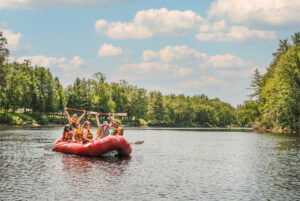
The Thorne Lake Home Owners’ Association (TLHOA) hosted biologist Annie Parent on July 21 to test for the plant on Thorne, Long and Killoran lakes, who found no trace of it.
“We were really, really happy, because it is really hard to get rid of,” said TLHOA president Judy Hancock about the result.
Eurasian milfoil is a common invasive species that is easily spread either by introducing unwashed boats with traces of the plant into new bodies of water, or by boat propellers chopping up pieces of the plant and spreading it.
“[It] takes the place of indigenous species, so it’s a danger to the biodiversity of a lake,” said Parent, who is not an expert in milfoil but has seen its impact in her career as an aquatic biologist.
She said the plant chokes out other indigenous life in the lake to the point where nothing can outcompete it. “Invasive exotic plants, they have nothing to prevent them from reproducing. There are no controllers,” she said.
A 2023 survey commissioned by the municipality of Otter Lake, also conducted by Parent, first flagged the presence of the plant in two of its lakes. Last year, another survey found the plant in three more lakes.
Otter Lake council has since implemented solutions to curb the plant’s spread, including closing its public boat launch on Farm Lake. Council passed a bylaw in 2020 making boat-washing mandatory before putting any craft into a new body of water.
Hancock said while the lakes her association serves do not have public boat launches, the organization still wanted to be proactive about stopping the plant’s spread.
“If it can happen to Otter Lake, it can happen anywhere,” she said of the plant’s appearance in the neighbouring municipality. “We wanted to [ . . . ] get ahead of it.”
Parent said in her experience, getting ahead of it is exactly what residents should do, especially in cases where there are no public boat launches for the municipality to police.
She said in Thorne and other municipalities that don’t have as many public launches, the introduction of new watercraft can make those lakes more vulnerable to invasive species.
“That’s what’s dangerous for small lakes that don’t have a public launch – there’s no boat washing, there’s no surveillance, there’s absolutely nothing.”
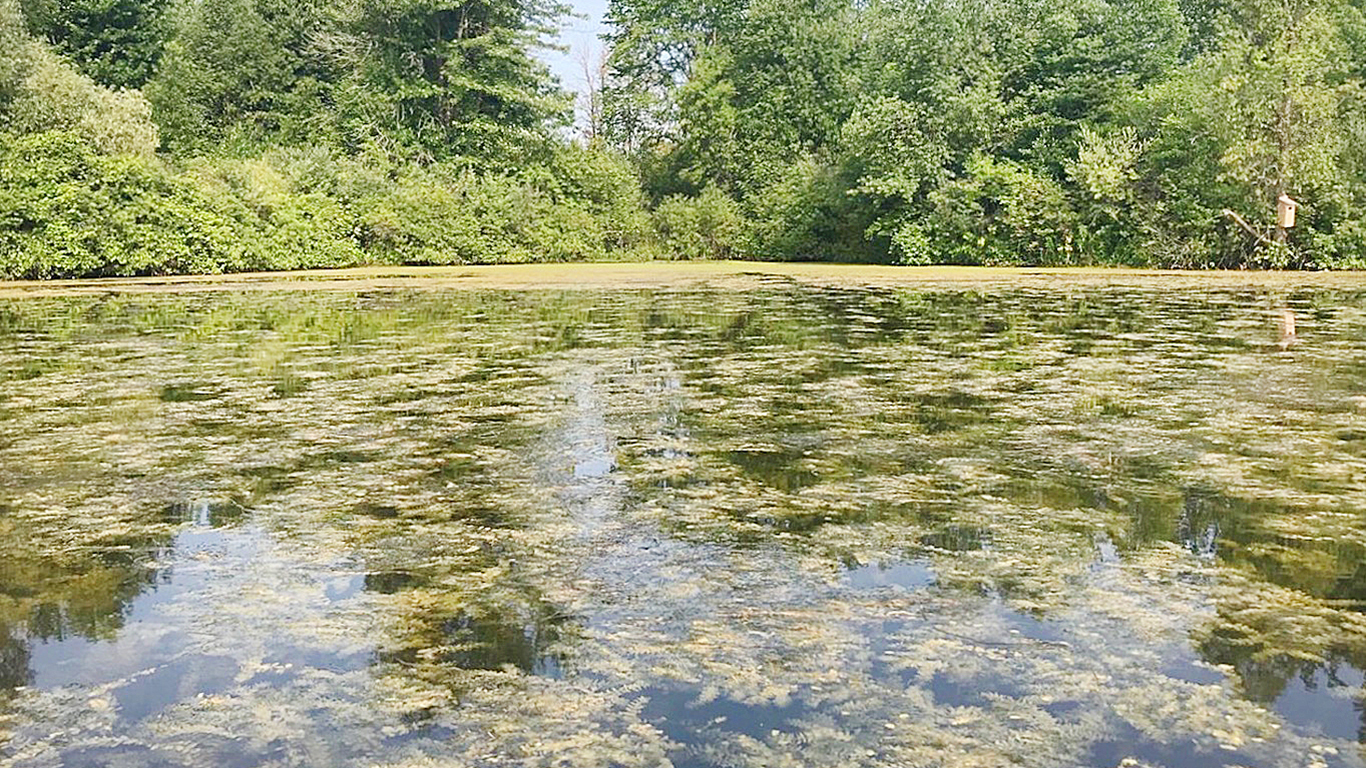
She said that milfoil, if left untreated, can become very thick on the surface of the water and hinder any kind of enjoyment of the lake, as has been the case in many lakes she has studied over the years.
“It was impossible for people to go out and bathe, there was too much [milfoil]. The big rods can wrap around your feet and it can be dangerous.”
Hancock said it is exactly this kind of thing that her organization wants to avoid. She said that by handing out flyers and ordering this survey, they hope to educate their neighbours about the risks the plant could pose for their summer havens.
“Everybody wants to make sure that they do their due diligence, because these cottages are legacy properties [ . . .] So people really want to preserve the flora and fauna. They want to preserve the air and the water so that the enjoyment can be there for their kids and grandkids,” she said.
Parent said even though the milfoil test came back negative, the work doesn’t stop there for the TLHOA – cottage owners still need to be vigilant about who is entering and exiting the water on their property and ensure they are properly cleaning their craft.
“For users who put their boat in the spring and take it out in the fall [ . . . ] they’re not going to be the ones to bring in milfoil. The family, the friends, and [ . . . ] people who allow people to put their boat in the water. That’s where the risk is.”
Hancock said she is going to communicate that message to members of her association, and is also encouraging other lake associations to do the same thing. She said she will also bring the issue to the municipality to see if there is anything it can do to raise awareness to the issue.
Parent said residents can also do routine visual checks to see if there is milfoil on the lake.
A guide created by local environmental organization Ottawa Riverkeeper offers tips for identifying Eurasian milfoil, as well as other common invasive species in the Ottawa River watershed. It can by found by visiting Ottawa Riverkeeper’s website and searching “Invasive Species in Quebec Regions of the Ottawa River Watershed.”
Une étude menée en juillet sur trois lacs de Thorne les a trouvés exempts de la plante envahissante, le myriophylle à épi, qui a été détecté dans certaines voies navigables du lac Otter voisin.
L’Association des propriétaires de chalets du lac Thorne (TLHOA) a accueilli la biologiste Annie Parent le 21 juillet pour analyser la présence de la plante dans les lacs Thorne, Long et Killoran, qui n’en a trouvé aucune trace.
« Nous étions vraiment, vraiment heureux, car c’est très difficile de s’en débarrasser », a déclaré Judy Hancock, présidente de la TLHOA, à propos du résultat.
Le myriophylle à épi est une espèce envahissante commune qui se propage facilement, soit en introduisant des embarcations non lavées avec des traces de la plante dans de nouveaux plans d’eau, soit par les hélices de bateaux qui découpent des morceaux de la plante et les dispersent.
« [Il] prend la place des espèces indigènes, c’est donc un danger pour la biodiversité d’un lac », a déclaré Mme Parent, qui n’est pas une experte du myriophylle, mais qui a constaté son impact dans sa carrière de biologiste aquatique.
Elle a expliqué que la plante étouffe les autres espèces indigènes du lac au point que rien ne peut lui faire concurrence. « Les plantes exotiques envahissantes n’ont rien pour les empêcher de se reproduire. Il n’y a pas de contrôleurs », a-t-elle ajouté.
Une étude de 2023 commandée par la Municipalité du lac Otter, également menée par Mme Parent, a d’abord signalé la présence de la plante dans deux de ses lacs. L’année dernière, une autre étude a découvert la plante dans trois autres lacs.
Le conseil municipal du lac Otter a depuis mis en œuvre des solutions pour freiner la propagation de la plante, notamment en fermant sa rampe de mise à l’eau publique sur le lac Farm. Le conseil a adopté un règlement en 2020 rendant le lavage des embarcations obligatoire avant de mettre toute embarcation dans un nouveau plan d’eau.
Mme Hancock a déclaré que si les lacs que son association dessert n’ont pas de rampes de mise à l’eau publiques, l’organisme voulait tout de même être proactif pour stopper la propagation de la plante.
« Si cela peut arriver au lac Otter, cela peut arriver n’importe où », a-elle dit à propos de l’apparition de la plante dans la municipalité voisine. « Nous voulions [ . . . ] prendre les devants. »
Mme Parent a déclaré que, selon son expérience, prendre les devants est exactement ce que les résidents devraient faire, surtout dans les cas où il n’y a pas de rampes de mise à l’eau publiques pour que la municipalité puisse surveiller.
Elle a ajouté que dans la Municipalité de Thorne et d’autres municipalités qui n’ont pas autant de rampes de mise à l’eau publiques, l’introduction de nouvelles embarcations peut rendre ces lacs plus vulnérables aux espèces envahissantes.
« C’est ce qui est dangereux pour les petits lacs qui n’ont pas de rampe de mise à l’eau publique — il n’y a pas de lavage de bateaux, pas de surveillance, il n’y a absolument rien. »
Elle a expliqué que le myriophylle, s’il n’est pas traité, peut devenir très dense à la surface de l’eau et nuire à tout type de jouissance du lac, comme cela a été le cas dans de nombreux lacs qu’elle a étudiés au fil des ans.
« Il était impossible pour les gens de se baigner, il y avait trop de [myriophylle]. Les grandes tiges peuvent s’enrouler autour de vos pieds et cela peut être dangereux. »
Mme Hancock a déclaré que c’est exactement ce genre de situation que son organisation veut éviter. Elle a ajouté qu’en distribuant des dépliants et en commandant cette étude, ils espèrent informer leurs voisins sur les risques que la plante pourrait poser à leurs refuges d’été.
« Tout le monde veut s’assurer de faire preuve de diligence raisonnable, car ces chalets sont des propriétés patrimoniales [ . . .] Les gens veulent donc vraiment préserver la flore et la faune. Ils veulent préserver l’air et l’eau afin que leurs enfants et petits-enfants puissent en profiter », a-t-elle dit.
Mme Parent a déclaré que même si le test de myriophylle est revenu négatif, le travail ne s’arrête pas là pour la TLHOA — les propriétaires de chalets doivent toujours être vigilants quant à ceux qui entrent et sortent de l’eau sur leur propriété et s’assurer qu’ils nettoient correctement leur embarcation.
« Pour les utilisateurs qui mettent leur bateau au printemps et le sortent à l’automne [ . . . ] ce ne sont pas eux qui vont introduire le myriophylle. La famille, les amis et [ . . . ] les gens qui permettent à d’autres de mettre leur bateau à l’eau. C’est là que se trouve le risque. »
Mme Hancock a déclaré qu’elle allait communiquer ce message aux membres de son association et encourage également d’autres associations de lacs à faire de même. Elle a ajouté qu’elle porterait également la question à la municipalité pour voir si elle peut faire quelque chose pour sensibiliser le public à cette question.
Mme Parent a déclaré que les résidents peuvent également effectuer des vérifications visuelles de routine pour voir s’il y a du myriophylle sur le lac.
Un guide créé par l’organisation environnementale locale Garde-rivière des Outaouais offre des conseils pour identifier le myriophylle à épi, ainsi que d’autres espèces envahissantes communes dans le bassin versant de la rivière des Outaouais. Il peut être consulté en visitant le site web de Garde-rivière des Outaouais et en recherchant « Espèces envahissantes dans les régions du Québec du bassin versant de la rivière des Outaouais ».