





Dear Editor,
I am responding to the letter to the editor submitted by Robert Wills (Transparency in government, THE EQUITY, Nov. 27, 2024).
Robert Wills is the pro-mayor of Thorne and has attended some plenary meetings when Mayor Karen Kelly has been unable. I was surprised with his remarks.
He feels that the only way open plenary meetings could be fair to the mayors is if the audience would be silent for the entire meeting. He asks, “Are you really that interested in the workings of the MRC government?”
The Council of Mayors meets twice a month. The second Wednesday of the month is our closed plenary or planning meeting and on the third Wednesday of the month we hold our public MRC meeting. In 2017, as warden, I changed the time of the public meeting from the afternoon to the evening to enable more citizens to attend. The Council of Mayors is only together as a group twice a month and, at this point, the majority of mayors feel that the council needs this closed meeting to meet informally without a public audience.
Although much has been written about the need to open plenary meetings, Mr. Wills seems to imply that residents would not benefit from this. His reference to a meeting of presentations from 9:00 a.m. – 3:00 p.m. are “mind- and butt-numbing with one-way talkathons” does not properly describe our agendas. We have two or three presentations from various groups and individuals. For example, at our last meeting Kelley Bush from Health Canada and Judith Spence from Citizens of the Pontiac spoke on the subject of radon testing. We also have many updates on projects, programs and ideas in progress.
My earlier political experience was in Ontario where all council and committee meetings are open to the public. It was an interesting adjustment to the Quebec process where plenary meetings are closed. I believe that in 2025 we will place more items and presentations on our public meeting agenda. It would be great to hear the discussion of the mayors through their questions and opinions.
I would like to thank Mr. Wills for using the example of the solar farm project needing more scrutiny – it provides the necessity to make clarifications. The motive and desire for this solar opportunity has come from within the MRC Pontiac through the MRC Renewable Energy Committee. Regular updates are provided to the mayors, and several mayors sit on the committee. We are in the driver’s seat; we are not being solicited by companies and we work closely with the CREDDO (Outaouais Regional Council for Environment and Sustainable Development).
MRC Pontiac is the most ideal location for a solar farm because we receive the most hours of sunlight in Quebec. We have worked on this proposal for many months and with the social, economic and environmental mandates, one company has been selected having met our criteria. The MRC Pontiac will make no financial investment. We recently announced Innergex.
The land that will be used for a potential solar farm will not be agricultural but instead commercial/industrial land that would not have future development potential for other industries.
There is no need for expensive long transmission of electricity, but instead this company will plug power directly into the local hydro lines beside the farm. The DC voltage from the solar farm is converted to AC voltage. This will indeed help provide more power in the Pontiac where we need it.
Finally, to address Mr. Wills’ preference for residential panels on homes – they are unfortunately no longer subsidized in Quebec. The Canada Greener Homes Loan (federal) offers interest-free financing to make homes more efficient. Hydro Quebec, through their Logis-vert program and Reno Climate (provincial), both offer financial assistance and subsidies for retrofits for better energy efficiency.
We are being referred to as the pioneer of solar energy in Quebec. I am proud of MRC Pontiac to be a leader in the province.
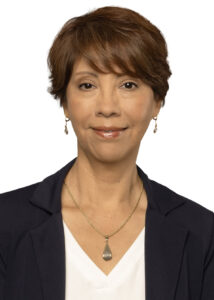
Jane Toller, Warden, MRC Pontiac
Fort Coulonge