






In several ancient cultures, the lotus flower has significant meaning, often serving as a metaphor for rebirth, or the contrast between night and day. It’s hard to believe that the beautiful petals floating on the surface of the water could spring from the mud below, but they do and the result is stunning.
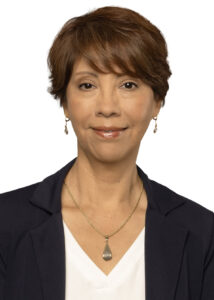
According to Joanne Romain, the owner of the Lotus Clinic in Shawville, this contrast was the inspiration for her business, and now that four years have gone by, it still stands as an apt comparison.
“I said, I would like it to be the name of a flower,” she explained, sitting in an empty office in the clinic, located on rue Centre. “One of my friends was helping me. I was thinking of lotus, and she came back with lotus too. I liked the lotus because it’s a flower that comes from nothing, it comes from mud, but it’s so beautiful.”
“It’s the same here, this was nothing, just ground and we built a beautiful clinic to help the people,” she continued, gesturing to the floor. “That’s why I called it the Lotus.”
The Clinic was the recipient of the Health Services Award at the Pontiac Chamber of Commerce Awards Gala on Feb. 23. They were also recognized as the Best New Business in 2015, two years after opening.
“It’s so rewarding for someone to acknowledge that you’ve done something great. That you made a difference,” she said. “As an employer, you always do it for your employees, you reward them, congratulate them, encourage them. But there’s no one really doing it for the employer.”
Romain is a Fort Coulonge native who worked as a medical secretary in the area for many years, before setting out on a business venture with her husband.
“I went back and applied and worked as a medical secretary at the CLSC in Fort Coulonge,” she explained. “While I was working there, the GMF, the family medicine group, started to build and one of the doctors at the CLSC in Coulonge asked me to be the manager of that. So I left the CLSC and became the coordinator of the family medicine group and it’s kind of the way the doctors got to know me.”
She explained that during her time there, she gained valuable managerial experience and a vast network of contacts in local healthcare. She came up with the idea of the clinic after listening to some of the medical students that she coordinated.
“We weren’t really recruiting doctors, so I was questioning why,” she said. “It came down to, they couldn’t find a spot where they felt like they belong. The offices were older offices, things weren’t up to date, having electronic charts, stuff like that. When you’re a new doctor and you don’t know the area, you have to find staff for your office, find a spot. It’s all overwhelming for them. They’re not taught to manage.”
She looked around for spaces to rent and convert into a clinic but didn’t find anything suitable, so she decided to design her own. She wanted a place designed from the ground up for comfort and efficiency.
“First of all, the doctors have their rooms on the outside of the building, for the windows. Inside, there’s exam rooms that don’t have windows,” she explained. “I wanted a waiting room with a special space for the kids. I’ve often been in offices where there’s just a little table for kids to play, but they’re running all over the place.”
In the centre lies a large space for the secretarial staff, with plexiglass windows on all sides.
“I have windows in front for incoming patients and incoming calls,” she said, going over her thought process. “I have two windows on the side for patients, when they’re coming out and I have two windows at the back that the doctors use to talk to the secretaries. It’s all about the flow of things.”
Construction began in 2013 and the Lotus Clinic officially opened to the public in June 2014, hosting seven doctors, and adding an eighth by the end of the year.
Nearly four years later, Romain said that as of April, they will have 11 general practitioners working in the space, as well as a few other specialists, like a private psychotherapist and physiotherapy.
She said that her role is to manage the clinic’s operations so that the doctors pay closer attention to their patients.
“It’s important for them to be just able to focus on their patients,” she said. “They don’t have to worry if there’s a secretary that’s sick, or if there’s water in the basement. They don’t. Sometimes they don’t even know about it.”
She said that a clinic set up by medical professionals, for medical professionals, is both uncommon and incredibly satisfying for the staff.
“I had three doctors that were close to retiring before I opened the clinic. They were talking about it,” she said. “Since then, it’s going to be four years since we opened and they haven’t retired. I don’t even hear them talk about retirement anymore.”
She said students from McGill University and the University of Ottawa that train at the clinic often comment on the little things, like using stickers to identify lab results.
“Even the students or residents that come here from Montreal are like ‘Oh my God.’” she said. “Like, just putting stickers on paperwork, they don’t get that in Montreal. For us, it’s common sense.”
She said that through the efforts of groups like the GMF, most of the people in the Pontiac now have a family doctor.
“Right now we’re at about 10,000 registered patients that come to the clinic,” she said. “We have secretaries only right now to support the doctors, but I’m thinking in the future we could have a nurses aid, to [check blood pressure], do weight and height or things like that.”
She said that she is constantly looking for new specialists to offer services that are lacking in the region.
“I’m talking to a footcare doctor. I approached an optometrist, things like that,” she said. “The services that are not available in the Pontiac, that’s what I’m looking for.”
She added that she is thinking of moving some offices to the basement, as the ground floor is nearing capacity. Expanding the parking lot, which is getting backed up on certain days, could also be in the cards for the future.
Romain said that at the end of the day, she does her job for the patients that they get to help.
“We treat them like they’re family and they don’t get that everywhere. They recognize that,” she said. “One day a guy walked in – and I had gotten him an appointment with a specialist – with a box of chocolates, just because I had helped him. That is the best reward, being able to help the patients, that’s what’s driving me to continue.”