





Fourteen years ago, Shawville’s Royal Bank of Canada encountered maybe one case of fraud every month, according to branch manager Meagan Derouin. She said these days, she is seeing an average of two cases every day.
“It’s all different types of fraud, but there’s a lot more, definitely a lot more,” she said, noting it’s a trend that is being felt nationwide. She pointed to the rise of “deep fakes” – fake videos and images generated by artificial intelligence – as the latest tool being used by fraudsters to convince people to share their personal information or sign up for scams.
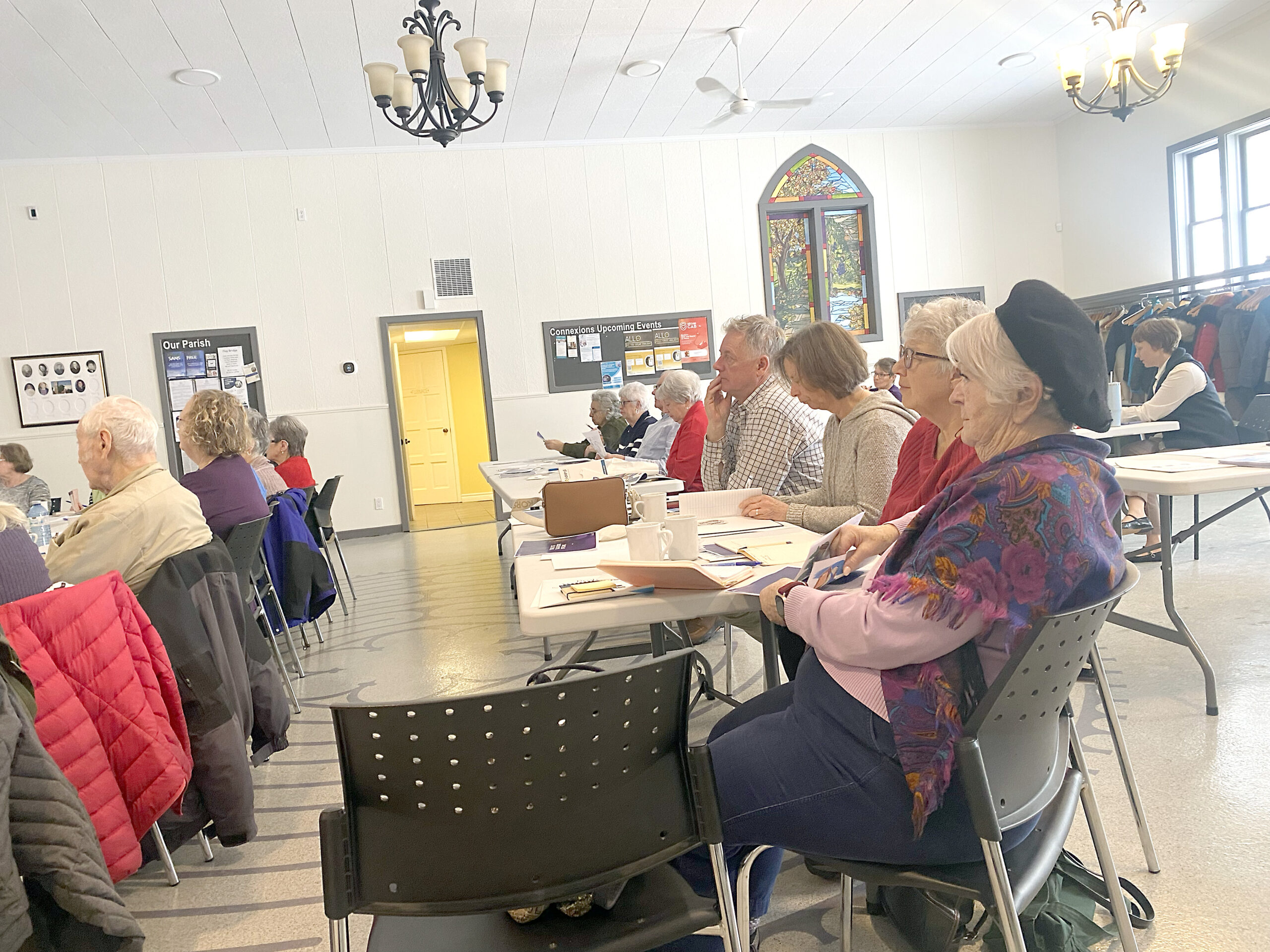
It’s in this context that on Jan. 22, Derouin hosted some 30 people in a workshop about how to identify scams and protect yourself from fraud and cyberfraud, organized by Connexions Resource Centre.
Derouin said the most common types of fraud seen at the bank are password compromise, debit and credit card fraud, socially engineered fraud including phishing scams, malware, identity theft and financial abuse.
Password compromise can occur when a password or PIN number is stolen by a scammer and used to access bank accounts. Derouin explained that scammers have advanced ways of breaking into secure accounts, and can easily use computers to generate the most common passwords for a given account.
To protect yourself against this type of fraud, Derouin emphasized the importance of creating passwords that are a random combination of upper and lower case letters, numbers, and symbols, and said passwords should ideally be kept in a password-locked app on a phone or tablet so that they are not accessible to anybody.
She also emphasized the importance of not sharing passwords with loved ones, because if the bank discovers a PIN or password has been shared, it will no longer be able to refund any money that was lost to a fraudster.
“There is a difference if your power of attorney is coming into the bank. They’re able to do things on your behalf. That has to be a conversation before any memory loss or things like that happen,” Derouin said.
Debit or credit card fraud can happen when a fraudster steals your physical card or gains access to its information through a variety of ways. To protect yourself from this, Derouin recommended always keeping your card in hand when paying with swipe or tap, securing access to your digital wallet, and using online banking to lock lost or stolen cards until they are recovered or replaced. She also said it is important to report even small charges that appear on a bank statement if they weren’t made by you, because sometimes fraudsters will try taking small amounts first, to test if anybody is paying attention, before stealing larger amounts from an account.
Phishing scams, what Derouin classified as social engineering fraud, occur when a scammer uses social media, phone calls and texting to lure somebody into giving up personal information that will then be used to access their accounts. She said this can look like anything from a Facebook invitation from a friend to click on a link that will somehow compromise the security of the information on your computer to a text message or email from the CRA telling you you owe the government massive amounts of money, to a text message from your bank telling you your account has been compromised and need to text back your PIN number to protect it. She said the best practice is to always check in with your financial institution in person or by phone to verify the legitimacy of messages like these.
An added danger of scam emails is that they may contain links that will put malware on your computer. This malware can be used to collect critical information scammers need to get into your account.
Identify theft can occur without your knowledge or consent, when someone uses your name, social insurance number or other personal information to get into your accounts. To protect yourself from this, Derouin recommended not carrying your SIN card in your wallet, and ensuring all documents with personal information are shredded and not simply recycled.
Finally, Derouin explained financial abuse occurs when money or property is misused by someone you trust. She said she sees this occur often with grandchildren who begin with helping out a grandparent with groceries, for example, but who slowly take liberties with the trust being bestowed in them. Derouin said bank employees are trained to recognize signs that financial abuse may be occurring, including timid or fearful body language, the withdrawal of large amounts of money at one time, or the presence of another person hovering over you at the bank.
“We’re equipped, at the bank, to help you deal with these kinds of situations.”
The big message from Derouin was to always do your due diligence to verify the credentials of a person, an email, a text message or any other seemingly strange request for personal information before sharing anything. She said she is more than happy to help anybody do this.
“I would just always double check with your local financial institution or wherever you bank, because most of the time we’re able to recognize quickly whether it’s a fraud or not.”
Il y a quatorze ans, la Banque Royale du Canada de Shawville rencontrait peut-être un cas de fraude par mois, selon la directrice de succursale Meagan Derouin. Elle a dit que de nos jours, elle voyait en moyenne deux cas par jour.
« Ce sont tous des types de fraude différents, mais il y en a beaucoup plus, vraiment beaucoup plus », a-t-elle déclaré, soulignant qu’il s’agit d’une tendance ressentie à l’échelle nationale. Elle a cité la montée des « hypertrucages » – de fausses vidéos et images générées par l’intelligence artificielle – comme le dernier outil utilisé par les fraudeurs pour convaincre les gens de partager leurs informations personnelles ou de s’inscrire à des escroqueries.
C’est dans ce contexte que le 22 janvier, Mme Derouin a accueilli une trentaine de personnes à un atelier sur la façon d’identifier les escroqueries et de se protéger contre la fraude et la cyberfraude, organisé par le Centre de ressources Connexions.
Mme Derouin a déclaré que les types de fraude les plus courants observés à la banque sont la compromission de mot de passe, la fraude par carte de débit et de crédit, la fraude par ingénierie sociale, y compris les tentatives d’hameçonnage, les logiciels malveillants, le vol d’identité et l’abus financier.
La compromission de mot de passe peut se produire lorsqu’un mot de passe ou un numéro d’identification personnel (NIP) est volé par un fraudeur et utilisé pour accéder à des comptes bancaires. Mme Derouin a expliqué que les fraudeurs disposent de moyens avancés pour s’introduire dans des comptes sécurisés et peuvent facilement utiliser des ordinateurs pour générer les mots de passe les plus courants pour un compte donné.
Pour se protéger contre ce type de fraude, Mme Derouin a souligné l’importance de créer des mots de passe qui sont une combinaison aléatoire de lettres majuscules et minuscules, de chiffres et de symboles, et a ajouté que les mots de passe devraient idéalement être conservés dans une application verrouillée par mot de passe sur un téléphone ou une tablette afin qu’ils ne soient accessibles à personne.
Elle a également souligné l’importance de ne pas partager les mots de passe avec les proches, car si la banque découvre qu’un NIP ou un mot de passe a été partagé, elle ne pourra plus rembourser l’argent perdu à cause d’un fraudeur.
« C’est différent si votre procuration vient à la banque. Ces personnes sont en mesure d’agir en votre nom. Cela doit faire l’objet d’une discussion avant toute perte de mémoire ou des choses comme ça », a déclaré Mme Derouin.
La fraude par carte de débit ou de crédit peut survenir lorsqu’un fraudeur vole votre carte physique ou accède à ses informations par divers moyens. Pour vous en protéger, Mme Derouin a recommandé de toujours garder votre carte en main lorsque vous payez par glissement ou par carte sans contact, de sécuriser l’accès à votre portefeuille numérique et d’utiliser les services bancaires en ligne pour bloquer les cartes perdues ou volées jusqu’à ce qu’elles soient retrouvées ou remplacées. Elle a également ajouté qu’il est important de signaler même les petits frais qui apparaissent sur un relevé bancaire s’ils n’ont pas été effectués par vous, car parfois les fraudeurs essaieront de prélever de petits montants d’abord, pour voir si quelqu’un y prête attention, avant de voler des montants plus importants d’un compte.
Les tentatives d’hameçonnage, ce que Mme Derouin a classé comme fraude par ingénierie sociale, se produisent lorsqu’un fraudeur utilise les médias sociaux, les appels téléphoniques et les messages texte pour inciter quelqu’un à divulguer des informations personnelles qui seront ensuite utilisées pour accéder à ses comptes. Elle a dit que cela peut prendre diverses formes, allant d’une invitation Facebook d’un ami à cliquer sur un lien qui pourrait compromettre la sécurité des informations sur votre ordinateur, à un message texte ou un courriel de l’ARC vous disant que vous devez d’énormes sommes d’argent au gouvernement, ou à un message texte de votre banque vous disant que votre compte a été compromis et que vous devez renvoyer votre NIP pour le protéger. Elle a ajouté que la meilleure pratique est de toujours vérifier auprès de votre institution financière en personne ou par téléphone pour vérifier la légitimité de tels messages.
Un danger supplémentaire des courriels frauduleux est qu’ils peuvent contenir des liens qui installeront des logiciels malveillants sur votre ordinateur. Ces logiciels malveillants peuvent être utilisés pour collecter des informations critiques dont les fraudeurs ont besoin pour accéder à votre compte.
Le vol d’identité peut se produire à votre insu ou sans votre consentement, lorsque quelqu’un utilise votre nom, votre numéro d’assurance sociale ou d’autres informations personnelles pour accéder à vos comptes. Pour vous en protéger, Mme Derouin a recommandé de ne pas transporter votre carte de NAS dans votre portefeuille, et de s’assurer que tous les documents contenant des informations personnelles sont déchiquetés et non simplement recyclés.
Enfin, Mme Derouin a expliqué que l’abus financier se produit lorsque de l’argent ou des biens sont mal utilisés par quelqu’un en qui vous avez confiance. Elle a dit qu’elle voit cela souvent avec des petits-enfants qui commencent par aider un grand-parent avec l’épicerie, par exemple, mais qui prennent lentement des libertés avec la confiance qui leur est accordée. Mme Derouin a ajouté que les employés de banque sont formés pour reconnaître les signes d’un possible abus financier, y compris un langage corporel timide ou craintif, le retrait de grandes sommes d’argent en une seule fois, ou la présence d’une autre personne planant au-dessus de vous à la banque.
« Nous sommes équipés, à la banque, pour vous aider à gérer ces types de situations. »
Le message principal de Mme Derouin était de toujours faire preuve de diligence raisonnable pour vérifier les informations d’identification d’une personne, d’un courriel, d’un message texte ou de toute autre demande d’informations personnelles apparemment étrange avant de partager quoi que ce soit. Elle a dit qu’elle est plus qu’heureuse d’aider n’importe qui à le faire.
« Je vérifierais toujours auprès de votre institution financière locale ou de votre banque, car la plupart du temps, nous sommes en mesure de reconnaître rapidement s’il s’agit d’une fraude ou non. »